
Rome on a Budget: 15 Free Monuments & Masterpieces
Master Rome on a budget with this meticulous guide. Learn exact timings for free monuments, the $1 Caravaggio hack, and how to avoid expensive tourist traps.
Planning a trip to Rome doesn't require draining your savings account if you know exactly where to look. In this guide, you will learn how to strategically map your itinerary to experience Rome's iconic monuments, artistic masterpieces, and panoramic views for free. I will walk you through precise timings, budget hacks, and the exact routes to keep your daily costs low while maximizing your time.
Quick Facts
- Best Time to Visit: April to May, or September to October (arrive at major sites by 8:30 AM to beat crowds)
- Daily Budget: $60 - $150 USD (excluding accommodation)
- Recommended Duration: 3 to 5 days
- Primary Transport: Walking ($0 cost)
The Strategic "Walk Everywhere" Approach
Rome is an open-air museum where every single block features an ancient pillar, a beautiful church, or a historic facade. My number one rule for budget travelers: skip the $1.60 (€1.50) metro tickets and $20 taxis. Walk everywhere.
If you book accommodation in the historical center, your transit costs will be exactly $0.
- Historical Center Distances: Most major attractions are only a 12 to 15-minute walk (roughly 1 km or 0.6 miles) from each other. You can easily walk from the Pantheon to the Trevi Fountain in under 10 minutes.
- The Vatican Trek: Even the furthest central attraction, the Vatican, is only a 35 to 40-minute scenic walk (3 km or 1.8 miles) from the main historical center.
- Physical Prep: Bring highly supportive, broken-in walking shoes. You will easily log 15,000 to 20,000 steps (10 to 14 km / 6 to 8.5 miles) per day on uneven cobblestone streets. Leave the stiff dress shoes at home.
Iconic Plazas & Monuments (Zero Cost)
Rome's most famous landmarks are completely free to view, provided you know exactly when to go.
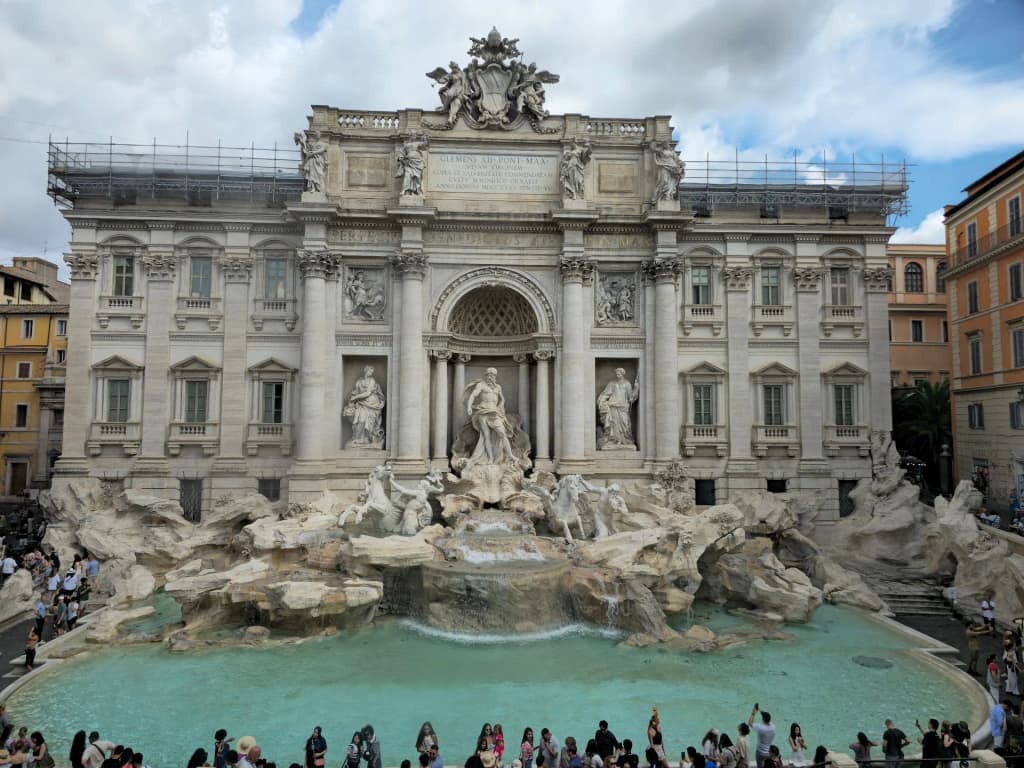
The Trevi Fountain Strategy This is the most heavily trafficked monument in Rome relative to its small footprint. Recently, the city tested a €2 ($2.15) entry fee for tourists wanting to get close to the water between 9:00 AM and 10:00 PM.
Pro Tip: Arrive by 6:20 AM. By 6:40 AM, the crowds already start forming. If you arrive before 9:00 AM, you completely bypass the €2 fee and can toss your coin in peace.
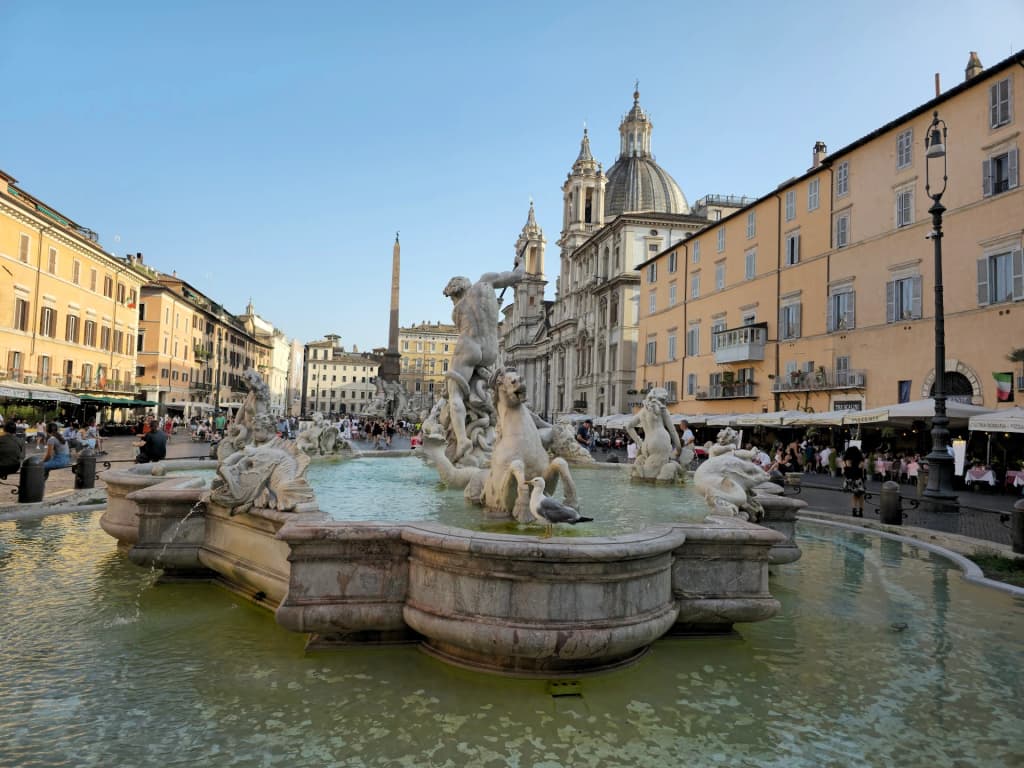
Piazza Navona & The Spanish Steps Piazza Navona is built on the site of an ancient Roman stadium, hence its long, oval shape. While the cafes lining the square are notoriously expensive, admiring the fountains and street artists costs absolutely nothing.
Just a 10-minute walk away, you will find the Piazza di Spagna and its famous 135-step staircase.
⚠️ Watch Out: Do NOT sit on the Spanish Steps. Local police actively patrol the area, and sitting on the marble steps can result in an immediate €400 ($430) fine. Stand to take your photos, or sit on the benches at the bottom of the square.
Artistic Masterpieces & Secret Views
Why pay €20 for a crowded museum when Rome's churches function as free, world-class art galleries?
The €1 Caravaggio Hack Located just a 4-minute walk behind Piazza Navona is the San Luigi dei Francesi church. Inside the Contarelli Chapel, you will find three original, magnificent masterpieces by the genius painter Caravaggio, including "The Calling of St Matthew."
- Cost: Free entry.
- The Hack: Bring a €1 coin to drop into the illumination box next to the chapel. The lights will turn on, perfectly illuminating the dramatic shadows of the paintings.
The Aventine Keyhole (Il Buco della Serratura) This requires a slightly longer 25-minute walk up the Aventine Hill, but the payoff is incredible. You look through a literal green door's keyhole and see a perfectly manicured tunnel of trees framing the dome of St. Peter's Basilica.
- The Magic: You are looking at three sovereign entities at once: The Knights of Malta (the property you are standing on), Italy (the city of Rome), and the Vatican (the dome in the distance).
Secret Roman Forum Viewpoint After visiting the colossal Monument to Victor Emmanuel II (which is free to enter), walk around back to the Piazza del Campidoglio, designed by Michelangelo. Walk down the small side streets just behind the City Hall building. You will emerge onto a massive balcony offering a completely free, uncrowded, panoramic view of the ancient Roman Forum.
The Vatican & Ancient Rome on a Budget
When planning your budget, you need to understand the exact difference between what is free and what requires a ticket.
Attraction Cost Booking Strategy Best For St. Peter's Basilica Free Arrive 30 mins before opening Budget travelers Vatican Museums €20 ($22) Book 4 weeks in advance Art lovers (Sistine Chapel) The Pantheon €6 ($6.50) Book online via QR code Architecture buffs Colosseum/Forum €18 ($20) Must book 4 weeks in advance History enthusiastsNavigating the Vatican The Vatican is an independent state entirely surrounded by Rome. St. Peter's Basilica is 100% free to enter. However, the security lines can stretch for 1.5 to 2 hours in the summer heat. Arrive at least 30 minutes before opening (aim for 6:30 AM).
- Dress Code: Shoulders and knees must be strictly covered, or you will be turned away at security.
If you want to see the Sistine Chapel, you must buy a ticket for the Vatican Museums. This is one of the two places in Rome (along with the Colosseum) where you should absolutely spend your money.
The Pantheon Located just 5 minutes from Piazza Navona, the Pantheon is the most well-preserved ancient Roman building in the world. It recently introduced a €6 ($6.50) entry fee. It is absolutely worth the small cost. Budget exactly 30 to 40 minutes inside to admire the massive 43-meter open oculus in the dome.
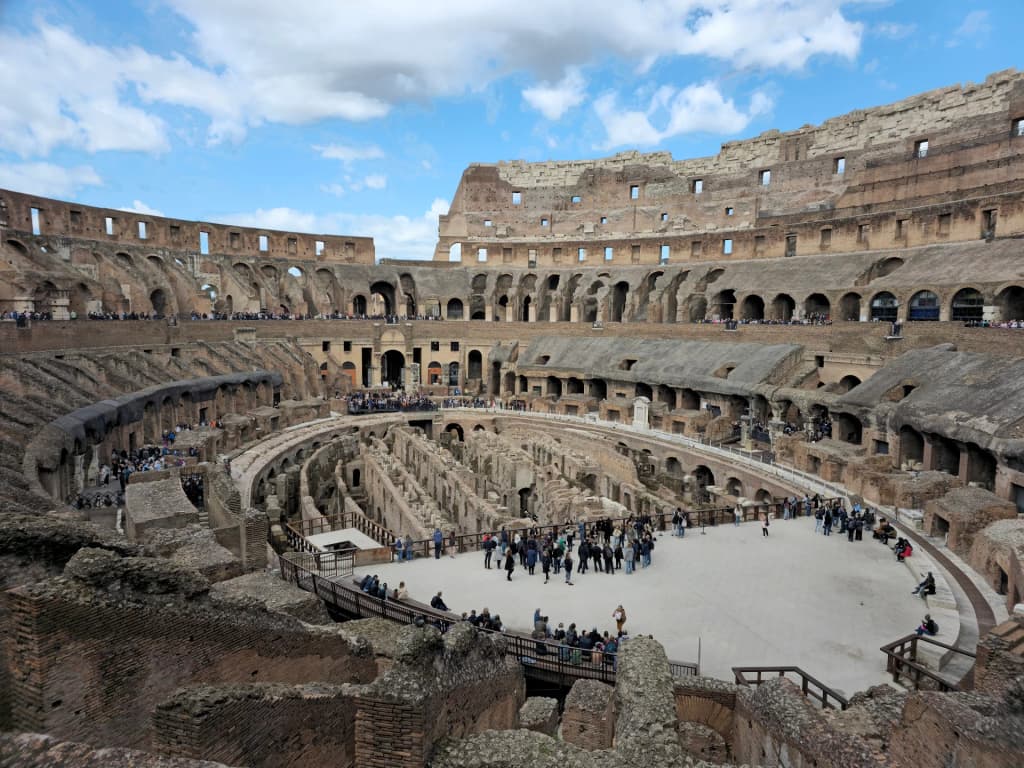
Via dei Fori Imperiali This grand boulevard connects Piazza Venezia to the Colosseum. If you are in Rome on a Sunday, the city closes this street to car traffic. It becomes a massive pedestrian and cyclist promenade cutting right through the ancient ruins, offering spectacular free views of the forums.
Parks & Free Walking Tours
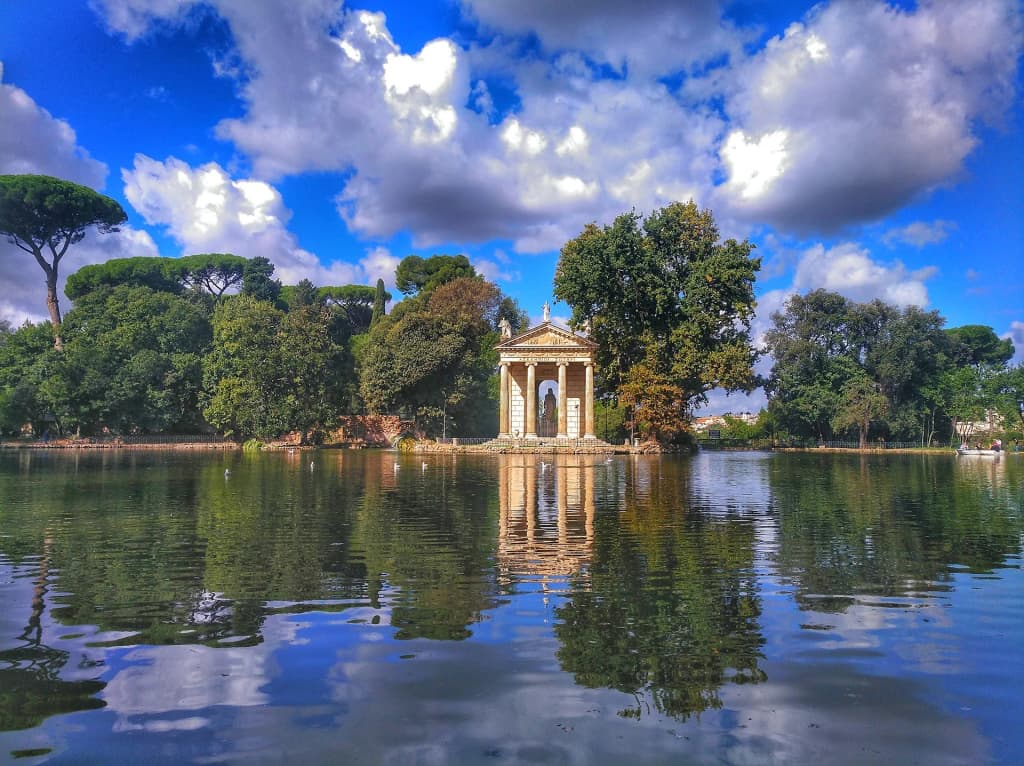
Villa Borghese Gardens Often called the "Central Park of Rome," these gardens are located about 20 to 25 minutes walking north of the historical center. While the Galleria Borghese museum requires a paid €13 ticket, the massive 80-hectare surrounding gardens, fountains, and viewpoints (like the Pincio Terrace) are entirely free to explore.
Tip-Based Free Walking Tours Booking a "Free Walking Tour" is the smartest way to orient yourself on day one. You typically pay a €0.01 booking fee online to secure your spot.
- Classic Historical Center Tour: Starts at Piazza del Popolo, covers the Trevi Fountain, Pantheon, and ends at Piazza Navona. Takes exactly 2 hours.
- Imperial Rome Night Tour: Starts at the Victor Emmanuel II monument, passes Michelangelo's square, and ends at the illuminated Colosseum.
Pro Tip: While the tour is technically free, the guides work exclusively for tips. A standard, respectful tip is €5 to €10 ($5.50 - $11) per person at the end of the 2-hour walk.
Common Mistakes to Avoid
The €9 Water Trap When you sit down at a restaurant in Rome, the waiter will likely ask, "Do you want water?" If you say yes, they will bring a large glass bottle of sparkling or still water that costs €8 to €9 ($8.50 - $9.50). Over a 4-day trip, two people can easily spend $80 just on water with meals.
- The Fix: Explicitly ask for "tap water" (acqua di rubinetto). It is perfectly safe to drink in Italy, and the waiter will bring you a pitcher with ice for free.
Buying Bottled Water at Monuments Do not buy €6 plastic water bottles from vendors near the Colosseum. Rome is filled with over 2,500 free public drinking fountains called nasoni (meaning "large noses" due to their spout shape). Bring a reusable water bottle and fill it up all day long for free with ice-cold, fresh Roman aqueduct water.
Final Next Steps
- Pin the locations of the nasoni (water fountains) on your Google Maps before you leave home.
- Book your Colosseum and Vatican Museum tickets exactly one month in advance to secure the base rates and avoid third-party markups.
- Pack a lightweight scarf in your daybag to easily cover your shoulders for unexpected, free church visits.
More Photos
More Adventures
 $120 - $350/day 4-5 days
 9 Expensive Mistakes to Avoid on Your First Trip to Rome
Planning a trip to Rome? Avoid 400 EUR fines, 130 EUR taxi scams, and overpriced tickets with this methodical, budget-optimized travel guide.
 $25 - $100/day 1 days
 Vatican City Budget Guide: Tickets, Tours & Itinerary
Plan your Vatican City visit with this meticulous budget guide. Learn how to skip 2-hour lines, navigate the strict dress code, and optimize your trip.
 $100 - $250/day 10-14 days
 The Meticulous 13-Day Italy Itinerary & Budget Guide
Master Italy's travel logistics with our 13-day itinerary. Discover exact costs, train schedules, and strategies to avoid tourist traps and long lines.
 $50 - $150/day 3-7 days
 Conquer Buenos Aires: The Ultimate Bike & Food Guide
Skip the tourist traps. Grab a bike and conquer Buenos Aires. Explore River Plate stadium, Palermo Soho eats, and massive city parks. Get the guide.