
A Day of Stillness and Wonder in São Paulo’s Botanical Garden
Lose yourself in the lush, sensory world of São Paulo’s Botanical Garden—where city noise fades, orchids bloom, and every path tells a story.
The wooden walkway creaks softly beneath my feet, the scent of damp earth and wild ginger rising with each step. Sunlight filters through a cathedral of towering palm trees—Gerivá, the guide tells me, native to Brazil and older than the city itself. To my left, a narrow stream gurgles, its water born right here in the Atlantic Forest, feeding the restless arteries of São Paulo. The city’s roar is a distant memory, muffled by green.
A family pauses ahead, the children’s laughter echoing as they lean over the railing, pointing at a flash of blue—a butterfly, or maybe a kingfisher. The air is thick with the perfume of orchids and something sharper, almost citrus, drifting from unseen blossoms. I close my eyes for a moment, letting the humidity settle on my skin, the city’s tension dissolving in the hush of leaves.
The João Barbosa Botanical Museum stands at the heart of the garden, its whitewashed walls cool and silent. Inside, the air is tinged with the must of old paper and pressed leaves. Five rooms, arranged in a cross, hold the story of this place: dioramas of the forest, glass cases of seeds and dried fungi, faded photographs of botanists in wide-brimmed hats. A documentary flickers on a small screen, the voiceover soft and reverent. “Francisco Carlos dedicated his life to this garden,” the attendant says, her voice low. “He wanted everyone to understand the beauty of our flora.”
I linger over a panel of watercolors—delicate illustrations of bromeliads, ferns, and the wild orchids that once filled these greenhouses. The museum is open most days, and the ten-dollar entry fee feels like a small price for this quiet education.
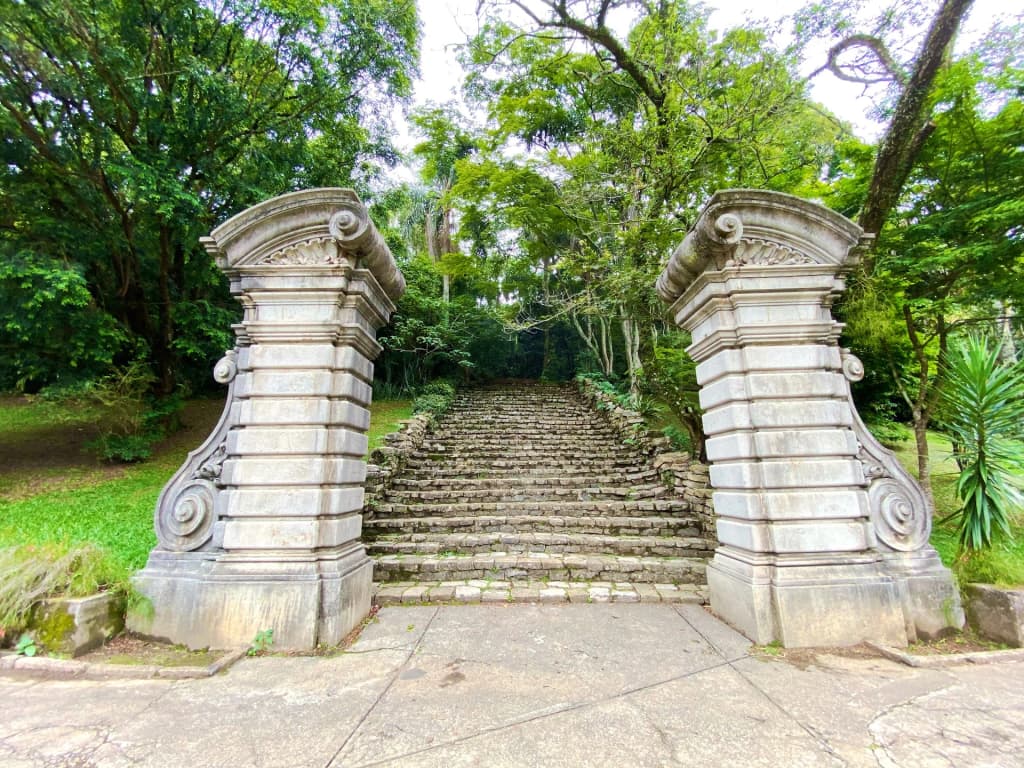
Outside, the symmetry of the Linnaeus Garden draws me in. Inspired by the gardens of Uppsala, Sweden, but unmistakably Brazilian in its wildness, it’s a living map of taxonomy: beds of native plants arranged in careful order, their names handwritten on wooden stakes. The famous Lineu Staircase rises at the center, its stone steps flanked by wedding parties and children in fairy-tale costumes. A girl in a Cinderella dress twirls for a photographer, her laughter mingling with the call of a distant thrush.
“People come here for the photos,” a gardener tells me, pausing to wipe his brow. “But they stay for the peace. You can breathe here.”
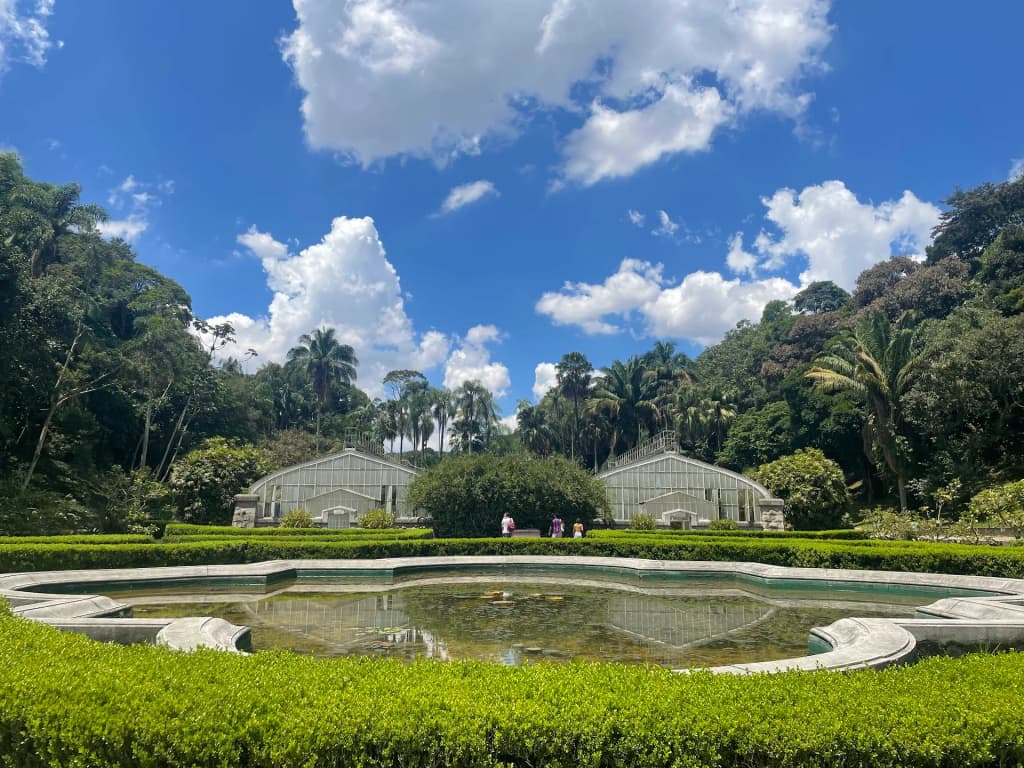
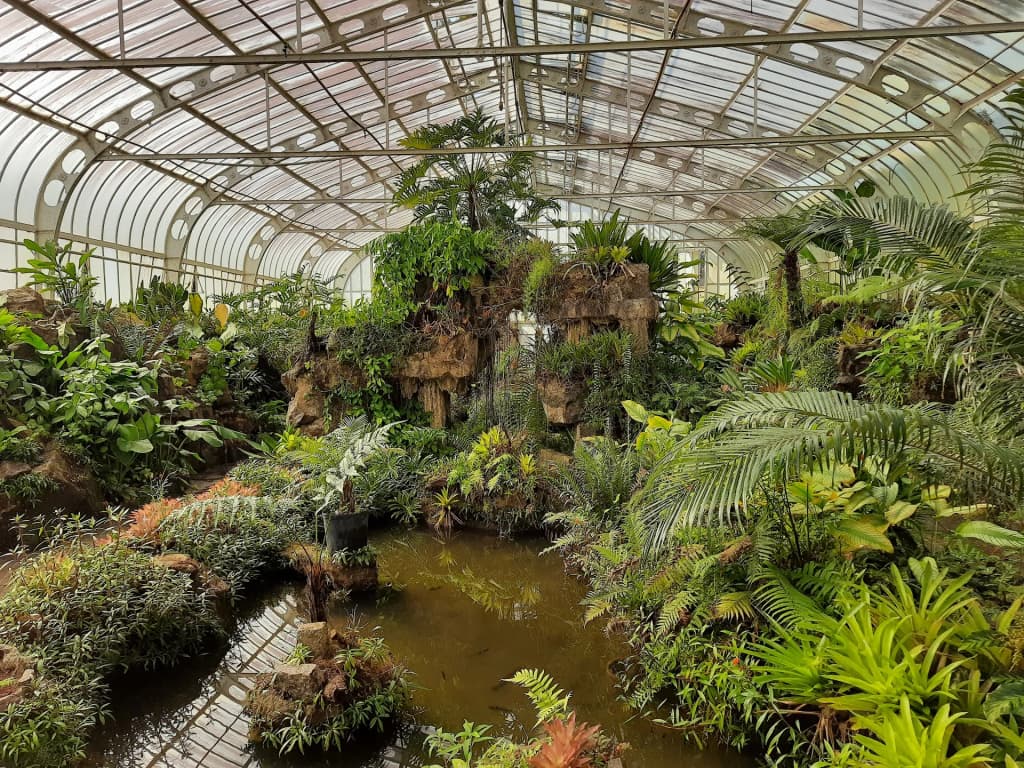
Across from the staircase, two greenhouses stand like glass cathedrals. One is closed for repairs, but the other welcomes me with a rush of warm, floral air. Inside, orchids bloom in impossible colors—violet, gold, blood-red—while bromeliads spill from hanging baskets. The scent is intoxicating, a heady mix of honey and rain. I run my fingers along a leaf, waxy and cool, and think of the decades of care that have gone into this collection.
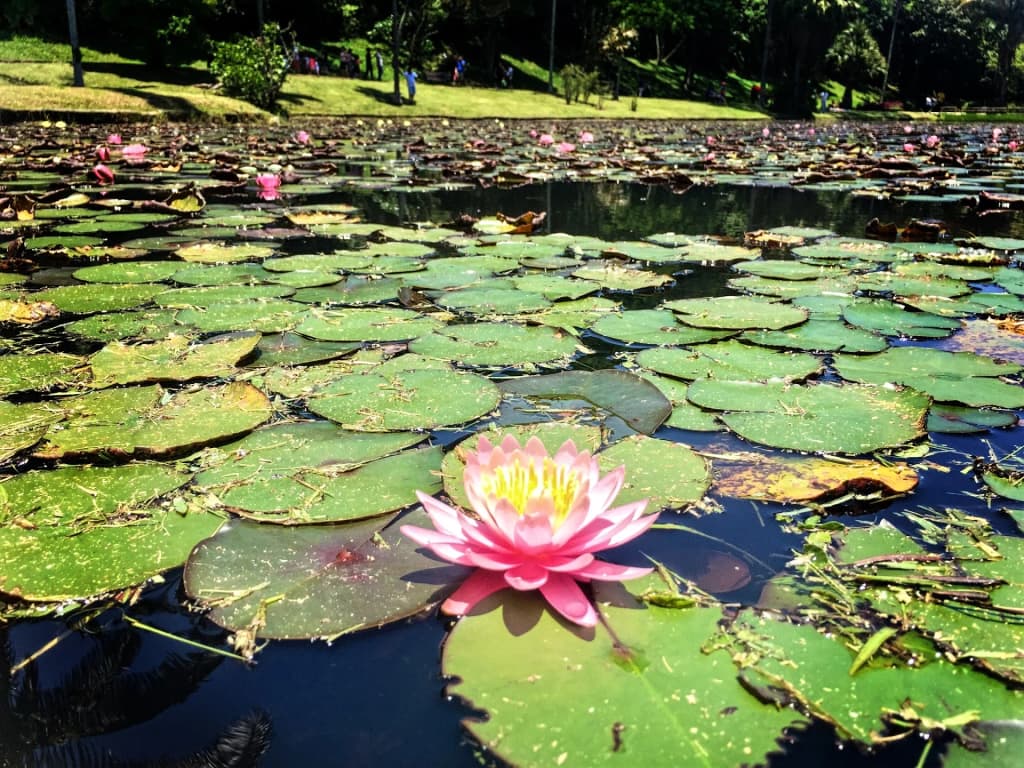
The path climbs gently to the upper garden, where the Lago das Ninfeias lies still and green, its surface dappled with pink water lilies. The name—Ninfeias—sounds like a spell, and the flowers themselves are otherworldly, their petals trembling in the breeze. Turtles sun themselves on the banks, while dragonflies skim the water, their wings catching the light. Somewhere nearby, a frog croaks, and the air is alive with the hum of insects.
A couple sits on a bench, sharing a thermos of coffee. “We come every Sunday,” the man says, offering me a smile. “It’s the only place in the city where you can hear yourself think.”
Beyond the lake, the original iron gate—once the entrance to the city’s waterworks—stands as a reminder of the garden’s past life. Here, the Jardim dos Sentidos invites me to touch and smell: velvety leaves, sharp citrus, the musky sweetness of mariposa flowers. Each plant is labeled, not just with its name, but with an invitation—smell, touch, listen. I close my eyes and breathe in, the world shrinking to the scent of crushed mint and sun-warmed earth.
The Bamboo Tunnel is darker than I expect, the stalks arching overhead to form a living corridor. The air is cool, almost cold, and the only sound is the soft rustle of leaves. My footsteps slow, and I find myself listening—to the distant call of a bird, the whisper of wind through bamboo, the faint laughter of a family picnicking nearby. This is a favorite spot for photographers, and I see a young couple posing, their faces lit by the green glow.
There are trails here I cannot walk today—the Trilha das Nascentes, closed for repairs, its 24 springs hidden from view. But even without them, the garden feels endless. There are picnic tables beneath ancient trees, open lawns for yoga and quiet contemplation, and everywhere the sense that time moves differently here. The only noise is the chorus of birds and the occasional splash of a turtle slipping into the lake.
At the end of the day, I sit on the grass, the city skyline just visible through a break in the trees. The sun is low, painting everything gold. I think of Francisco Carlos, of the generations of botanists and gardeners who have tended this place, and of the families and dreamers who find refuge here. The garden is not just a collection of plants—it is a living memory, a promise that even in the heart of the city, there is space for stillness, wonder, and wildness.
More Photos
More Adventures
 $80 - $250/day 4-7 days
 Surviving Manaus: Gateway to the Raw Amazon Jungle
Skip the tourist traps. Dive deep into Manaus, witness the Meeting of the Waters, and journey straight into the raw heart of the Amazon rainforest.
 $40 - $80/day 3-5 days
 Into the Wild: Surviving Roraima's Macuxi Territory
Skip the tourist traps. Plunge into the raw culture of the Macuxi tribe in Roraima, Brazil. Experience fire-hot stews, sacred rituals, and wild borders.
 $150 - $400/day 3-7 days
 Survive the Amazon: Eat the Grub and Disappear
Skip the tourist traps. Trek deep into the Amazon Rainforest, eat a live larva, and discover nature's raw power. Get lost and find yourself.
 $50 - $120/day 3-5 days
 Chasing Echoes and Gold Dust in Tiradentes, Brazil
Experience Tiradentes, Brazil through a sensory journey of colonial architecture, deep-rooted history, and the rich culinary traditions of Minas Gerais.