
Steam, Stone, and Symphony: A Sensory Day in Bath
Wander through the honey-colored streets of Bath, where ancient Roman thermal waters, towering Gothic abbeys, and grand Georgian crescents await.
The humid air clings to my skin the moment I step onto the stone terrace. It smells faintly of damp earth, centuries-old masonry, and something sharp and metallic that I can't quite place. Steam dances lightly off the surface of the emerald-green water below, curling into the crisp English morning air just as it has for millennia. I lean over the ancient railing of the Roman Baths, watching the water bubble up from the depths of the earth at a staggering forty-six degrees Celsius. I had booked my twenty-seven-pound ticket online for the eleven o'clock slot—a crucial move that saved me from the winding, restless queue of hopefuls standing outside in the chill. The journey here began hours ago with a twenty-six-pound train ride across the border from Cardiff, the Welsh countryside blurring into rolling English hills through the smudged window of the carriage. Now, standing beneath the imposing stone statues of Roman governors that line the terrace, the modern world feels delightfully far away.
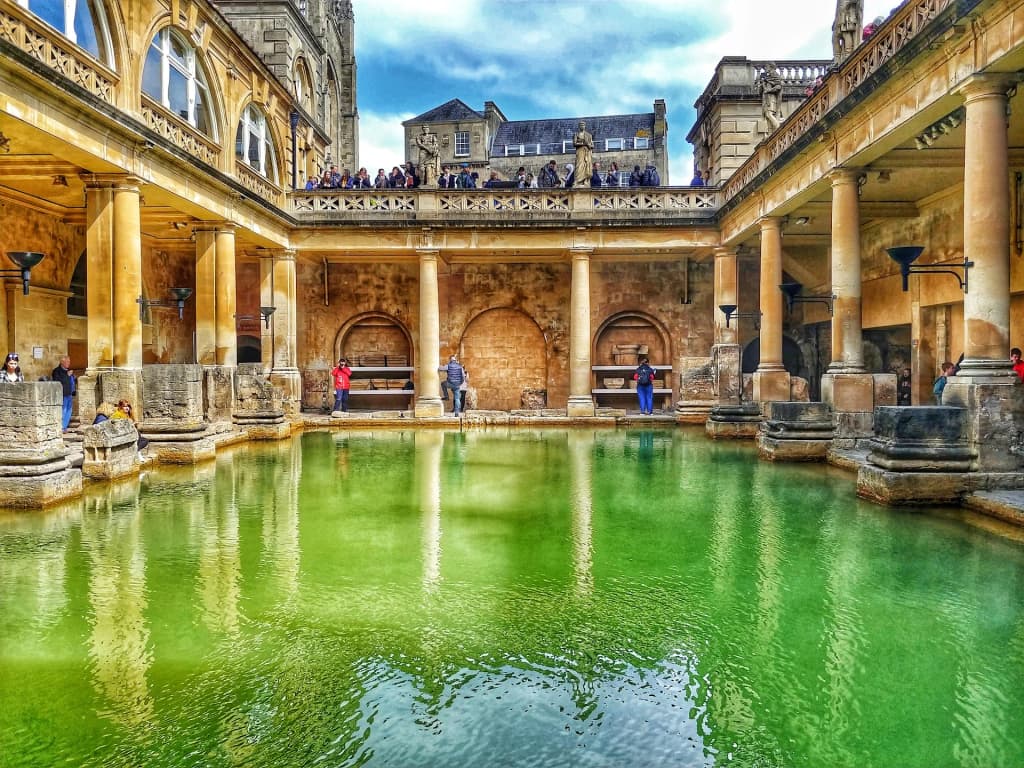
The audio guide murmurs in my ear as I follow the path deeper into the complex. I wander through the vaulted rooms where ancient citizens once cycled through freezing plunge pools and sweltering steam rooms, engaging in a daily ritual of purification and gossip. Behind thick glass, thousands of Roman artifacts—coins, wooden combs, and delicate jewelry—rest in illuminated displays. These were offerings tossed into the sacred springs for the goddess Sulis Minerva, silent prayers suspended in time. The water in the Great Bath owes its intense, almost unnatural green hue to algae blooming happily in the sunlight and heat. It looks thick, heavy, and entirely uninviting to drink, yet that is exactly what I am about to do.
At the end of the bathhouse corridor, a modern tap offers a taste of the legendary thermal water. I fill a tiny paper cone, the heat immediately transferring to my fingertips.
"Drink it quickly," an older attendant with a warm, crinkling smile advises, noticing my hesitation as I stare into the cup.
"Does it actually heal anything?" I ask, eyeing the steaming liquid.
"It heals curiosity," she laughs, wiping down the stone counter with a rag. "Though I make no promises about the taste. The Romans loved it. We just tolerate it."
She isn't wrong. The water is startlingly warm and tastes heavily of minerals—a thick, intensely metallic flavor that coats the back of the throat, like licking a warm iron pipe. I toss the crumpled cup into the bin, deciding my curiosity has been sufficiently cured. Stepping back out onto the cobblestone streets, the melancholic notes of an acoustic guitar drift through the air. Bath is a city scored by brilliant street musicians, their open guitar cases fitted with modern tap-to-pay machines for a cashless society—a jarring but convenient reminder of the twenty-first century. I let the music guide me toward the towering gothic spires of Bath Abbey, letting the crowds of weekend shoppers part around me.
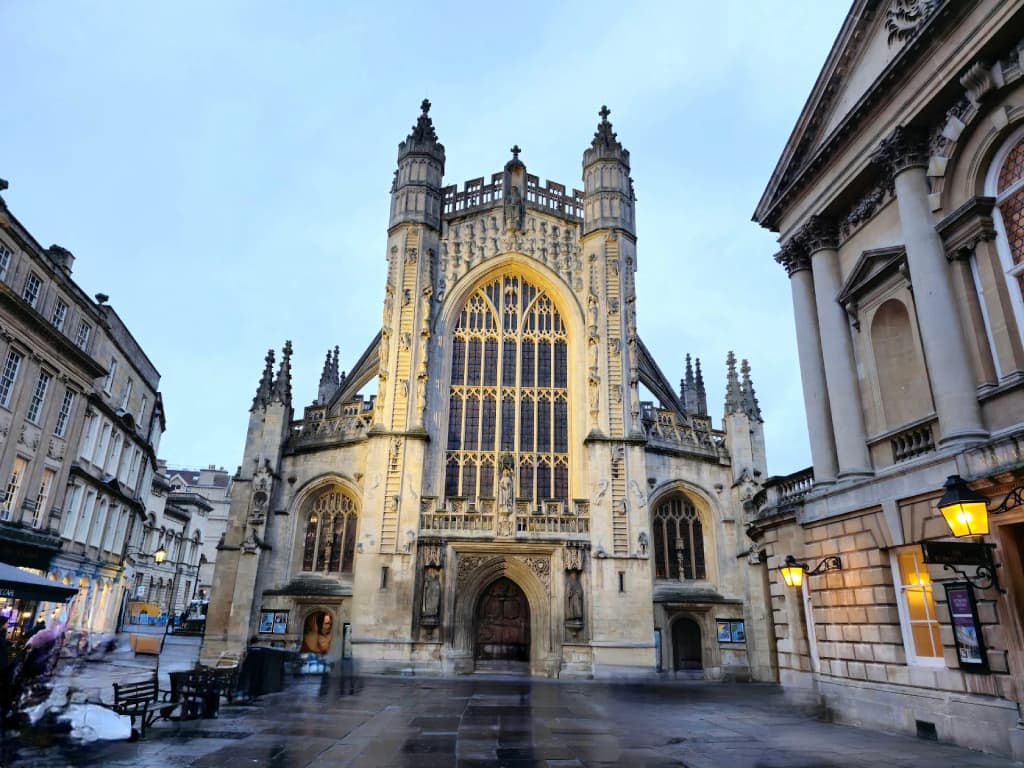
I hand over seven pounds and fifty pence at the heavy wooden doors and step into the cavernous nave. The entry fee feels like a small price for the hushed reverence inside. I arrive just as the morning prayers begin, the soft, rhythmic chanting echoing off the magnificent fan-vaulted ceiling. The stained glass windows catch the mid-morning light, throwing fractured rainbows across the pale stone floor. I sit in one of the wooden pews, letting the chill of the stone seep through my coat. It is a moment of profound stillness in a city that is rapidly filling with weekend travelers. I trace the intricate carvings of angels climbing Jacob's Ladder on the abbey's exterior in my mind, marveling at the sheer human effort required to build such a monument to faith.
By noon, the scent of roasting garlic and tomatoes pulls me away from the historic center and into a cozy, bustling spot called The Real Italian Pizza. Despite the name, it's a steaming, fragrant plate of gnocchi that catches my eye. Fifteen pounds later, accompanied by a sharp glass of white wine and a jug of free tap water—an absolute lifesaver for travelers in the UK—I am entirely rejuvenated. The restaurant hums with the clatter of silverware and the rapid-fire chatter of families taking shelter from the midday sun. The rich, heavy carbohydrates are exactly what I need before tackling the city's famous hills.
With my energy restored, I let myself get entirely lost in the honey-colored Georgian architecture that defines the city. Bath is compact, easily walkable, and deeply cinematic. I wander through Beauford Square and Trim Street, places where the modern world seems to fade entirely. If you have ever watched the series Bridgerton, these streets will feel instantly familiar. The illusion of stepping back in time is nearly perfect, broken only by the occasional smartphone lens reflecting the afternoon light. The limestone, known locally as Bath stone, gives the entire city a unified, warm glow that seems to hold onto the sunlight even when the clouds roll in.
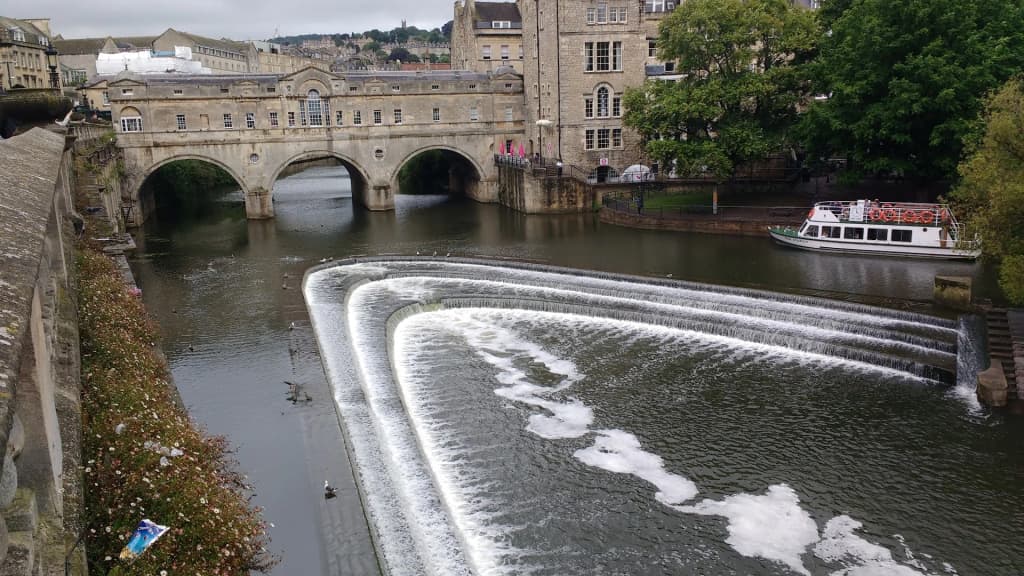
I pay a small fee of two pounds and fifty pence to enter Parade Gardens, a meticulously manicured private park that slopes gently down to the River Avon. From the edge of the water, the view is spectacular. Ahead of me spans Pulteney Bridge, an elegant feat of architecture lined entirely with tiny, independent shops and bakeries. It is often compared to the Ponte Vecchio in Florence, and seeing it stretch over the rushing weir, the comparison feels earned. The water crashes audibly over the stepped falls below, a constant, rushing soundtrack to the afternoon. I lean against the stone parapet, watching a small boat navigate the calmer waters upstream, the passengers waving to onlookers above.
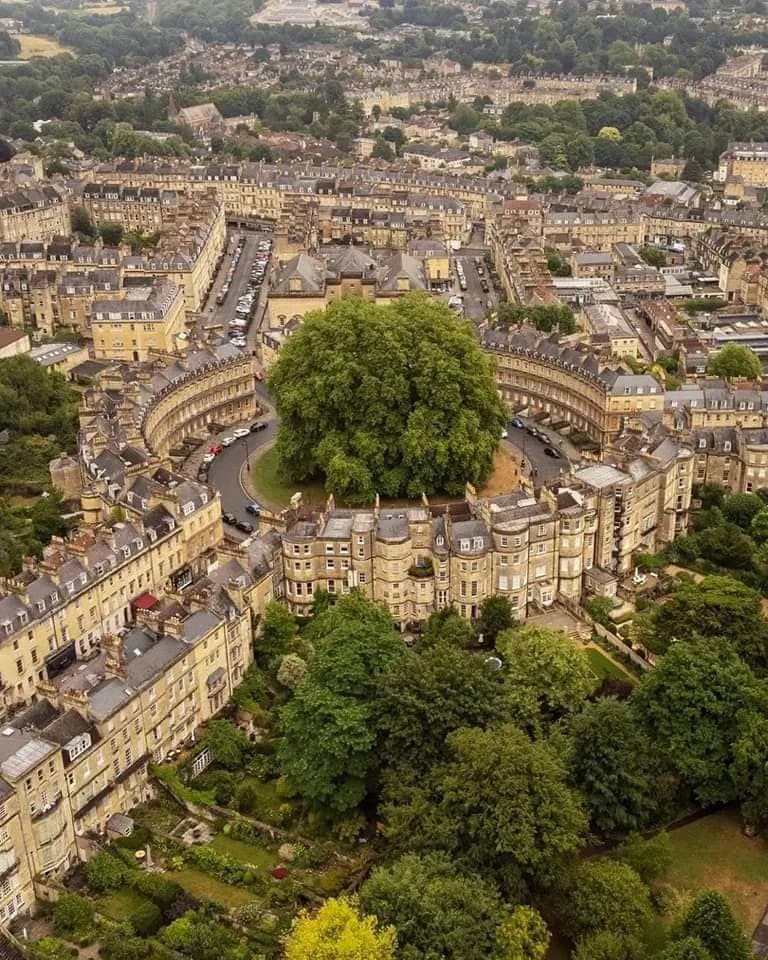
My feet carry me uphill, the incline testing my stamina, toward The Circus. This monumental ring of townhouses curves gracefully around a circular green lawn, a masterpiece of Georgian design. The identical facades are adorned with classical emblems, glowing warmly in the shifting light. Locals are sprawled across the grass on picnic blankets, their faces turned upward to catch the rare, brilliant British sunshine. It is a beautiful collision of grand, protected history and casual, everyday life.
I continue my walk, eventually arriving at the Royal Crescent. Built in the late eighteenth century, this sweeping half-moon of thirty terraced houses is staggering in its scale and elegance. The sheer expanse of the lawn in front of it makes you feel incredibly small. After nearly ten kilometers of walking—my watch vibrating to confirm the milestone—my legs are heavy, but the golden hour light hitting the pale stone makes every step worth the ache. The architectural ambition of John Wood and his son, who designed these spaces, is palpable. They wanted to recreate the grandeur of Rome in the rolling hills of Somerset, and standing here, dwarfed by the massive ionic columns, it is hard to argue that they failed.
I slowly make my way back down the hill toward the train station, the shadows lengthening across the cobblestones. Near the Abbey, the rich, buttery scent of sugar draws me into a small artisanal shop. I buy a thick slab of handmade fudge and a scoop of cold vanilla ice cream, the perfect antidote to a long day of walking. Sitting on a wooden bench in the square, listening to yet another brilliant street musician strumming a soulful melody, I watch the sky turn a bruised purple over the spires. The train back to Cardiff leaves in an hour, but for now, I am perfectly content to just sit here, letting the centuries wash over me.
More Photos
More Adventures
 $150 - $350/day 4-7 days
 London Travel Guide: Embracing the City's Chaotic Charm
Navigate the bustling streets of London, from the royal gates of Buckingham Palace to the chaotic glow of Piccadilly and the halls of ancient museums.
 $75 - $150/day 1-2 days
 Montreal Layover Itinerary: The Ultimate 24-Hour Guide
Maximize your Montreal layover with this precise 24-hour itinerary. Discover fast transit routes, historic sights, and budget dining near YUL airport.
 $80 - $150/day 3-5 days
 London Unfiltered: 5 Gritty Spots You Need to Explore
Skip the generic tourist traps. Discover London's gritty, beautiful secrets. From quiet canal walks to bombed-out ruins, experience the real city.
 $80 - $150/day 1-3 days
 A Perfect Day in London: Little Venice to the Thames
Follow a sensory journey through London, walking from the quiet canals of Little Venice to the kinetic streets of Camden, Soho, and Westminster.