
Socorro, Brazil: A Sensory Journey Beyond the Rapids
Leave the adrenaline behind and explore the quiet, sensory side of Socorro, Brazil. Discover mountain viewpoints, flooded quarries, and rich local flavors.
The woodsmoke stings my eyes just enough to make the panoramic view of the Mantiqueira Mountains blur. I am holding a long wooden stick over an open fire pit, waiting for a thick lump of dough to turn golden brown. The heat radiates against my palms, smelling of charred cedar and the sweet, lingering scent of chocolate from a neighboring fire.
"It takes patience," Kleber says, adjusting the glowing logs with a blackened iron poker. He watches my technique with a critical but warm eye. "It's a Peruvian recipe, the pão de palo. They use it because it lasts a long time on journeys. But here, we made it ours."
I nod, rotating the stick as the crust finally begins to blister and crack. I ordered the savory calabresa filling, though the brigadeiro version baking next to me is deeply tempting. This is the Mirante da Pedra da Bela Vista, a viewpoint perched high above the town of Socorro in the Brazilian state of São Paulo. The sun is melting into the horizon right now, casting a bruised purple and burnt orange light over the distant, rolling hills of Minas Gerais. The wind carries the faint sound of an acoustic guitar from the nearby deck. People come here for the sweeping vistas, but they stay for the slow, deliberate act of cooking their own food over the embers as the day fades.
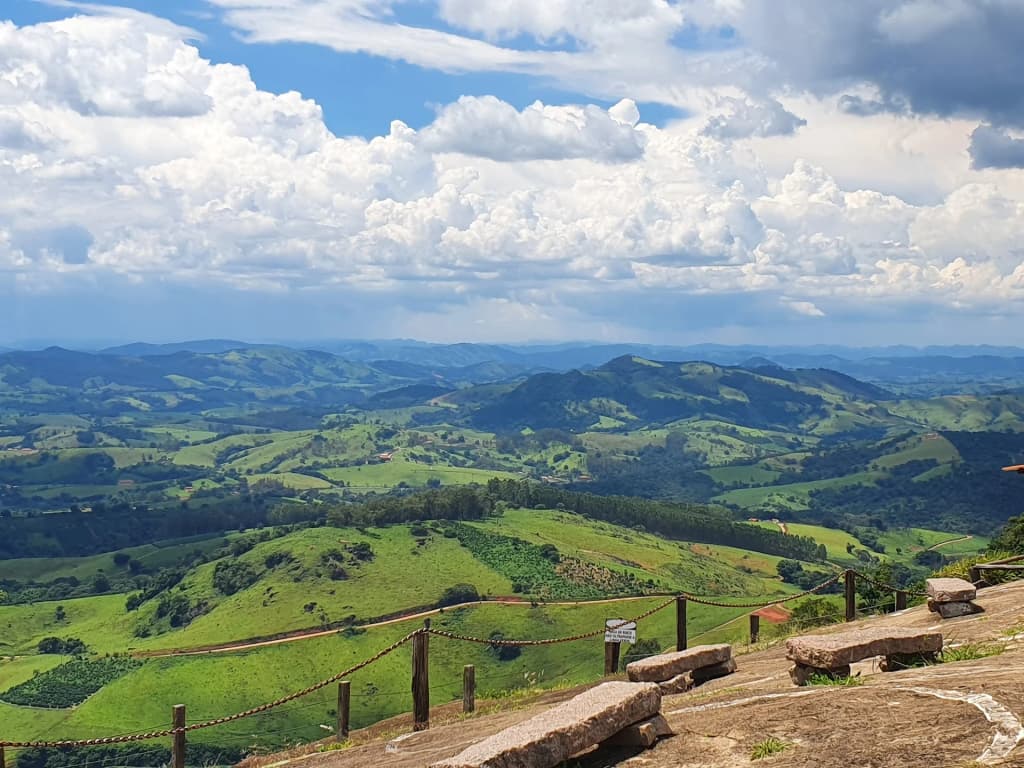
Socorro carries a heavy title: The City of Adventure. It is a place that promises adrenaline, where the brochures are plastered with images of white-water rafting, quad bikes tearing through mud, and zip-lines cutting across the sky. But as I leave the heights of the viewpoint and descend toward the valley the next morning, I find that the town's true rhythm is much more nuanced.
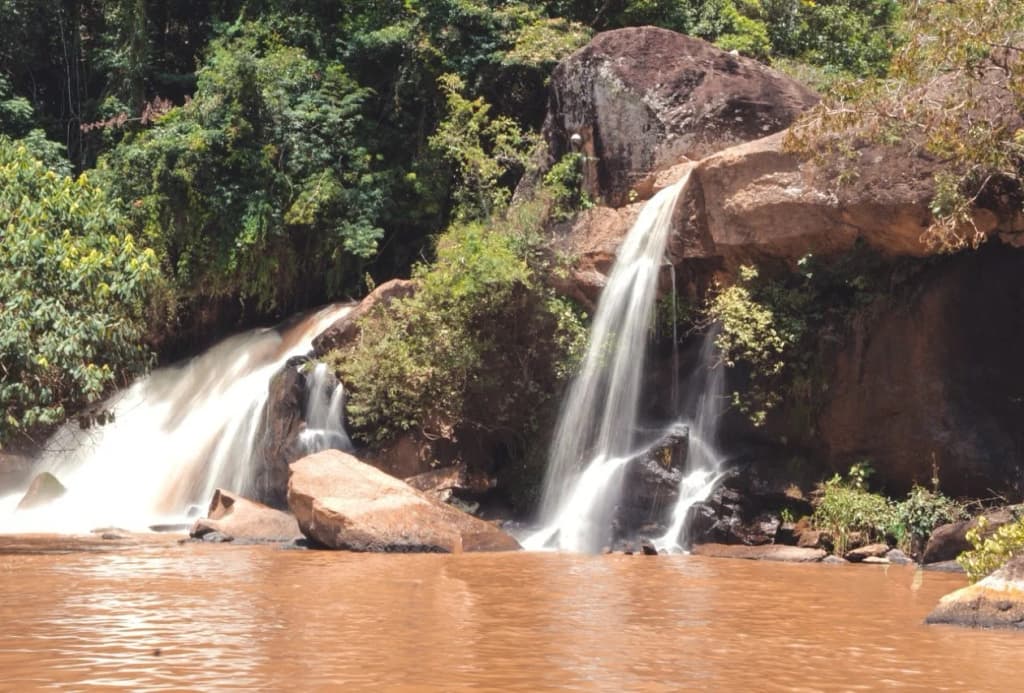
I follow the path of the Rio do Peixe, the main artery of the region. The air down here is heavy with moisture and the scent of damp earth and crushed ferns. Instead of strapping into a raft, I take the walking trail toward the waterfalls. The sound of rushing water grows from a low hum to a deafening roar. At Cachoeira da Prainha, the river slows just enough to form a small, sandy bank, but it is at Cachoeira da Toca where I finally step into the water. The stones are worn impossibly smooth by centuries of current. The water is cold, but not the biting, breath-stealing cold of the high mountains—it is crisp and awakening. I run my hands over the slick granite, feeling the relentless pulse of the river beneath my fingertips.
The physical exertion of the trails leaves a hollow space in my stomach that demands to be filled. I find myself at a rustic restaurant near Parque Auá, a place famous for its regional gastronomy. The air inside is thick with the savory, rich aroma of roasting meat.
"You have to try the costela no bafo," the waiter tells me, wiping down the wooden table with a damp cloth. "It cooks for hours. It falls apart if you just look at it."
He isn't wrong. The ribs arrive glistening, melting instantly on the tongue with a deep, smoky flavor. But it is the appetizer that catches me off guard. The owner, a man named Rogério, has taken the traditional Bahian acarajé—normally a deep-fried black-eyed pea fritter stuffed with shrimp—and reimagined it for the mountains.
"We use tilapia," he explains, stopping by the table to gauge my reaction. "It is perfect for people who come here and have shrimp allergies, but it also just belongs to this region now."
I take a bite. The outside is perfectly crisp, giving way to a soft, flavorful center that tastes entirely unique, yet deeply Brazilian. It is a brilliant adaptation, a nod to tradition while firmly planting its roots in the local soil.
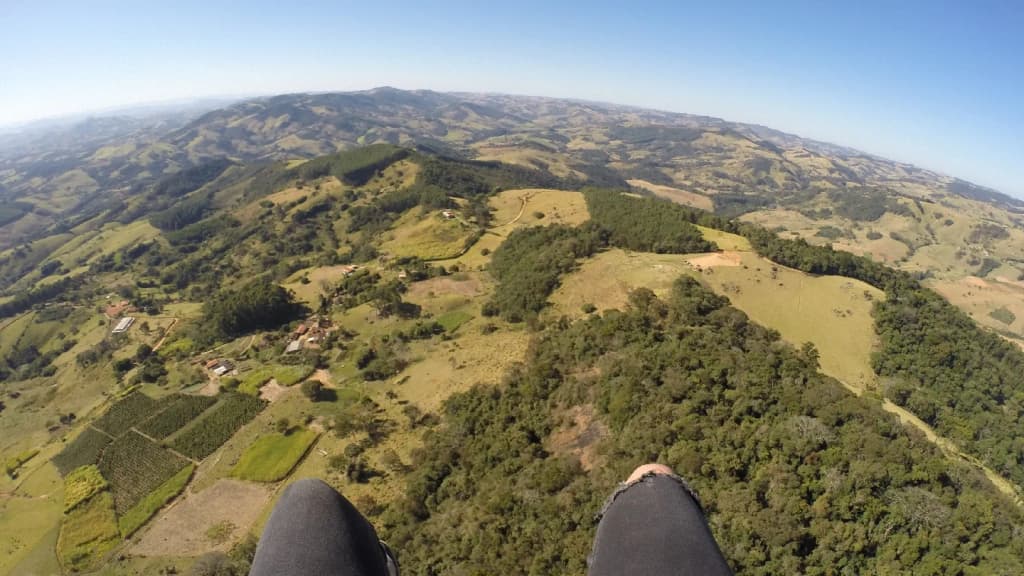
The afternoon brings a stark contrast in altitude and atmosphere. The drive up to Pico do Cascavel—Rattlesnake Peak—is a jarring, steep ascent up a rutted dirt road. By the time I reach the summit, the temperature has dropped significantly. A biting wind whips across the exposed ridge, carrying the scent of dry grass and dust. I had hoped to watch the paragliders launch themselves into the abyss, but the erratic weather has grounded them. Still, standing on the edge of the world, looking out over the vast expanse of the Serra da Mantiqueira, the sheer scale of the landscape is dizzying.
Seeking shelter from the wind, I trade the high peaks for the subterranean quiet of the Gruta do Anjo. I hand over my thirty reais at the entrance—a modest fee that includes a pedal boat ride through the cavern. The grotto is a former quartz quarry, abandoned years ago and slowly reclaimed by nature. Natural springs and rainwater have filled the cavern, creating a subterranean lake of astonishing clarity.
The echo of the squeaking pedal boat bounces off the jagged rock walls. The water below me is a striking blue-green, so clear I can see schools of fish darting through the submerged stone columns. The air inside the cave is cool and smells faintly of wet minerals and moss. It is profoundly quiet in here, a stark departure from the roaring rivers and howling winds outside.
By evening, the rugged edges of the wilderness soften into the warm, illuminated streets of the town center. Socorro has a twenty-seven-year history of knitwear production, and the newly revitalized Feira Permanente de Malhas is humming with activity. I run my hands over the buttery soft sweaters in one of the fifty-plus stalls, the textures a comforting contrast to the rough rocks of the caves.
Dinner is a hearty affair at Di Napoli, an Italian spot where the scent of garlic and rich tomato sauce spills out onto the pavement. I cut into a perfectly cooked medallion of beef accompanied by a creamy risotto, watching through the window as the town prepares for the night.
I end my day walking through the Praça da Matriz. The square is dripping with lights, casting a golden glow over the cobblestones. Families are gathered around, children are laughing, and living statues stand perfectly still, waiting to surprise unsuspecting passersby.
Later, I drive the short distance up to the Mirante do Cristo. Standing beneath the towering statue, I look down at Socorro. The town is a constellation of warm yellow lights resting deep within the dark, imposing silhouette of the mountains. They call this the City of Adventure, and perhaps it is. But as I stand there in the cool night air, listening to the faint hum of life below, I realize that the real thrill of this place isn't found in the speed of the river or the height of the peaks. It is found in the warmth of the fire, the taste of the bread, and the quiet, echoing beauty of the spaces in between.
More Photos
More Adventures
 $40 - $100/day 3-4 days
 Campos do Jordão Itinerary: Budget Guide & Hiking Logistics
Plan a practical trip to Campos do Jordão, Brazil's highest city. Get exact costs for state parks, hiking Pedra do Baú, and budget-friendly dining.
 $50 - $150/day 3-5 days
 Misty Peaks and Wood-Fired Feasts in Visconde de Mauá
Experience the misty mountains of Visconde de Mauá, Brazil. Discover steep trails, cozy rain-lashed cabins, and the rich culinary heritage of Minas Gerais.
 $50 - $150/day 1-2 days
 Conquer the Serra Verde Express: Brazil's Wildest Train
Ditch the tourist traps and ride the Serra Verde Express from Curitiba to Morretes. Discover ticket tips, seating secrets, and the best Barreado.
 $40 - $80/day 3-5 days
 Into the Wild: Surviving Roraima's Macuxi Territory
Skip the tourist traps. Plunge into the raw culture of the Macuxi tribe in Roraima, Brazil. Experience fire-hot stews, sacred rituals, and wild borders.