
Whispers of the Palmetto State: A Sensory South Carolina Journey
Experience the true soul of South Carolina. From Charleston's historic cobblestones to Congaree's silent swamps, immerse yourself in the Palmetto State.
The humidity wraps around you like a damp, heavy quilt the moment you step onto the cobblestones of Charleston's French Quarter. The air here doesn't just sit; it breathes, carrying the scent of salt from the harbor, blooming star jasmine, and centuries-old brick baking in the morning sun. A horse-drawn carriage clatters past, the rhythmic clopping echoing off the pastel-colored antebellum mansions. I duck into a small cafe near the waterfront, seeking a brief refuge from the enveloping South Carolina heat.
The bell above the wooden door jingles, cutting through the low hum of conversation.
"First time in the Lowcountry?" the woman behind the counter asks. It's more of an observation than a question. She pours a tall glass of iced sweet tea that immediately begins to sweat on the dark mahogany counter.
"Is it that obvious?" I reply, wrapping my hands around the icy glass.
She laughs, a warm, easy sound that fills the small space. "It's the way you're looking up at the ceilings and the balconies. Everyone who isn't from here does it. Drink that. It'll help with the heat."
The tea is bracingly cold and unapologetically sugary, a perfect, sharp shock to the system. I leave a five-dollar bill on the counter—more than covering the three-dollar drink—and step back out toward the harbor, just in time to hear the deep, resonant horn of the ferry setting off toward Fort Sumter.
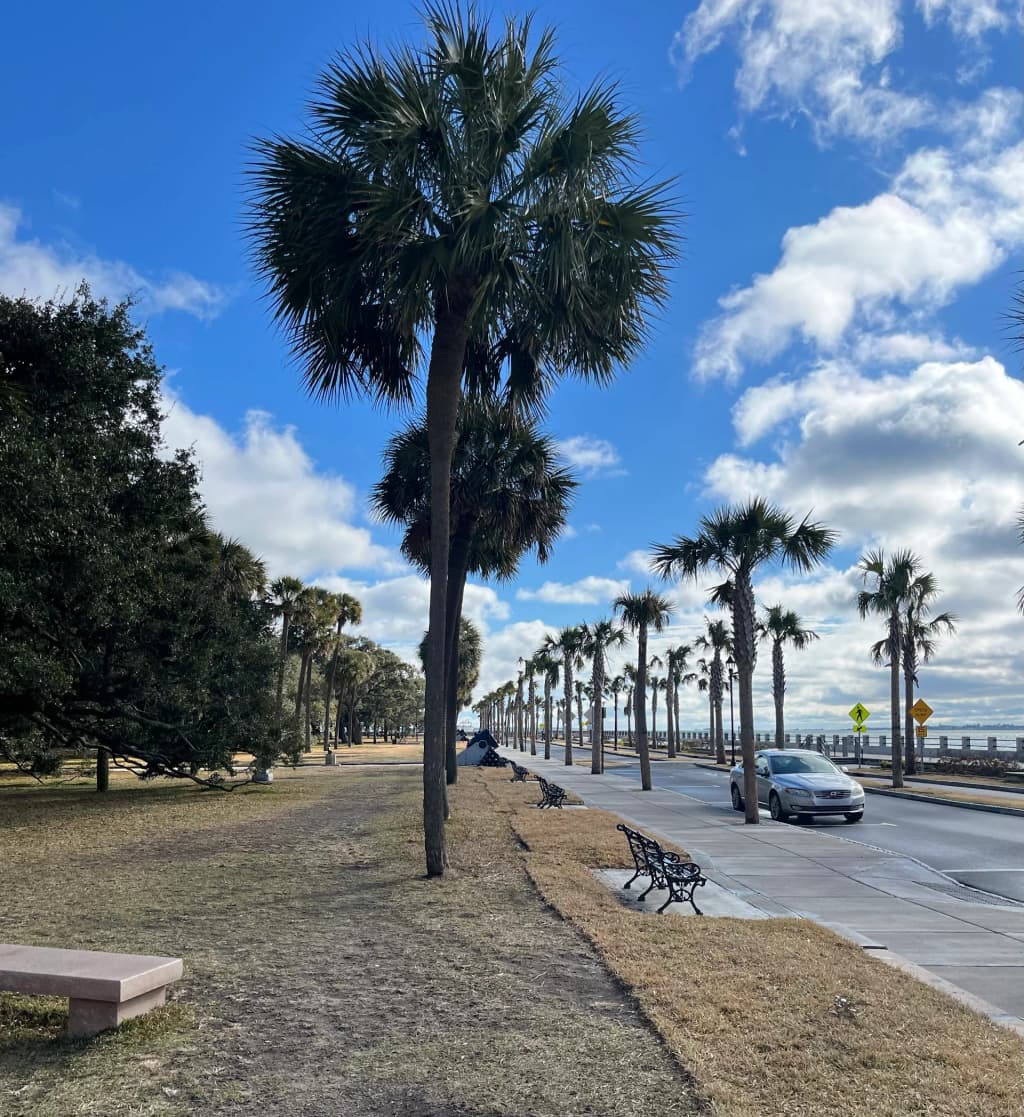
Crossing the iconic, cable-stayed expanse of the Ravenel Bridge, the dense historic skyline of Charleston gives way to the quieter, marshy expanse of Mount Pleasant. The breeze off Shem Creek carries the distinct, earthy tang of pluff mud and the rich aroma of fried shrimp drifting from the waterfront restaurants. Down at Patriot's Point, the massive steel hull of the USS Yorktown looms over the water, a silent, imposing steel giant from the Second World War. Walking its sprawling decks, you can feel the sheer weight of history beneath your boots.
Further down the coast, tucked just off the Intracoastal Waterway, Beaufort waits. Walking through its historic district feels like moving underwater. Ancient oak trees stretch their limbs across the roads, dripping in thick, gray Spanish moss that sways gently in the coastal breeze. I run my fingers along the smooth white columns of an antebellum mansion, feeling the cool, painted wood. Time doesn't just slow down in Beaufort; it stops entirely, held in place by the weight of the humid air and the quiet charm of the South.
Inland, the landscape shifts dramatically. Leaving behind the bustling university streets and the stark civil war monuments of Columbia, the capital city, I drive until the pavement narrows and the trees close in. I arrive at Congaree National Park just as the morning mist is burning off the floodplain.
There is no entrance fee here, no grand gates—just the immediate, overwhelming silence of the largest intact expanse of old-growth bottomland hardwood forest remaining in the southeastern United States. The wooden boardwalk thumps softly under my boots, the only sound for miles save for the sudden, sharp cry of a hawk slicing through the dense, green canopy overhead. I crouch down by the edge of the dark, still water of Cedar Creek. The air smells older here, thick with the scent of rich earth, damp moss, and decaying leaves. I press my palm against the rough, deeply grooved bark of a massive bald cypress tree. Its knobby roots, called knees, poke up from the swamp water like ancient wooden stalagmites. Renting a canoe for the afternoon to paddle this quiet creek feels less like recreation and more like a meditation, sliding silently through a flooded, prehistoric world.
The lowcountry heat finally breaks as the elevation steadily climbs toward the Blue Ridge escarpment. The Upstate feels like a different state entirely. Greenville is a revelation—a modern, progressive pulse beating in the heart of the traditional South. I stand on the curved suspension bridge in Falls Park on the Reedy, watching the massive waterfall crash over the rocks right in the center of the city. The sound is a constant, rushing roar, drowning out the traffic. The air is cooler here, smelling of fresh river water and the roasted coffee spilling from the cafes near the Peace Center theater.
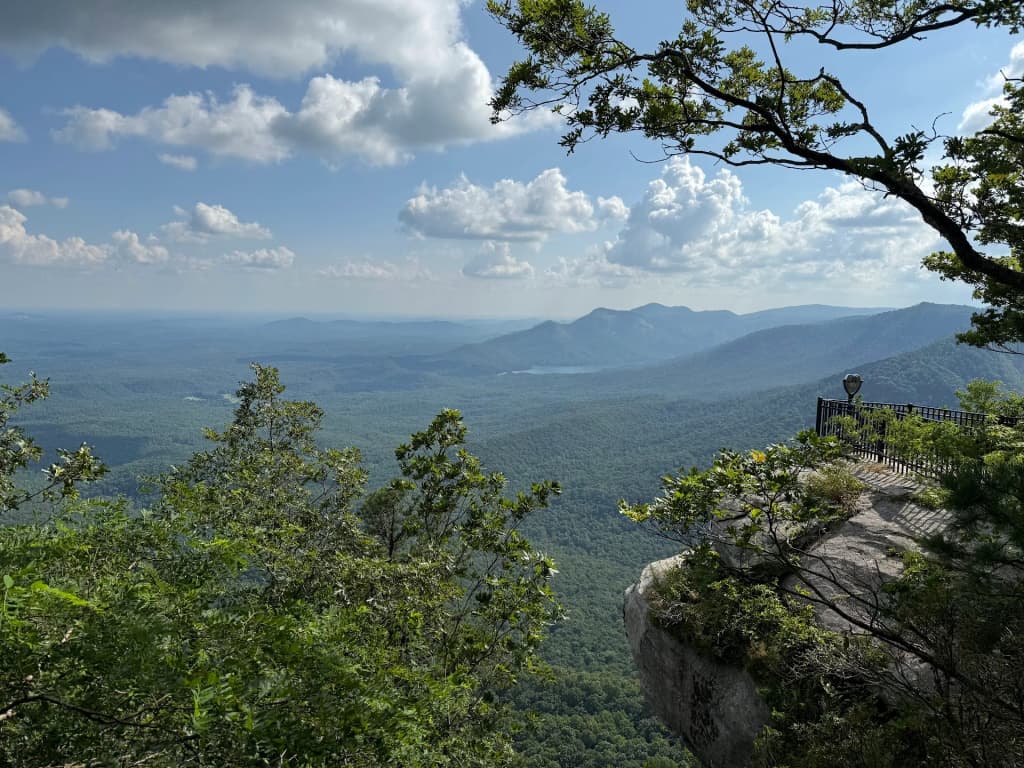
But the true escape lies further up, at Caesar's Head State Park. After paying the modest three-dollar trail fee, I stand at the rocky outcrop, 3,200 feet above the world. The wind is suddenly sharp and biting. It whips through my jacket, a stark contrast to the heavy humidity of the coast. Below, the forested hills tumble away in endless waves of deep green and smoky blue, a vast, unbroken ocean of trees stretching toward neighboring North Carolina.
Yet, the Atlantic always pulls you back. You cannot truly understand South Carolina without surrendering to the rhythm of its tides.
Down in the Grand Strand region, Pawleys Island offers a quiet, upscale retreat. The pristine, white sand dunes roll gently toward the ocean, and the sea breeze carries the clean, sharp scent of salt spray. It is a place of manicured golf courses with unparalleled views of the water right from the tees, where wealth whispers rather than shouts.
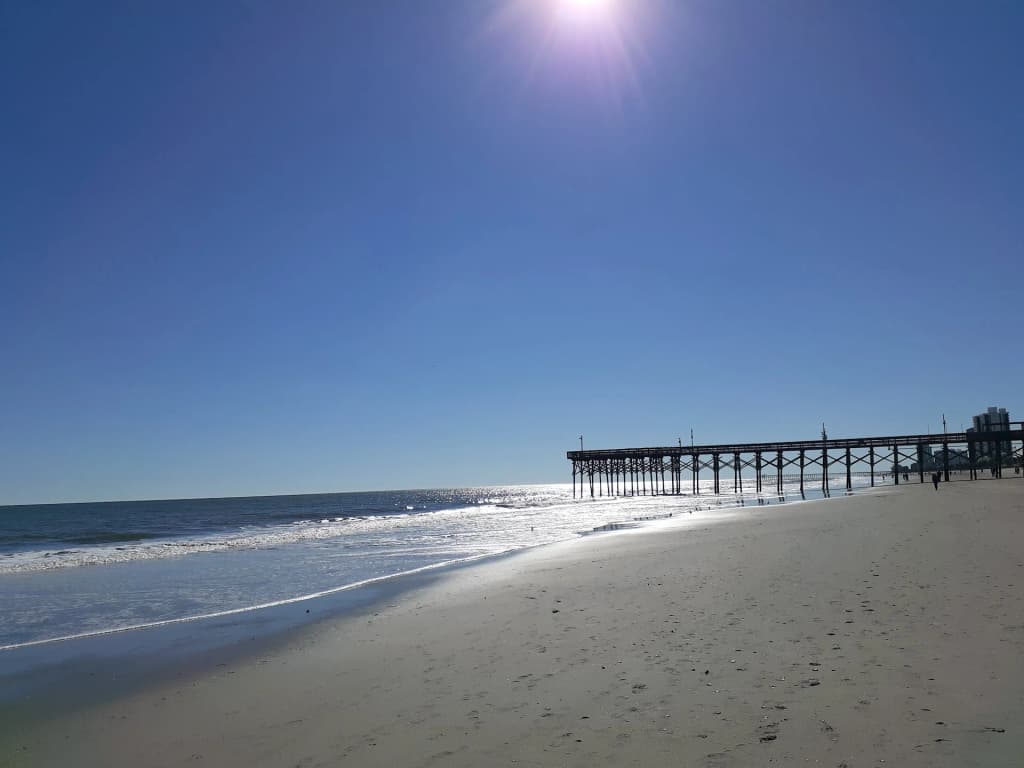
Just a short drive away, Myrtle Beach is an entirely different beast. It is loud, bright, and unapologetically alive. Joining the millions of visitors who flock here annually, I walk the boardwalk as the sun begins to dip. The sensory overload is intoxicating: the neon lights of the arcades buzzing to life, the loud crash of the Atlantic waves, the unmistakable smell of spun sugar, sunscreen, and fried seafood. I grab a spot near the pier, watching the sky turn a bruised purple and bright orange.
The journey ends on Hilton Head Island, a twelve-mile barrier island just north of Savannah. The upscale neighborhood of Harbour Town is quiet as evening approaches. I stand at the edge of the water, the red-and-white striped lighthouse towering behind me. The water slaps gently against the hulls of the docked sailboats.
Suddenly, the smooth gray back of a dolphin breaks the surface of the water just fifty yards out, followed by another. The only sound is the soft exhalation of their blowholes before they slip back beneath the dark waves. I taste the salt on my lips, feeling the lingering warmth of the southern sun on my skin. South Carolina doesn't just show you its beauty; it insists that you feel it, breathe it, and carry it with you long after you've gone.
More Photos

More Adventures
 $120 - $300/day 7-14 days
 Forget the Textbooks: Uncovering Virginia's Wild Side
Think Virginia is just history? Think again. From brutal mountain scrambles to urban whitewater rafting, here is your ultimate adrenaline-fueled guide.
 $100 - $250/day 7-14 days
 Conquer North Carolina: From Mist to Wild Shores
Skip the tourist traps. Discover North Carolina's wild side, from the mist-shrouded peaks of the Smokies to the untamed barrier islands of the Outer Banks.
 $60 - $150/day 5-7 days
 Conquering Florianópolis: A 6-Day Wild Island Escape
Skip the tourist traps in Florianópolis. Discover secret islands, massive sand dunes, and boat-access-only lagoons in this high-octane 6-day Brazil itinerary.
 $60 - $150/day 5-10 days
 Chasing Witches and Wild Coastlines in Florianópolis
Discover the wild soul of Florianópolis, Brazil. A sensory journey through the trails of Lagoinha do Leste, Azorean fishing villages, and Ilha do Campeche.