
Chasing Witches and Wild Coastlines in Florianópolis
Discover the wild soul of Florianópolis, Brazil. A sensory journey through the trails of Lagoinha do Leste, Azorean fishing villages, and Ilha do Campeche.
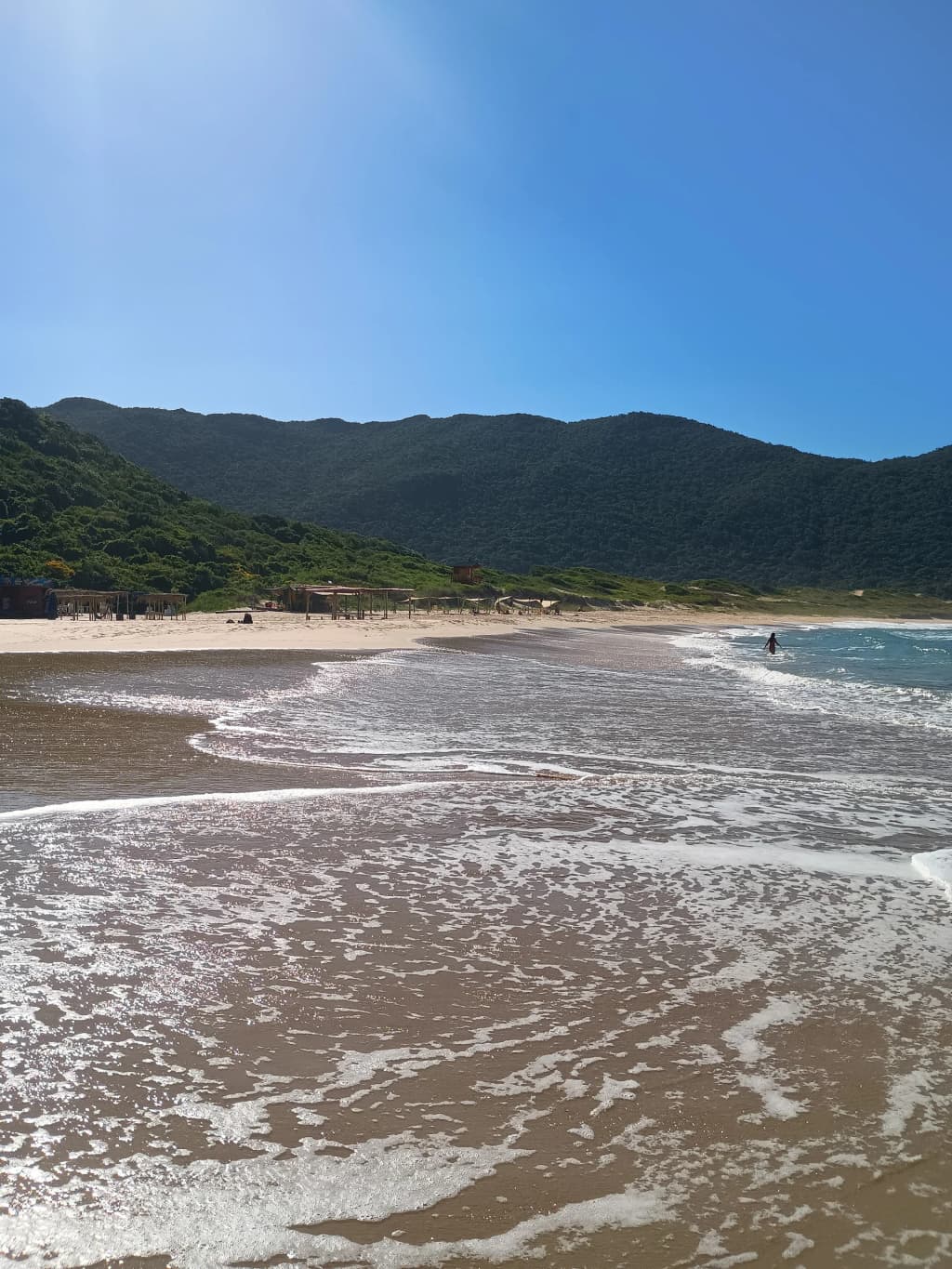
The salt spray hits you even here, high up on the jagged, wind-battered spine of Morro da Coroa. My calves burn with a dull, persistent ache from the two-and-a-half-hour ascent through the dense, humid Atlantic Forest, a trek that started all the way back at the quiet sands of Praia do Matadeiro. The air smells heavily of crushed leaves, damp earth, and an impending rainstorm that never quite breaks, a fragrant perfume that clings to your skin like a second shirt. Below, framed by two towering emerald hills, lies Lagoinha do Leste. It is a perfect crescent of furious white foam and deep, bruised-blue water, utterly devoid of roads, resorts, or beach umbrellas. To reach this isolated stretch of coast, you have to earn it with sweat, packing in your own water and food for the day. The isolation is its own kind of magic, a stark reminder that despite the bustling city to the north, this island still harbors corners of untamed wilderness.
The ancestors who settled this island, the Azoreans, believed Florianópolis was haunted by witches. Walking through the narrow, cobbled streets of Santo Antônio de Lisboa and Ribeirão da Ilha, you can almost understand why. The pastel-colored colonial houses glow with an eerie, golden luminescence as the sun dips low over the calm western bay. I sit at a small, slightly wobbly wooden table outside a waterside restaurant, listening to the rhythmic slosh of the tide against the stone retaining wall. The scent of garlic, cilantro, and fresh ocean brine wafts from the open kitchen windows, mingling with the sharp tang of cheap, cold beer.
"You eat them raw or grilled?" asks an older man, his face deeply lined from decades of harsh sun and salt wind. He is wiping down the adjacent table with a damp cloth, wearing a faded blue fishing shirt that looks as old as the cobblestones.
"I'll take your recommendation," I tell him, leaning back in the plastic chair.
He nods approvingly, a slow, knowing gesture. "Grilled with garlic. Our oysters are the best in Brazil. The water here is sweet, you see. It changes everything."
He brings the plate out ten minutes later, the shells still sizzling. The taste is an absolute revelation—plump, smoky, melting on the tongue with a rich, buttery finish. You can easily spend the entire afternoon here, losing track of the hours as the sky turns from a bruised purple to a deep, velvety black, the distant lights of the mainland flickering to life across the bay.
According to local lore, a witch named Conceição fell desperately in love with an indigenous man named Peri. Forbidden by the other witches to be together, Peri was transformed into a lagoon in the south, while Conceição wept so bitterly that her endless tears formed Lagoa da Conceição. Today, this massive salt-water lagoon is the beating heart of the island's eastern shore. The wind howls gently over the rippling water, carrying the distant, joyous laughter of paddle-boarders and the sharp, rhythmic clatter of skateboards from the nearby LayBack park.
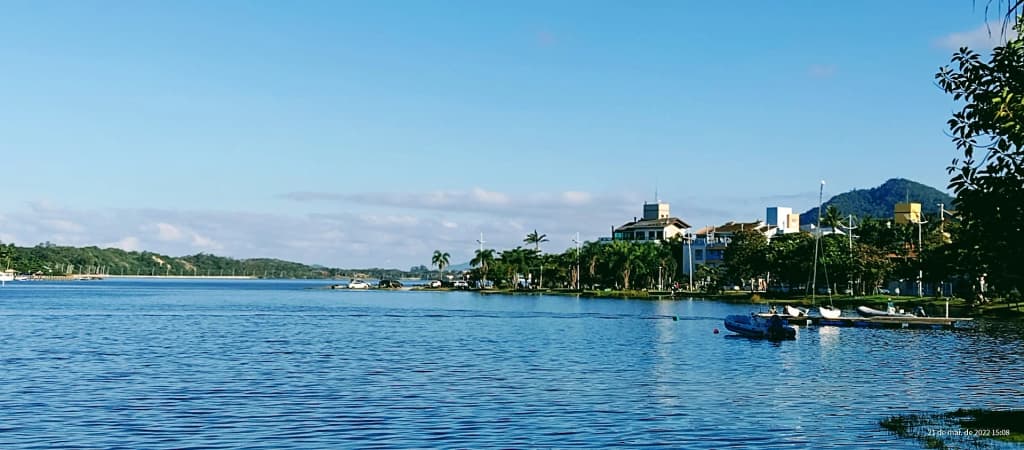
Renting a car is almost mandatory on this island. The distances are vast, and the traffic, especially in the sweltering height of summer, demands a saint's patience. But once you finally park near the lagoon's centrinho, everything slows down to a comfortable walking pace. I wander down Avenida das Rendeiras, where the smell of frying fish and sweet, earthy açai bowls mingles with the exhaust of passing motorcycles. The energy here is electric, a beautiful collision of different tribes: surfers with bleached, salt-stiffened hair, bohemian artists selling handmade silver jewelry on woven blankets, and families carrying heavy coolers to the grassy water's edge.
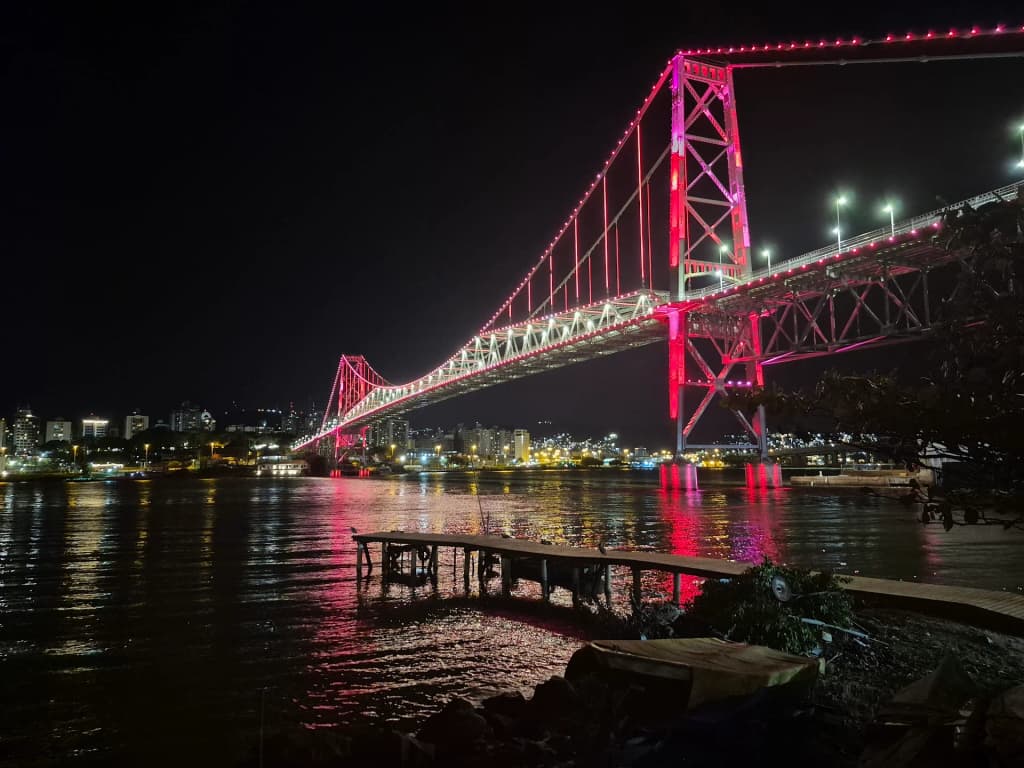
The iron lattice of the Hercílio Luz Bridge hums beneath my feet, a low, steady vibration you can feel in your teeth. For over thirty years, this monumental structure connecting the island to the mainland was closed, standing as a decaying ghost of Florianópolis's past. Now, fully restored and painted a brilliant, structural black, it serves as a bustling artery. On weekends, the cars are mercifully banished, leaving the vast expanse of asphalt to pedestrians, cyclists, and wandering musicians.
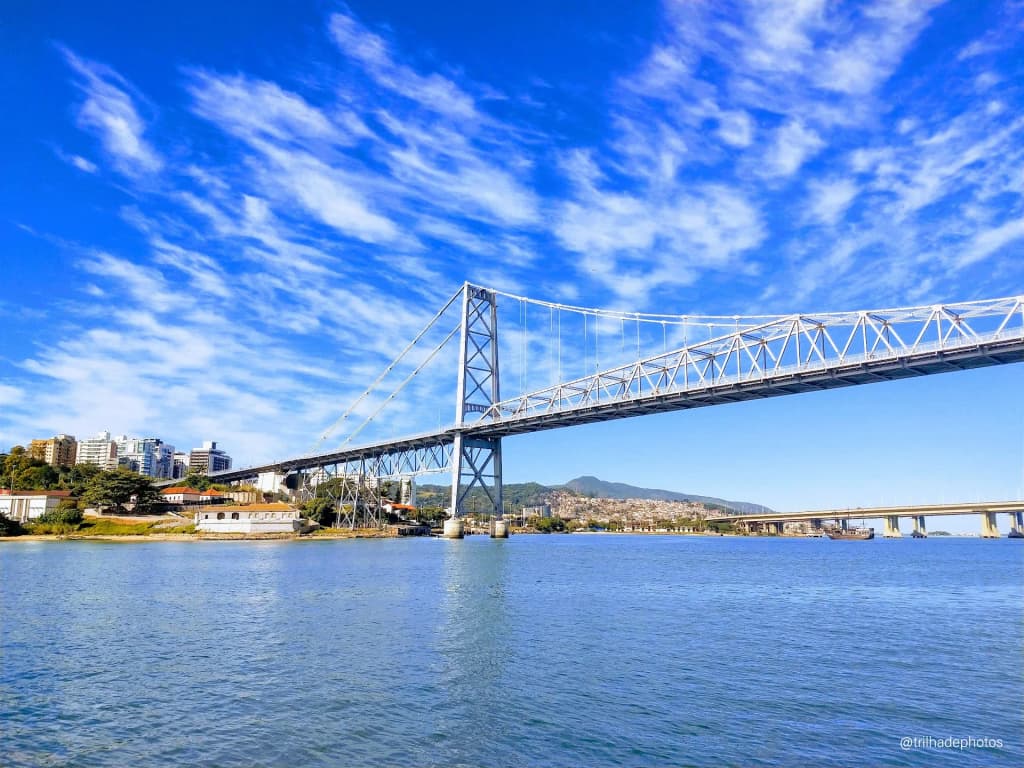
I walk across the massive suspension bridge just as the city lights begin to flicker on, casting shimmering, distorted reflections across the black water of the bay below. The wind here is sharper, colder than on the sheltered beaches. You can hear the low murmur of conversations in Portuguese, Spanish, and English blending into a steady cosmopolitan hum. This bridge is the anchor of the city center, a short, brisk walk from the historic public market where, earlier in the day, I stood shoulder-to-shoulder with locals at the famous Box 32, eating a shatteringly crisp shrimp pastel. The contrast between the wild, witch-haunted beaches of the south and this towering feat of 1920s engineering is jarring, yet it perfectly encapsulates the island's dual nature.
The boat engine cuts out abruptly, and suddenly, the only sound is the gentle lap of water against the fiberglass hull. We have sailed about a mile and a half from the main coast, paying the hundred and twenty reais for the passage—a price that feels like an absolute steal the moment you look over the side. The water surrounding Ilha do Campeche is a shocking, translucent turquoise. It is the kind of impossible clarity that makes the boats look as though they are levitating above the ribbed white sand below.
Wading ashore at Praia da Enseada, the fine sand squeaks audibly beneath my bare feet, a strange, delightful sound. The air is thick with the sweet smell of sunscreen and the clean scent of the open ocean. You have to watch your belongings closely here, not because of pickpockets, but because of the brazen local coatis. These small, raccoon-like creatures emerge from the dense brush with zero fear, happily unzipping an unattended backpack for a forgotten sandwich. I spend the afternoon floating weightless in the glassy water, staring up at the dense, emerald jungle that covers the interior of the island. There are ancient rock inscriptions hidden deep in those trees, thousands of years old, but the pull of the cool ocean is simply too strong to leave the water.
The day finally ends at Praia Mole. The name translates to "soft beach," and as my feet sink deep into the powdery, yielding sand, the reason is obvious. The waves here are violent and beautiful, crashing with a concussive boom that vibrates deep in your chest. Surfers dot the lineup, tiny black silhouettes bobbing patiently against a fiery, bruised-orange horizon.
I sit on the sand, wrapping a damp towel around my shoulders as the evening chill finally sets in, raising goosebumps on my arms. The island of magic, they call it. You come to Florianópolis expecting just another Brazilian beach destination, a place of cheap caipirinhas, thumping resort clubs, and sunburns. But what you find instead is a place that refuses to be just one thing. It is Azorean history and indigenous legend, untouched wilderness and bustling urban life. As the last sliver of the sun dips below the rugged hills, painting the sky in violent shades of pink and gold, the magic feels entirely real. You don't just visit this island. You let it cast its spell on you.
More Photos
More Adventures
 $150 - $350/day 7-14 days
 Where the Water Meets the Woods: A Michigan Journey
Experience Michigan's contrasting landscapes, from the artistic streets of Detroit to the towering dunes and wild shores of the Great Lakes on this road trip.
 $150 - $400/day 5-10 days
 Ditch the Textbook: Conquer the Wild Side of Massachusetts
Think you know Massachusetts? Think again. From the rugged peaks of the Berkshires to the untamed shores of Cape Cod, it's time to conquer the Bay State.
 $40 - $150/day 14-21 days
 Chasing Dragons and Lanterns: A Sensory Journey Through Vietnam
Experience the sensory magic of Vietnam, from the chaotic streets of Hanoi to the emerald karsts of Halong Bay and the quiet waterways of the Mekong Delta.
 $100 - $250/day 10-14 days
 Beyond the Cobblestones: A Sensory Journey Through Portugal
Experience Portugal through its deepest sensory details, from the smoky, fado-filled alleys of Lisbon to the misty palaces of Sintra and the volcanic Azores.