
Where the Water Meets the Woods: A Michigan Journey
Experience Michigan's contrasting landscapes, from the artistic streets of Detroit to the towering dunes and wild shores of the Great Lakes on this road trip.
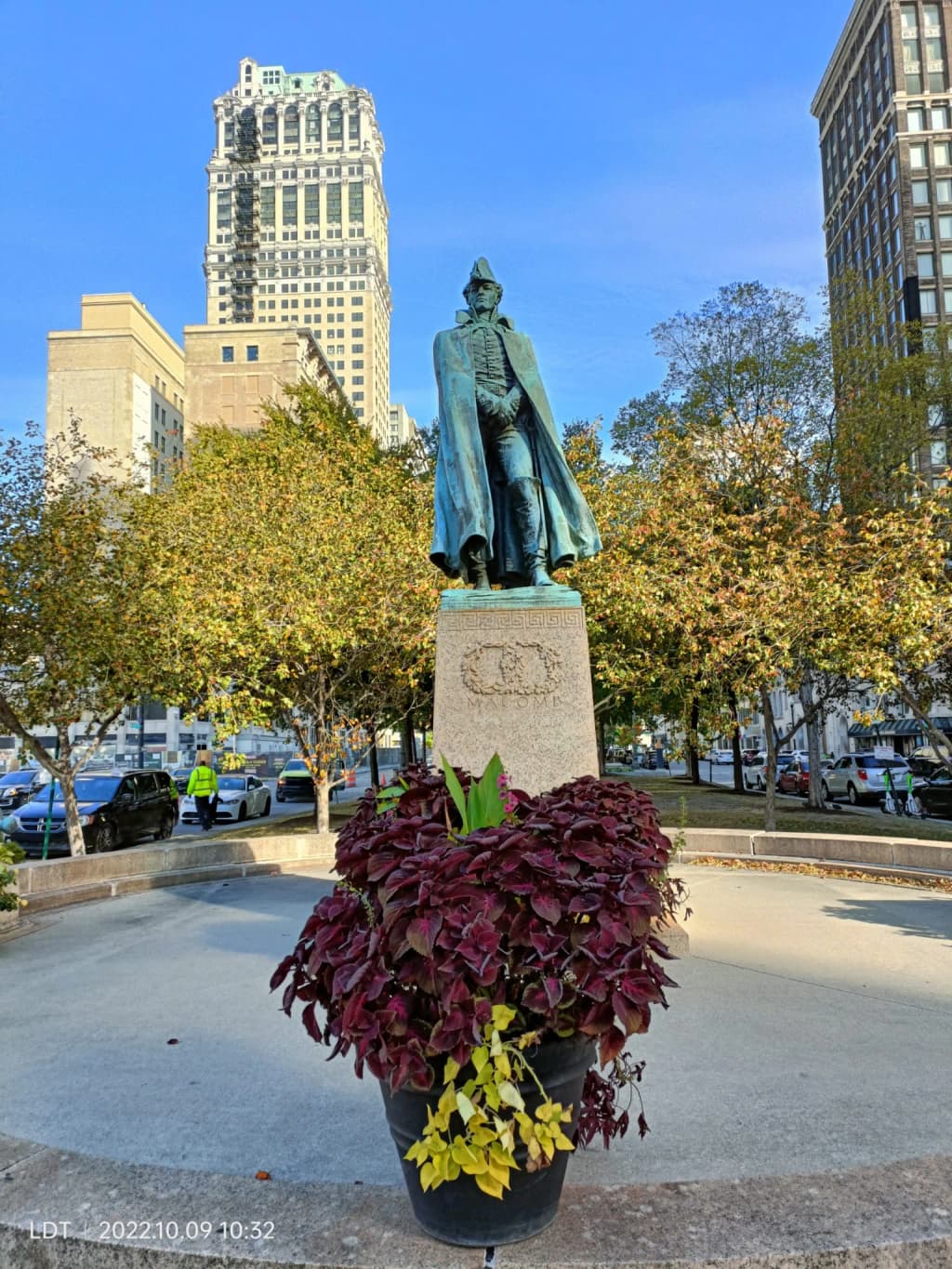
The espresso machine hisses, sending a thick plume of steam up toward the vaulted ceiling of what used to be a derelict bank on Griswold Street. Now, it is a sanctuary of exposed brick, roasted beans, and quiet conversations in downtown Detroit. I wrap my hands around a warm ceramic mug, watching the morning rain streak down the massive Art Deco windows. The city outside is waking up, shaking off the lingering shadows of its past. "People gave up on us for a long time," the barista, Elias, says, wiping down the marble counter with a slow, deliberate rhythm. "But the roots were always here. You just had to wait for the spring." He slides a warm blueberry scone onto a small porcelain plate. Detroit feels exactly like that—a revival forged in steel and soul. Outside, the skyscraper-dotted streets hum with a new kind of energy. I step out just as the heavy wooden doors to the nearby Detroit Institute of Arts are being unlocked for their nine o'clock opening, the fourteen-dollar admission feeling trivial the moment I stand beneath Diego Rivera's towering industry murals. The air smells of wet asphalt and roasting coffee, a gritty, beautiful perfume of a city that refuses to be forgotten.
Leaving the industrial poetry of Detroit behind, the landscape softens as I drive west along Interstate 96. Forty-five minutes out, the frantic pace of the city dissolves into the pedestrian-friendly, tree-lined streets of Ann Arbor. The university town pulses with a youthful, artistic energy. Students lounge on manicured lawns, and the scent of old paper and fresh autumn air drifts from the open doors of independent bookstores along State Street. Further west, the Grand River cuts through Grand Rapids, a city that has traded its historic title as a furniture-making capital for a new crown in the craft brewery scene. I spend an afternoon wandering through the Heritage Hill district, running my hands along the cold wrought-iron fences of magnificent Victorian and Prairie-style homes. Later, in a dimly lit microbrewery downtown, a local brewer pours me a hazy IPA that tastes of pine and citrus. "We build things here," she tells me, leaning over the wooden bar over the din of clinking glasses. "Used to be chairs and tables. Now it's community and beer."
The air shifts entirely when I reach the shores of Lake Michigan. The breeze carries the unmistakable scent of fresh water, damp sand, and dune grass. In the coastal towns of Saugatuck and Holland, life slows to the rhythm of the waves. Saugatuck, a former lumber port turned art colony, feels like a quiet secret kept by the locals. I wander past unusual storefronts and waterfront restaurants, the Kalamazoo River glittering under the midday sun. By late afternoon, I am sitting on the soft, powdery sand of Oval Beach, watching the sky erupt into psychedelic shades of magenta and gold as the sun dips below the horizon. Just up the coast in Holland, the architectural echoes of Dutch immigrants stand proud against the shoreline. Even outside of the busy May tulip festivals or the charming December Christmas markets, the windmill-dotted gardens and historic downtown exude a quiet, old-world warmth that makes you want to linger over a second cup of coffee.
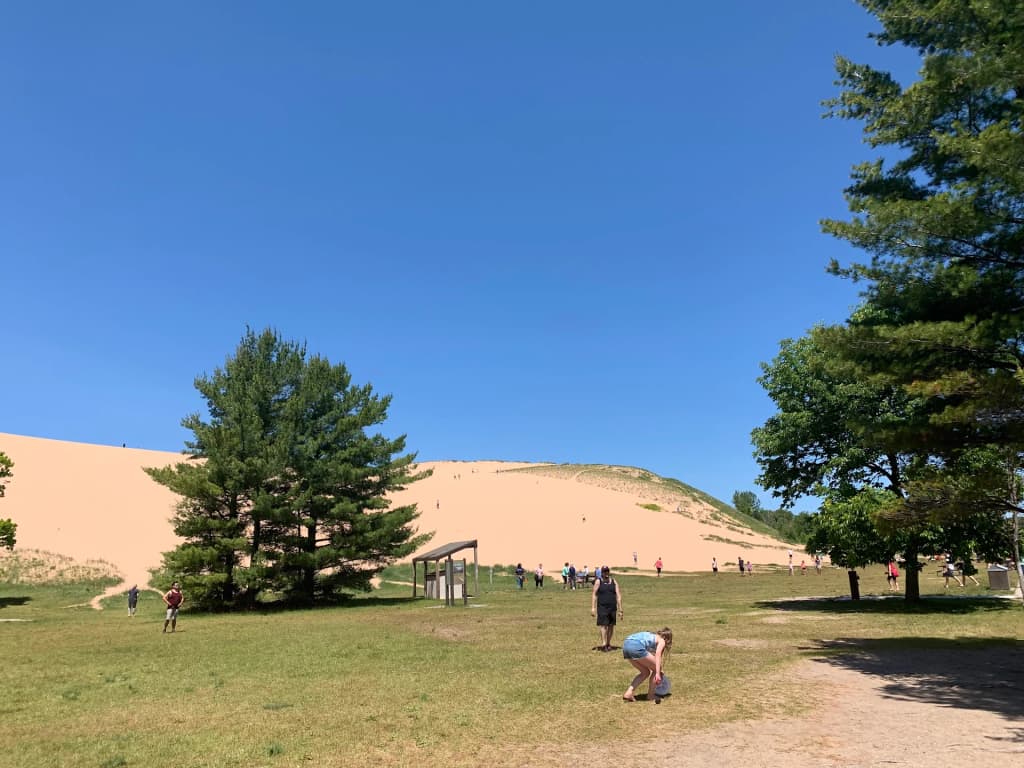
Heading north toward the tip of the lower peninsula, the road winds through dense forests and sprawling orchards. Traverse City sits quietly at the end of the long, natural harbor of Grand Traverse Bay. The landscape here is a patchwork of deep blue water and rolling vineyards. I stop at a winery on the Old Mission Peninsula, tasting a crisp Riesling that holds the chill of the northern climate. But the true masterpiece of this region lies just to the west. The sand shifts endlessly beneath my boots, a relentless climb that burns the calves but promises the world at the summit. When I finally crest the 450-foot bluff at Sleeping Bear Dunes National Lakeshore, having paid the twenty-five dollar vehicle entrance fee earlier that morning, the breath leaves my lungs entirely. It isn't just the exertion; it is the sheer, impossible expanse of Lake Michigan stretching out like an ocean, its waters a shocking, Caribbean blue. The wind howls in my ears, whipping fine grains of sand against my cheeks. I follow the Heritage Trail through the dense forest, emerging at spectacular viewpoints that make you feel incredibly small in the best possible way.
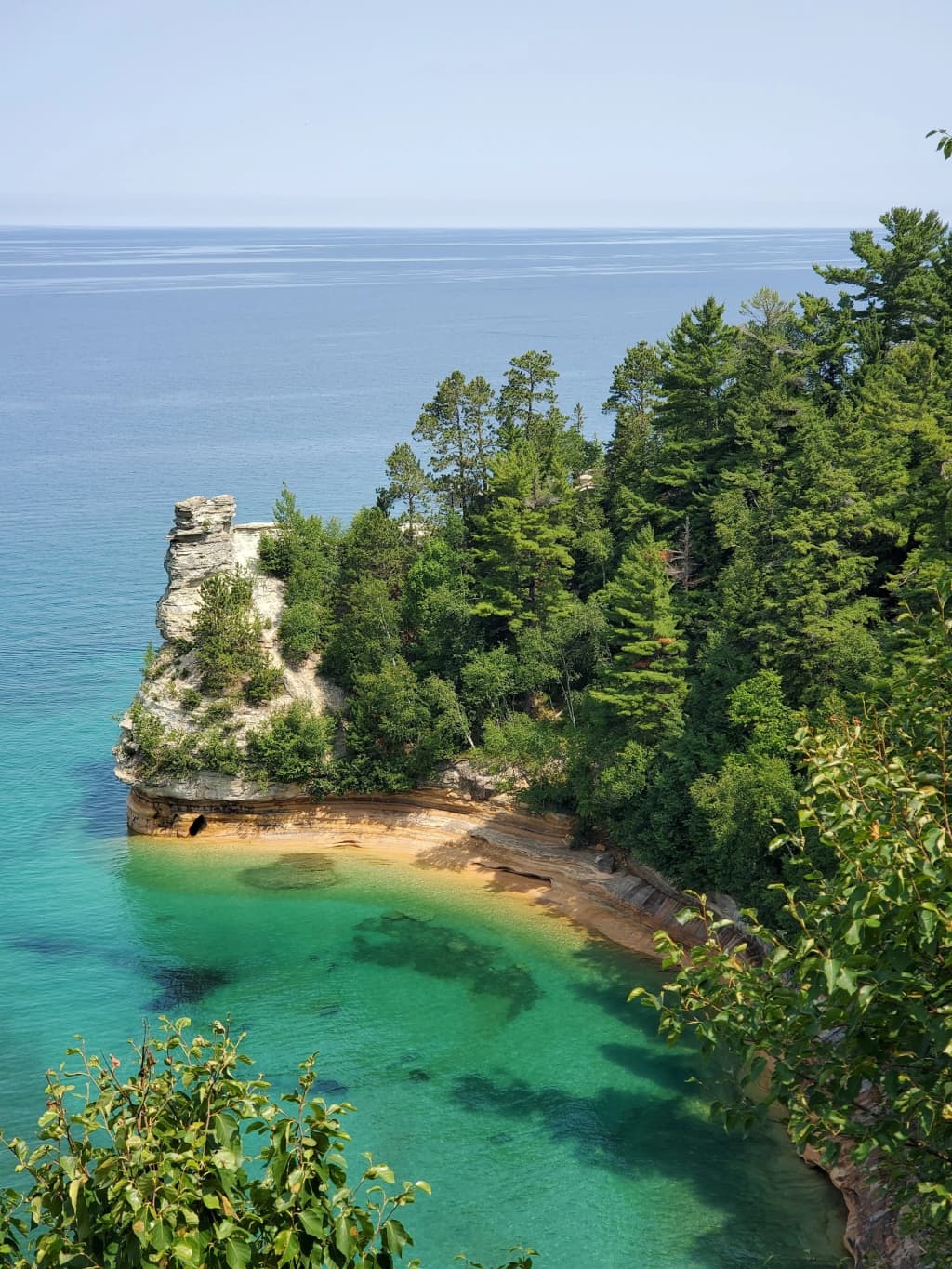
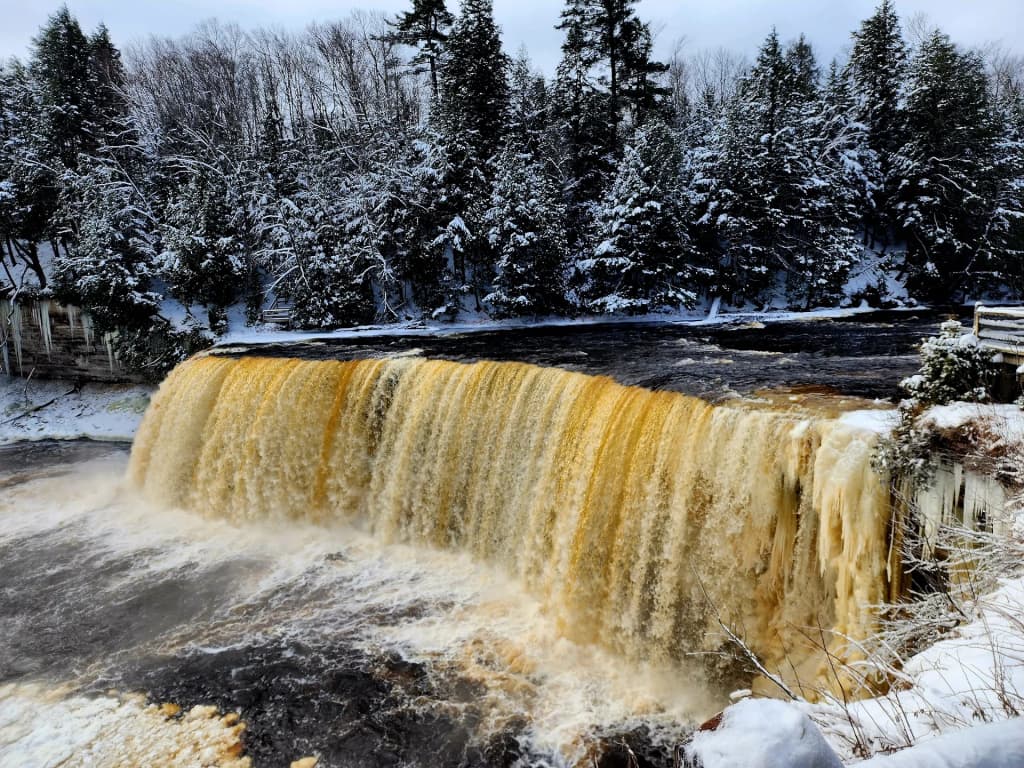
Crossing the Mackinac Bridge into the Upper Peninsula feels like entering a different country. The air is sharper here, biting and wild. I am paddling a sea kayak along the forty-two-mile stretch of Pictured Rocks National Lakeshore, the deep waters of Lake Superior so incredibly clear I can see smooth, glacial stones fifty feet below the surface. Above me tower the massive sandstone cliffs. Mineral stains bleed down the rock faces in striking streaks of iron-red, copper-green, and manganese-black—a natural canvas oxidized by time and water. The rhythmic splash of my paddle echoes off the rock walls, bouncing around natural landmarks like Miners Castle and Chapel Rock. "Superior doesn't forgive," my guide calls out from the kayak ahead of me, his voice carrying over the vast, cold water. "But she sure does put on a show." Later, deep in the untouched woodlands of Tahquamenon Falls State Park, I feel the thunderous vibration of the river before I see it. The upper falls plunge forty-eight feet over a steep overhang, the water tinted a rich, deep amber from the tannins of cedar swamps upstream. It roars into the basin below, sending a cool mist into the dense canopy of towering trees.
The rhythmic clip-clop of horseshoes on pavement replaces the hum of engines, a sound that instantly rewires your internal clock. Mackinac Island doesn't just preserve the past; it demands you live in it. Stepping off the thirty-dollar ferry onto the car-free island in Lake Huron, the scent of churning fudge and blooming lilacs drifts from the Victorian storefronts. A horse-drawn carriage rattles past, the driver tipping his hat to a couple strolling along the historic pavement. I spend the afternoon wandering the streets, admiring the grand architecture and the sweeping porches of cozy bed and breakfasts. As evening falls, I lean against the wooden railing of the harbor. The water laps gently against the stone breakwater, a rhythmic, soothing sound that fills the absence of traffic. There is a profound stillness in a place without cars, a quiet that settles deep into your bones. The sky bruises purple over the vast expanse of the Great Lakes, and as the cool evening breeze washes over the island, I realize I am in absolutely no rush to leave.
More Photos
More Adventures
 $150 - $400/day 5-10 days
 Ditch the Textbook: Conquer the Wild Side of Massachusetts
Think you know Massachusetts? Think again. From the rugged peaks of the Berkshires to the untamed shores of Cape Cod, it's time to conquer the Bay State.
 $40 - $150/day 14-21 days
 Chasing Dragons and Lanterns: A Sensory Journey Through Vietnam
Experience the sensory magic of Vietnam, from the chaotic streets of Hanoi to the emerald karsts of Halong Bay and the quiet waterways of the Mekong Delta.
 $150 - $400/day 7-21 days
 Conquer America: The Ultimate Wild State-by-State Adventure
Think you know the US? Think again. From Alaska's glaciers to Arizona's canyons, discover the raw, untamed side of America that demands to be explored.
 $150 - $350/day 7-14 days
 Beyond the Turnpike: A Sensory Journey Across Pennsylvania
Experience Pennsylvania through a sensory lens, from the sizzling food carts of Philadelphia and Gettysburg's solemn fields to the reborn steel of Pittsburgh.