
Chasing Dragons and Lanterns: A Sensory Journey Through Vietnam
Experience the sensory magic of Vietnam, from the chaotic streets of Hanoi to the emerald karsts of Halong Bay and the quiet waterways of the Mekong Delta.
The scent hits you before you even fully comprehend the chaos. A thick, intoxicating perfume of roasted pork, star anise, exhaust fumes, and damp pavement. Hanoi does not ease you in; it swallows you whole. Motorbikes swarm like angry hornets through the narrow arteries of the Old Quarter, their horns creating a relentless, pulsing symphony. I press myself against the peeling yellow plaster of a French colonial building to let a woman balancing two impossibly heavy baskets of rambutans pass. She doesn't even break her stride.
"You're walking too fast," an old woman calls out from a low plastic stool. Her hands are deftly folding rice paper around seasoned pork, dropping them into a blackened wok of popping oil.
"I'm just trying to see it all," I tell her, wiping the heavy, humid sweat from my forehead.
She laughs, a dry, raspy sound that barely carries over the sizzle of the oil and the roar of the street. "Vietnam is not a place you see, my friend. It is a place you feel. Sit down. Eat."
I drop onto a red plastic stool that feels meant for a child. For roughly a dollar and a half, she slides a plate of crispy nem cua be—crab spring rolls—in front of me. The crunch gives way to an explosion of savory, ocean-salty warmth. She is right. You don't just observe this country; you consume it, and it consumes you.
Leaving the manic energy of the capital behind, the journey north into the mountains feels like stepping through a portal. Booking a sleeper cabin on the overnight train to Sapa costs about forty dollars, a small price to pay for waking up to a world painted entirely in impossible shades of green. The air up here in the remote northwest is thin and cool, a sharp contrast to the suffocating heat of the lowlands.
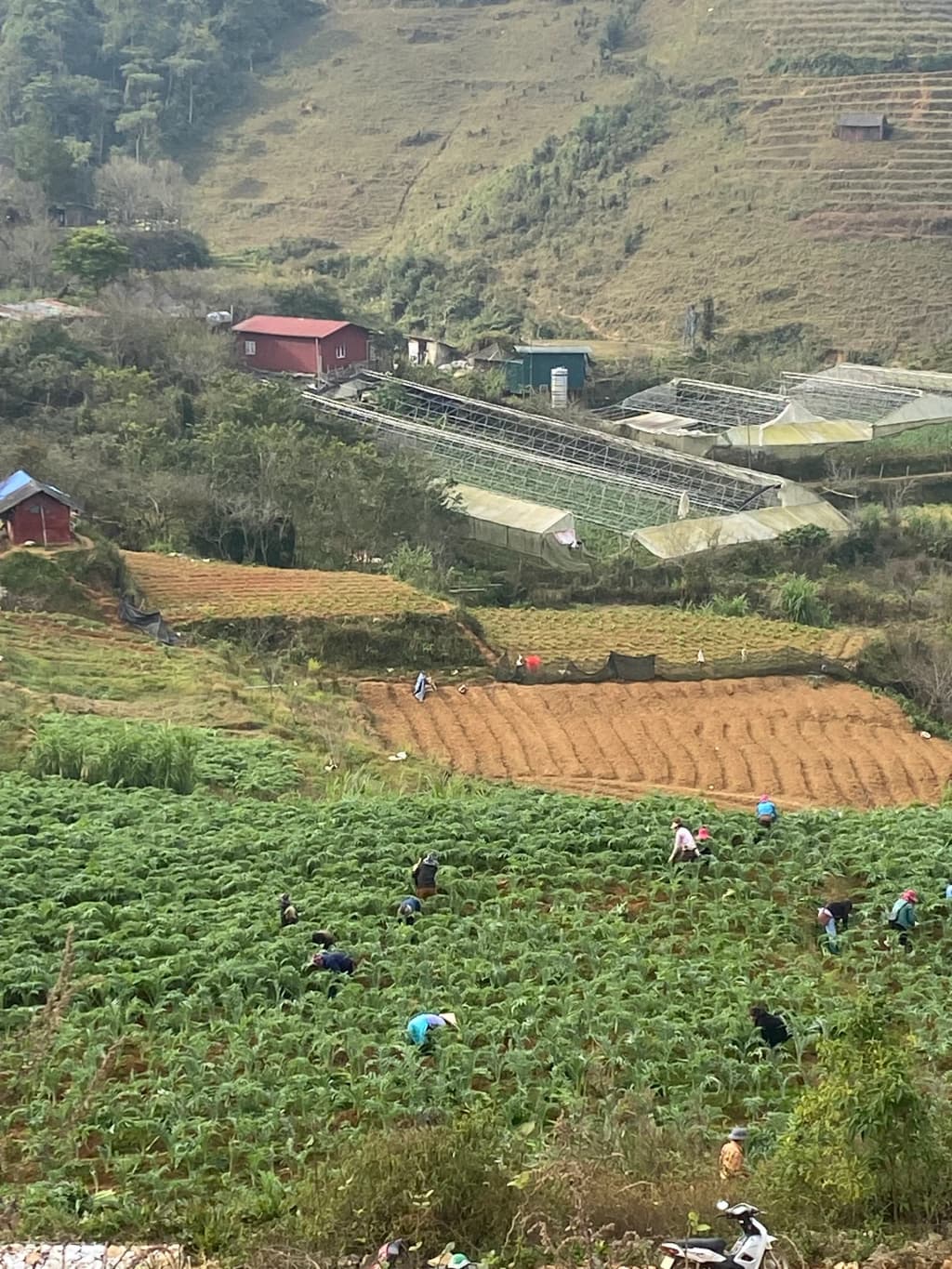
Mist clings to the jagged peaks, rolling down into the valleys where terraced rice paddies cascade like giant, emerald staircases. I spend the morning walking the narrow dirt paths between the paddies, the mud squelching beneath my boots. Women from the local Hmong tribes, their hands stained blue from indigo dye, walk alongside me, their silver jewelry clinking softly with each step. The smell here is pure earth—wet soil, crushed grass, and woodsmoke drifting from remote villages. It is a landscape that demands silence and reverence.
That same sense of awe translates to the water when you reach the Gulf of Tonkin. Halong Bay translates to 'descending dragons,' and as our wooden junk boat cuts through the jade-colored water, it is easy to see why. Thousands of limestone karsts jut violently from the sea, their peaks crowned with dense, impenetrable jungle.
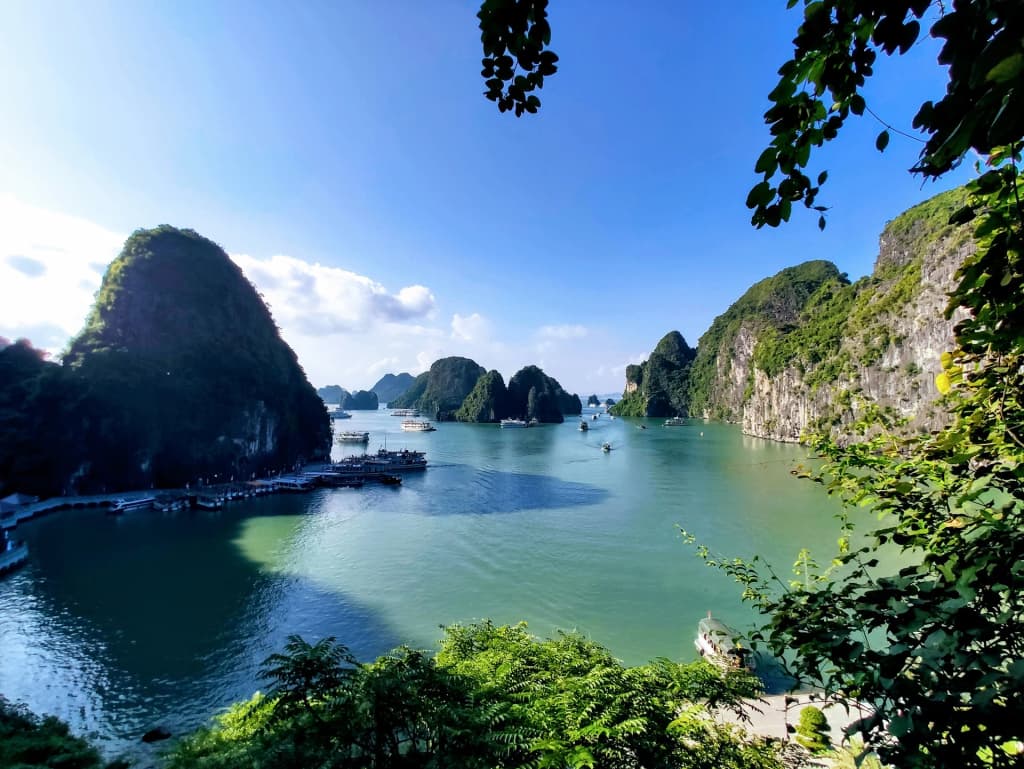
The boat rocks gently as we drop anchor in a quiet cove. A day cruise will cost you anywhere from fifty to a hundred dollars, including a feast of freshly caught squid and morning glory sautéed in garlic. I dive off the side of the boat, the water shocking and cool against my sun-baked skin. Floating on my back, tasting the sharp brine on my lips and looking up at the 400-million-year-old rock formations towering above me, the scale of Vietnam’s natural history feels deeply humbling.
Moving south down the narrow spine of the country, the landscape shifts again. The central region is the historical heart of Vietnam, where the ghosts of empires still linger. In Hue, situated on the languid banks of the Perfume River, the Imperial Citadel stands as a sprawling monument to the Nguyen dynasty. The entrance fee is a mere two hundred thousand dong—less than ten dollars—to wander through grand palaces and ornate temples that echo with centuries of royal whispers. The air smells of jasmine incense and old stone.
But it is Hoi An, just down the coast, that captures the imagination completely. Once a bustling trading port of the Champa Kingdom, the Old Town is a labyrinth of narrow, winding lanes dating back two thousand years.
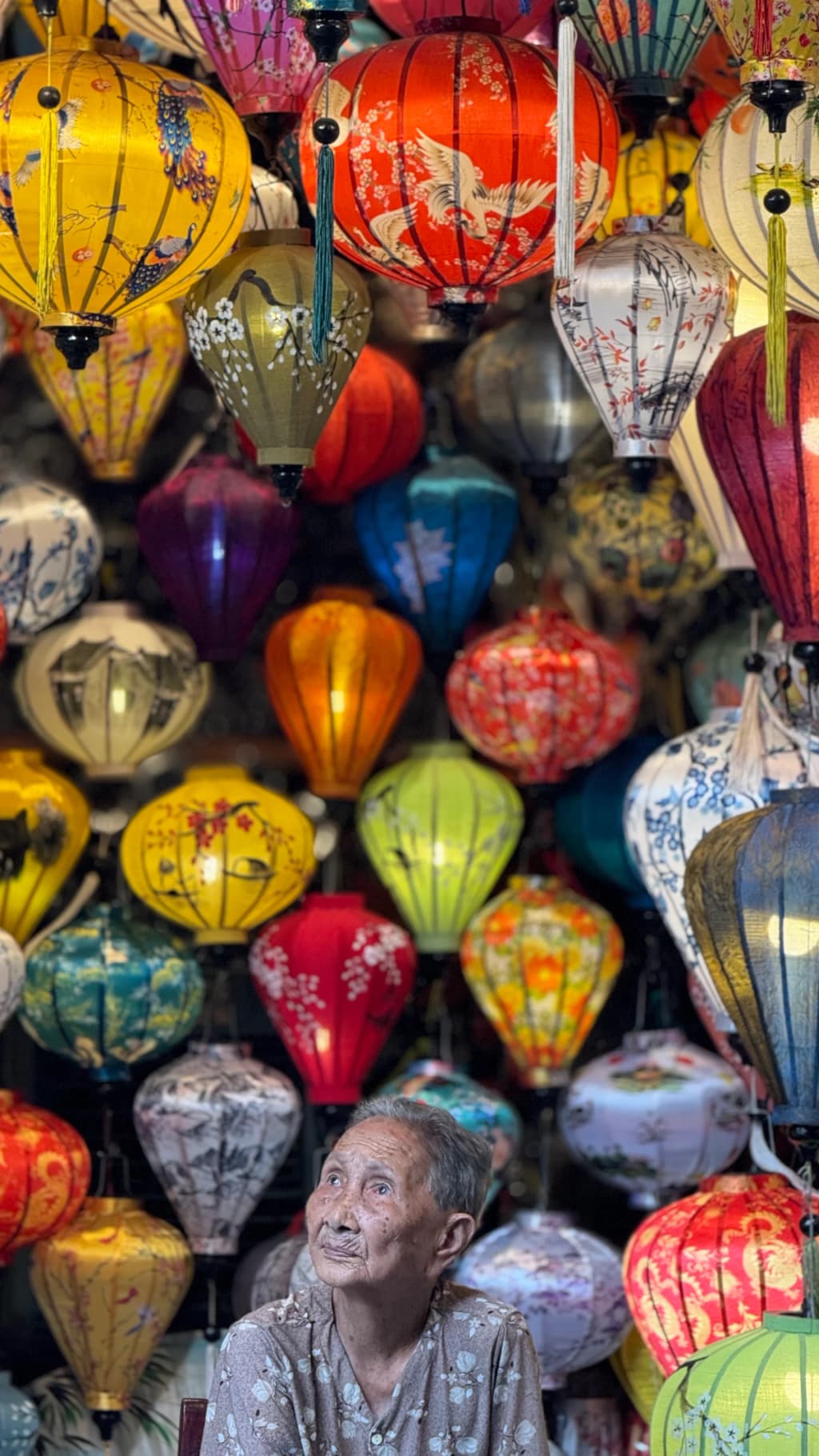
As dusk falls, the town transforms. Motorized vehicles are banned in the historic center, replacing the roar of engines with the soft shuffle of footsteps and the gentle hum of conversation. Thousands of silk lanterns illuminate the mustard-yellow facades of traditional wooden merchant houses, casting a warm, kaleidoscopic glow over the Thu Bon River. I duck into one of the hundreds of tailor shops that line the streets. The scent of raw silk and chalk dust fills the room. Within minutes, a tape measure is whipped around my shoulders, and by tomorrow afternoon, I will have a custom-made linen suit for a fraction of what it would cost back home.
The deep south pulls you back into the modern century with the gravitational force of Ho Chi Minh City. Formerly Saigon, this sprawling metropolis is the economic engine of a reunified Vietnam. It is a city of staggering heights and dizzying ground-level chaos. I spend hours wandering the grounds of the Reunification Palace, the very spot where tanks crashed through the gates to end the Vietnam War. The history here is heavy, palpable, yet the city itself is relentlessly forward-looking.
To escape the concrete, you only need to travel a few hours southwest into the Mekong Delta. Known as Vietnam’s Rice Basket, this vast agricultural region is a fertile maze of canals, streams, and mangrove forests. Renting a small wooden rowboat, I let a local guide navigate the narrow waterways.
The rhythmic splash of the oars is hypnotic. We pass floating markets where boats overflow with pineapples, coconuts, and rambutan, the vendors tossing fruit to one another across the water. The air is thick with humidity and the sweet, decaying smell of ripe fruit and river mud.
As the sun begins to set, casting long, golden shadows across the water, the chaotic symphony of the country finally softens to a quiet hum. I trail my hand in the warm, murky water of the Mekong. The old woman in Hanoi was right. I am not just seeing the lush paddies, the ancient limestone giants, or the glowing lanterns. I am feeling the pulse of a country that breathes, shifts, and sings in a language entirely its own.
More Photos

More Adventures
 $150 - $350/day 7-14 days
 Where the Water Meets the Woods: A Michigan Journey
Experience Michigan's contrasting landscapes, from the artistic streets of Detroit to the towering dunes and wild shores of the Great Lakes on this road trip.
 $150 - $400/day 5-10 days
 Ditch the Textbook: Conquer the Wild Side of Massachusetts
Think you know Massachusetts? Think again. From the rugged peaks of the Berkshires to the untamed shores of Cape Cod, it's time to conquer the Bay State.
 $60 - $150/day 4-7 days
 Fortaleza Unleashed: The Ultimate High-Octane Coastal Guide
Skip the resort chairs. Discover Fortaleza's towering red cliffs, high-speed dune buggy rides, and relentless kitesurfing winds. Get ready to sweat.
 $150 - $350/day 7-14 days
 Beyond the Turnpike: A Sensory Journey Across Pennsylvania
Experience Pennsylvania through a sensory lens, from the sizzling food carts of Philadelphia and Gettysburg's solemn fields to the reborn steel of Pittsburgh.