
The Sydney Sprint: Fast Crosswalks and Laid-Back Rhythms
Experience the delightful contradictions of Sydney travel culture. From ridiculously fast crosswalks to laid-back slang, discover the real rhythm of the city.
The frantic, high-pitched ticking starts before my brain even registers the need to move. Tick-tick-tick-tick. It sounds less like a traffic signal and more like a metronome set to panic mode. The pedestrian light across the intersection flashes a brilliant, glowing green, but almost the very second my boot leaves the curb, it shifts to an angry, flashing red. Around me, a wave of commuters in sharp wool suits and casual wrinkled linen surges forward, treating the crosswalk like the final stretch of a fifty-meter dash. The air smells heavily of roasted espresso from an unseen cafe, undercut by the faint, metallic tang of city exhaust. The humid heat of the afternoon presses against my skin as I break into a light jog just to keep up with the crowd.
"You've got to run, mate," a man says, matching my hurried pace. He is balancing a cardboard tray of four coffees and doesn't even break a sweat. "It's the Sydney sprint."
I catch my breath on the opposite pavement, feeling the concrete radiating warmth through my soles. "Is it always this fast?"
He laughs, adjusting his dark sunglasses against the glare. "Always. Keeps us in shape. Plus, the police will slap you with a heavy fine for jaywalking if you don't make it or if you cross outside the lines. Welcome to Australia."
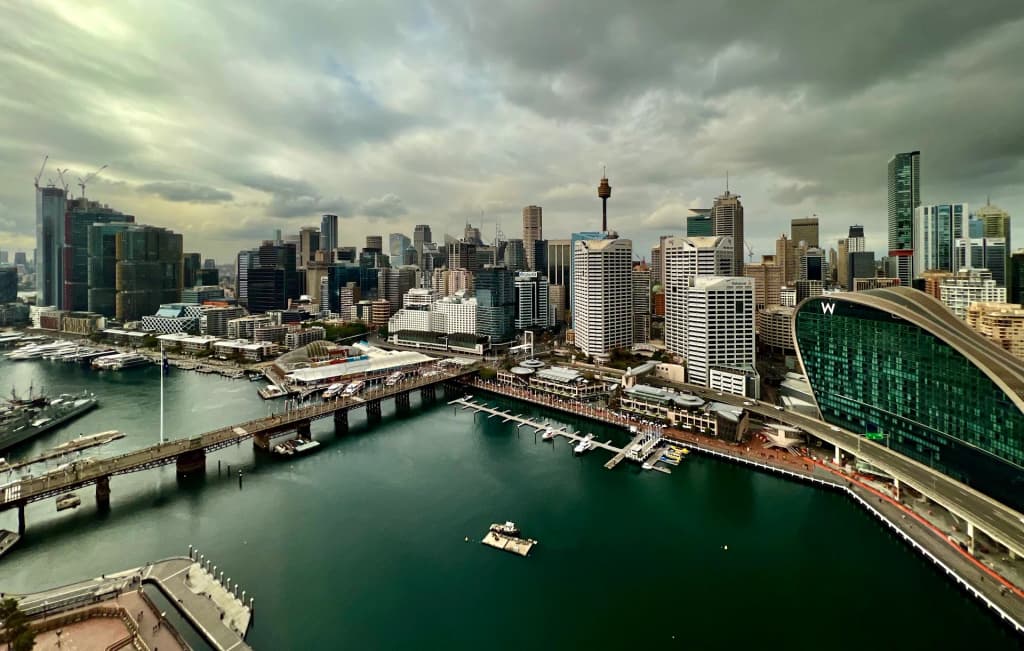
It is the first of many delightful contradictions I find in this sun-drenched coastal metropolis. We are told globally that Australians are the undisputed masters of the laid-back lifestyle, yet their traffic lights demand the cardiovascular fitness of a professional athlete. I spend the rest of the afternoon walking through the Central Business District, feeling the pulse of a city that is simultaneously rushing and entirely at ease.
The blast of air conditioning inside the neighborhood supermarket is a welcome, icy shock to the system. I wander the brightly lit aisles, listening to the soft, mechanical hum of the refrigeration units and the distinct squeak of my rubber soles on polished linoleum. I am simply looking for a bottle of wine to take back to my room for the evening, scanning endless shelves of olive oil, fresh produce, and baked goods. Nothing resembles a liquor aisle.
I find a clerk stocking shelves—a young woman with a messy bun and a green name tag that reads Chloe.
"Excuse me," I say, feeling suddenly out of place amidst the mundane domesticity of evening grocery shopping. "Where is the wine aisle?"
She looks up, offering a sympathetic smile. "You're not from around here, are you?"
"Is it that obvious?"
"A bit," she chuckles, tossing a box of tea onto the top shelf. "We don't sell alcohol in supermarkets here. You have to go to a bottle shop—a bottle-o. There's a specialized liquor store about two blocks down on the corner."
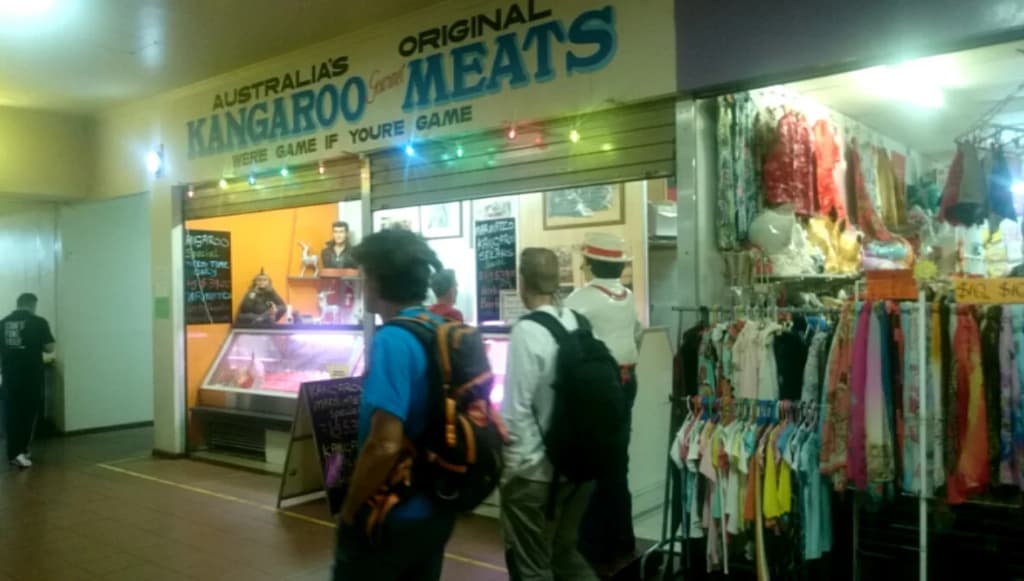
I thank her and turn to leave, but my eye catches a display in the meat section. Beneath the harsh fluorescent lights, wrapped neatly in plastic and resting on styrofoam trays, are deep, crimson cuts of meat. I lean in closer, squinting at the label. It is kangaroo. In Australia, the national emblem isn't just standing proudly on the coat of arms; it is marinating in garlic and rosemary in the local grocery store. It is wildly lean, remarkably cheap, and completely commonplace. I don't buy the meat, but the sheer normalcy of it—sitting right there next to the beef mince and chicken breasts—leaves me smiling at the beautiful strangeness of travel.
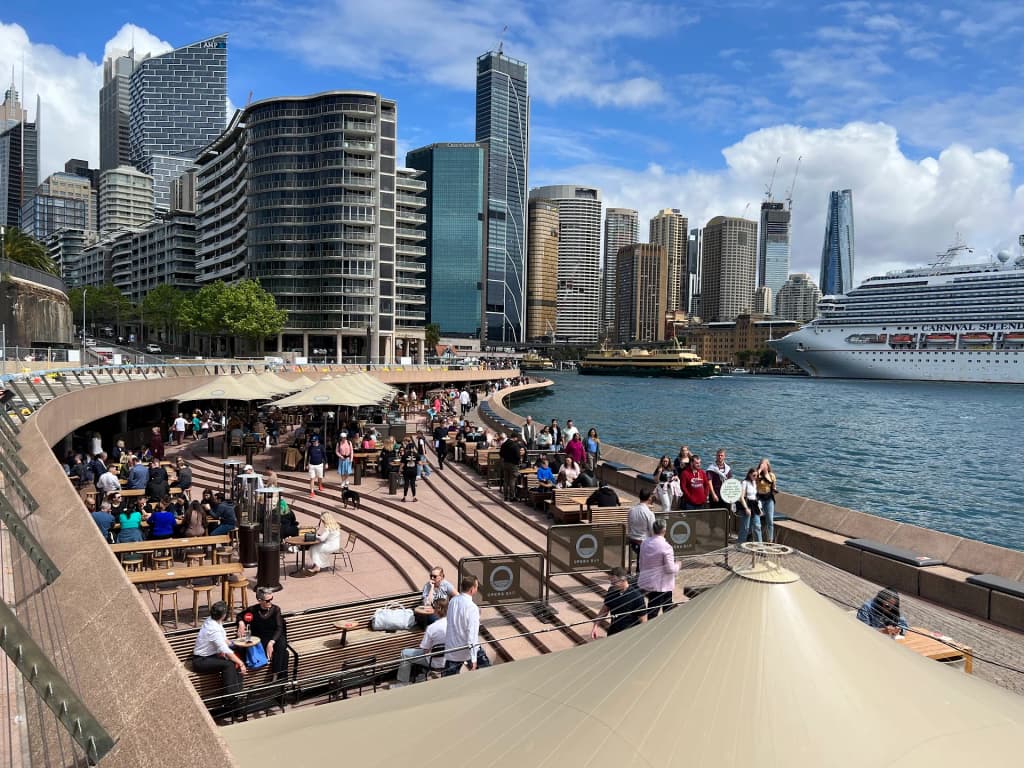
Later, walking along the harbor, the salty breeze of the Pacific washes over the concrete edges of the city. The water glints like crushed diamonds under the late afternoon sun, boats bobbing in the gentle swell. It is hard to reconcile this gleaming, affluent paradise with its dark, muddy origins. Sydney, the most populous city in the country, was born as a prison. It was a dumping ground for the unwanted and the condemned of the British Empire.
There is a profound irony in the way history folds back on itself here. The nation's very first police force was actually formed by convicts—prisoners who had exhibited good behavior were given badges and authority over their peers. Perhaps that deep-rooted history of rebellion and authority is why the rules here today feel so stark against the backdrop of paradise.
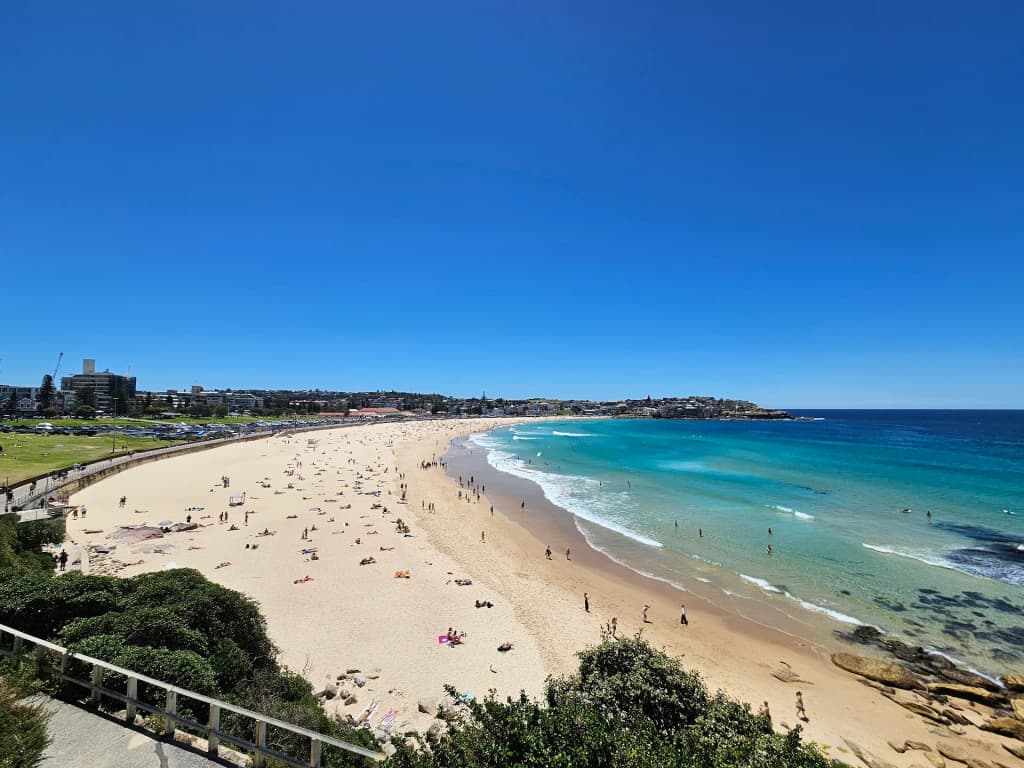
I take a bus out to the coast, watching the dense architecture melt into the golden crescent of the shoreline. The sand is powder-soft beneath my bare feet, squeaking slightly with each step. The rhythmic crashing of the waves fills my ears, a hypnotic, thunderous sound that instantly lowers my heart rate. But even here, in this temple of leisure, the rules apply. You cannot drink alcohol in public places. No cold beers on the beach, no wine in the parks. The wild spirit of the convict colony has been thoroughly tamed by municipal bylaws.
But if the laws are strict, the language is gloriously lazy. I sit at a corner cafe the next morning, the smell of roasting coffee beans and toasted sourdough filling the warm morning air. I order a flat white, tasting the rich, velvety micro-foam that Australian baristas have perfected into an absolute art form. The ceramic cup warms my palms as I watch the morning rush unfold.
Listening to the chatter around me is like tuning into a slightly different frequency of English. Every word that can possibly be shortened, is. A barbecue is a Barbie. Sunglasses are sunnies. The meal I am currently eating is brekkie. Even the global monolith of McDonald's is affectionately reduced to Maccas. It is an entire lexicon designed to save time and effort, a linguistic reflection of a people who refuse to take themselves too seriously. And interestingly, this casual nature is paired with a fierce progressive streak; I learn over my brekkie that Australia was the very first independent nation to allow women the right to vote. They are casual in their speech, but they are forward-moving in their actions.
My final hours in Sydney are spent in the sterile, echoing halls of the international airport. The sharp scent of duty-free perfume mixes with the lingering, salty smell of fast food. Speaking of Maccas, the McDonald's here in the terminal is unlike any I have ever seen. The kitchen is housed entirely in a glass box suspended above the counter. I stand there, mesmerized, watching burgers and fries travel down to the cashiers on a transparent, mechanical conveyor belt. It is futuristic, highly efficient, and wonderfully absurd.
I turn my attention to the massive electronic departure boards to check my gate. Amidst the endless scrolling lists of global destinations, flight numbers, and rigid boarding times, there is a small, blinking message at the very bottom of the screen. Where you might expect a severe security warning or a strict boarding instruction, the digital yellow letters simply read: Relax.
I let out a slow breath, feeling the tension drop from my shoulders. I think about the frantic crosswalks, the kangaroo steaks sitting under fluorescent lights, the convict cops, and the strict beachside rules. Sydney is a city that makes you sprint to cross the street, only to tell you to relax once you finally get to where you are going. It makes perfect, beautiful sense.
More Photos
More Adventures
 $100 - $350/day 2-4 days
 Conquer Lima: The Ultimate Peru Coastal Capital Guide
Think Lima is just a stopover? Think again. Experience Miraflores cliffside views, pre-Inca history, and the best culinary scene in South America.
 $50 - $150/day 5-10 days
 Finding the Rhythm of Bahia: From Porto Seguro to Trancoso
Experience the sensory magic of Brazil's Costa do Descobrimento, from the chaotic nightlife of Porto Seguro to the barefoot luxury of Trancoso's beaches.
 $70 - $150/day 10-15 days
 Portugal Beyond Lisbon: 6 Epic Destinations You Can't Ignore
Skip the tourist traps. Discover Portugal's raw extremes, from chilling bone chapels to volcanic islands and dramatic coastlines. Your ultimate adventure guide.
 $75 - $250/day 7-14 days
 The Ultimate Month-by-Month International Travel Guide
Stop gambling with your PTO. Discover the exact best (and worst) international destinations for every month of the year to optimize budget and weather.