
Toledo After Sunset: Finding the Soul of Spain's Ancient Capital
Experience the quiet magic of Toledo, Spain. Beyond the crowded day trips lies an affordable city of three cultures, historic tavernas, and evening stillness.
The incline burns your calves before the true scale of the city even registers. I am walking up, up, up from the magnificent Moorish Revival railway station, leaving behind the sleek modern world that brought me here. Just thirty minutes ago, I was sitting on a high-speed train gliding out of Madrid's Atocha station, watching the sprawling suburbs blur past the glass, but that portal has spat me out into another epoch entirely. Below me, the Tagus River rushes over ancient rocks, the cold, damp scent of the water mingling with the smell of dry earth and wild thyme. My boots scuff against stones that have been polished smooth by centuries of footfalls. The sun is just beginning to crest the fortified walls of Toledo, casting long, bruised shadows across the cobblestones. The only sound is the rhythmic ringing of a distant church bell cutting through the crisp March air. It is a sensory shock, dropping you right into the heart of Spain's formidable history.
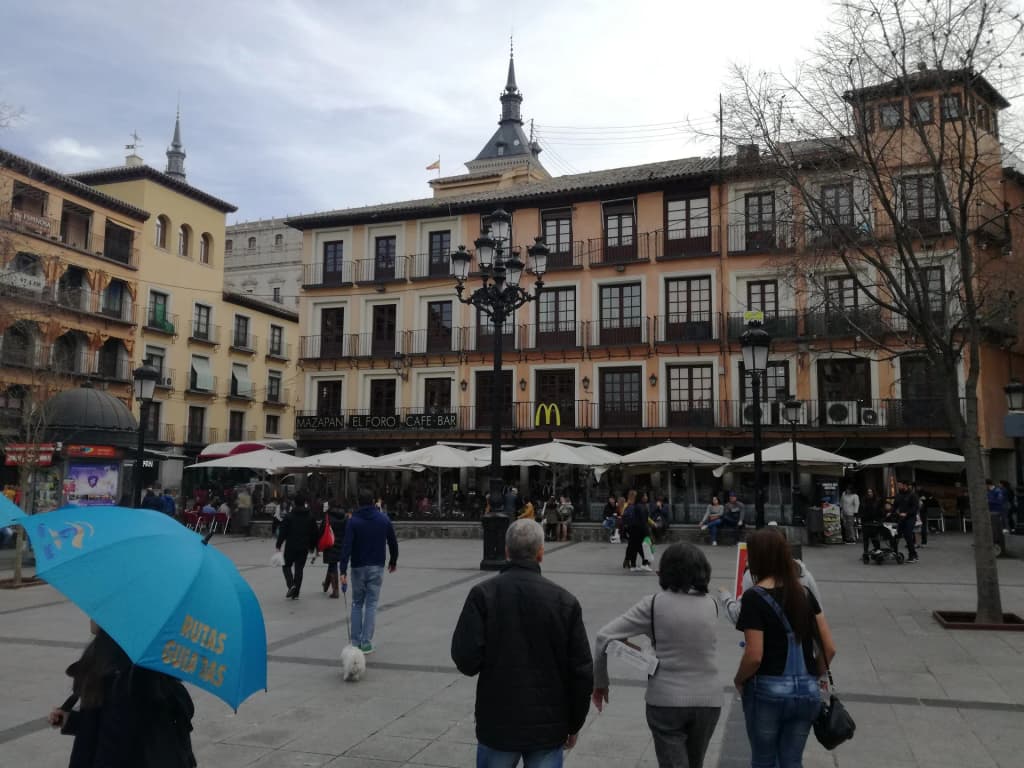
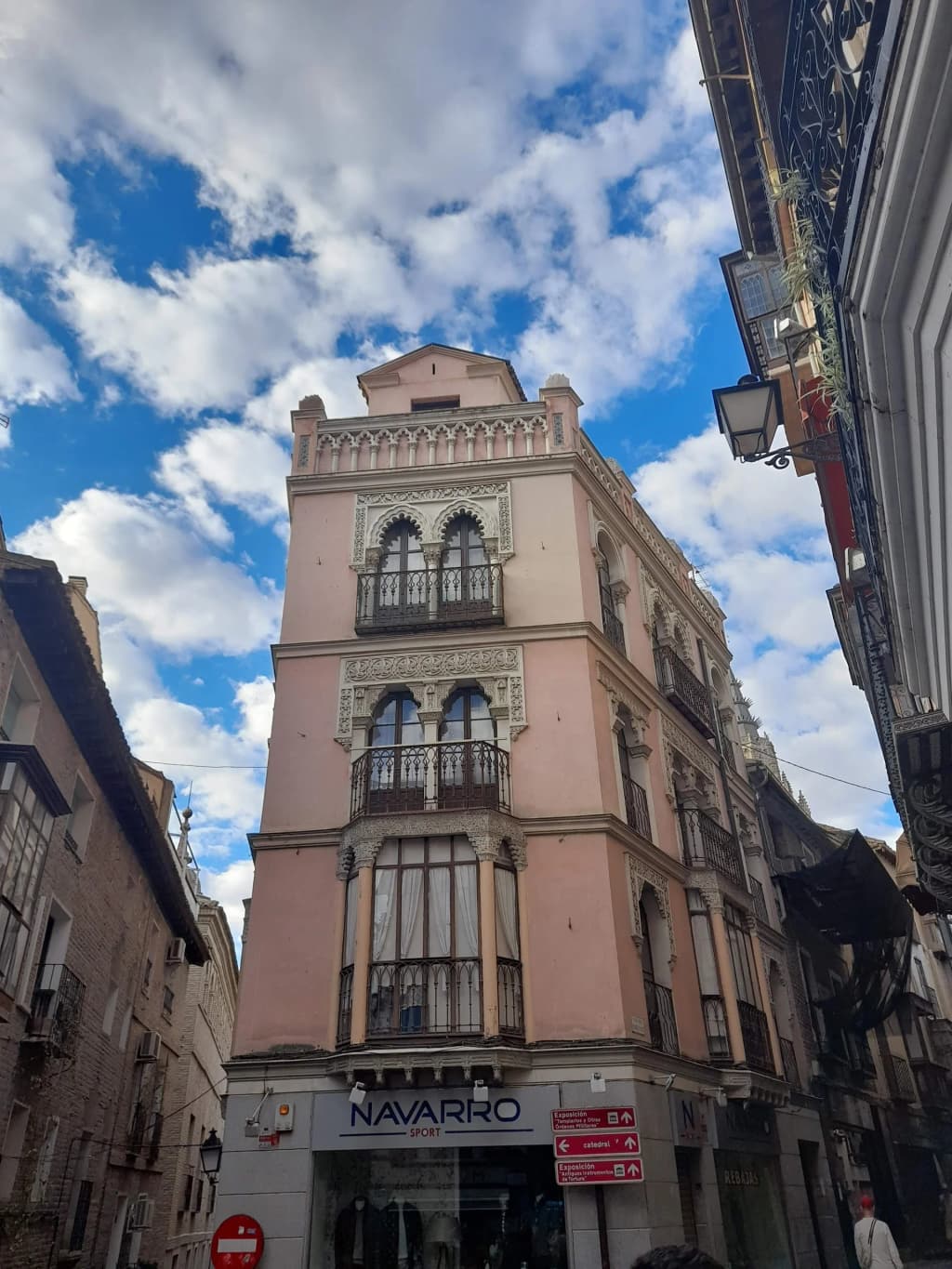
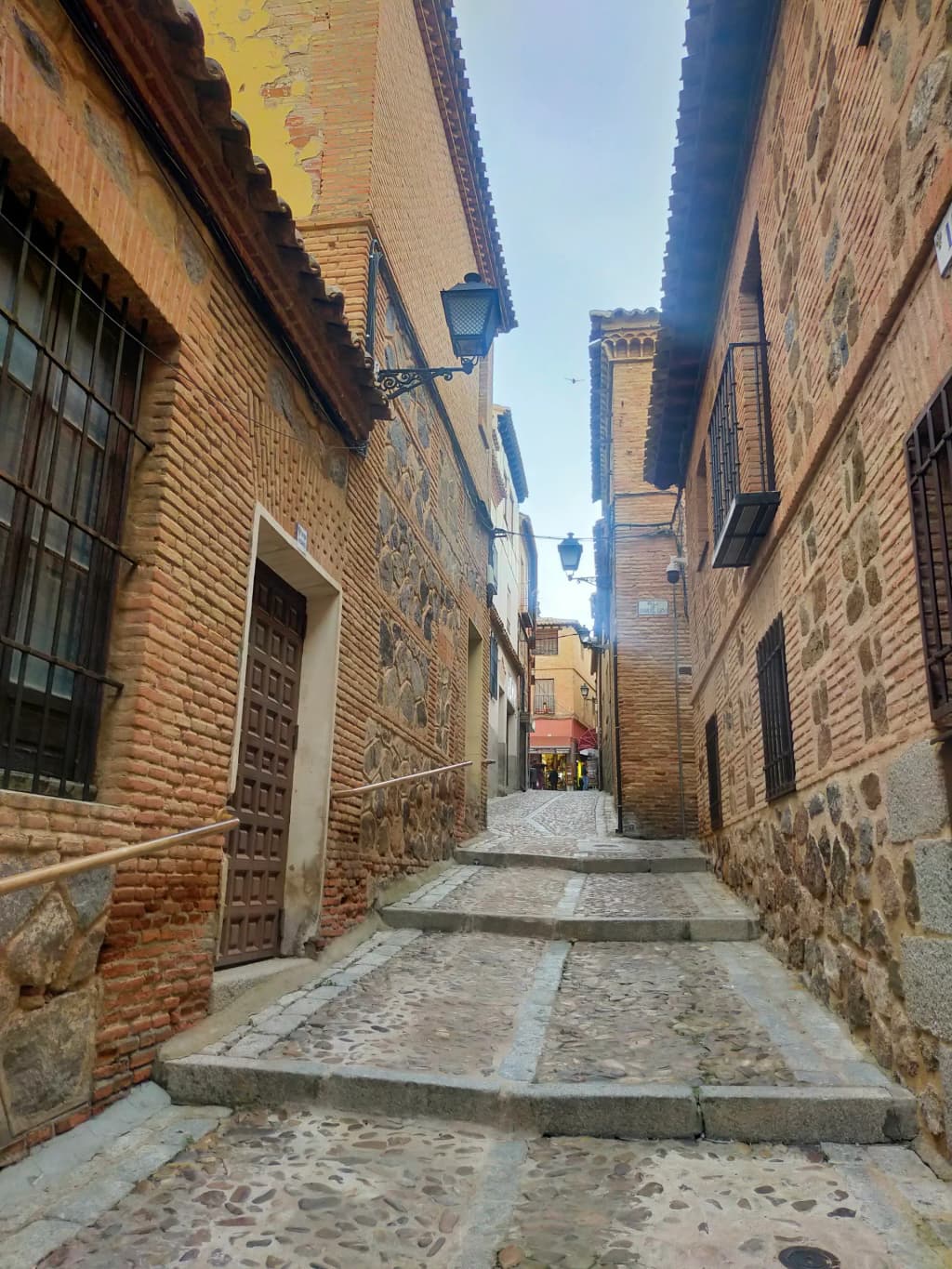
You don't just see the history here; you feel it pressing in from the narrow, labyrinthine alleys. Toledo is famously dubbed the City of Three Cultures, a rare European sanctuary where Christian, Muslim, and Jewish communities once lived and thrived simultaneously. I run my hand along a sun-warmed brick wall, feeling the rough, mortar-choked joints. The stone is cool in the shade but radiates a gentle heat where the morning light catches it. Around the corner, a mosque that became a church stands in quiet defiance of time, while just down the street, a synagogue holds its ground. The architectural DNA is a staggering blend of horseshoe arches, soaring Gothic spires, and intricate mudéjar brickwork that plays tricks with the light. I wander aimlessly, letting the incline dictate my path, passing heavy wooden doors studded with iron that look as though they haven't been opened in centuries. It feels less like a museum and more like a living, breathing echo of a time when coexistence was a daily reality. The fact that this was once the Spanish capital is almost comical given its small, intimate footprint, yet the weight of its legacy is undeniable.
The smell of roasted pork, smoked paprika, and fried garlic pulls me off the main thoroughfare and into a dimly lit taverna. Dust motes dance in the single shaft of sunlight piercing the gloom. The air inside is thick with the rich, savory scent of carcamusas, Toledo's signature meaty stew, simmering somewhere in the back kitchen. I settle at a scarred wooden bar, ordering a simple bocadillo con jamón and a few thick triangles of local Manchego cheese. The salt of the cured meat and the sharp, nutty bite of the cheese are perfect, simple pleasures. The bartender, an older man with flour dusting his dark apron, slides a small, golden crescent onto my plate alongside the sandwich.
"You are looking at it like you expect it to taste like German clay," he says, his voice a low, gravelly rumble over the clatter of plates.
"I've never been a fan of marzipan," I admit, eyeing the dense little sweet. "It always tastes like Play-Doh."
He laughs, a rich, booming sound, and taps the wooden counter. "That is because you have only eaten the northern impostor. Ours is baked. One hundred percent sweet almonds. No bitter fillers. Eat."
I take a bite. The crust gives way with a delicate crunch, revealing a warm, melting center that tastes of pure, unadulterated almond and caramelized sugar. It is spectacular, miles away from the mass-produced paste found on Western European cakes. It is a unifying delicacy, too—historically enjoyed by all three of Toledo's religious communities, perfectly halal, kosher, and Catholic all at once.
I wash the pastry down with a glass of robust local red wine. When the bill comes, I almost double-take. The wine is barely three euros. The coffee and churros from earlier this morning were the same. For a city steeped in so much grandeur, the humility of its prices—especially here in the quiet chill of March—feels like a stolen secret in a continent that often charges a premium for the past. Coming from the UK, the affordability of Spain is always a pleasant surprise, but Toledo feels wonderfully accessible, a place that invites you to linger over a second glass without counting the coins in your pocket.
By midday, however, the secret is temporarily suspended. I sit on a stone bench near the Alcázar, watching the transformation unfold. The quiet, empty streets of the morning are suddenly choked with day-trippers. The buses roll in from Madrid, discharging waves of guided tours that flood the narrow plazas. It is the double-edged sword of proximity—being just under an hour by car or a quick train ride from the capital makes Toledo an easy target for a rushed afternoon itinerary. The charm of the city retracts slightly, pulling back into the shadows as elbows jostle for photographs and voices battle over the commentary of tour guides. The cacophony of a dozen different languages bounces off the ancient walls, drowning out the subtle, quiet magic I had found just hours before.
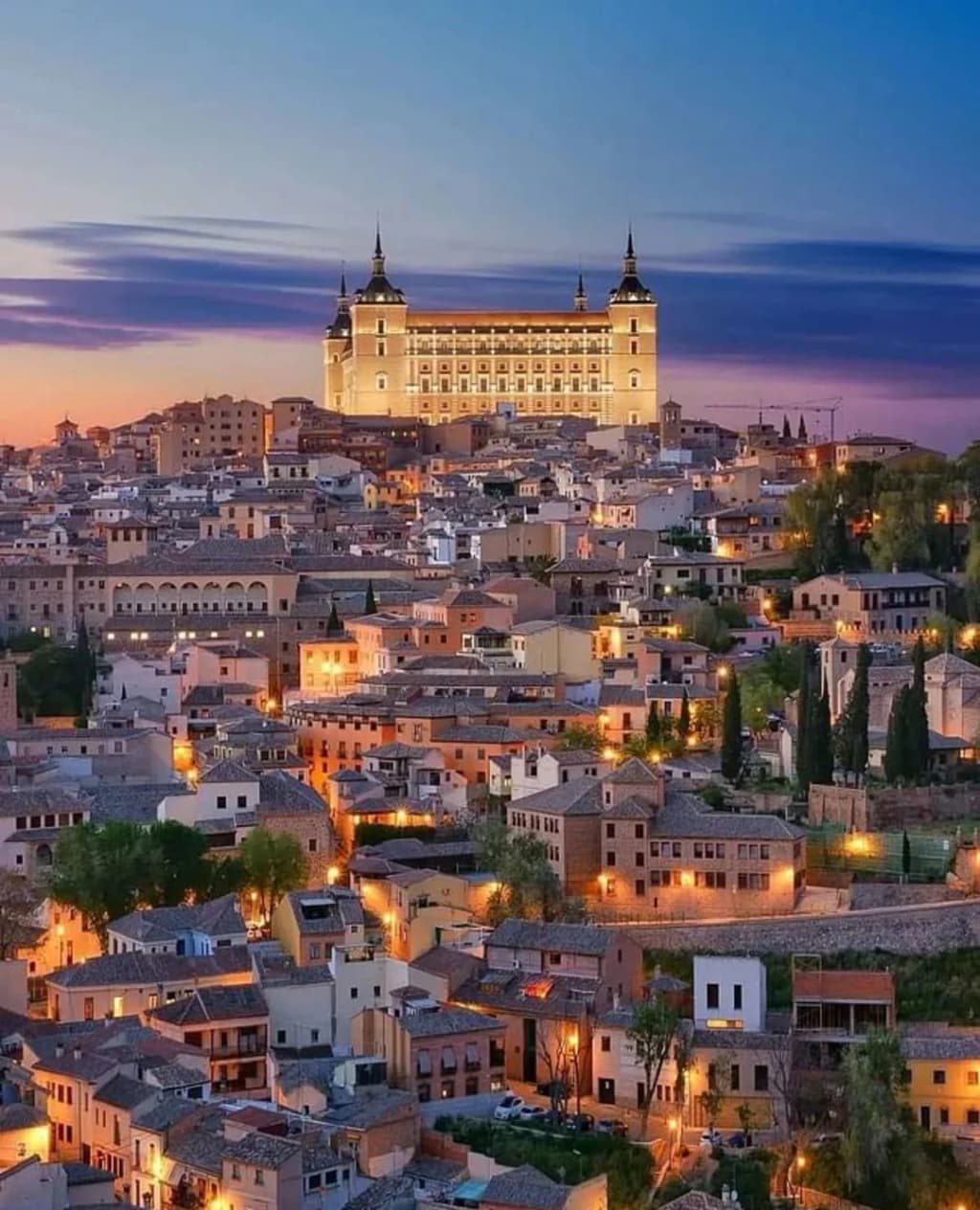
But patience here is rewarded in gold. You just have to outlast them. As the sun begins its heavy descent, bleeding vivid orange and bruised purple across the Castilian sky, the buses pack up and leave. The day-trippers vanish, taking the frantic energy with them. This is when Toledo truly exhales. I wander back through the suddenly quiet alleys, the streetlamps flickering on to cast a warm, theatrical glow over the stones. The tavernas come back to life, but this time they are filled with locals—people who live within these walls or in the surrounding villages, their rapid-fire Spanish echoing musically down the narrow streets. The air cools, the scent of charcoal smoke and roasting meats returns, and a profound stillness descends on the city. Shadows stretch long and thin across the plazas. Toledo was a shot in the dark for me, a last-minute detour driven by curiosity, but as I sit listening to the clinking of glasses in the lively, reclaimed night, I realize that leaving before sunset is the greatest mistake a traveler can make here.
More Photos
More Adventures
 $100 - $250/day 3-5 days
 A Handheld Feast: Walking the Cobblestones of Edinburgh
Explore the sensory magic of Edinburgh. From handheld meat pies to cask-strength whisky, discover the warmth and history of Scotland's stunning capital.
 $150 - $350/day 3-5 days
 Conquer Dubrovnik: The Ultimate Adventure Survival Guide
Skip the massive cruise ship crowds. Discover the raw, adventurous side of Dubrovnik by attacking the city before dawn and exploring beyond the walls.
 $60 - $150/day 4-7 days
 Conquer Buenos Aires: The Ultimate 7-Day Itinerary
Ready to conquer Buenos Aires? Skip the tourist traps and dive into this high-octane 7-day itinerary. Discover the real heart of Argentina's capital.
 $100 - $250/day 10-14 days
 The Meticulous 13-Day Italy Itinerary & Budget Guide
Master Italy's travel logistics with our 13-day itinerary. Discover exact costs, train schedules, and strategies to avoid tourist traps and long lines.