
Vancouver: Where the Glass City Meets the Wild Pacific
A sensory journey through Vancouver, from the rain-slicked cobblestones of Gastown to the alpine peaks of Whistler, exploring the best food, stays, and wild escapes.
The steam hisses first, a sharp, white plume escaping into the grey afternoon, followed immediately by a whistle that sounds like a choir of tea kettles. I’m standing on the cobblestones of Gastown, watching the famous steam clock announce the quarter-hour. It’s raining—of course it is—but the locals don’t seem to mind. They walk with a practiced rhythm, dodging puddles without looking down, their umbrellas forming a colorful canopy against the brick facades. This is Vancouver. It smells of roasting coffee, damp wool, and the faint, salty tang of the ocean that is never more than a few blocks away.
Getting here feels like a decompression. Vancouver International Airport is a beast, but a gentle one. As I step off the plane, I face a choice. The SkyTrain is the efficient artery of the city, a surface train that cuts through the suburbs and deposits you downtown for less than ten dollars. It’s tempting, and for the solo traveler with a backpack, it’s the right move. But today, with heavy luggage and a desire for ease, I opt for a car. The drive is short—twenty, maybe thirty minutes—but it gives me my first real look at the skyline. The glass towers reflect the clouds, making the city look like it's disappearing into the sky.
I drop my bags in a hotel in the West End. Finding a place here requires strategy. The city is squeezed onto a peninsula, and real estate is precious. I learned the hard way that waiting until the last minute is a financial death sentence. The trick, I discovered, is to book months in advance on a platform that offers free cancellation. I watched the prices climb like the tides as my trip approached, grateful I had locked in a rate that didn't require a second mortgage. Downtown is where you want to be—Yaletown for the nightlife, Coal Harbour for the views, or here in the West End, where the city feels lived-in.
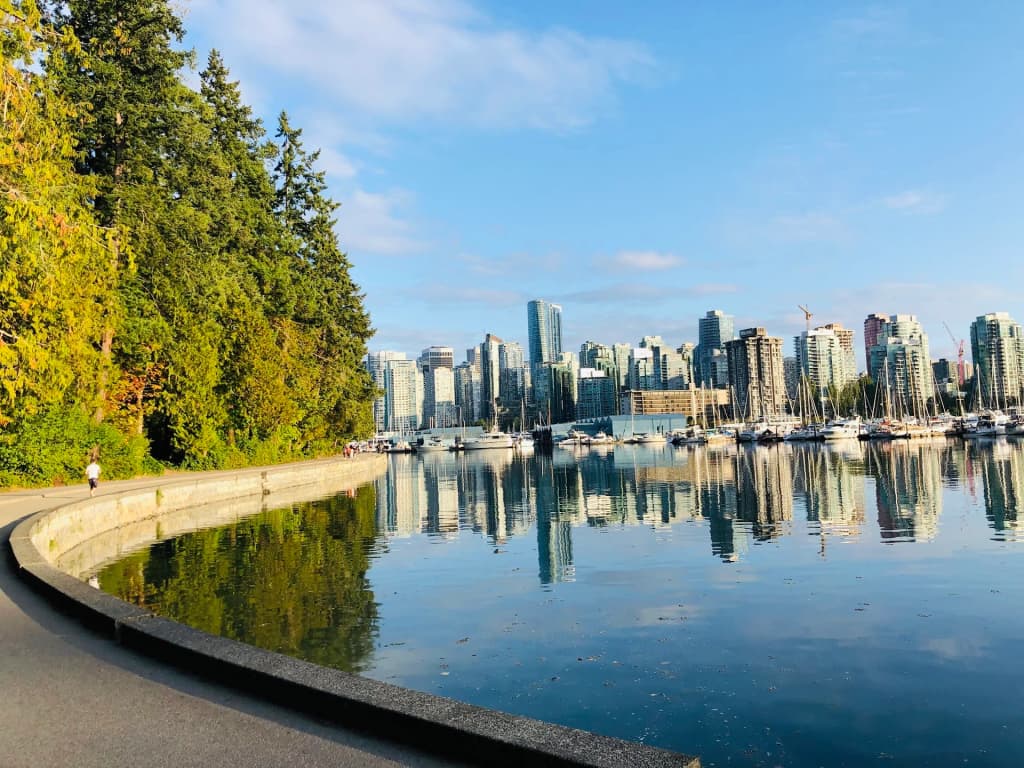
To understand this place, you have to go to the edge. I rent a bicycle near the harbor and head for Stanley Park. It’s not just a park; it’s a dense, temperate rainforest that somehow survived the urban sprawl. The Seawall is a paved ribbon that wraps around the perimeter, separating the ancient cedars from the Pacific Ocean.
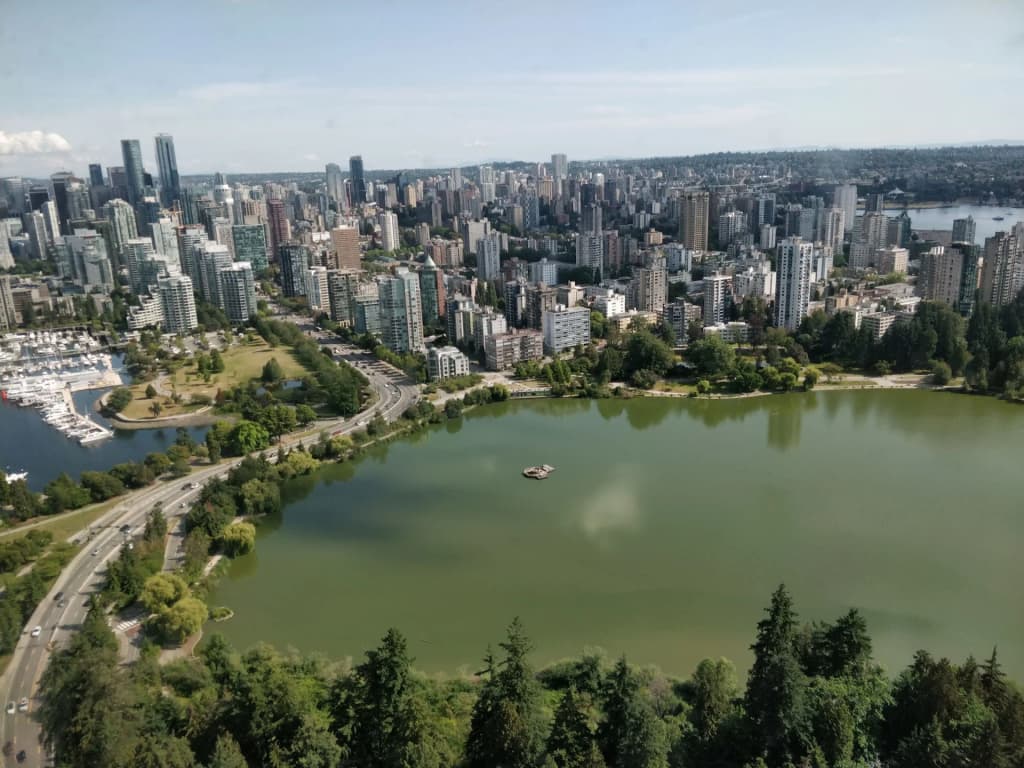
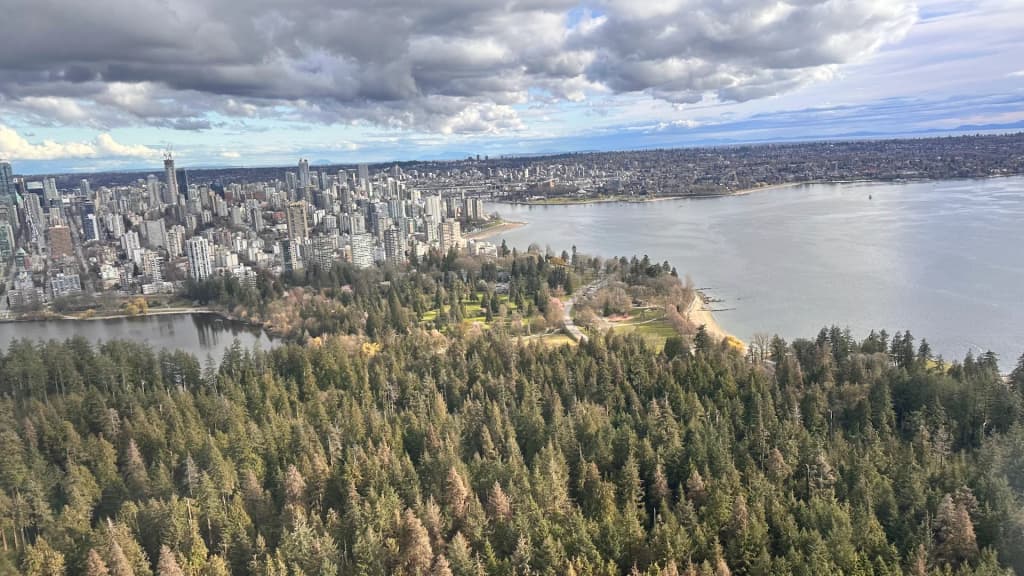
The ride is sensory overload. On my left, the forest is a wall of deep, mossy green. On my right, the ocean laps against the rocks, grey and restless. I pedal past the totem poles, their painted faces staring out to sea, and stop near the Lions Gate Bridge. The air here tastes different—cleaner, sharper. It’s a place of contrasts. You can look back and see the glittering city skyline, a monument to human engineering, and then turn your head to see mountains that look exactly as they did ten thousand years ago.
Hunger drives me toward the water again, this time to a tiny dock to catch the Aquabus. These little rainbow-colored boats putter back and forth across False Creek, ferrying people to Granville Island. The Public Market is a cathedral of food. The noise hits you the moment the doors slide open—a cacophony of orders being shouted, ice being shoveled, and the low hum of hungry conversation.
I drift toward a stall piled high with ruby-red berries and smoked fish. The smell of maple-glazed salmon is intoxicating.
"You're staring at the sockeye," the man behind the counter says. He’s wearing a heavy apron and has the hands of someone who works with knives. It's not a question.
"I am," I admit. "It looks incredible."
He slices a thin piece and hands it to me on a square of wax paper. "Wild caught. Smoked it this morning. It's the candy of the sea, my friend."
He’s right. It melts on my tongue, sweet and smoky and rich. I buy a slab, along with a basket of strawberries that smell like perfume. We talk for a moment about the season—May through September is the sweet spot here, when the sun lingers late into the evening and the rain retreats just enough to let the city breathe. In winter, he tells me, the rain is relentless, a grey curtain that drives everyone indoors. But today, the sun is fighting its way through.
If Stanley Park is where Vancouver touches the water, North Vancouver is where it touches the sky. I take the shuttle across the bridge to the Capilano Suspension Bridge. It is undeniably popular, drawing crowds from every corner of the globe, yet it manages to retain its magic. The bridge is a slender thread spanning a canyon, seventy meters above a river that churns with white water.
Stepping onto it requires a suspension of disbelief. The bridge sways with every step, a living thing reacting to the crowd. Beneath me, the tops of Douglas firs reach up like grasping hands. It’s dizzying and exhilarating. Further up the mountain, the Grouse Mountain Skyride offers a more stable ascent. The red gondola climbs steeply, revealing the city in layers—the harbor, the downtown peninsula, the scattering of islands in the strait. Up here, there are grizzly bears in a refuge and lumberjack shows that feel campy but fun, a nod to the rough-hewn history of this province.
But the city can’t hold me forever. I rent a car for the day and head north on the Sea-to-Sky Highway. The name is not an exaggeration. The road clings to the coastline, a ribbon of asphalt sandwiched between the plunging cliffs of the fjord and the rising granite of the mountains. I’m driving toward Whistler, the famous alpine village, but the destination hardly matters.
The drive is a cinematic experience. I stop at a lookout, gripping the railing as the wind whips my hair. The water of Howe Sound is a deep, impossible turquoise. Whistler itself is a manicured alpine dream, a village of chalets and pedestrian streets that feels plucked from Europe and dropped into the Canadian wilderness. I take the Peak 2 Peak gondola, drifting between two mountains with a glass floor beneath my feet, watching the world turn into a map of rock and ice.
Back in the city that evening, I walk along the waterfront near Canada Place. The white sails of the building glow against the night sky. A cruise ship is preparing to depart for Alaska, its horn bellowing a deep, resonant note that echoes off the skyscrapers. Vancouver is a city of edges—the edge of the continent, the edge of the wilderness, the edge of what feels familiar. It asks you to bring a raincoat and an appetite, and in return, it gives you a world that feels vast, green, and wonderfully alive.
More Photos
More Adventures
 $200 - $500/day 2-3 days
 Conquer Disneyland California: The Ultimate 2-Park Guide
Think Disneyland is just a walk in the park? Think again. Get the ultimate battle plan for dominating Disneyland and California Adventure. Skip the lines.
 $60 - $200/day 4-7 days
 Between the Andes and the Ocean: Unraveling Santiago
Experience the striking contrasts of Santiago, Chile. Discover historic dive bars, the soaring Andes in Cajón del Maipo, and the colorful hills of Valparaíso.
 $75 - $250/day 7-14 days
 The Ultimate Month-by-Month International Travel Guide
Stop gambling with your PTO. Discover the exact best (and worst) international destinations for every month of the year to optimize budget and weather.
 $150 - $350/day 1 days
 Conquer Disneyland Paris: 2 Parks in 1 Brutal Day
Think you can't conquer both Disneyland Paris parks in a single day? Think again. Here is the ruthless, high-energy strategy to dominate every major ride.