
A Day in Munich: Snow, Surf, and Bavarian Soul
From snowy Marienplatz to the warmth of a beer hall, Munich in a day is a sensory journey—history, food, and even winter surfing. Here’s how it feels.
The cold bites first—sharp, insistent, a reminder that Munich in winter is not for the faint of heart. My breath fogs in the air as I step out from the Bud Hotel, layers upon layers cocooning me: thermal leggings, woolen scarf, gloves, a hat pulled low. Across the street, the city is already stirring. The market’s awnings ripple in the wind, and the tram bell rings, echoing off the stone facades. I cross the street, boots crunching on last night’s snow, and the city’s heart—Marienplatz—beckons just a few minutes’ walk away.
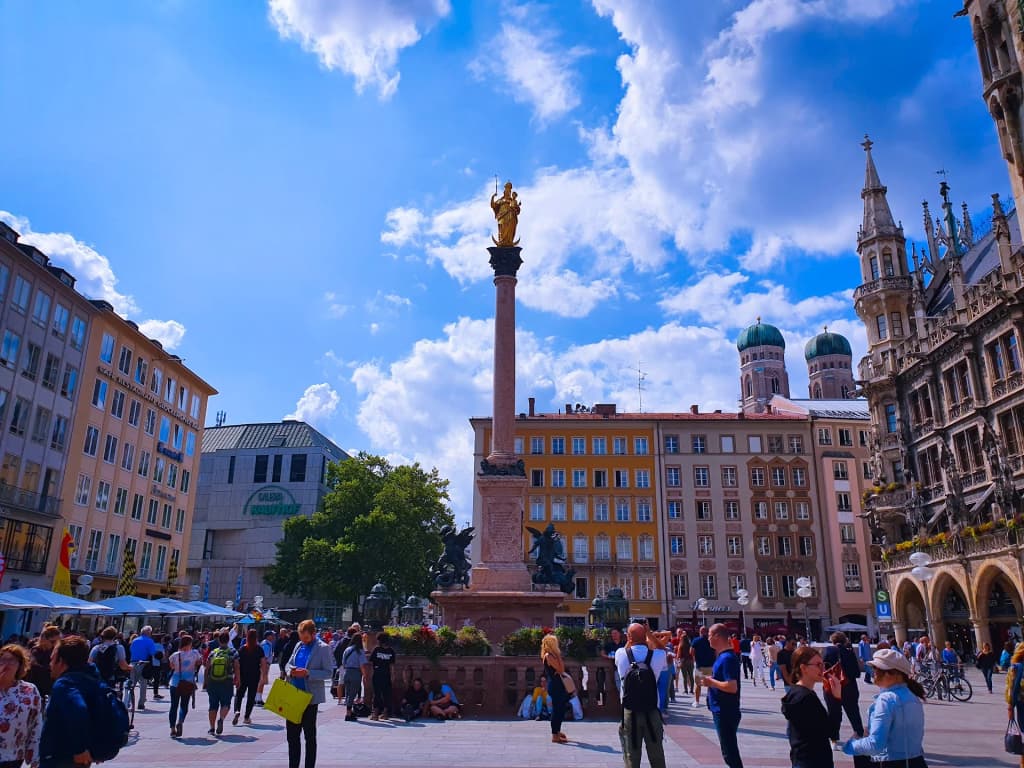
The square is hushed at this hour, the New Town Hall’s gothic spires silhouetted against a pale sky. Even in the cold, there’s a warmth to the place—a sense of anticipation. I watch as a café owner sweeps snow from his stoop, the scent of fresh bread and coffee drifting out to mingle with the crisp air. I order a coffee and a pastry, the price neither cheap nor extravagant, but the view—priceless. Locals gather in small knots, scarves wrapped tight, laughter rising in clouds of steam. The famous Glockenspiel is still, its painted figures waiting for the hour to dance.
A woman at the next table catches my eye. “You’re not from here,” she says, her accent soft but unmistakably Bavarian.
“No,” I admit, “but I wish I was.”
She smiles, nodding toward the Rathaus. “Wait for the bells. It’s worth it.”
The city unfolds on foot, each street a story. Past the old St. Peter’s Church, its stone worn smooth by centuries of footsteps, I wander toward the English Garden. The snow is deeper here, blanketing the lawns and dusting the bare branches. The world is muffled, save for the sudden, wild sound of rushing water. I follow it, curiosity piqued, until I see them—surfers, in Munich, in January. They line the banks of the Eisbach, boards tucked under arms, wetsuits zipped tight. One by one, they launch into the churning wave, carving arcs through the icy spray as if the cold is nothing at all.
A man in a red beanie grins at me, water streaming from his beard. “Crazy, right?” he shouts over the roar. “But the wave is always here. Doesn’t matter if it snows.”
I laugh, shivering, and watch a little longer, the scene so improbable it feels like a dream. The English Garden stretches on, quiet paths winding past the Chinese Tower—its pagoda roof frosted white—and the Monopteros, a Greek-style pavilion perched on a hill. From up there, the city is a patchwork of rooftops and steeples, the air tinged with woodsmoke and the faint sweetness of roasting nuts from a distant vendor.
Back in the city center, the Viktualienmarkt is a riot of color and scent. Stalls overflow with apples and pears, wheels of cheese, sausages strung like garlands, and buckets of winter flowers. The air is alive with the calls of vendors and the laughter of shoppers, the clink of glasses from a nearby stand serving mulled wine. I sample a slice of cheese, sharp and creamy, and buy a small bag of candied nuts, the sugar sticking to my gloves. It’s easy to linger here, to watch the rhythm of daily life—locals haggling, tourists marveling, children darting between stalls.
A young woman at a flower stand wraps a bouquet in brown paper. “For someone special?” she asks, her eyes bright.
“For myself,” I say, and she laughs, handing me the flowers with a wink.
Lunch is at Augustiner, a beer hall with thick wooden tables and the hum of conversation. The air is heavy with the scent of roast pork and hops. I order the classics: crispy pork knuckle, potato dumplings, a stein of Augustiner beer. The food is hearty, the portions generous, the flavors deep and comforting. Around me, families and friends toast, their voices rising in a chorus of gemütlichkeit—the untranslatable coziness that fills Bavarian spaces.
The waiter sets down a plate of apple strudel, warm and dusted with sugar. “You must try,” he insists. I do, and the pastry flakes, the apples soft and spiced, the cream cool on my tongue. The bill is fair, less than I expected for such a feast, and I leave with a full belly and a lighter heart.
The afternoon drifts by in a blur of shop windows and side streets. I duck into the official Bayern Munich store, the red and white scarves a blur of color, and then into Haribo, where the scent of gummy bears is almost dizzying. I buy a keychain and a magnet—small tokens, overpriced, but irresistible. The city’s rhythm is infectious, and I find myself smiling at strangers, caught up in the easy camaraderie of a place that feels both grand and intimate.
At the Munich Residenz, the former royal palace, I pause outside the ornate gates. The stone glows gold in the late afternoon light. I don’t have time to tour the lavish halls or the treasury, but even from the outside, the weight of history is palpable. I imagine candlelit balls, whispered intrigues, the sweep of silk across marble floors.
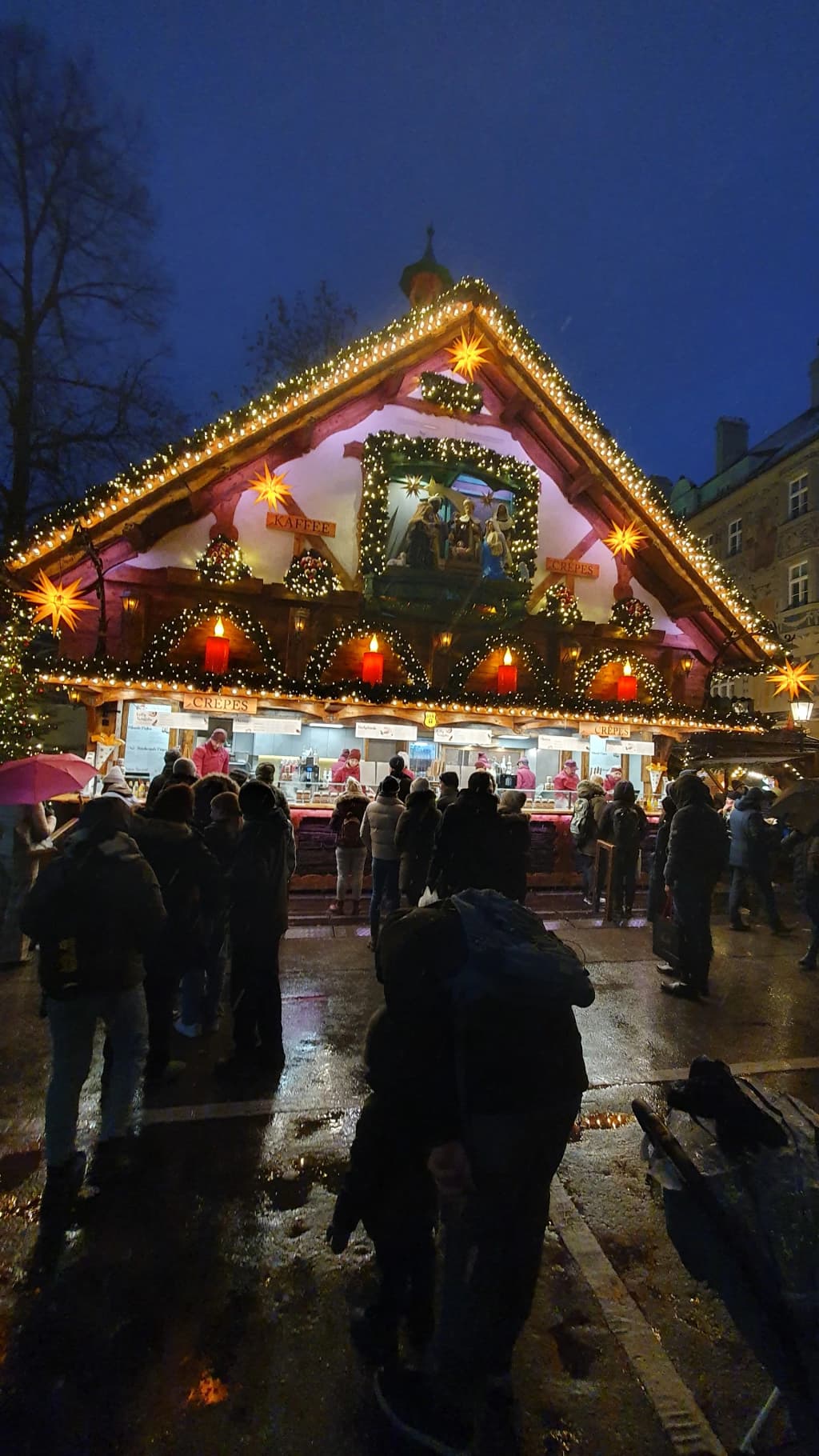
As dusk falls, I wander back toward Marienplatz. The square is transformed, lights twinkling in the windows, the air tinged with the promise of snow. I linger, watching as the city slips from day to night, the bells of the Rathaus marking the hour. My feet ache, my cheeks are flushed from the cold, but I am content. Munich, in a single day, has offered me history and surprise, comfort and adventure—a city both familiar and strange, where even the cold feels like an invitation to stay a little longer.
I stand in the glow of the square, the world hushed for a moment, and think: sometimes, a day is enough to fall in love with a place.
More Photos
More Adventures
 $50 - $120/day 4-7 days
 Sensory Buenos Aires: Smoke, Stone, and Neon Lights
Immerse yourself in Buenos Aires. Experience the contrasts from the smoky grills of San Telmo to the neon-drenched pizzerias of Avenida Corrientes.
 $40 - $80/day 2-4 days
 Boa Vista: Exploring the Amazon's Fan-Shaped Frontier City
Experience the unexpected beauty of Boa Vista, Roraima. Discover Macuxi indigenous crafts, the unique Lavrado biome, and sunset boat tours on the Rio Branco.
 $100 - $300/day 1-3 days
 Escape the Airport: Conquer Your Luanda Layover
Think a layover in Luanda means killing time at the airport? Think again. Discover the fortress, island sunsets, and the ultimate Angolan adventure.
 $120 - $250/day 1-2 days
 Hack the Alps: Milan to St. Moritz Day Trip on a Budget
Discover how to travel from Milan to St. Moritz on a budget. Skip the Bernina Express, take the regional train, and experience the Swiss Alps like a pro.