
Cinematic Shores: Senses and Stories of Fortaleza
Waves, falésias, and city rhythms—Fortaleza’s coast is a sensory journey. From Iracema’s art to Cumbuco’s wild sunrise, discover Ceará’s cinematic soul.
The wind is already up, warm and insistent, as I step onto the sand at Praia de Iracema. The sea is restless, a shifting blue-green, and the air smells of salt, sunscreen, and the faintest trace of grilled fish drifting from a distant barraca. A group of older men play dominoes under a faded umbrella, their laughter rising above the crash of the surf. Nearby, a ramp slopes gently toward the water—part of the Praia Acessível project, a small but vital gesture of inclusion. I watch as a woman in a sunhat wheels her father down, the sand giving way to a floating chair, the two of them grinning as the Atlantic laps at their feet.
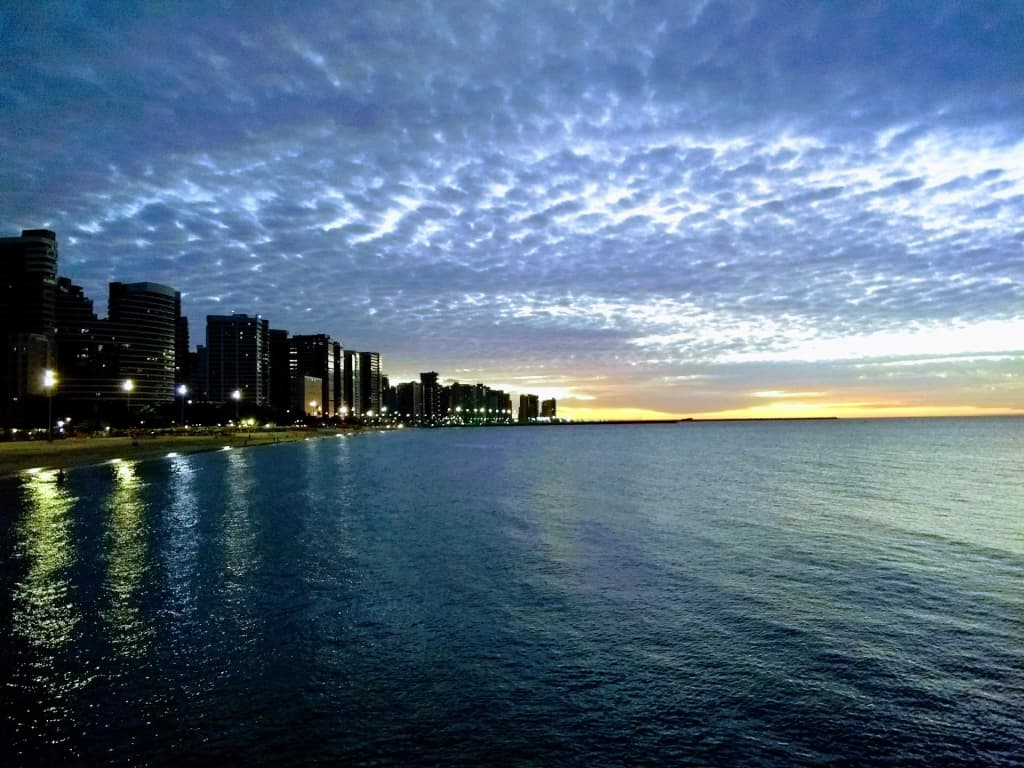
A local, Fábio, gestures at the horizon. “Iracema wasn’t always called that,” he says, his voice half-lost in the wind. “It was Praia do Peixe, before the writer José de Alencar gave her a new name. Now she’s everywhere—statues, stories, even the soul of the place.”
I follow the curve of the promenade, past the Ponte dos Ingleses—its iron bones exposed, waiting for the next chapter of its long life. The city’s edge is a collage of old and new: revitalized kiosks, a cycling path that hums with the whir of rented bikes, and the scent of coconut oil and fried tapioca. In Meireles, the boardwalk is alive with runners, families, and artisans selling lace and leather. The sun is high, the light almost too bright, and I duck into 50 Sabores for a scoop of cajá sorbet—tart, cold, a shock of tropical sweetness that lingers on my tongue.
The rhythm of the city gives way to the wildness of the coast. At Cumbuco, dawn is a private show: the sky blushing pink, the sand cool beneath my feet, the only sound the hush of waves and the clatter of stones as the tide recedes. I try to record the music of it, but the wind steals most of the sound. Still, the memory stays—a kind of hush, broken only by the distant call of a kite surfer slicing through the morning.
Cumbuco is both wild and welcoming, its resorts tucked behind dunes, its beach a playground for the bold. I watch as a group of friends pile into a buggy, laughter trailing behind them as they race toward the lagoons. The air smells of wet sand and sun-warmed grass. Later, I sit on a shaded veranda, sipping coconut water, the taste clean and faintly sweet, and listen to the staff joke about the “rustic charm” of the place. “We call it wild,” one says, “but the comfort is real. You just have to let the wind mess your hair.”
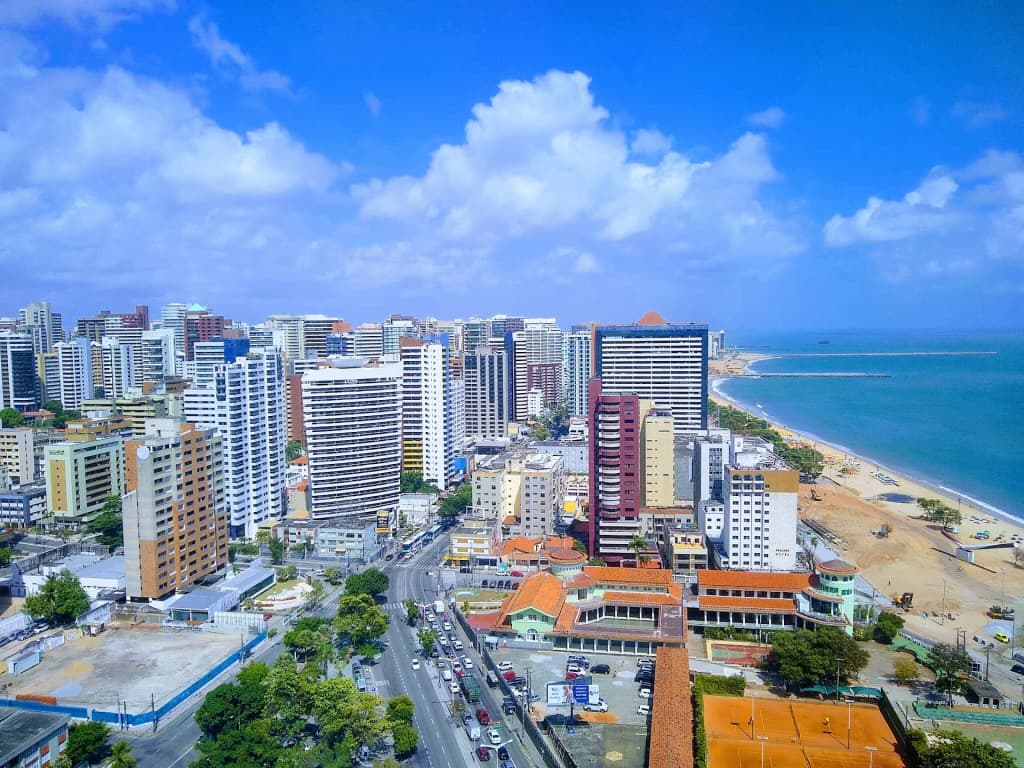
The days blur into each other: a buggy ride over the orange dunes of Lagoinha, the view from the new mirante stretching out to a horizon lined with palm trees. The sand here is fine, almost powdery, and the sea is a shifting palette of blues and greens. I wander down to the rightmost edge, where the famous duna glows in the late afternoon sun, and a fisherman waves as he hauls in his net. “You’re not from here,” he says, not unkindly. “But you see why we stay.”
In Flexeiras, the tide is low and the natural pools shimmer, emerald and clear. Children chase tiny fish, their laughter echoing off the dunes. The west coast feels wilder, less polished than the east—more dunes, fewer cliffs, a sense of space and possibility. I join a boat tour on the Mundaú River, the water cool against my fingers, the air thick with the scent of mangroves and river mud. When the sea pushes in, the colors shift—emerald, turquoise, a fleeting silver as the sun catches the surface.
Back in the city, the past lingers in unexpected places. The old prison, now the Centro de Turismo, is a warren of craft shops, each cell a riot of color and texture: lace, leather, wood, and clay. The air is heavy with the scent of leather and the faint must of old stone. At the Mercado Central, I lose myself among stalls piled high with hammocks, baskets, and sweets. The vendors call out, their voices a chorus of welcome and gentle persuasion.
The Theatro José de Alencar is a jewel box of iron and glass, its Art Nouveau façade gleaming in the late sun. Inside, a guide points out the original metalwork, shipped from abroad and assembled more than a century ago. “The rich used to sit here,” she says, patting a velvet seat. “To be seen, to show off new clothes. The real nobility, though, they preferred the boxes—quiet, above it all.” The gardens, designed by Burle Marx, are a tangle of green and shadow, a cool respite from the city’s heat. Admission is free, but the sense of history is priceless.
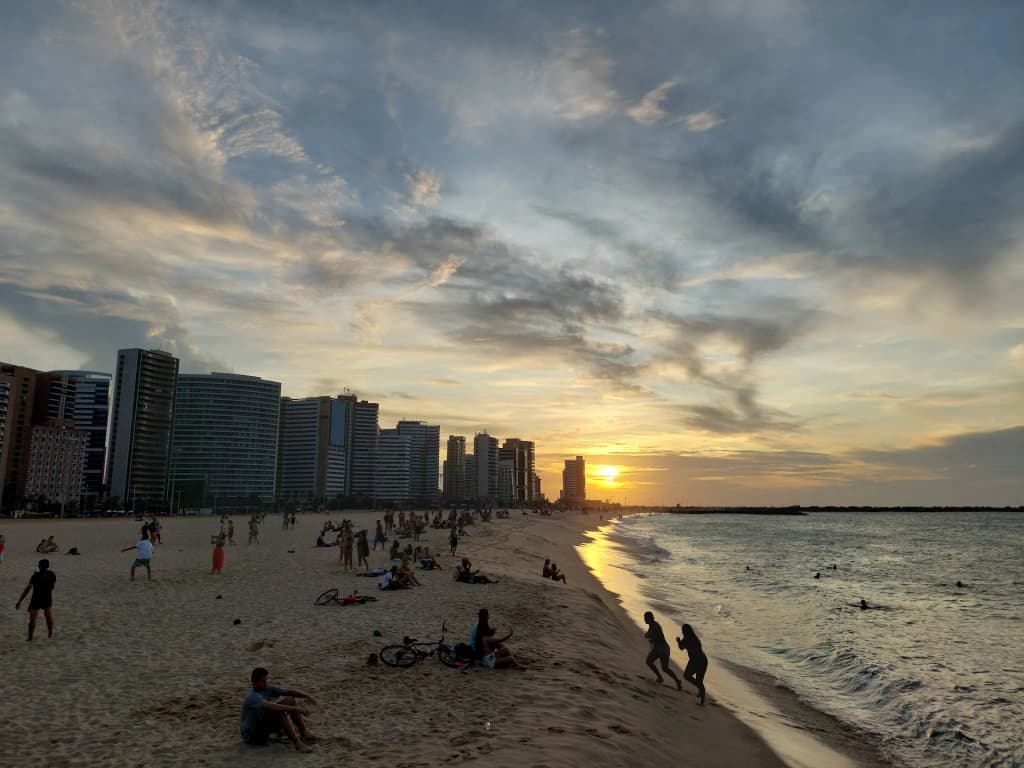
At night, the city shifts again. I meet Manu and César, locals with the easy confidence of people who know every corner. “Fortaleza is a crossroads,” Manu says, “east and west, cliffs and dunes, old and new. There’s a sun for every day here.” They debate their favorite beaches—Canoa Quebrada, Majorlândia, Lagoinha—each with its own story, its own flavor. The conversation drifts to food: the ritual of choosing fresh fish at the market, then carrying it to a nearby restaurant to be grilled, smoky and tender, served with farofa and a squeeze of lime.
The days are full: buggy rides, boat tours, endless beaches. Morro Branco’s cliffs glow with twenty shades of sand, the colors shifting with the light. I walk the edge, careful not to get too close, the wind tugging at my shirt. The symbol of Canoa Quebrada—a crescent moon and star—appears, carved into the rock, a secret for those who look closely. The guides say it began as a love story, a gift from a foreign couple to a local artisan. Now it’s everywhere, a quiet reminder that every place is shaped by the people who pass through.
On my last morning, I wake early and walk to the water’s edge. The city is quiet, the sky pale and expectant. I think of all the stories layered here: the old names and new, the laughter of friends, the hush of dawn, the taste of salt and sugar and sun. Fortaleza is cinematic, yes—but it’s also intimate, textured, alive. I leave with sand in my shoes and the sense that, here, the story is never quite finished.
More Photos
More Adventures
 $40 - $80/day 4-6 days
 Forget the Beaches: Why Curitiba is Brazil's Ultimate Adventure
Skip the crowded tourist traps. Discover Curitiba, Brazil's green capital, featuring gravity-defying architecture, epic train rides, and budget thrills.
 $40 - $80/day 2-4 days
 Boa Vista: Exploring the Amazon's Fan-Shaped Frontier City
Experience the unexpected beauty of Boa Vista, Roraima. Discover Macuxi indigenous crafts, the unique Lavrado biome, and sunset boat tours on the Rio Branco.
 $50 - $150/day 1-2 days
 Conquer the Serra Verde Express: Brazil's Wildest Train
Ditch the tourist traps and ride the Serra Verde Express from Curitiba to Morretes. Discover ticket tips, seating secrets, and the best Barreado.
 $50 - $150/day 5-10 days
 Finding the Rhythm of Bahia: From Porto Seguro to Trancoso
Experience the sensory magic of Brazil's Costa do Descobrimento, from the chaotic nightlife of Porto Seguro to the barefoot luxury of Trancoso's beaches.