
Chasing the Wild Edges of Crete: Beyond the Blue and White
Discover the wild beauty of Crete. From the steep hike down to Balos Beach to the Venetian alleys of Chania, explore Greece's most rugged and diverse island.
The crunch of the barley rusk breaks the low hum of the evening harbor. A heavy pour of local, golden olive oil soaks into the bread, pooling around a mountain of grated tomatoes and sharp, crumbly feta. The air smells of sea salt, roasting lamb, and the faint, sweet trace of jasmine hanging from the wrought-iron balconies above.
"You eat it fast, before the bread forgets it is bread," the taverna owner tells me, wiping his hands on a linen apron. He pushes the plate of dakos closer to the center of the wooden table.
"It won't last long enough to forget," I tell him, taking a bite. The flavors—acidic, rich, earthy—taste exactly like the island itself.
He laughs, a deep sound from his chest, and leaves a sweating jug of local wine on the table. "Good. Tomorrow you need your strength for the mountains."
He isn't wrong. Sitting here in the narrow, labyrinthine alleys of Chania's Old Town, it is easy to be lulled into a false sense of smallness. But Crete is not a typical Greek island; it is a sprawling, rugged country unto itself. It takes nearly three hours just to drive across it. While many travelers fly into the larger international airport in Heraklion, I quickly learn that navigating the two-hour drive west to Chania is the secret to unlocking the island. This Venetian port city is the perfect base camp. It lacks the eye-watering price tags of the Cyclades—my quiet, comfortable hotel room just outside the center costs barely seventy-five dollars a night—and it places you within striking distance of the most dramatic coastlines in the Mediterranean.
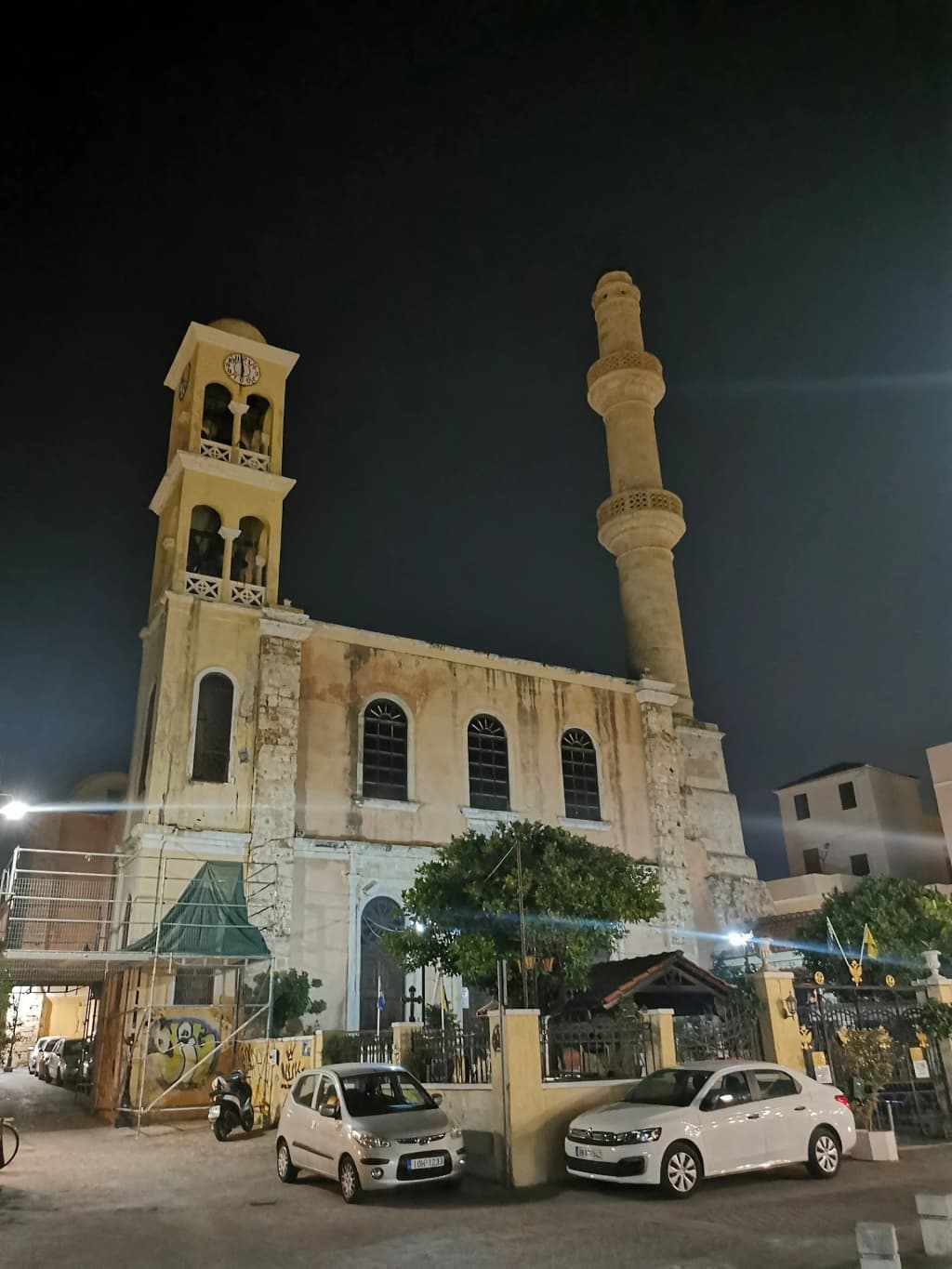
The alarm pulls me from sleep at six in the morning. The sky is still a bruised purple as I slide behind the wheel of my rental car. You cannot survive Crete without one. Public transport exists, but the true magic of this island lies at the end of unmarked dirt roads and isolated peninsulas. I double-check that my International Driving Permit is in the glove box—a strict requirement at many local rental agencies—and begin the forty-minute drive north toward Balos Beach.
The road is winding and demands respect, cutting through a desolate, beautiful landscape that feels more like a desert than a Mediterranean paradise. I arrive at the parking lot just before seven. By eleven, this dusty patch of earth will be overflowing, forcing latecomers to turn back, but right now, it is wonderfully empty.
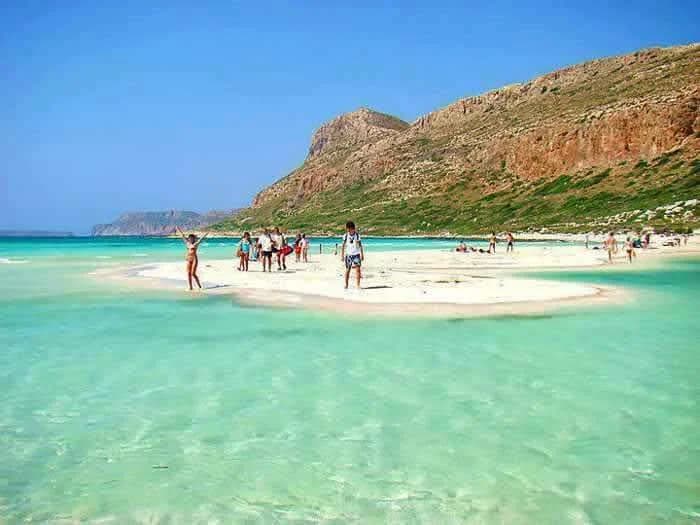
The hike down takes twenty minutes. The path is steep and unforgiving. The rocks are still slick from a rare rainstorm the day before, demanding careful footing. But then, the horizon breaks open.
I stop on the trail, the morning wind pulling at my jacket. Below me lies Balos. It is a brilliant, impossible mosaic of neon turquoise and deep sapphire, separated by sweeping curves of white sand. The descent is a small price to pay for this view. For those who prefer the ocean's rhythm to a precarious hike, boats depart from the port of Chania, cutting through the waves to drop passengers right onto the sand. But standing up here, feeling the burn in my calves and listening to the absolute silence of the morning, I wouldn't trade the walk.
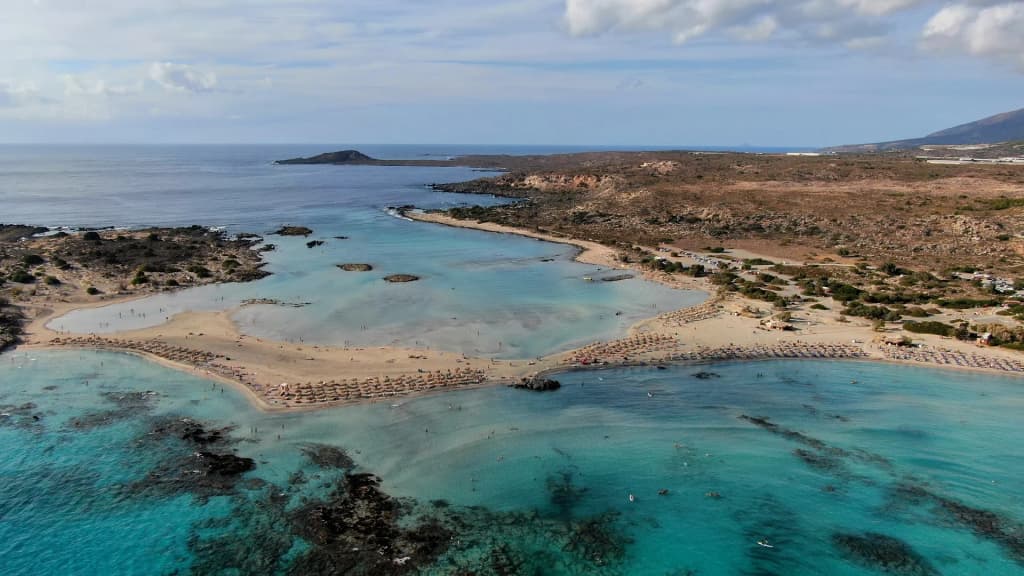
The southern coast offers a different kind of rhythm. By the time I reach Elafonisi, the sun is high and baking the earth. The water here is impossibly calm, gently lapping against my ankles as I wade out into the shallows.
I look down. The sand at the water's edge isn't just white; it catches the light with a subtle, unmistakable pink hue, born from millions of crushed seashells. I walk out further, realizing that I am standing on a sandbar with the sea stretching out on both sides of me. It feels like walking on the edge of the world.
Later, I push further along the coast to Preveli Beach, where the landscape shifts again. Here, a freshwater river carves its way through a dense, unexpected forest of palm trees before spilling out into the salty embrace of the sea. The water temperature drops dramatically where the river meets the ocean, sending a sudden, refreshing shock through my skin.
But Crete is not just water and sand. It is ancient stone and deep earth. Driving east toward Heraklion, the landscape rises and folds into dramatic peaks.
I spend a morning walking through the ruins of the Knossos Palace, the beating heart of the ancient Minoan civilization. The air is thick with history, the restored red columns standing in stark contrast to the brilliant blue sky. It requires a mental gear shift to go from lazy beach days to absorbing the weight of thousands of years of human triumph and collapse.
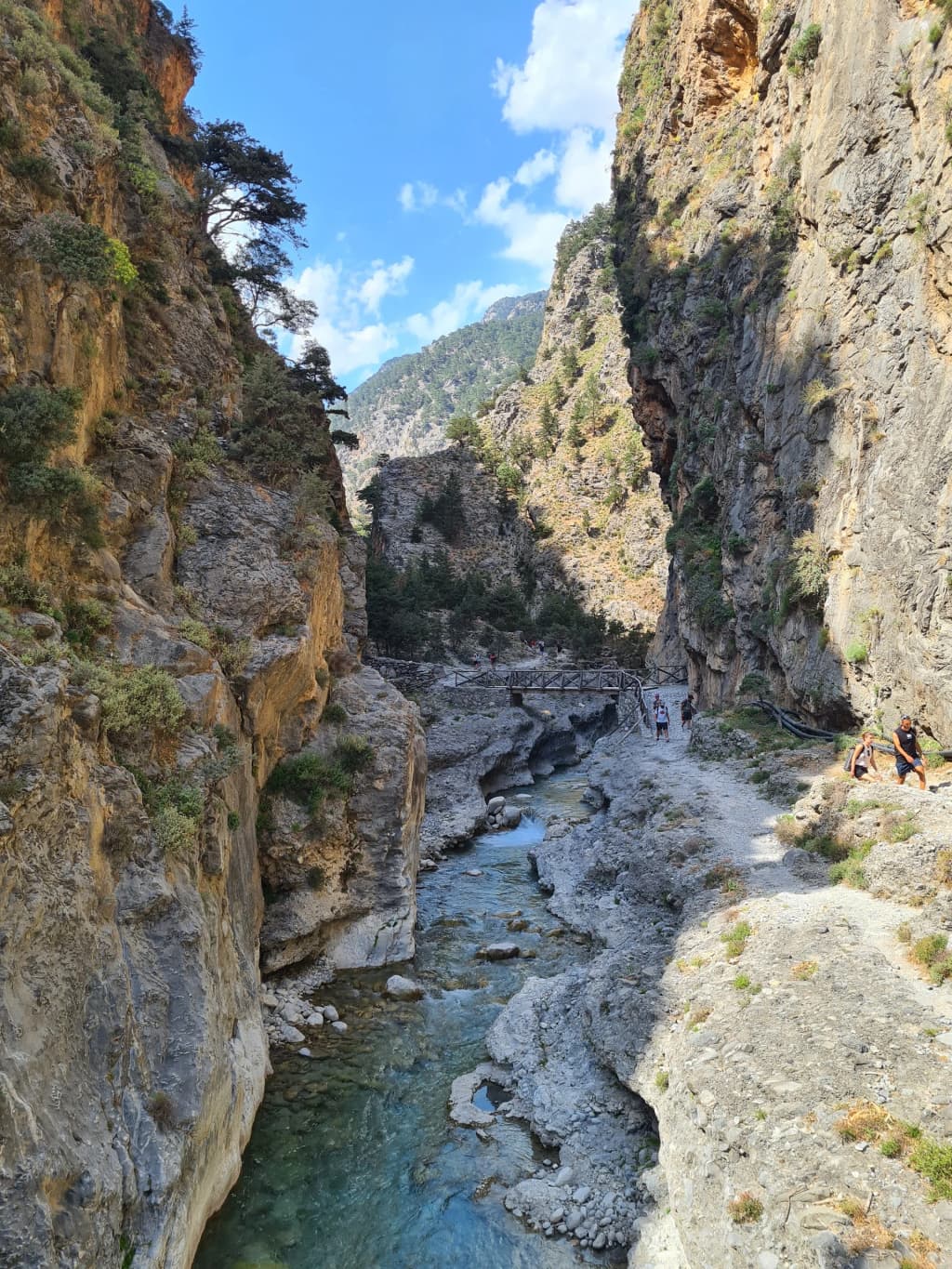
Further inland, the island splits open at the Samaria Gorge. It is one of the largest canyons in Europe, offering a grueling sixteen-kilometer trek through towering rock walls. The heat radiates from the stone, and the scent of wild herbs—thyme, oregano, and mountain sage—is baked into the dry air. I watch hikers disappear into the narrowest parts of the gorge, swallowed by the sheer scale of the natural world.
By the end of my seventh day, my body is exhausted but my spirit feels remarkably light. Seven days is the bare minimum to give this island; five will leave you rushing, and any less is simply an injustice to its scale.
I find myself back in Chania, sitting on a low stool at a corner stall far from the main tourist drag. I order a gyros. It costs exactly six euros. The vendor hands it to me wrapped in thick paper—warm, pillowy pita bread stuffed with charred, heavily spiced chicken, crispy fries, and a generous smear of cold, garlic-heavy tzatziki.
I take a bite, the juices running down my fingers, and listen to the rhythmic, musical cadence of Greek being spoken at the tables around me. The night air is warm on my skin. Crete doesn't ask you to simply visit; it demands that you hike its cliffs, drive its winding roads, and taste the raw, unfiltered earth in its food. It makes you work for its beauty, and that is precisely why it is so hard to leave.
More Photos
More Adventures
 $120 - $350/day 2-3 days
 Disneyland Paris Strategy: Ride Hacks & Coaster Secrets
Think you know Disney? Think again. Discover the underground secrets, massive coasters, and insider hacks to conquer Disneyland Paris like a pro.
 $40 - $150/day 20-30 days
 Conquer Thailand: The Ultimate 20-Day Blueprint
Skip the tourist traps. Grab your backpack. This is your high-energy, no-BS guide to dominating Thailand in 20 days. Get ready to sweat.
 $60 - $150/day 7-14 days
 Brazil's Rhythms: From the Discovery Coast to the Cerrado
Experience Brazil's contrasting landscapes. Journey through the rustic Discovery Coast, the white dunes of Lençóis Maranhenses, and the mystical Chapada.
 $40 - $120/day 3-5 days
 A Sensory Walking Tour Through Central Buenos Aires
Experience the historic heart of Buenos Aires on a sensory walking tour. Taste medialunas at Café Tortoni and explore the bustling San Telmo Market.