
Fernando de Noronha Budget Guide: Exact Costs & Tips
Plan your trip to Fernando de Noronha with this meticulous budget guide. Discover exact costs, public transit hacks, local dining, and free activities.
Fernando de Noronha is Brazil's most coveted island paradise, famously known for its pristine beaches, incredible marine life, and notoriously high prices. For most travelers, it is the ultimate dream destination—but you do not need a luxury budget to make this trip happen.
I tracked every single expense during my recent 7-day trip to show you exactly how to optimize your spending. By leveraging public transportation, local dining, and free marine activities, you can master this island on a realistic budget. Let's look at the numbers and break down exactly how to plan your itinerary.
Quick Facts
- Best Time to Visit: August to October (calm waters, minimal rain)
- Daily Budget Range: $100 - $200 USD per day (excluding flights)
- Duration Needed: 5 to 7 days
- Currency: Brazilian Real (BRL) - Note: Prices below are estimated in USD for easy planning (approx. 5 BRL = 1 USD).
1. Decoding the Mandatory Island Fees
Before you even look at hotel prices, you need to budget for the island's two mandatory environmental fees. This is where many first-time visitors get caught off guard. I am a firm believer in knowing your fixed costs upfront so you can build an accurate spreadsheet.
- TPA (Taxa de Preservação Ambiental): You pay this environmental tax upon arrival at the airport. It costs approximately $15 USD (73 BRL) per day of your stay. The longer you stay, the daily rate decreases slightly, but visits are capped at a maximum of 30 days. For a 7-day trip, budget $105 USD.
- PARNAMAR (National Park Pass): This is your golden ticket to the island's protected beaches (like Baía do Sancho and Praia do Sueste) and official hiking trails. It costs $40 USD (200 BRL) for foreigners and $20 USD (100 BRL) for Brazilians. The pass is valid for 10 days.
Pro Tip: You can pay for your National Park Pass at the PIC (Point of Information and Control) at Baía do Sancho, Praia do Sueste, or the Tamar Project headquarters. The PICs feature fantastic infrastructure, including paid lockers ($2 USD / 10 BRL), clean showers, and snack bars.
2. Getting There: The Flight Strategy
There are absolutely zero direct flights to Fernando de Noronha from outside of Brazil, or even from major hubs like São Paulo or Rio de Janeiro. You have to factor a domestic connection into your budget.
- You must connect through either Recife (REC) or Natal (NAT).
- Flights from Recife cost around $200 USD (1,000 BRL) round-trip, though this fluctuates based on the season.
- If you are flying from São Paulo or Rio de Janeiro, budget at least $400 USD total for your round-trip flights.
3. Where to Sleep: Accommodation Tiers
Accommodation will be your biggest daily expense. I highly recommend staying in family-run guesthouses (pousadas caseiras) over large luxury hotels if you want to stretch your budget without sacrificing comfort.
- Hostels: Expect to pay $40 USD (200 BRL) for a bed in a shared dorm.
- Family Guesthouses: Budget $80 USD (400 BRL) for a private room with an en-suite bathroom. You generally get access to the main house kitchen, which is a massive budget-saver for preparing breakfasts and packing trail snacks.
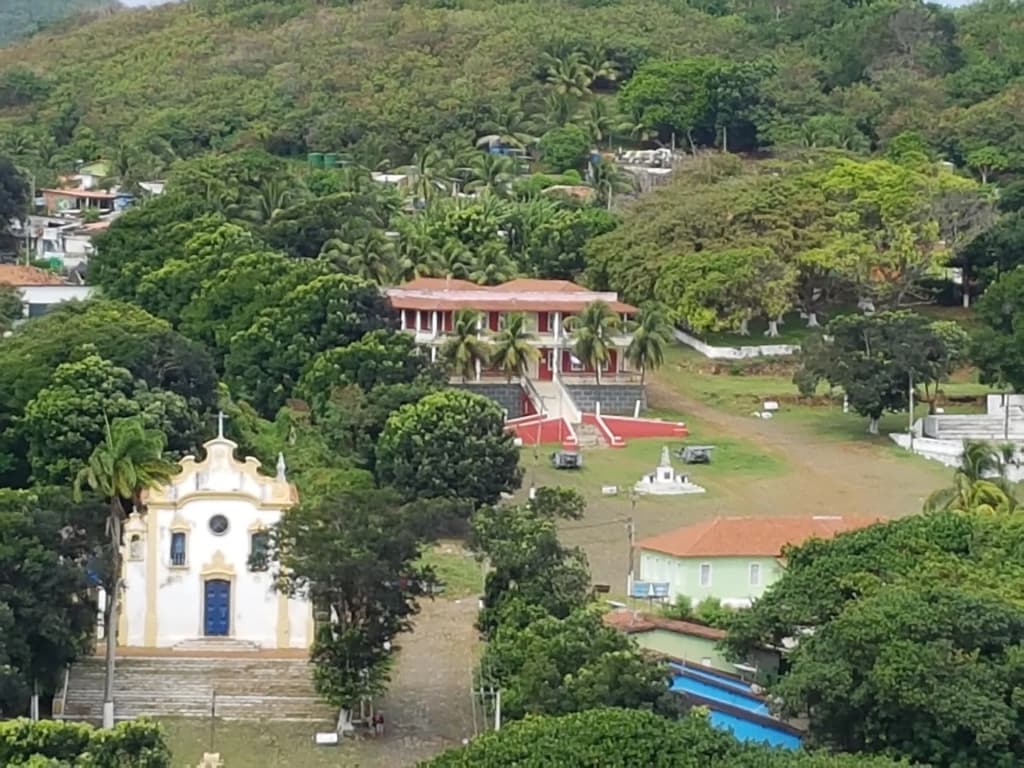
- Best Neighborhoods: Look for accommodations in Vila dos Remédios (the main commercial hub), Vila dos Trinta, Floresta Nova, or Floresta Velha. These areas keep you close to supermarkets and bus stops.
4. Getting Around: Bus vs. Taxi vs. Buggy
Forget the expensive buggy rentals. Here is the mathematical breakdown of why public transit and taxis win every single time.
Option Cost Time Best For Public Bus $0.60 USD 30 min route Extreme budget, flexible schedules Taxi $6-$8 USD 10-15 min Groups, evening dinners, quick hops Buggy Rental $60 USD/day On demand Convenience (but terrible ROI)- The Public Bus: Runs every 30 minutes and costs just $0.60 USD (3.10 BRL). It can be slightly delayed, but it gets you to 90% of the island's attractions.
- Buggy Rentals: A buggy costs roughly $60 USD (300 BRL) per day, plus highly inflated island gas prices.
- Taxis: At $6-$8 USD (30-40 BRL) per taxi ride, you would have to take 10 taxi rides a day just to break even on a buggy rental. Stick to taxis and buses to keep your daily spend low.
5. Eating Well on an Island Budget
Food on the island is significantly more expensive than mainland Brazil, but you do not have to spend $100 a day to eat well. You just need to know where to look.
- The "PF" (Prato Feito): Head to the stalls at Porto de Santo Antônio. You can get a massive traditional plate of rice, beans, meat, and salad for just $3-$4 USD (15-20 BRL). This is the best value on the island.
- Kilo Restaurants: These self-serve buffets charge by weight. Expect to pay around $18 USD/kg (90 BRL). It is a great way to load up on vegetables and protein without over-ordering.
- Mid-Range Dining: A nice meal at popular spots like Cacimba in Vila dos Remédios will cost between $14-$20 USD (70-100 BRL) per person.
⚠️ Watch Out: Many mid-range restaurants serve massive portions designed for two people. Always ask if a dish is "para dividir" (to share) before ordering two main courses!
6. Free and Low-Cost Activities
You do not need to book expensive boat tours every day. The island offers incredible free marine life encounters if you are willing to put in a little effort.

- Free Snorkeling at Porto de Santo Antônio: This is my absolute favorite budget hack. Just swim out from the port beach. We saw sea turtles, stingrays, reef sharks, and even a shipwreck—all completely free! No guide required.
- Independent Trails: Trails like Trilha dos Abreus are free, but they MUST be scheduled in advance through the National Park system. Do not show up without a reservation.
- Paid Boat Tours/Dives: If you do want to splurge, expect to pay around $30 USD (150 BRL) for a standard boat tour or a guided Tamar Project trail.
7. Common Mistakes to Avoid
Protect your budget and your itinerary by avoiding these common tourist traps:
- Relying on Credit Cards: ATMs on the island frequently run out of cash. Many tour operators offer a 10-15% discount if you pay in cash. Bring plenty of BRL from the mainland.
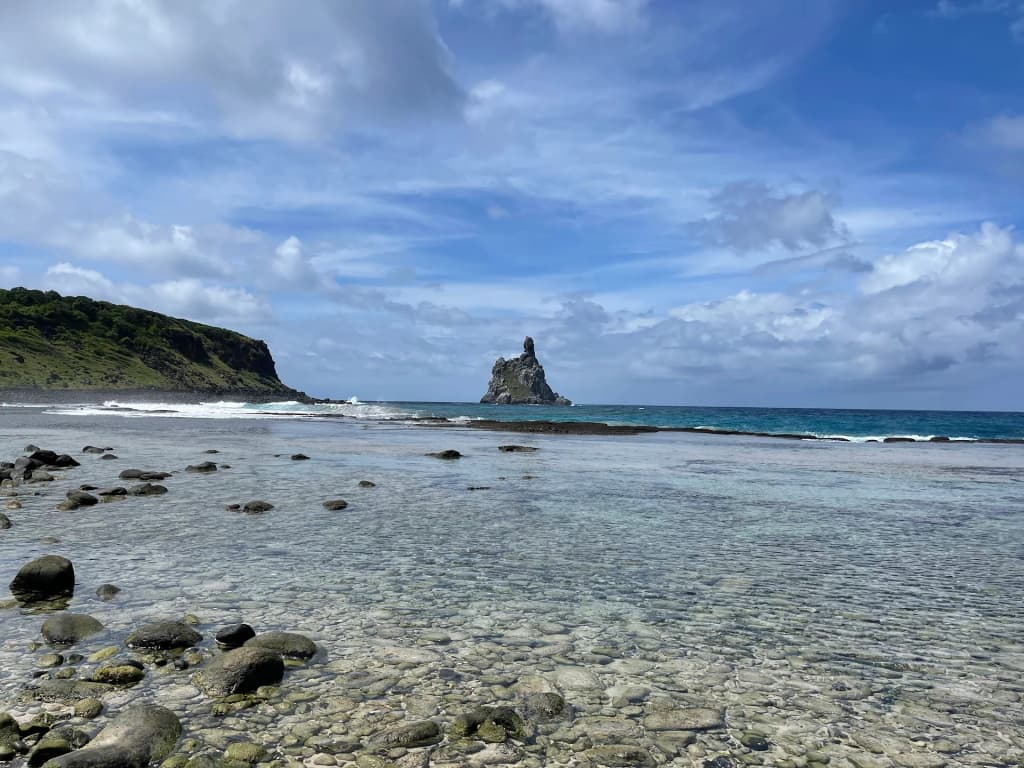
- Visiting During the Swell: From December to February (Summer), the island gets massive swells. This is fantastic for surfers but terrible for snorkeling, as visibility drops to near zero and the water gets incredibly choppy.
- Ignoring the Rainy Season: March to July brings heavy rains that can wash out trails and dampen your beach days. Stick to the August-October window for the best weather and water clarity.
- Forgetting to Pre-book Free Trails: Even the free, unguided trails require a reservation. Slots fill up days in advance, so book these as soon as you arrive at the PIC.
Practical Closing and Next Steps
Fernando de Noronha is entirely doable for around $1,100 USD ($5,500 BRL) for a 7-day trip, including mainland flights. The key is mixing a few premium experiences with $0.60 bus rides, local PF meals, and free snorkeling at the port.
Your next step? Lock in your flights to Recife and start tracking those domestic connections. The island's strict visitor cap means planning ahead isn't just a suggestion—it is a requirement. Get your dates set, pull out your spreadsheet, and start building your budget based on these numbers!
More Photos
More Adventures
 $50 - $120/day 4-7 days
 Boipeba Island: Conquer Bahia's Wild, Car-Free Coast
Forget the tourist traps in Bahia. Discover Boipeba Island's empty beaches, rugged trails, and off-the-grid adventure. Get the ultimate guide now.
 $60 - $250/day 21-60 days
 A Teardrop on Eternity: Drifting Through Asia's Extremes
Experience the staggering sensory extremes of traveling across Asia, from the freezing summit of Mount Fuji to the sweltering ruins of Angkor Wat.
 $50 - $120/day 2-4 days
 Conquer Morro de São Paulo: 48 Hours of Pure Adrenaline
Skip the tourist traps. Discover how to hike four beaches, bathe in natural clay, and spot dolphins in Morro de São Paulo with this 2-day guide.
 $50 - $150/day 4-7 days
 Where the Atlantic Breathes: Finding Solitude in Imbituba
Discover Imbituba, Brazil. From the towering dunes of Itapirubá to the wild shores of Praia do Rosa, experience a deeply sensory coastal journey.