
Where the Atlantic Breathes: Finding Solitude in Imbituba
Discover Imbituba, Brazil. From the towering dunes of Itapirubá to the wild shores of Praia do Rosa, experience a deeply sensory coastal journey.
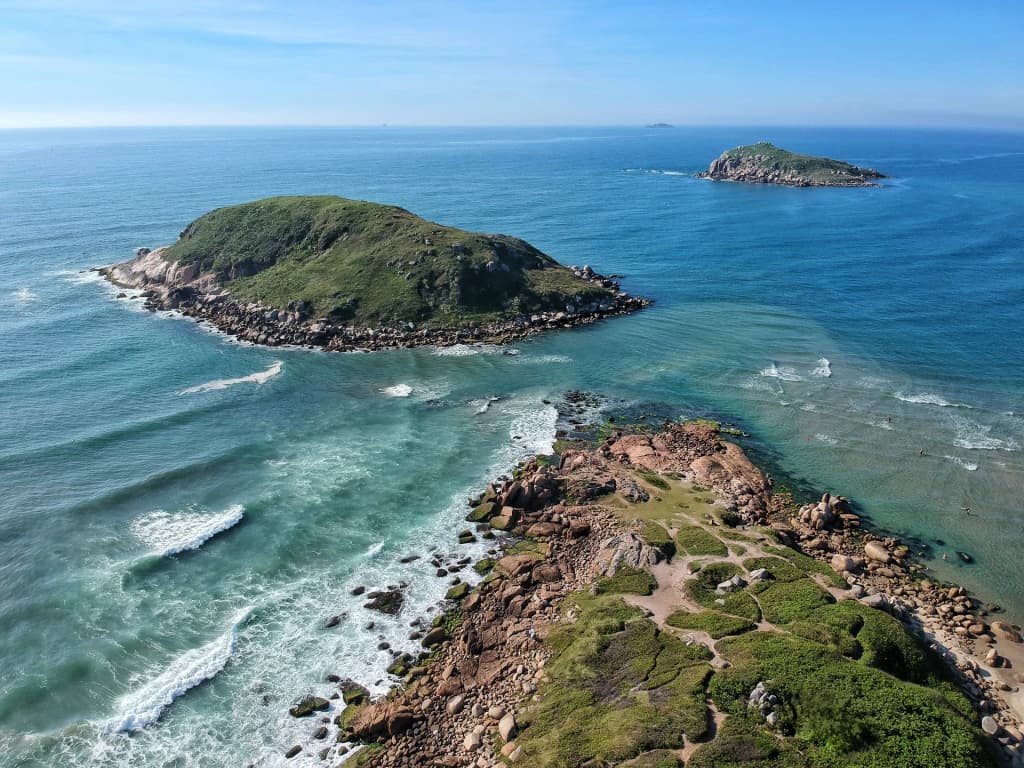
The salt hangs heavy in the air, a fine mist that settles on your skin and tastes faintly of kelp and cold ocean currents. I am standing on the edge of Praia da Vila, the sand damp and packed hard beneath my bare feet. The roar of the Atlantic is deafening here, a relentless, rhythmic pounding that vibrates up through the soles of my feet. Out in the distance, the twin silhouettes of the Santana islands—Santana de Dentro and Santana de Fora—rise from the churning blue water like sleeping giants.
It is easy to see why the world's best surfers spent eight years competing on these very waves for the championship. The water here demands respect. I watch a lone surfer carve a sharp line against a massive swell, the morning light catching the spray in a prism of colors. There is a raw, untamed energy to this stretch of the southern Brazilian coast. It isn’t just a beach; it’s an amphitheater of nature. I walk toward the rocky northern edge, where the two-hour trail to the 1919 lighthouse begins, letting the cold water rush over my ankles.
The smell of garlic, simmering tomatoes, and fresh fish draws me inland toward the historic center of Imbituba. In Praça Henrique Lage, the midday heat softens as I step into the shadow of the Nossa Senhora Imaculada Conceição church. Its colonial architecture is striking, but it is the history in its walls that holds my attention.
An older man is sweeping the stone steps. He pauses, leaning heavily on his wooden broom, and watches me examine the white-washed exterior.
"You're admiring the mortar," he says, his Portuguese thick with the melodic, drawn-out vowels of the Azorean descendants who settled this coast.
"It's beautiful," I reply, tracing a hand over the rough stone. "But I read about how it was built."
He nods slowly, his eyes crinkling against the harsh sun. "Whale oil. From 1946 until it was finished. We used to hunt them in these waters. Now, we protect them." He points a calloused finger toward the ocean. "If you stay until July, the bay fills with mothers and calves. They forgive us, I think. They always come back."
His words linger as I wander down to the nearby Portinho da Vila. It is a quiet fishermen's enclave where the Lagoa do Imaruí stretches out like a sheet of liquid glass. I find a small wooden table at a waterside restaurant and order a plate of fried mullet. The fish is caught mere meters from where I sit, its flesh sweet and tender, perfectly balanced by the sharp bite of a lime squeezed over the top.
The landscape shifts dramatically as I drive south toward Itapirubá. The paved roads give way to packed dirt, kicking up a cloud of ochre dust behind my rental car. You don't need a four-by-four to navigate the path to Lagoa do Timbé, just a slow pace and a bit of patience.
When I arrive, the silence is absolute. The lagoon appears like a mirage, an oasis of dark, still water surrounded by towering mountains of pale sand. I kick off my shoes and begin the steep climb up the Dunas da Roça Grande. The sand is hot against my soles, shifting unpredictably with every step. The wind whips fine grains against my ankles, a sharp, stinging sensation that reminds me I am entirely exposed to the elements.
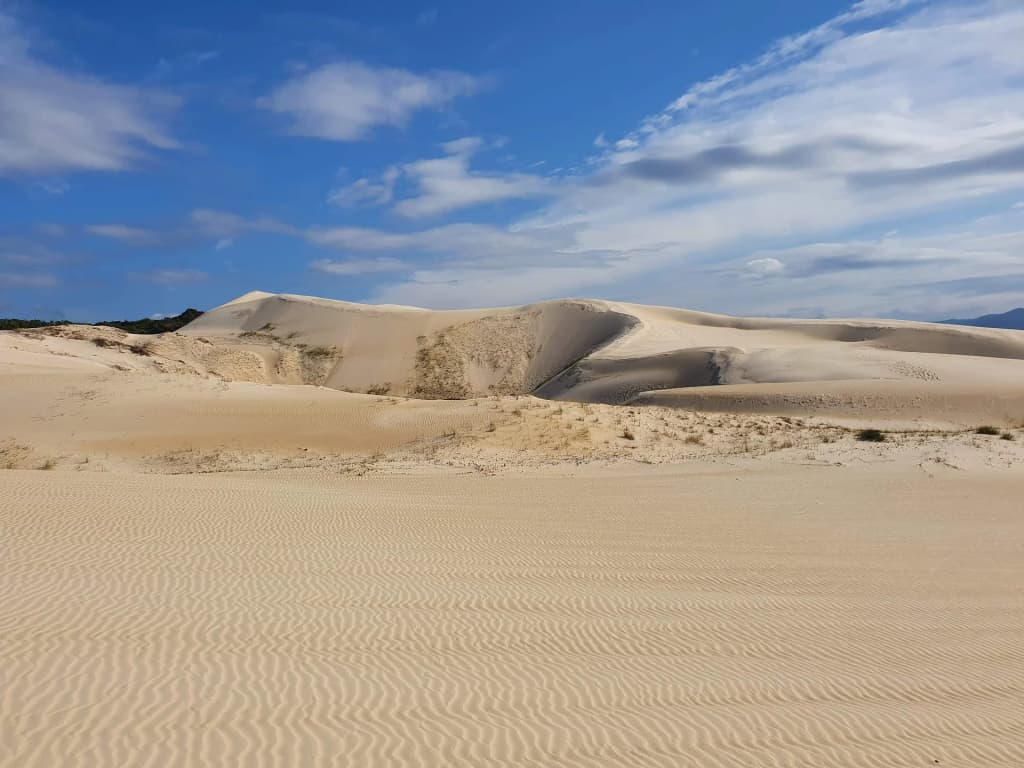
From the crest of the dune, the view is staggering. To the west, the quiet lagoon; to the east, the endless expanse of the Atlantic Ocean. I sit in the sand, listening to the low hum of the wind. Time feels suspended here. There are no beach umbrellas, no vendors calling out cold drinks—just the earth, the water, and the sky.
By late afternoon, I find myself further north at Barra da Ibiraquera. The mood here is different. The air buzzes with the energy of kitesurfers harnessing the strong coastal winds, their colorful sails darting across the sky like tropical birds.
The sky begins to bruise into spectacular shades of violet and deep peach. I find a wooden bench along Avenida Jovino Tomé Marques, joining a scattered handful of locals who have gathered for the daily ritual of sunset. The water of the lagoon is perfectly still, mirroring the colossal silhouette of Ilha do Batuta just offshore.
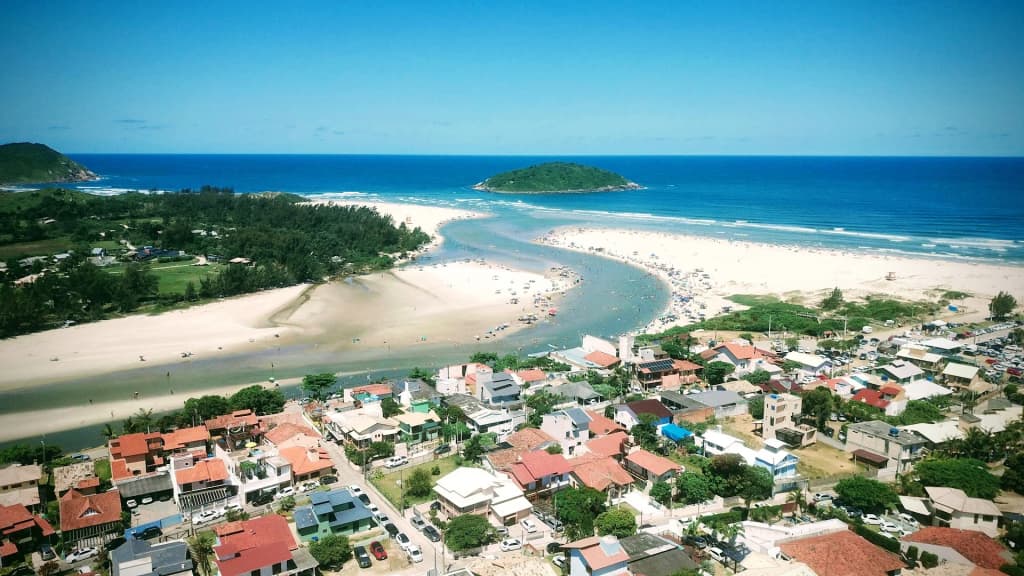
The scent of wood-fired dough drifts over from a nearby pizzeria, mixing with the ever-present brine of the ocean. It is the kind of evening that demands nothing of you. I watch a young family launch a stand-up paddleboard into the lagoon, their laughter carrying across the water, clear as a bell in the cooling evening air.
The journey culminates at Praia do Rosa. Despite its international fame—regularly listed among the most beautiful bays in the world—it retains an undeniably wild soul. I skip the busier southern end and navigate the rugged, forty-minute trail along the northern cliffs toward Praia Vermelha.
The path is draped in dense Atlantic rainforest. The air here is thick, humid, and fragrant with the scent of crushed leaves and damp earth. I pause at a set of natural rock pools carved into the granite coastline. The water inside is crystal clear and shockingly cold, a perfect respite from the heavy humidity of the trail.
As night falls, the sandy streets of the Rosa center come alive. Lanterns swing from wooden verandas, casting a warm, golden glow over the cobblestones. I secure a table at Urucum, a restaurant hidden among the lush greenery. The moqueca arrives in a bubbling clay pot. The rich aroma of dendê oil, sweet coconut milk, and fresh cilantro fills the air. It tastes like Brazil—complex, bold, and deeply rooted in the earth.
I walk back to my flat under a canopy of stars, the distant crash of the waves providing a steady, comforting rhythm. Imbituba is not just a place you visit. It is a place that seeps into your skin, a delicate, enduring dance between humanity and the raw power of the sea.
More Photos
More Adventures
 $50 - $120/day 3-5 days
 Between Glass Giants and Untamed Jungles in Balneário Camboriú
Explore Balneário Camboriú, where the towering skyscrapers of the Brazilian Dubai meet the wild Atlantic Forest. Discover beaches, hikes, and local culture.
 $50 - $150/day 3-5 days
 Chasing Tides and Tamarind: The Sensory Rhythm of Aracaju
Explore Aracaju through its disappearing sandbanks, rich seafood, and bustling municipal markets. Discover the soul of northeast Brazil in this journey.
 $50 - $120/day 3-7 days
 Conquer the Costa da Lagoa Trail in Florianópolis
Ditch the crowded beaches. Hike the Costa da Lagoa trail via Ratones in Florianópolis for wild jungle encounters, stunning views, and epic seafood.
 $30 - $80/day 5-15 days
 5 Cinematic Budget Beaches in Brazil You Need to See
Discover Brazil's best budget beaches. From epic buggy rides in Natal to wild islands in Ubatuba, get insider tips for an action-packed, cheap adventure.