
Between Glass Giants and Untamed Jungles in Balneário Camboriú
Explore Balneário Camboriú, where the towering skyscrapers of the Brazilian Dubai meet the wild Atlantic Forest. Discover beaches, hikes, and local culture.
The scent of salt spray collides with roasting peanuts and the faint trace of diesel exhaust from passing tourist buses. I am standing on the sprawling mosaic pavement of Avenida Atlântica, craning my neck upward.
"You are looking at the sky, but you should look at the water," the vendor says, slicing the top off a heavy green coconut with a swift, practiced thwack of his machete.
"It's hard to ignore the glass," I tell him, handing over a crumpled note.
He laughs, a deep, raspy sound that competes with the crashing of the surf. "They call us the Brazilian Dubai now. Six of the ten tallest buildings in the country are right here on this street. But Dubai doesn't have the Atlantic Forest breathing down its neck. Drink. It's cold."
I take the coconut, the chilled, fibrous shell rough beneath my fingertips, and taste the sweet, earthy water. He is right. Balneário Camboriú is a city of staggering juxtaposition. The Central Beach stretches out for seven kilometers, its sand a vast golden carpet that was massively widened to seventy meters just a few years ago to push back against the creeping shadows of the mega-towers. At the southern end, the Barra Sul breakwater reaches into the ocean like a concrete finger. Walking to its edge offers a surreal vantage point: a wall of hyper-modern architecture rising straight out of the South Atlantic, tethered to the mainland by the sleek, 190-meter span of the Passarela Estaiada suspension bridge.
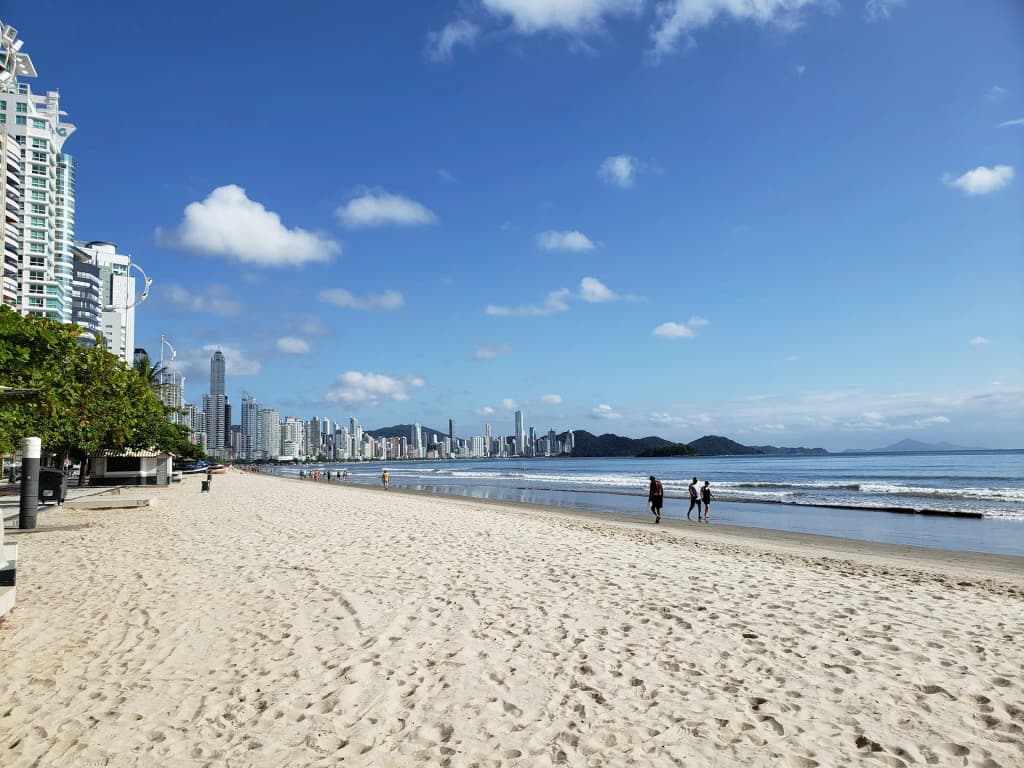
But the concrete jungle is only half the story. I leave the crowded promenade, skipping the sixty-real entry to the massive Oceanic Aquarium—despite the tempting promise of river otters and sharks—and point my rental car south along the Rodovia Interpraias. This coastal highway is a ribbon of asphalt winding through a completely different world, one you can easily traverse in a single day if you let the road guide you.
First comes Estaleirinho, then its larger sibling, Estaleiro. The air here feels heavier, carrying the sharp, briny smell of crushed seashells and agitated water. High-end homes hide behind dense foliage, and the waves pound aggressively against jagged rocky shores. The ocean here commands respect, its churn a deep, frothy white against the dark stone.
Further along, the landscape softens into Taquaras. I slip off my shoes and let my feet sink into the thick, coarse sand. It is quieter here. A three-kilometer trail, Ponta das Taquaras, snakes away toward isolated natural pools, but I am drawn instead to the neighboring Taquarinhas. Standing at the roadside viewpoint, leaning against the warm metal of the guardrail, I look down at a beach that feels entirely forgotten. It is wild, deserted, and fiercely beautiful. The water is treacherous, but the isolation is a balm after the sensory overload of the city center.
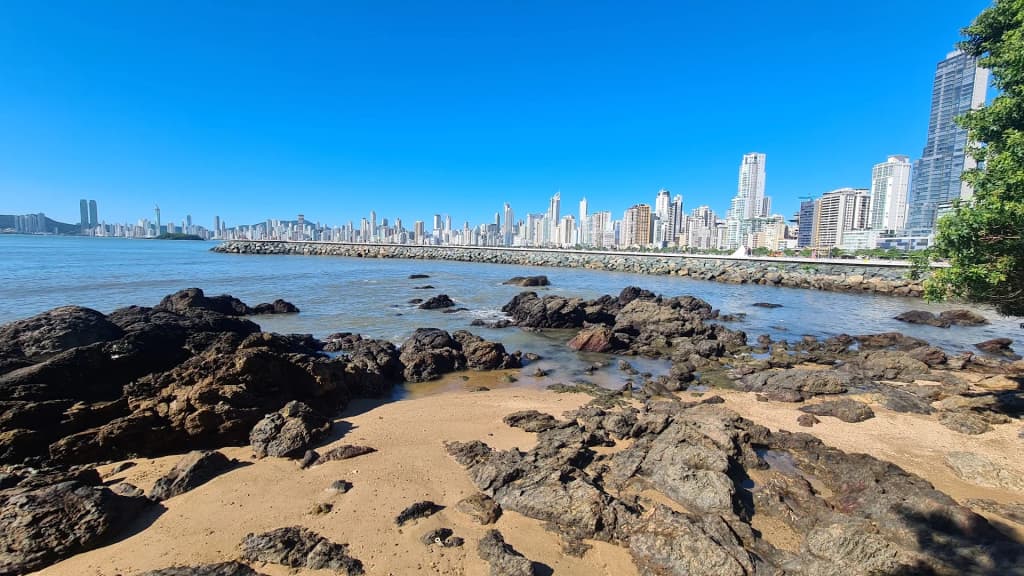
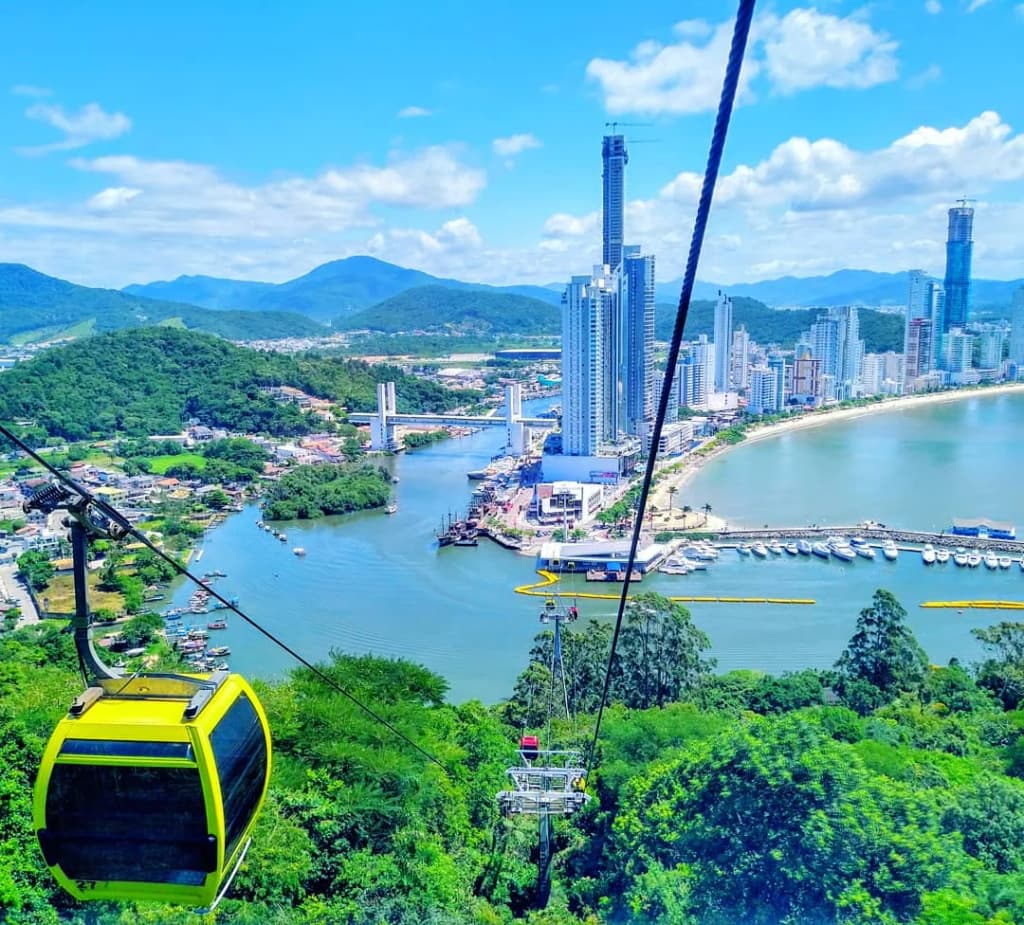
To truly understand how the city and the jungle coexist, you have to get above them. I arrive at the base of Parque Unipraias just as the afternoon heat begins to peak. Sixty reais buys a ticket on a system of forty-seven cable cars that silently glide up into the dense canopy of the Mata Atlântica.
The mechanical hum of the gondola fades as we rise. The air temperature drops instantly, and the urban smells are replaced by the rich, damp aroma of wet earth, blooming bromeliads, and ancient pines. At the Mata Atlântica station, high on the ridge, the forest feels alive. I can hear the distant shrieks of thrill-seekers riding the Youhooo mountain sled and the Zip Rider zipline, but the true magic is the quiet walk to the viewpoints. Peering through a break in the emerald leaves, I can see Laranjeiras Beach far below—a perfect, calm horseshoe of water where pirate-themed tourist boats bob gently in the turquoise shallows.
If the southern beaches offer isolation and the cable cars offer elevated comfort, the northern edge of the city demands a bit of sweat. I find myself at the wooden deck of Pontal Norte, lacing up my boots for the hike up Morro do Careca.
The trail is short—about thirty minutes crossing through the quiet Praia do Buraco—but the incline is sharp enough to get the blood pumping. The wind picks up as I clear the tree line, cooling the sweat on my neck. Reaching the grassy, bald summit costs nothing, but it delivers the most striking panoramic view in the region. To my left, the wild, rolling waves of Praia Brava in neighboring Itajaí; to my right, the sweeping curve of Balneário Camboriú, its glass giants glittering in the late afternoon sun. It feels like standing on the border between two different centuries.
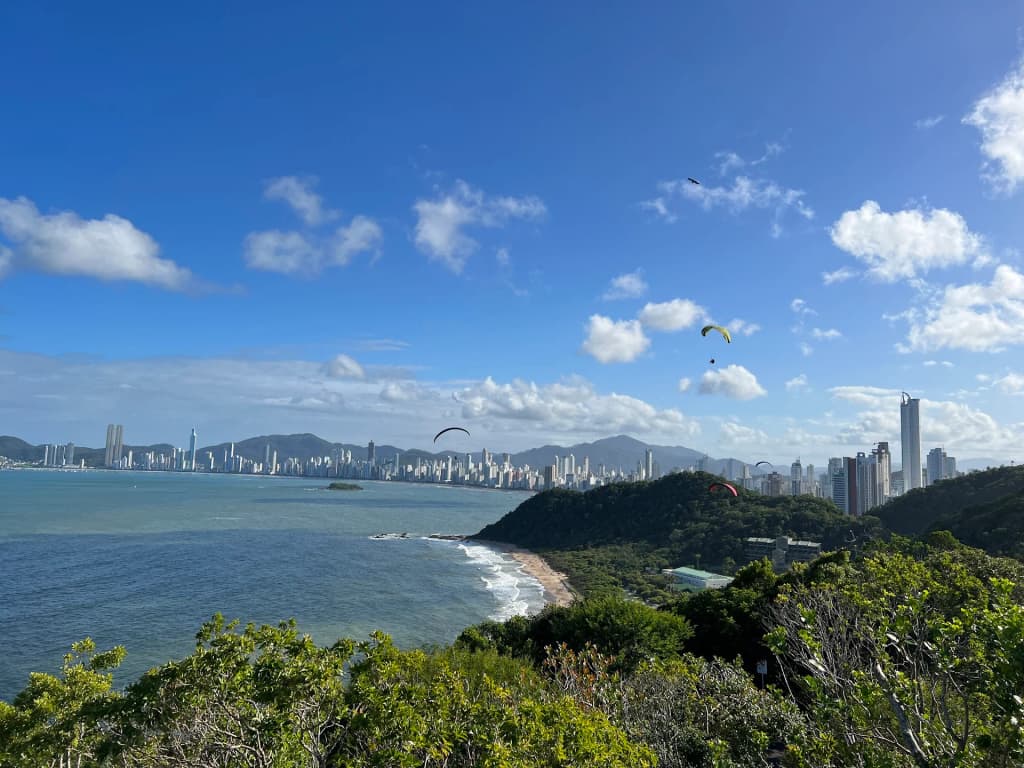
Evening falls fast here, the shadows of the skyscrapers stretching out to swallow the sand. I make one final stop, driving up the steep, winding roads to Cristo Luz. I hand over fifty reais at the gate and walk up to the base of the thirty-three-meter monument.
Unlike most viewpoints that face the ocean directly, this spot looks at the city from behind. As the sky bruises purple and deepens into black, the buildings light up one by one. Neon reflections dance on the dark water of the Atlantic in the distance. The Ferris wheel at Barra Norte glows like a giant, slow-moving halo. I lean against the cool stone wall, listening to the faint, rhythmic pulse of the city below. Balneário Camboriú is undeniably loud, ambitious, and paved in concrete—but with the dark, breathing forest at its back and the relentless ocean at its feet, it is a city that can never quite tame the wildness that surrounds it.
More Photos
More Adventures
 $50 - $150/day 4-7 days
 Where the Atlantic Breathes: Finding Solitude in Imbituba
Discover Imbituba, Brazil. From the towering dunes of Itapirubá to the wild shores of Praia do Rosa, experience a deeply sensory coastal journey.
 $40 - $120/day 2-4 days
 Conquer Urubici: Bike Ziplines & Extreme 4x4 Trails
Skip the beaches. Urubici is Brazil's rugged mountain frontier. Discover 120-meter canyon bike ziplines, freezing waterfalls, and extreme 4x4 trails.
 $40 - $100/day 3-5 days
 Laguna, Brazil: Wild Beaches & Historic Coastal Adventure
Skip Rio and explore Laguna, Brazil. Discover wild dolphin fishing, untamed hike-in beaches, and epic revolutionary history on this coastal adventure.
 $50 - $150/day 3-5 days
 Skip Porto Seguro: The Wild Beaches of Arraial d'Ajuda
Escape the crowds of Porto Seguro. Discover the rugged cliffs, wild beaches, and intense natural beauty of Arraial d'Ajuda in our adventure guide.