
Gramado and Canela: A 4-Day Guide to Brazil's Serra Gaúcha
Immerse yourself in Brazil's Serra Gaúcha. Discover the dramatic waterfalls of Canela, the chocolate-scented streets of Gramado, and rich European heritage.
The scent of dark chocolate and damp pine needles wraps around you before you even step under the glass roof. The Rua Coberta hums with the low murmur of Portuguese, clinking wine glasses, and the scrape of heavy wooden chairs against basalt stone. It is barely morning, yet the air in Gramado already feels thick with indulgence. I pull my jacket tighter against the mountain chill. There are no traffic lights out there on Borges de Medeiros, the town's main artery. Instead, cars glide to a polite halt, yielding to pedestrians wrapped in scarves, wandering past half-timbered enxaimel facades that make you forget, for a fleeting moment, that you are in South America.
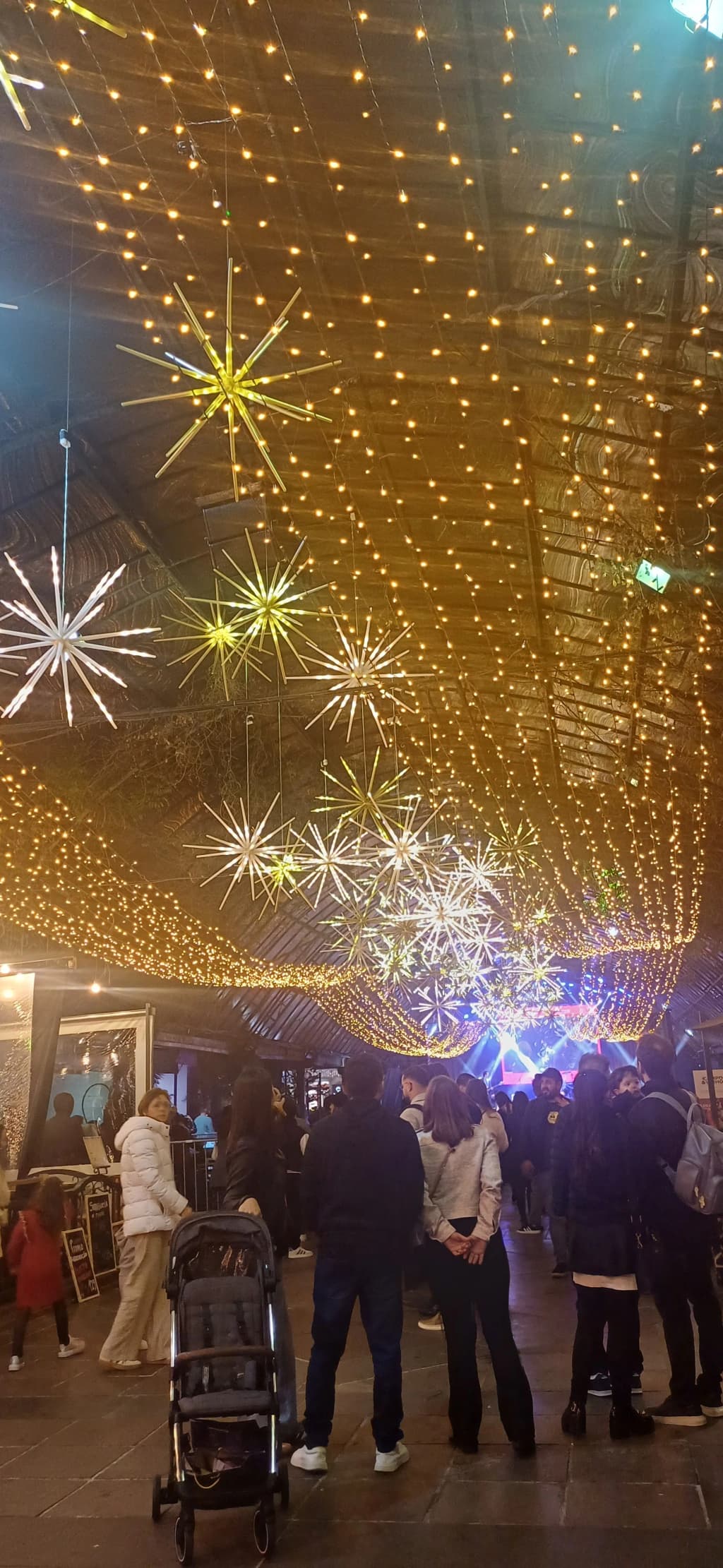
We wake up at 6:15 the next morning, slipping out of the Pousada Olidal before the breakfast coffee has even finished brewing. At roughly six hundred and sixty reais for four nights, the room is a modest, comfortable refuge perfectly positioned near the center, leaving plenty of budget for the culinary onslaught to come. The early hour is tactical. We walk to Rua Torta, Gramado's answer to San Francisco's Lombard Street. Without the midday crowds, the winding, flower-lined curve is entirely silent, save for a single passing car that forces us to step back against the manicured hedges. The stone is cold beneath my boots, the air is crisp, and the town feels like a secret.
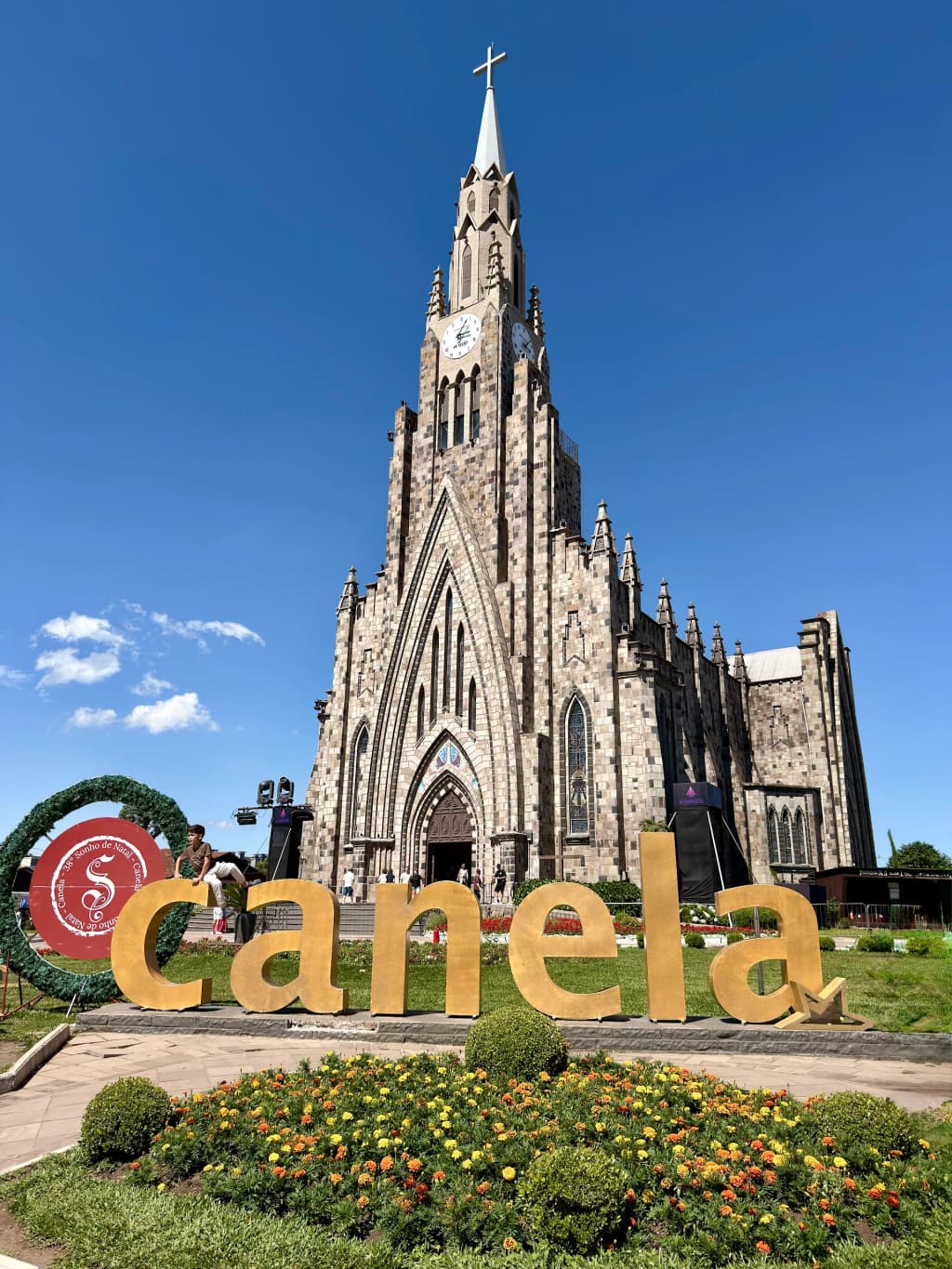
The light shifts differently in the neighboring town of Canela. We arrive just as the afternoon begins to surrender to dusk, standing at the base of the Catedral de Pedra. Sixty-five meters of neogothic stone reach up toward a bruising sky. It took fifty years to finish this church, built with a stubborn patience that feels entirely out of step with the modern world.
"Wait for the sun to drop," the waiter at Empório Canela tells me, setting down a heavy plate of Entrecot salad. "The stone catches fire."
"Does it really change color?" I ask, pulling apart a piece of warm bread.
He smiles, wiping down the table next to us. "Just watch."
I pay the hundred and thirty reais for our dinner and step outside just as the horizon burns out. He wasn't lying. The setting sun hits the facade, turning the cold gray stone into a brilliant, fiery orange. Inside, the stained glass throws fractured rainbows across the empty pews. It is a quiet, heavy kind of beautiful.
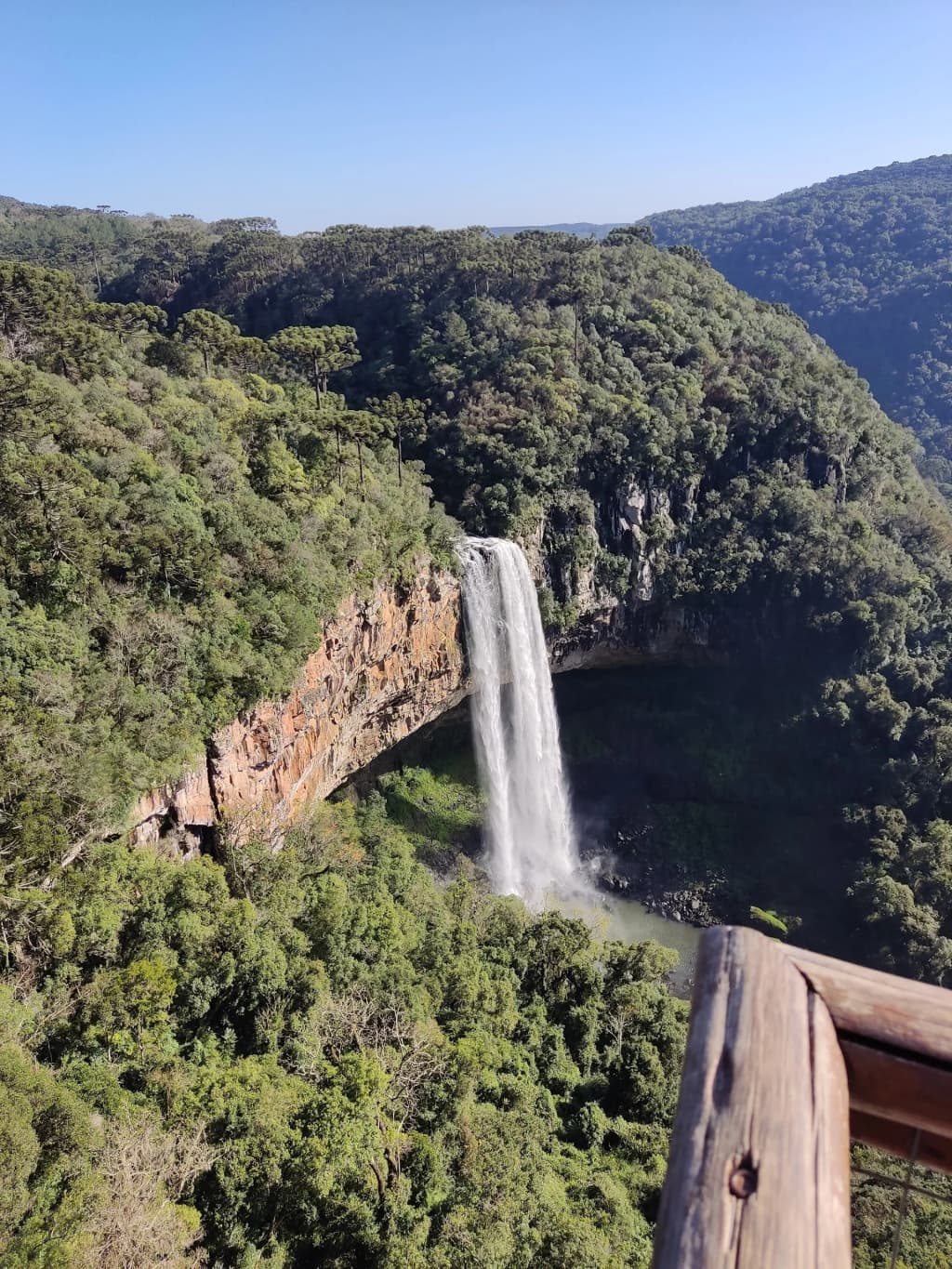
The silence of the church is quickly replaced by the violent roar of the earth. Thirty reais grants us entry into Parque Estadual do Caracol, where the manicured gardens abruptly give way to raw, plunging wilderness. I stand at the edge of the viewing platform, the mist clinging to my face as the Cascata do Caracol throws itself one hundred and thirty-one meters down into the lush, green valley below. You can pay an extra fifteen reais for a glass-enclosed observatory, but out here, feeling the vibration of the water in your chest and smelling the wet earth, the raw elements are more than enough.
We trade the massive scale of the waterfall for a world entirely shrunken down. Mini Mundo is an open-air park of meticulous miniatures, and handing over the fifty-eight reais at the ticket booth feels like paying admission to my own childhood. I spend an hour crouching down to eye-level with tiny European castles and Brazilian train stations, laughing when I spot the DeLorean from Back to the Future parked on a minuscule street corner, and the kids from Stranger Things hiding in an alleyway. It is entirely absurd and deeply charming.
"You don't want the pedal boat?" the vendor at Lago Negro asks, leaning against the wooden dock. He points to the fleet of fiberglass swans bobbing in the dark water.
"No," I tell him, watching the wind ripple across the surface. "I just want to listen to the trees."
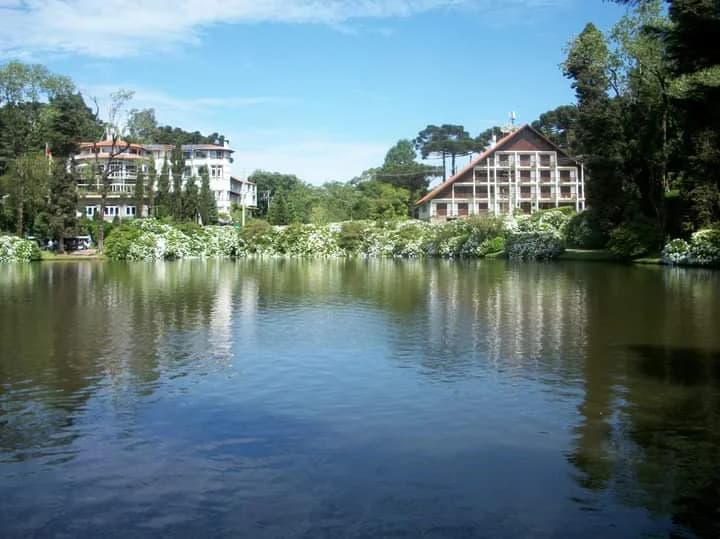
Fifty reais for twenty minutes feels steep, but more than that, it feels unnecessary. The beauty of Lago Negro—an artificial lake dug in 1942 after a devastating fire, lined with pines imported directly from Germany's Black Forest—is in its stillness. We sit on the grass in the shade, the air smelling faintly of pine resin and rain. Later, we chase that calmness to Le Jardin, a lavender park where a twenty-real entry fee unlocks greenhouses heavy with the intoxicating scent of blooming purple flowers, basil, and damp soil.
You cannot leave the Serra Gaúcha without surrendering to its gastronomy. It is a place built by Portuguese, German, and Italian immigrants, and their legacy is written in butter, cheese, and dough. At Trattoria Boniatto, hidden slightly away from the center, we devour a two-hundred-real feast: fried polenta beneath a blanket of gratin cheese, followed by Gnocchi a Boniatto, a chaotic but masterful collision of cheese, sausage, bacon, and eggplant.
And then, the fondue. We secure a table at Chateau de la Fondue for just under sixty-five reais a person through a local offer app. The sequence arrives like a slow, deliberate coronation: first the molten cheese, then sizzling hot stones for tender cuts of beef, and finally, a dark pool of liquid chocolate surrounded by fresh strawberries and marshmallows. I walk back to the pousada with the taste of rich cocoa lingering on my tongue, my boots clicking softly against the basalt streets. Gramado is quiet now, the fog rolling in off the mountains, wrapping the European facades in a thick, South American mist.
More Photos
More Adventures
 $60 - $150/day 3-5 days
 Get Lost in Bento Gonçalves: The Real Brazilian Wine Country
Skip the beaches. Rent a car and dive into Brazil's Italian wine country. Discover century-old mills, wild boar salami, and epic vineyards in Bento Gonçalves.
 $60 - $150/day 4-7 days
 Fortaleza Unleashed: The Ultimate High-Octane Coastal Guide
Skip the resort chairs. Discover Fortaleza's towering red cliffs, high-speed dune buggy rides, and relentless kitesurfing winds. Get ready to sweat.
 $150 - $400/day 4-7 days
 Skip the Resorts: The Ultimate Wild Guide to Trancoso
Ditch the tourist traps and explore the wild side of Trancoso, Bahia. Wade across rivers, hike to secluded natural pools, and experience the real Brazil.
 $50 - $120/day 2-3 days
 Holambra: Finding a Slice of Holland in Tropical Brazil
Explore Holambra, Brazil's City of Flowers. Discover authentic Dutch immigrant history, towering windmills, flower fields, and a unique cultural fusion.