
Earning the View: Hiking Morro da Urca in Rio de Janeiro
Skip the expensive cable car and hike the lush Atlantic rainforest trail up Morro da Urca. Discover Praia Vermelha, wild marmosets, and sweeping Rio views.
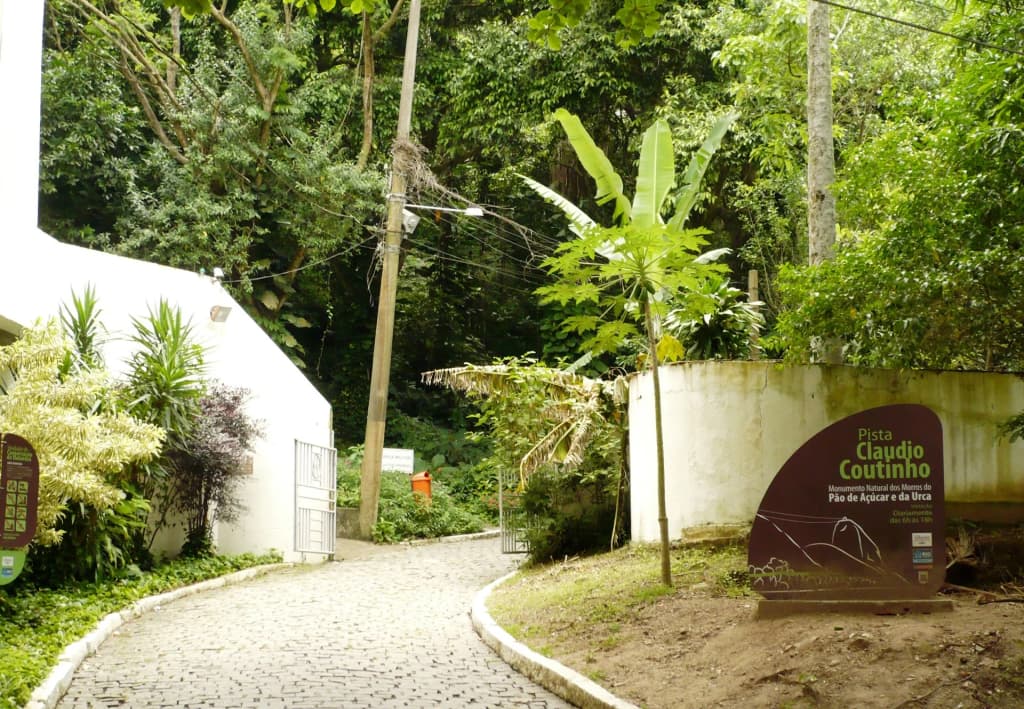
The salt spray hits you first, a fine mist rolling off the Atlantic that tastes faintly of iodine and morning. Praia Vermelha is still waking up. The sand here has a strange, reddish hue that catches the early sunlight, glowing against the dark, imposing granite monoliths that frame the quiet cove. I adjust my backpack, feeling the damp heat of the Rio de Janeiro morning already pressing against my skin. It is just past six, and the heavy iron gates to the Pista Cláudio Coutinho have just been pushed open.
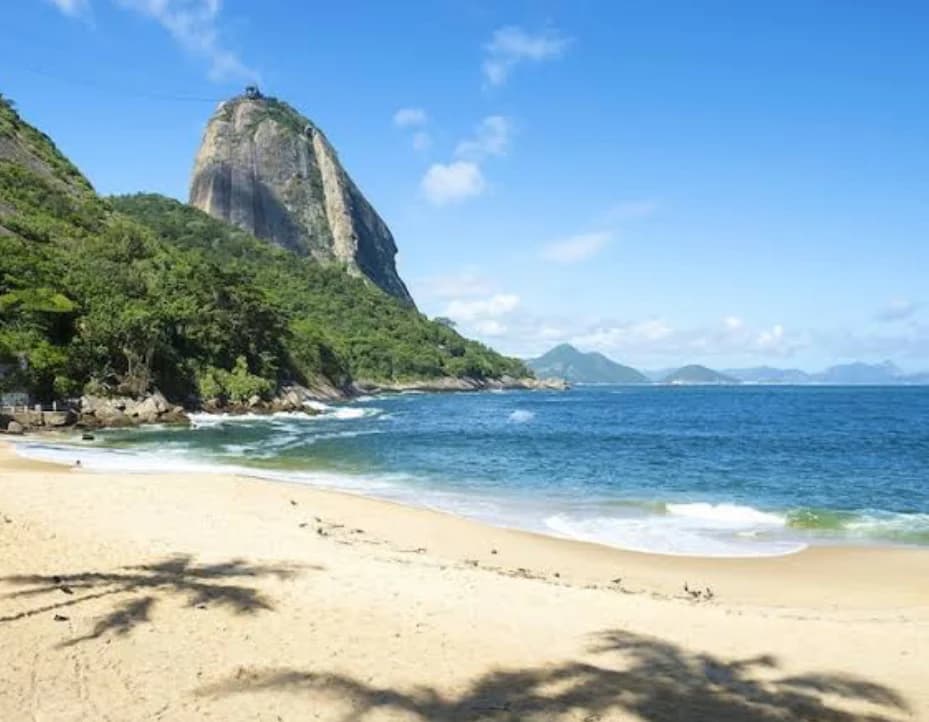
The paved walking path hugs the rugged coastline, a smooth ribbon of concrete caught between the crashing waves and the dense, tangled wall of the Atlantic rainforest. You can smell the wet leaves, a rich, earthy perfume mixed with the sharp tang of the ocean. Runners glide past in a rhythmic patter of rubber on stone, their heavy breath keeping time with the cicadas that are already buzzing in the canopy above.
I walk the track slowly, letting the chaotic city noise fade behind the curve of the mountain. Most visitors taking the expensive cable car up to Sugarloaf Mountain never see this side of the rock. They miss the profound quiet. They miss the way the morning light filters green and gold through the massive jackfruit trees. I arrive at the wooden sign marking the trailhead for Morro da Urca just as a park ranger is unhooking the metal chain. The clock on my phone reads exactly nine in the morning, right on schedule.
"Watch your step today," he says, his Portuguese thick with the melodic, drawn-out Rio accent, pointing a calloused finger toward my hiking shoes. "The stones are sweating."
"Is it always this slippery?" I ask, wiping a bead of sweat that has already found its way to my eye.
He laughs, a deep, rumbling sound that echoes slightly in the dense foliage. "It is the jungle, meu amigo. She is always breathing. Keep your feet on the roots and whatever you do, don't let the monkeys steal your lunch."
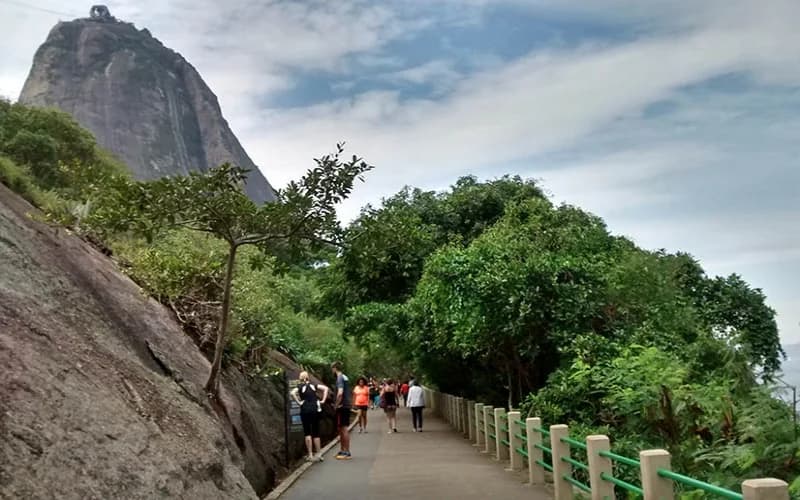
He isn't joking about the stones. The first ten minutes of the ascent are a steep, breathless scramble over damp granite and slick red earth. My boots—thankfully equipped with deep rubber treads—grip the thick tree roots that snake across the path like natural, chaotic staircases. The air grows noticeably heavier here, completely shielded from the ocean breeze. The sharp chemical scent of bug spray, which I applied generously at the bottom, mingles with the sweet, almost decaying smell of overripe fruit dropped by the unseen canopy above.
About halfway up the mountain, the dense wall of green suddenly breaks, offering a natural window through the thick leaves. I step onto a small dirt clearing, my lungs burning just a little, the salty taste of physical exertion on my lips. Below, the sprawling city stretches out in a sweeping, hazy panorama. A thick morning fog is still trying to burn off the water, but through the shifting mist, the gentle curves of Urca Beach and the long crescent of Praia do Flamengo reveal themselves.
A sudden rustle in the branches pulls my eyes up. A tiny marmoset, no bigger than a squirrel, is perched on a thick vine, watching me with wide, unblinking eyes. It inches closer, clearly accustomed to weary hikers offering easy snacks. I keep my hands firmly in my pockets. Feeding them only breaks their natural rhythm, turning wild foragers into dependent beggars. We share a long, silent moment of mutual curiosity before it chatters softly and darts back into the deep shadows of the leaves.
Thirty minutes after leaving the paved track, the dirt trail levels out and spills abruptly into civilization. The contrast is jarring but entirely welcome. One moment you are deep in the humid heart of the Atlantic forest, and the next, you are standing on the wide, manicured wooden terraces of Morro da Urca. The air up here is distinctly cooler, the ocean breeze finally finding its way back to my skin.
The summit is alive with the hum of different languages—Spanish, French, English, and the rapid-fire cadence of local Portuguese. The clinking of ceramic coffee cups from the small kiosks mixes with the mechanical whir of the massive cable cars gliding overhead toward the even higher peak of Pão de Açúcar. I walk past the Time Capsule exhibit—a modest five-real ticket into the history of this engineering marvel—and stop to admire the original 1912 cable car on display. Its faded yellow paint feels wonderfully nostalgic against the modern backdrop of sleek helicopters chopping rhythmically through the sky, ferrying tourists over the deep blue bay.
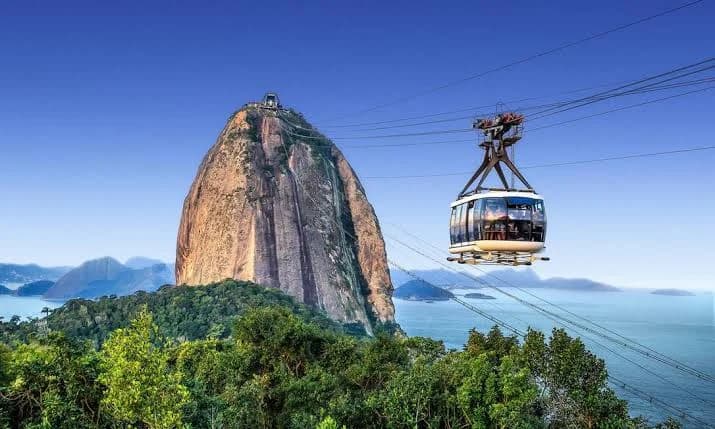
I buy a cold sparkling water from a vendor, the condensation instantly pooling on my fingers, and lean against the heavy metal railing. I let the sheer scale of Rio wash over me. The view is a masterpiece of dramatic geography. The sailboats anchored in Botafogo Bay look like scattered white petals on dark blue glass. To the left, the endless green canopy of the Aterro do Flamengo park snakes alongside the water, leading the eye toward the distant runways of Santos Dumont Airport. Beyond that, the impossibly long ribbon of the Rio-Niterói bridge disappears into the hazy horizon, connecting the bustling city to the quieter shores of Niterói. I can just make out the historic stone walls of the Fortaleza de Santa Bárbara standing guard over the waters.
The afternoon wears on, and the light begins to shift, painting the scattered clouds in softer, golden and bruised-purple tones. The park rangers start moving through the crowds, politely reminding hikers that the trail down into the jungle closes strictly at five o'clock. I consider my aching calves and the steep, slippery roots waiting in the deepening shadows of the forest. The ticket booth for the cable car descent catches my eye. For forty reais—half that if you qualify for a local discount—you can float down in a glass bubble, suspended weightless between the mountain and the sea.
I pay for the ticket and step into the spacious car, surrounded by families pointing excitedly through the scratch-marked glass. As we detach from the station and swing out over the void, the ground drops away, and Rio expands into an impossible, glittering panorama. My legs are tired, my shirt is damp with the lingering humidity of the jungle, and my hands still smell faintly of wet earth and crushed leaves. You can easily buy a ticket to the top of the world, but feeling the mountain breathe beneath your feet first makes the view belong to you in a way money never could.
More Photos
More Adventures
 $30 - $80/day 5-15 days
 5 Cinematic Budget Beaches in Brazil You Need to See
Discover Brazil's best budget beaches. From epic buggy rides in Natal to wild islands in Ubatuba, get insider tips for an action-packed, cheap adventure.
 $35 - $75/day 4-5 days
 Fortaleza Budget Travel Guide: Itinerary, Costs & Logistics
Plan a perfect trip to Fortaleza, Brazil with this meticulous budget guide. Discover top attractions, daily costs, day trips, and strategic itineraries.
 $40 - $100/day 3-5 days
 Skip Rio: Why Brazil's Smallest State is Your Next Big Adventure
Forget the massive crowds. Dive into Sergipe, Brazil's smallest state, for raw wildlife, UNESCO heritage, and mind-blowing untold culinary history.
 $50 - $120/day 2-4 days
 Into the Sertão: Outlaws, Canyons, and the Real Brazil
Skip the crowded beaches. Dive into Brazil's Sertão to explore the emerald Xingó Canyons, hike the unforgiving Caatinga, and trace the footsteps of outlaws.