
Finding Hope in the Heart of Hiroshima and Miyajima
Experience the resilience of Hiroshima and the sacred beauty of Miyajima Island through a sensory journey of history, street food, and local connection.
The hiss of batter hitting a hot iron griddle cuts through the low hum of Hiroshima Station. The air is thick with the scent of savory cabbage, sweet soy glaze, and charred pork. I slide onto a narrow stool at the food court, surrounded by locals hunched over massive, layered Japanese pancakes. The chef doesn't look up as he slides a steaming, impossibly tall mound of noodles and batter toward me. The heat radiates against my face, a welcome comfort after a long day of travel. I take a bite. It is rich, dense, and entirely different from the mixed versions I've eaten in Osaka. This is Hiroshima-style okonomiyaki, a dish born out of post-war scarcity that has become a proud emblem of the city's survival.
Getting here was an exercise in that famous Japanese efficiency, tempered by a few deliberate detours. The journey from Osaka took just under an hour on the Shinkansen, though I opted for the unreserved cars, saving a few thousand yen to spend wandering the city later. Earlier in the day, I had broken the trip in Himeji, stashing my heavy bags in a station locker with a quick tap of my Suica card. I spent the morning climbing the steep, incredibly narrow wooden stairs of Himeji Castle. Without the protective slippers they used to provide, the polished, six-hundred-year-old floorboards were icy through my socks. Himeji is a masterpiece of preservation, an untouched relic of feudal Japan. But as I finish my okonomiyaki and step out into the neon-lit streets of Hiroshima, I realize I am entering a completely different kind of historical monument—one defined not by what was preserved, but by what was rebuilt.
The morning air is crisp and tastes faintly of salt as the ferry cuts through the Seto Inland Sea. I stand on the right side of the deck—a trick a local mentioned to catch the best early glimpse of our destination. The ten-minute crossing to Miyajima Island feels like slipping quietly into another era. There is a plaque on the ferry noting a sister-city relationship with France's Mont Saint-Michel, a nod to their shared reliance on the dramatic whims of the tide.
Stepping onto the island, the sacred ground crunches beneath my boots. Almost immediately, a small, spotted deer nudges my hand, its wet nose cold against my skin. The island smells of ancient cedar, sea spray, and the distinct, savory smoke of giant oysters roasting on open grills. I follow the scent of sugar to a small wooden shop where a vendor is pulling Momiji Manju from a cast-iron mold. For a mere hundred and twenty yen, I am handed the maple-leaf-shaped cake. The traditional sweet red bean paste inside is warm and melts on my tongue, though the chocolate-filled version I buy moments later feels like a wonderful, decadent secret.
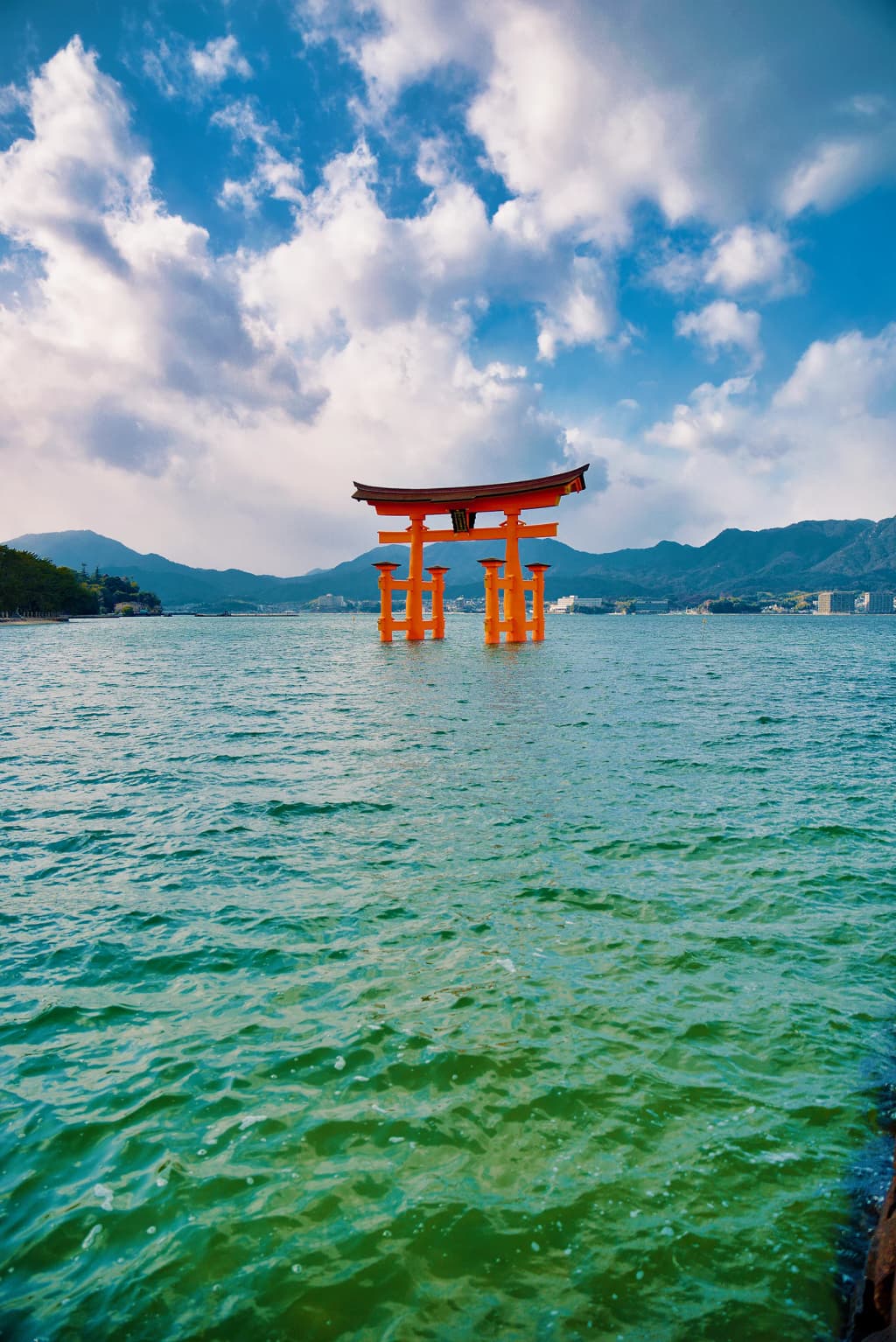
Walking along the coastline, the ocean has pulled back, revealing the muddy floor of the bay. The great vermilion torii gate of Itsukushima Shrine doesn't float today. Instead, it stands colossal and defiant on the exposed seabed, its massive wooden pillars scarred by barnacles and time. I pay the three hundred yen entry fee and wander the wooden corridors of the shrine. The floorboards creak rhythmically underfoot. Groups of school children in bright yellow hats flutter through the courtyards like flocks of birds, their unrestrained laughter echoing against the silent, watchful architecture. It is a place that demands you slow down, dictating your pace by the slow retreat and return of the sea.
The transition back to the city center in the afternoon brings a palpable shift in gravity. Standing before the A-Bomb Dome, the silence is physical. The skeletal remains of the former Prefectural Industrial Promotion Hall jut into the pristine blue sky, a jagged wound of twisted steel and crumbled brick that the city deliberately chose never to heal. The contrast between this shattered structure and the sleek, modern buildings surrounding it is jarring.
The wind rustles through thousands of paper cranes left at the nearby Children's Peace Monument, their brilliant colors a stark contrast to the gray stone. They are folded in memory of Sadako Sasaki, a two-year-old girl who survived the initial blast only to succumb to leukemia years later, and for all the children lost. A heavy realization settles over me: because the men were away at war, the overwhelming majority of the victims here were women, children, and the elderly. The scent of earthy incense drifts from a nearby memorial, mingling with the crisp autumn air.
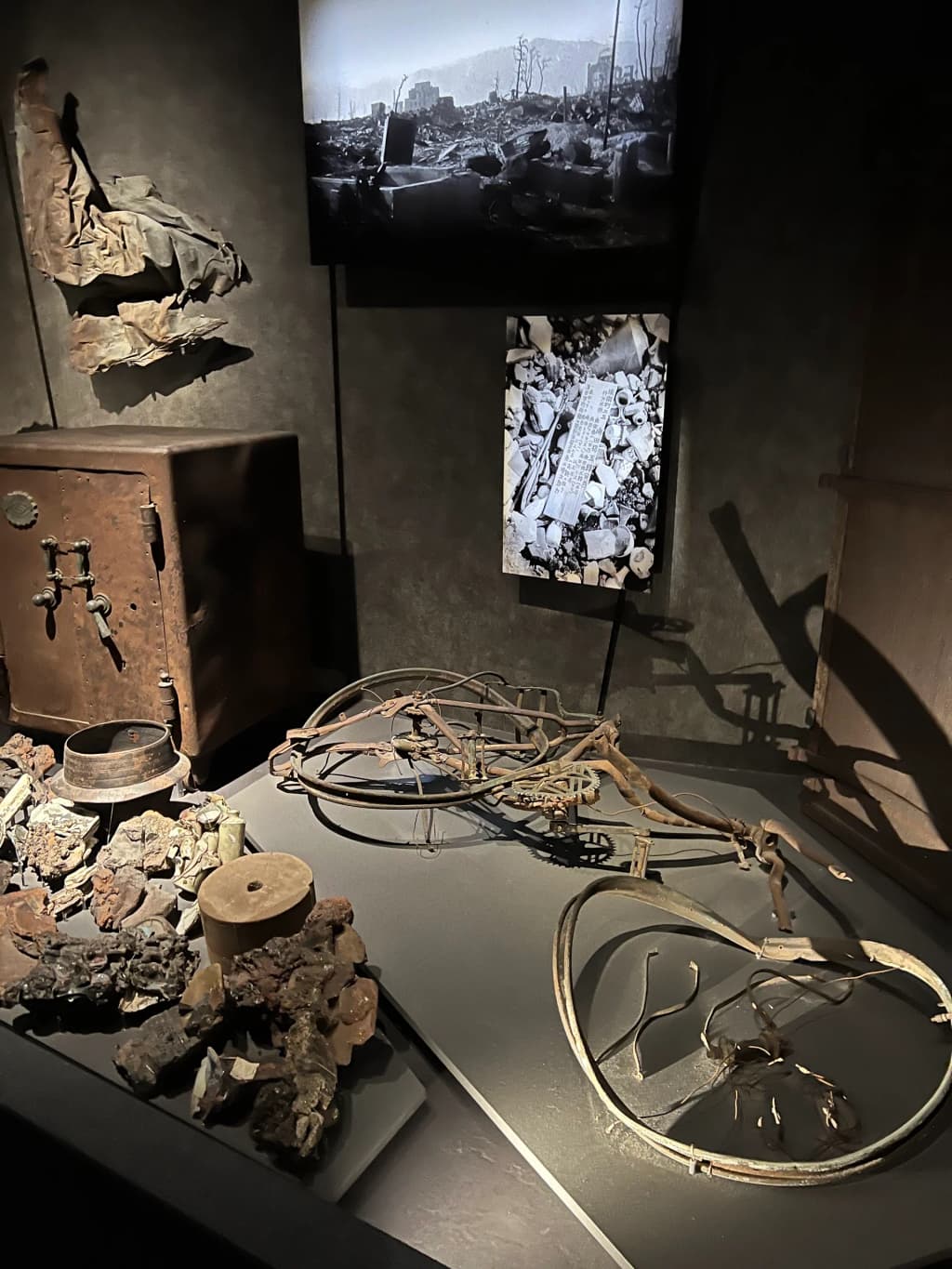
I hand over two hundred yen at the entrance of the Peace Memorial Museum. Inside, the exhibits press heavy on the chest. It takes hours to move through the dim, hushed rooms. You do not merely look at the artifacts; you feel the impossible weight of a city erased in a blinding flash. It is a dense, emotionally devastating experience, but an entirely necessary one. The museum asks for silence, and the visitors—from local school groups to foreign travelers—oblige, moving like ghosts through the tragedies of the past.
Yet, as I step back out into the fading afternoon light, the air feels remarkably different. The heaviness begins to lift, replaced by something warmer. Near the exit, an older Japanese man with a kind, deeply lined face waves me over to his small table. He holds a square of bright, patterned paper in his weathered hands.
"First time in Hiroshima?" he asks, his English careful and melodic.
"Yes," I say, still feeling the weight of the museum in my chest. "It is a lot to take in."
His eyes crinkle into a deep, genuine smile. He holds up the square of paper. "Look here," he says, leaning forward like he's sharing a secret. "Hiroshima magic."
With a flick of his wrist, the paper seems to take flight from his palm, transforming into a perfect origami crane. He presses it gently into my hand. The paper is crisp, the gesture infinitely warm. This is exactly what I hadn't expected. I came to Hiroshima preparing myself for a sad, devastated place, a city defined solely by its scars. Instead, I am met with people who are so gentle, so unbelievably resilient, that it brings a sudden lump to my throat.
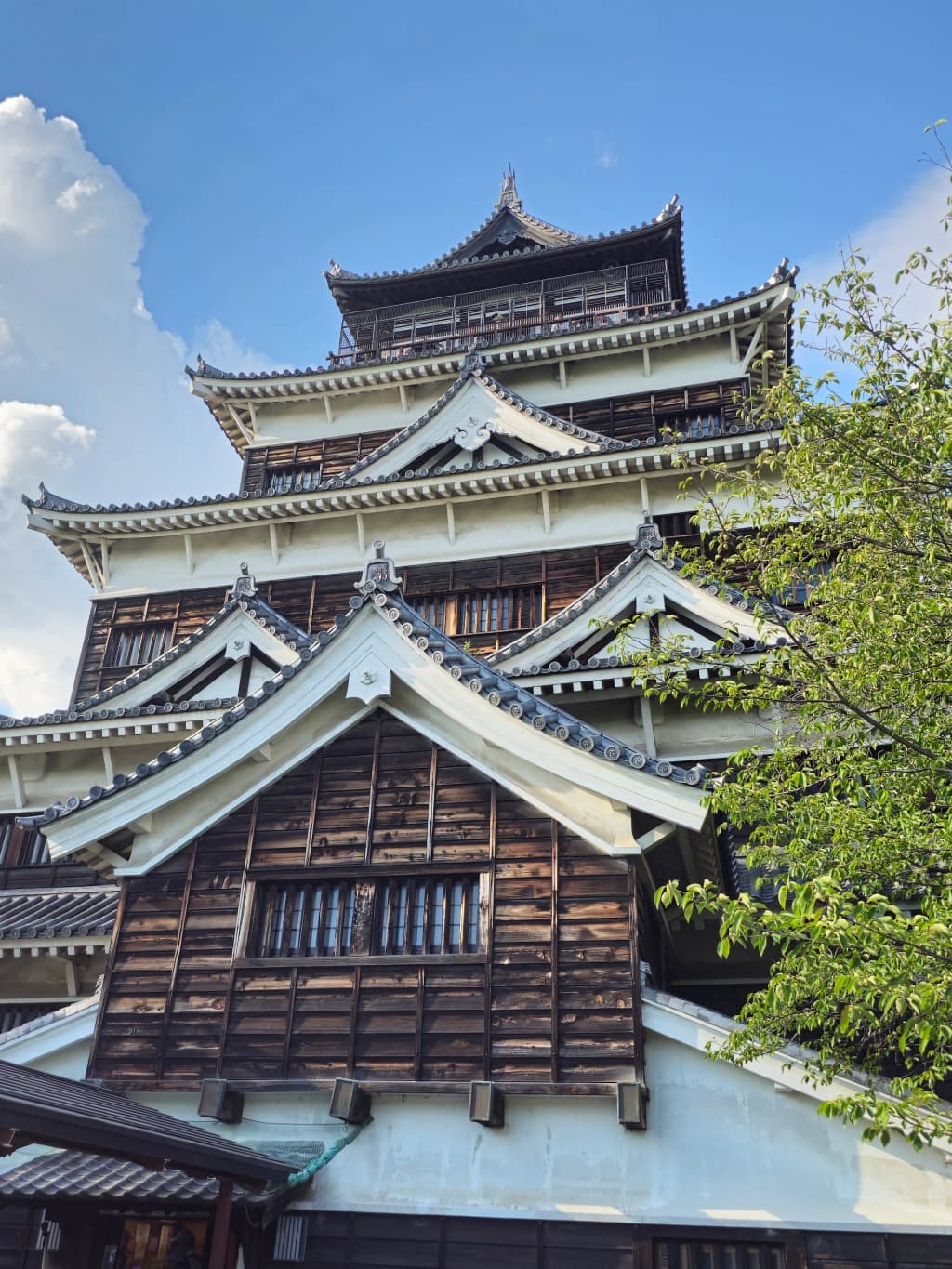
Walking back toward the station, the silhouette of Hiroshima Castle rises in the distance. Unlike the original wooden beams of Himeji, this fortress is a reconstruction. But it stands beautifully against the twilight, a defiant monument to a city that refused to be erased. A group of school children passes by, their initial shyness breaking into wide smiles as they bravely practice their English to ask me for a quick interview for a class project.
Hiroshima is not a tomb. It is a thriving, pulsing metropolis that has somehow alchemized its unimaginable pain into a profound, enduring plea for global peace. The neon lights begin to reflect in the tranquil waters of the Motoyasu River as evening falls. I reach into my pocket, my fingers brushing against the sharp folds of the paper crane. It is a quiet reminder that while humanity is capable of terrifying destruction, it is also capable of astounding grace. You don't leave this city the same person you were when you arrived. You leave carrying its memory, and a fierce, unshakeable hope.
More Photos
More Adventures
 $100 - $250/day 3-5 days
 A Handheld Feast: Walking the Cobblestones of Edinburgh
Explore the sensory magic of Edinburgh. From handheld meat pies to cask-strength whisky, discover the warmth and history of Scotland's stunning capital.
 $30 - $70/day 4-7 days
 Istanbul Unleashed: Master the Chaos and Devour the City
Skip the tourist traps. Master the chaos, devour authentic street food, and navigate the wild frontier of Europe and Asia with this bold Istanbul guide.
 $150 - $350/day 10-21 days
 England's Wild Edges: Cliffs, Grit, and Ancient Secrets
Skip the tourist traps. Discover England's raw beauty, from the towering Seven Sisters cliffs to ancient Stonehenge and reborn industrial cities. Get lost.
 $150 - $400/day 3-4 days
 Chasing the Ghost of Mount Fuji: Quiet in Kawaguchiko
Escape the chaotic photo spots and day-tripper crowds to find quiet lakeside walks, hot stone beef, and traditional ryokans in the shadow of Mount Fuji.