
Drinking Gold: How a Neon Soda Captures the Soul of Lima
A sensory journey through the restless streets of Lima, guided by the neon glow of its most defiant and beloved beverage.
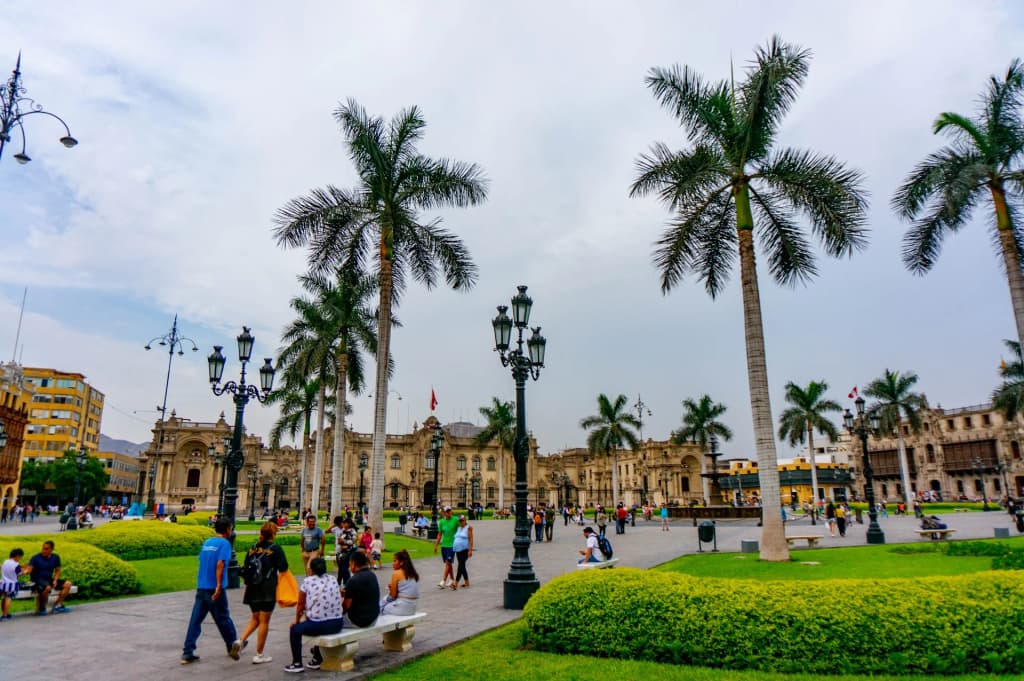
The fluorescent hum of the glass-door cooler vibrates against my palm, barely audible over the chaotic grind of Lima's morning traffic. Inside, past the sticky condensation and the smudged fingerprints of a hundred previous customers, sits a row of glass bottles radiating a shade of yellow so intense it borders on radioactive. The air in the tiny bodega smells of roasted corn nuts, diesel exhaust from the avenue, and the faint, sweet aroma of baking empanadas from a cart down the street.\n\nI pull the heavy glass door open, letting a wave of artificial chill wash over my face, and grab the bottle. The glass is freezing, rough with raised lettering that has survived decades of recycling.\n\n"You want the golden cola?" the shop owner asks. He is a man whose face is mapped with the deep lines of a lifetime spent in the coastal sun, wiping down the laminated counter with a rag that has seen better decades.\n\n"I have to try it," I tell him, fishing a few coins from my pocket. "The Peruvian Coca-Cola."\n\nHe scoffs, a brief, proud sound from the back of his throat. "No, my friend. Coca-Cola wishes it was Inca Kola. It is our national blood. They try to beat us, but they cannot."\n\nThe two soles—barely fifty cents in American money—clink against the glass counter. It is a remarkably small price for a bottle of national pride. I ask him to pop the cap. The metal yields with a sharp hiss, releasing a scent that instantly transports me back to childhood summers: spun sugar, vanilla, and something distinctly herbal.\n\nI take a sip. The carbonation bites at the tip of my tongue before giving way to a flavor that defies standard beverage logic. It does not taste like cola. It certainly isn't guaraná, the earthy, berry-forward soda I know from Brazil. Instead, it hits the palate like liquid bubblegum, mellowing out into notes of chamomile and hierba luisa, the lemon verbena that gives the drink its signature botanical backbone. It is unabashedly, unapologetically sweet.\n\n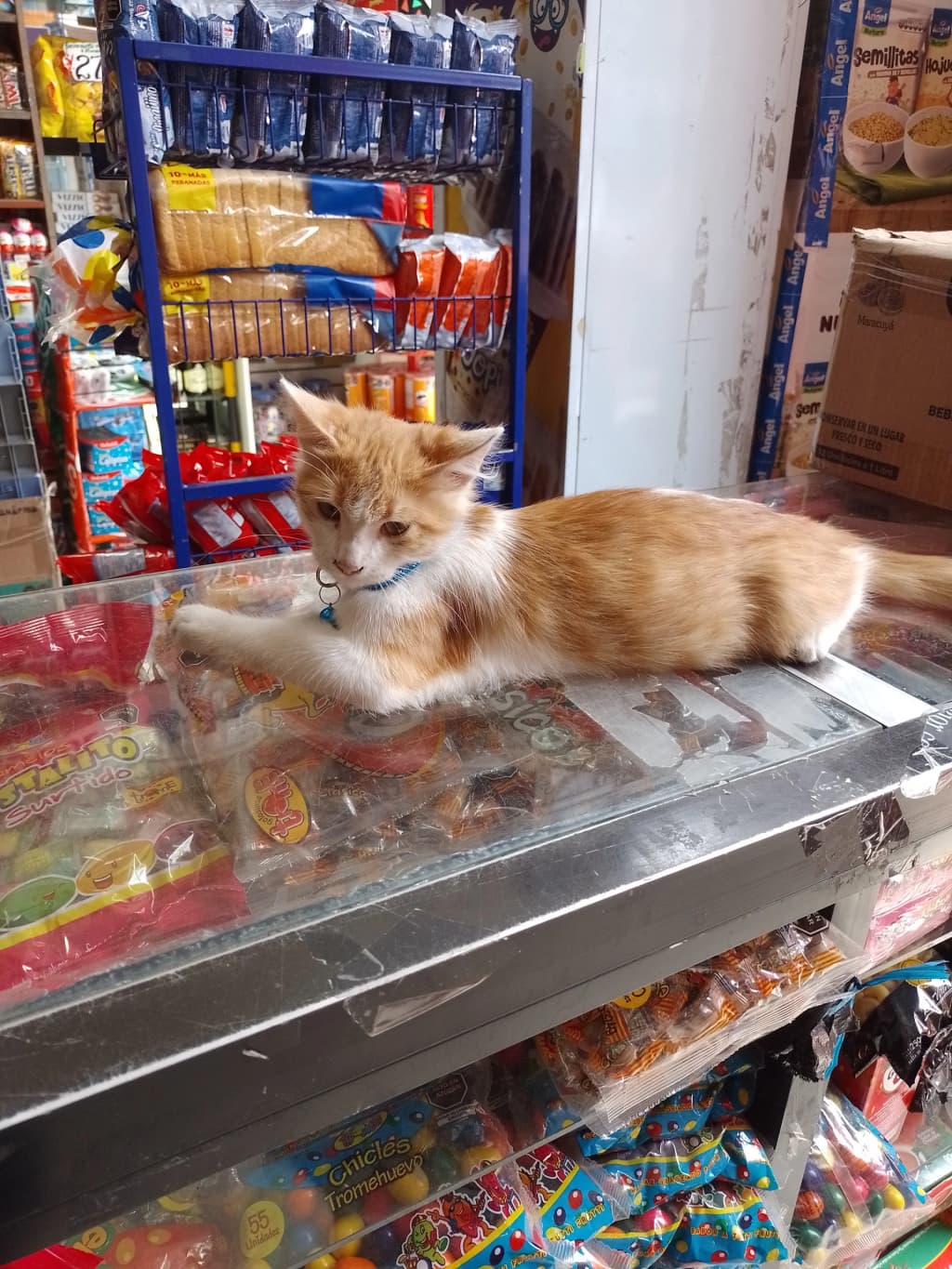 \n\n---\n\nStepping back out onto the street, the bottle glows like a captured piece of the sun against the backdrop of Lima's infamous garúa—the perpetual, low-hanging coastal mist that blankets the city in a soft, cinematic gray for half the year. The contrast is striking. The city is muted, historic, built of carved stone and heavy wooden balconies, yet its people drink this wildly saturated, neon-yellow elixir.\n\nI wander toward the Plaza de Armas, the historic heart of the city. The sidewalks are a ballet of purposeful movement. Women in sharp business suits rush past men pushing wooden carts piled high with fresh quail eggs and churros. The rhythmic clatter of footsteps on cobblestone mixes with the distant tolling of a cathedral bell.\n\nIt makes sense, sipping this drink while walking these streets. Lima is a city of layers, a place where the ancient and the hyper-modern sit shoulder to shoulder. Inca Kola is much the same. Created in the 1930s by a British immigrant, it utilized indigenous ingredients to craft a flavor profile that the local palate instantly adopted. It became such a juggernaut that it achieved what seemed impossible: it outsold the biggest soda brand in the world. Eventually, the global giant had to wave the white flag, purchasing a stake in the company just to get a piece of the Peruvian market.\n\n
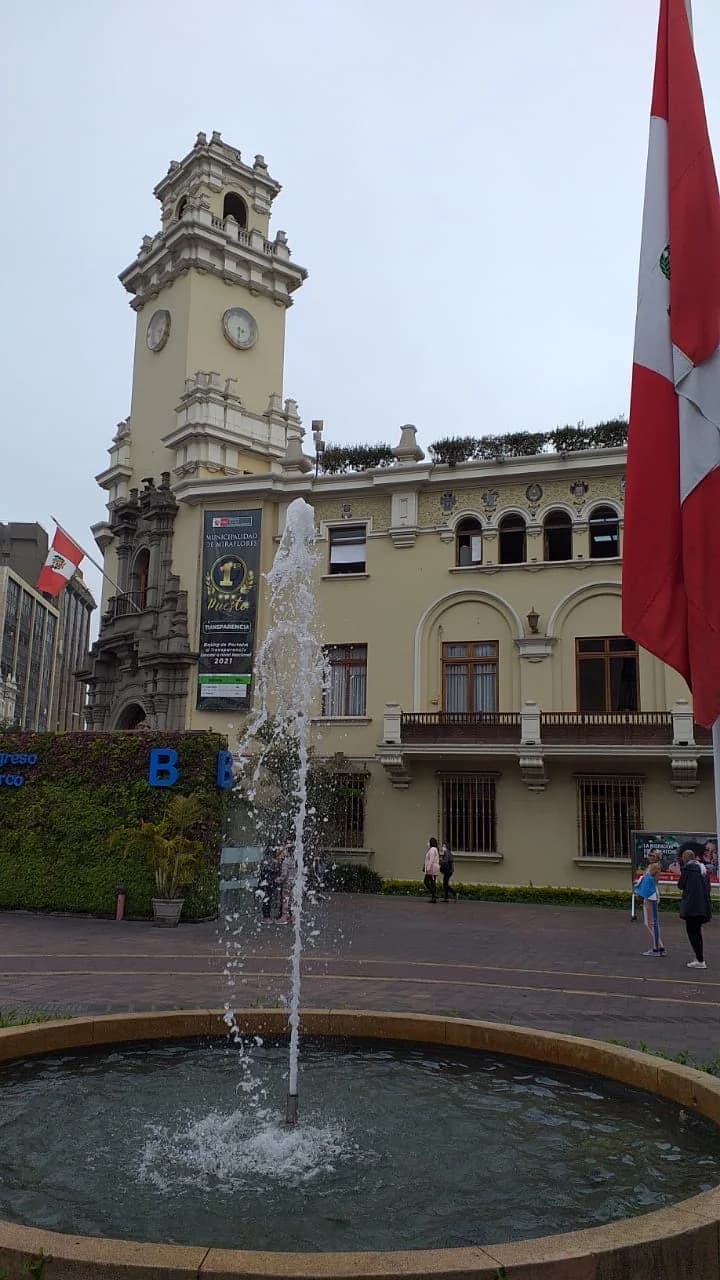
 \n\n---\n\nThe bottle is half empty by the time I flag down a taxi to head south toward Miraflores. The driver, a young guy listening to reggaeton with the windows rolled down, nods at the yellow bottle in my hand as I slide into the cracked leather of the back seat. The fifteen-minute ride costs me about four dollars, a standard rate if you agree on the price before closing the door.\n\nThe air changes as we approach the coast. The dense, exhaust-tinged oxygen of the city center gives way to the sharp, briny smell of the Pacific Ocean. Miraflores sits perched on towering cliffs of loose earth and clay, looking out over a sea that stretches endlessly toward the horizon.\n\nI find a small cevicheria tucked into a side street off the main park. The plastic chairs scrape loudly against the concrete floor as I pull one out. When my plate arrives, it is a mountain of translucent, lime-cured fish, crowned with razor-thin red onions and flanked by giant kernels of Andean corn.\n\nThis is where the magic of the golden soda truly reveals itself.\n\nI take a bite of the ceviche. The acid of the leche de tigre is sharp, waking up every nerve ending in my mouth, followed closely by the slow, creeping fire of the ají limo peppers. Just as the heat threatens to overpower the delicate fish, I take a long pull of the Inca Kola. The intense, syrupy sweetness of the soda acts as a perfect counterweight, extinguishing the spice and cutting through the acidity. It is a culinary lock and key. Suddenly, the flavor profile makes perfect sense. It wasn't designed to be drunk in a vacuum; it was engineered to dance with the bold, aggressive flavors of Peruvian cuisine.\n\n
 \n\n---\n\nThe late afternoon light begins to shift, breaking through the gray mist just enough to turn the sky a bruised purple over the Pacific. The wind picks up, carrying the chill of the Humboldt Current, rustling the palm trees that line the cliffside boardwalk. Paragliders drift silently overhead like colorful, slow-moving birds.\n\nI sit on a mosaic-tiled bench overlooking the water, rolling the empty glass bottle between my palms. The condensation has long since dried, leaving my hands slightly sticky.\n\nTravel is rarely about the grand monuments or the things you check off a list. It is found in the spaces between. It is the old man proudly defending his local soda over a global conglomerate. It is the way a hyper-sweet, bubblegum-flavored drink perfectly balances a plate of raw, spicy fish. It is sitting on a cliff at the edge of South America, listening to the crashing waves, holding a heavy glass bottle that tastes like resilience.
More Photos
More Adventures
 $100 - $350/day 2-4 days
 Conquer Lima: The Ultimate Peru Coastal Capital Guide
Think Lima is just a stopover? Think again. Experience Miraflores cliffside views, pre-Inca history, and the best culinary scene in South America.
 $200 - $500/day 2-3 days
 Conquer Disneyland California: The Ultimate 2-Park Guide
Think Disneyland is just a walk in the park? Think again. Get the ultimate battle plan for dominating Disneyland and California Adventure. Skip the lines.
 $60 - $200/day 4-7 days
 Between the Andes and the Ocean: Unraveling Santiago
Experience the striking contrasts of Santiago, Chile. Discover historic dive bars, the soaring Andes in Cajón del Maipo, and the colorful hills of Valparaíso.
 $40 - $80/day 2-4 days
 Boa Vista: Exploring the Amazon's Fan-Shaped Frontier City
Experience the unexpected beauty of Boa Vista, Roraima. Discover Macuxi indigenous crafts, the unique Lavrado biome, and sunset boat tours on the Rio Branco.