
Luxury Coastal Escapes: From Riviera Maya to Monaco
Experience the world's finest coastal luxury resorts. A sensory journey through Riviera Maya, Monaco, Brazil, Curaçao, and Punta Cana's exclusive escapes.
The heavy, sweet humidity of the Mexican Caribbean clings to your skin the moment you step out of the shaded lobby. Ice clinks in a glass somewhere to my left, mingling with the distant, rhythmic thumping of bass from a poolside speaker. Here at the Hard Rock Riviera Maya, the air smells faintly of coconut sunscreen, blooming hibiscus, and the unmistakable metallic tang of the ocean. The scale of the place is dizzying, a sprawling all-inclusive where a few hundred dollars a night buys you entry into two distinct worlds. You quickly learn to navigate the resort's dual personality: the Heaven section, a sanctuary reserved entirely for adults where the music pulses a little slower, and the Hacienda side, where the chaotic, joyful energy of families spills out onto the sun-baked pathways.
"You're trying to do it all in two days," the bartender observes, sliding a condensation-beaded glass of something fiercely citrusy across the smooth stone counter.
"Is it that obvious?" I ask, taking a sip. The lime is sharp, waking up my sun-dazed palate.
He laughs, a deep sound that competes with the crashing surf. "Pace yourself. The ocean isn't going anywhere."
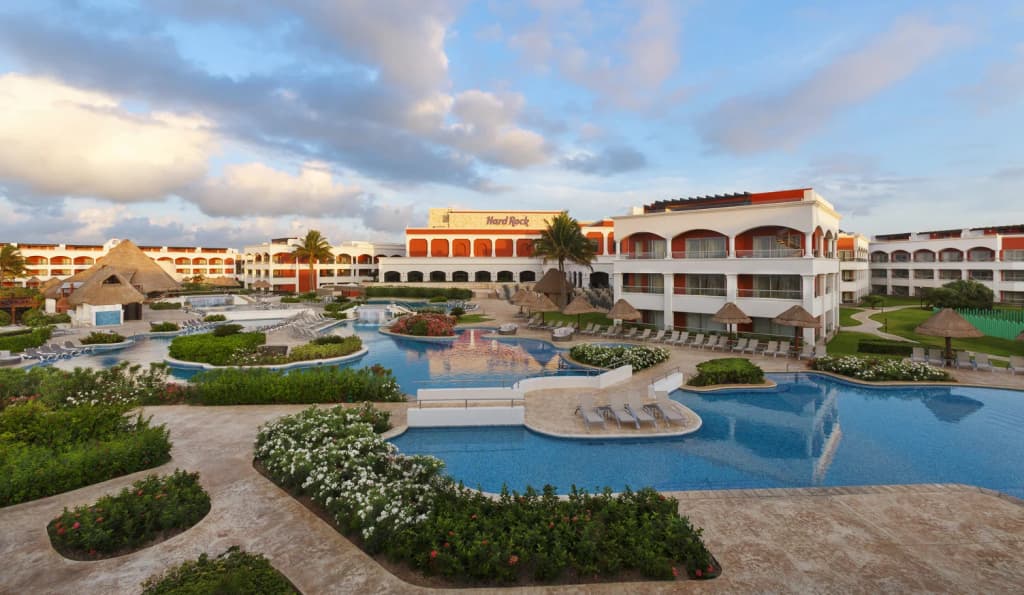
He is right, of course. To rush through a space designed entirely for lingering is to miss the point entirely. You have to let the heat slow your blood, let the endless amenities blur the edges of your itinerary until time becomes measured only by the shifting angle of the sun.
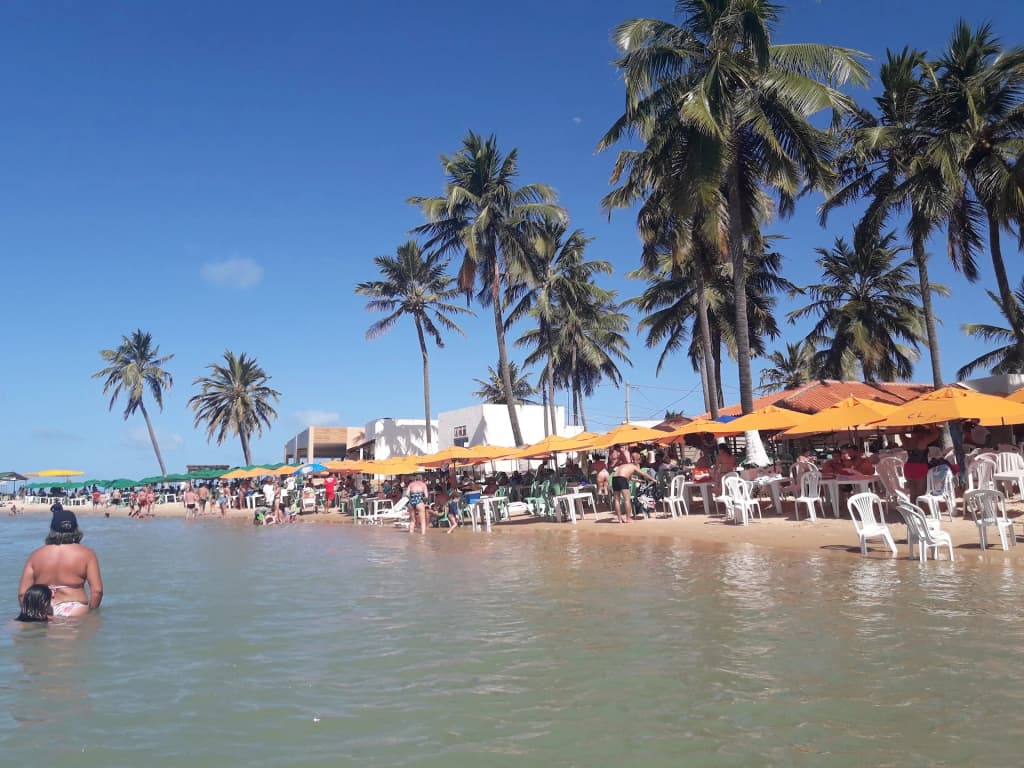
The transition from the curated jungles of Mexico to the raw, wind-whipped coastline of northeastern Brazil is a shock to the senses. We are high up now, at the Gungaporanga Hotel in Alagoas. The nightly rate feels like a steal when you are leaning against the edge of an infinity pool that seems to spill directly into the horizon. Below me stretches Praia do Gunga, a cinematic sweep of golden sand and millions of swaying coconut trees meeting the deep, bruised blue of the Atlantic. The wind here carries the smell of damp earth and salt, a wilder, more untamed fragrance than the Caribbean.
It takes an immense effort of will to pull myself from the warm, glassy water of the pool. The view over the Barra de São Miguel lagoon is paralyzing in its beauty. You can see the dark patches of reefs beneath the turquoise water, shifting like shadows as the clouds move overhead. It is the kind of landscape that makes you feel incredibly small, yet profoundly anchored to the earth.
If Brazil is a wild, untamed poem, Monaco is a perfectly structured sonnet. The air in the principality feels thinner, cooler, carrying the faint, expensive scent of blooming jasmine and European espresso. Walking into the Hotel Hermitage Monte-Carlo is like stepping into a gilded jewel box, where the premium price tag guarantees access to an exclusive slice of the Mediterranean. The silence here is heavy and intentional. It is a soft, muffled quiet, absorbed by thick carpets and centuries of old-world discretion.
As a property recognized among the Leading Hotels of the World, the Hermitage doesn't need to shout to be noticed. My fingers trace the cool, veined marble of the lobby pillars. The light filtering through the Belle Époque stained-glass dome casts fractured rainbows across the floor. It is a completely different vocabulary of luxury—one built on heritage, hushed tones, and the seamless anticipation of your needs before you even realize you have them.
But the gravitational pull of the tropics is relentless. Soon, the marble of Monaco is replaced by the rustic, organic textures of Búzios, back in Brazil. At the Pousada Pedra da Laguna, the architecture feels grown from the earth rather than built upon it. Situated right in front of the Ponta da Lagoinha environmental protection area, the air is alive with the chatter of exotic birds and the rustle of Atlantic forest foliage. I walk down toward Ferradura beach, my bare feet sinking into the warm, powdery sand, feeling a deep sense of environmental integration that grand city hotels simply cannot replicate.
The journey shifts again, this time to the pastel-hued island of Curaçao. Inside the Floris Suite Hotel, the atmosphere is distinctly intimate. The heavy wooden doors of my suite open to reveal a space that immediately feels like a private residence.
"You're far from home," the concierge notes warmly, adjusting a small, brightly colored rainbow flag sitting proudly on the polished mahogany desk.
"I'm starting to think home is wherever I unpack my bag," I reply, tracing the edge of my leather passport wallet.
She smiles, a genuine crinkling at the corners of her eyes. "Then welcome home. We want everyone to feel exactly as they are here."
It is a small gesture, but in the landscape of global travel, knowing a destination is genuinely gay-friendly and welcoming changes the very texture of the air. You breathe easier. Your shoulders drop. The luxury of acceptance is, perhaps, the greatest amenity a hotel can offer.
The quiet intimacy of Curaçao eventually gives way to the kinetic, overwhelming energy of Punta Cana. The Hard Rock Hotel & Casino here is less a resort and more a sovereign city of leisure. Navigating the property is an exercise in sensory overload. There are thirteen pools, each with its own distinct micro-culture, and nine restaurants scattered across the sprawling compound. The smell of wood-fired pizza drifts past a coffee shop, mingling with the sweet aroma of waffle cones from the gelateria.
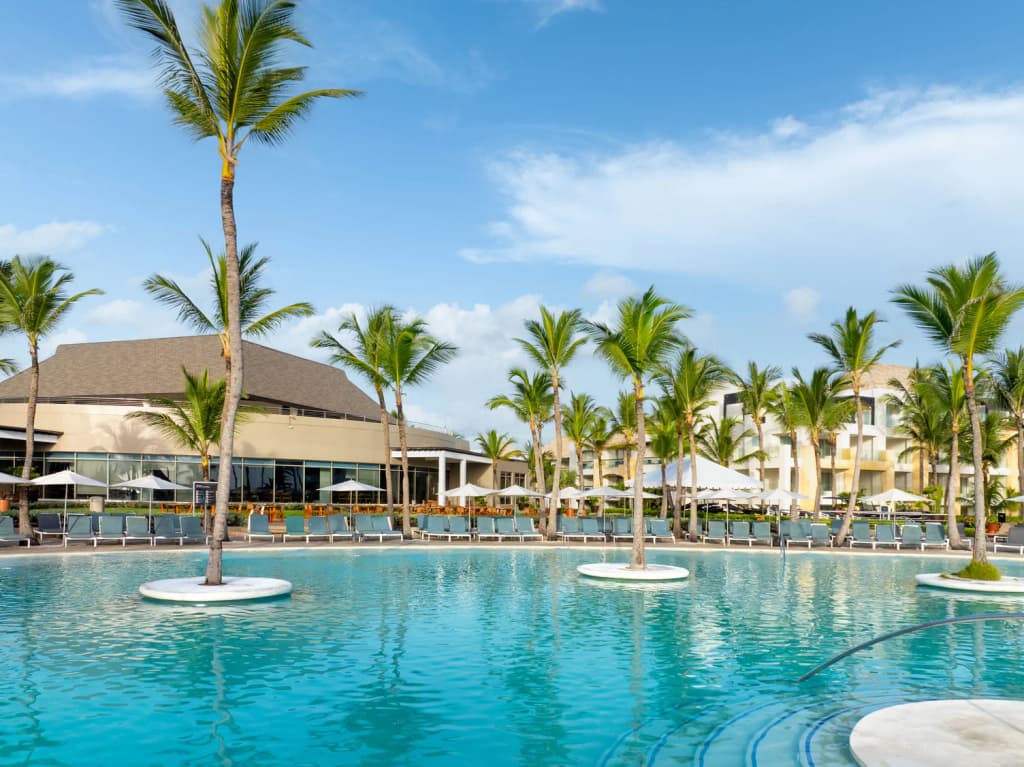
I find myself standing on the edge of the beach as the sun begins its slow, golden descent. The ocean here in the Dominican Republic is rough today, the waves crashing with a violent, beautiful anger against the shore. Behind me, the resort hums with the machinery of absolute comfort—the clinking of silverware, the tuning of guitars for the nightly show, the laughter of thousands of people escaping their daily lives.
I pull my jacket tighter against the evening breeze, feeling the fine mist of salt spray against my cheeks. From the manicured stillness of the French Riviera to the roaring Atlantic surf of the Americas, we build these coastal palaces for a singular reason. We are all just looking for a beautiful place to stand still, even if only for a little while, and watch the tide come in.
More Photos
More Adventures
 $50 - $150/day 5-10 days
 Finding the Rhythm of Bahia: From Porto Seguro to Trancoso
Experience the sensory magic of Brazil's Costa do Descobrimento, from the chaotic nightlife of Porto Seguro to the barefoot luxury of Trancoso's beaches.
 $60 - $150/day 7-14 days
 Brazil's Rhythms: From the Discovery Coast to the Cerrado
Experience Brazil's contrasting landscapes. Journey through the rustic Discovery Coast, the white dunes of Lençóis Maranhenses, and the mystical Chapada.
 $200 - $500/day 2-3 days
 Conquer Disneyland California: The Ultimate 2-Park Guide
Think Disneyland is just a walk in the park? Think again. Get the ultimate battle plan for dominating Disneyland and California Adventure. Skip the lines.
 $75 - $250/day 7-14 days
 The Ultimate Month-by-Month International Travel Guide
Stop gambling with your PTO. Discover the exact best (and worst) international destinations for every month of the year to optimize budget and weather.