
Maragogi vs Porto de Galinhas: Chasing the Perfect Blue
A sensory comparison of Brazil's Coral Coast, contrasting the village energy of Porto de Galinhas with the silence and tides of Maragogi.
The wind cuts through the headset, drowning out the hum of the engine strapped to the pilot’s back. My feet kick at empty air, five hundred feet above the reef. Below, the ocean isn't just blue; it is a violent, impossible spectrum of emerald and cyan. From the seat of the paramotor, Porto de Galinhas looks like a map drawn by a dreamer—the dark, jagged lines of the reef cracking the surface, the tiny white triangles of the jangada rafts bobbing in the natural pools. It is a chaotic, beautiful introduction to Pernambuco.
Back on the ground, the village maintains that intensity. The air smells of charcoal and roasting cheese (queijo coalho) and salt. I navigate the pedestrian streets of the center, dodging vendors and families still wet from the sea. There is an ease to being here that seduces you immediately. It makes sense why this is the hub. The drive from Recife’s airport took me less than an hour—a smooth run compared to the potholed stress of the southern routes I’ve driven before. Whether you choose the resorts in Muro Alto or the simpler chalets in Maracaípe, the town feels ready for you. It wants you here.
But there is another blue, a different frequency of quiet, waiting two hours south.
Crossing the border into Alagoas, the landscape shifts. The dense infrastructure thins out, replaced by coconut groves that stretch endlessly toward the horizon. Maragogi does not shout like its northern neighbor; it whispers. They call this the "Brazilian Caribbean," a nickname I usually dismiss as marketing fluff until I stand on the sands of Antunes and Barra Grande.
Here, the water is a shade of turquoise that looks manipulated even to the naked eye. But you have to know where to look. The actual town center of Maragogi is a deception—crowded, urban, and surprisingly gritty. To find the magic, I learned to drive north, past the center, to Ponta de Mangue.
"It is quieter here," a woman tells me as she pushes a bicycle into the water. It’s not a normal bike, but a floating one—an aqua bike, buoyed by yellow pontoons. "You pedal, you float, you see everything."
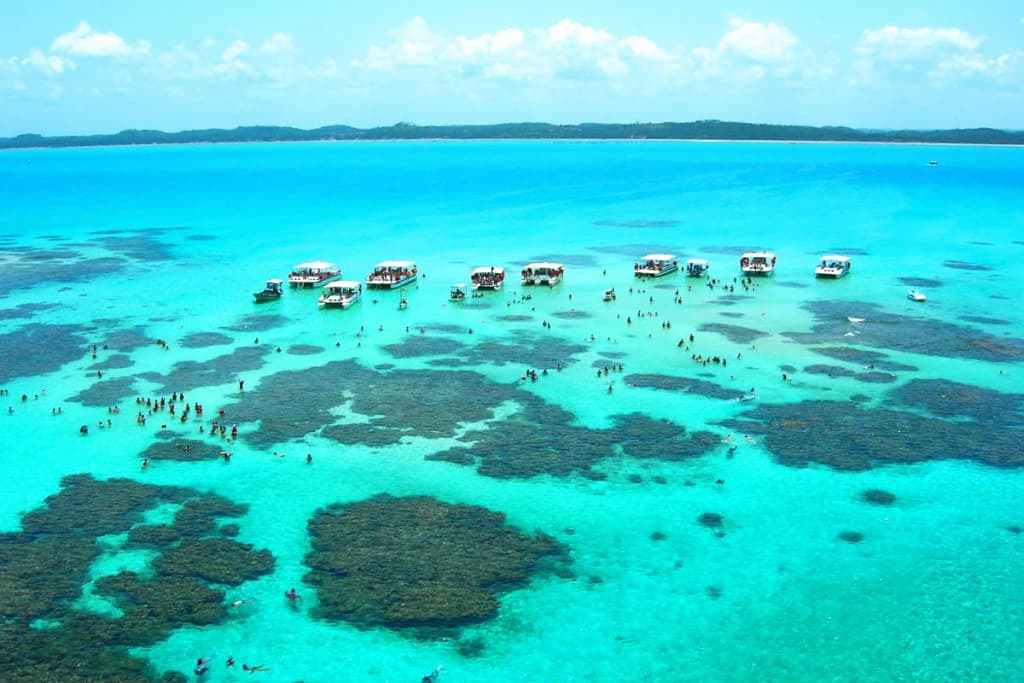
I pay the thirty reais and drift out over the coral. It is silent. The water is so still I feel suspended in glass. Unlike the deep, darker pools of the Galés further out, the water here in Barra Grande remains shallow, inviting you to simply stand and exist in the color blue.
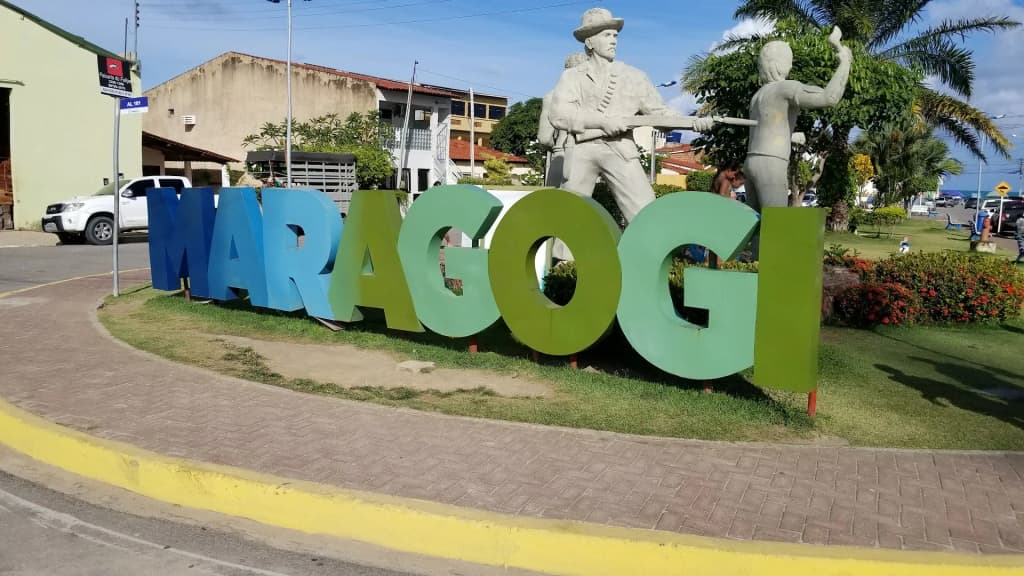
This beauty comes with strict rules, however. The ocean here dictates the schedule. I learn quickly to worship the Tábua das Marés—the tide chart. It is not a suggestion; it is the law. To see the Moses Path—that famous sandbar that parts the sea allowing you to walk kilometers into the ocean—the tide must be low. Ideally close to 0.0, certainly below 0.2.
I watch tourists wander far out onto the sandbar, mesmerized by the path opening before them. The ocean is deceptive, though. The tide turns quickly, and the walk back can become a panic-induced swim if you lose track of time. It is a wilder beauty here, one that demands respect.
Night falls differently in these two worlds. In Porto de Galinhas, the sun sets and the lights turn on. The restaurants fill with laughter, music spills from bars, and the night feels young. In Maragogi, the night is heavy and dark. The town sleeps early.
Seeking something to eat, I take a short drive to the neighboring town of São José da Coroa Grande. I find a small restaurant that smells of wood ovens and oregano. The menu boasts a pizza made with a macaxeira (cassava) crust.
"You're not from here," the waitress says, sliding a plate onto the metal table. It's more an observation than a question.
"No," I admit, taking a slice. The crust is dense, flavorful, distinct. "But I'm enjoying the pace."
She smiles, wiping her hands on her apron. "Porto is for the party," she says, gesturing north with her chin. "Here, we eat, we sleep, we look at the sea. The macaxeira grounds you."
She is right. Maragogi is the budget-friendly option—you can find pousadas for a hundred reais if you look hard enough—but it is also the option for those who want to disconnect. It is for the traveler who prefers the sound of wind in the palms to the beat of a drum.
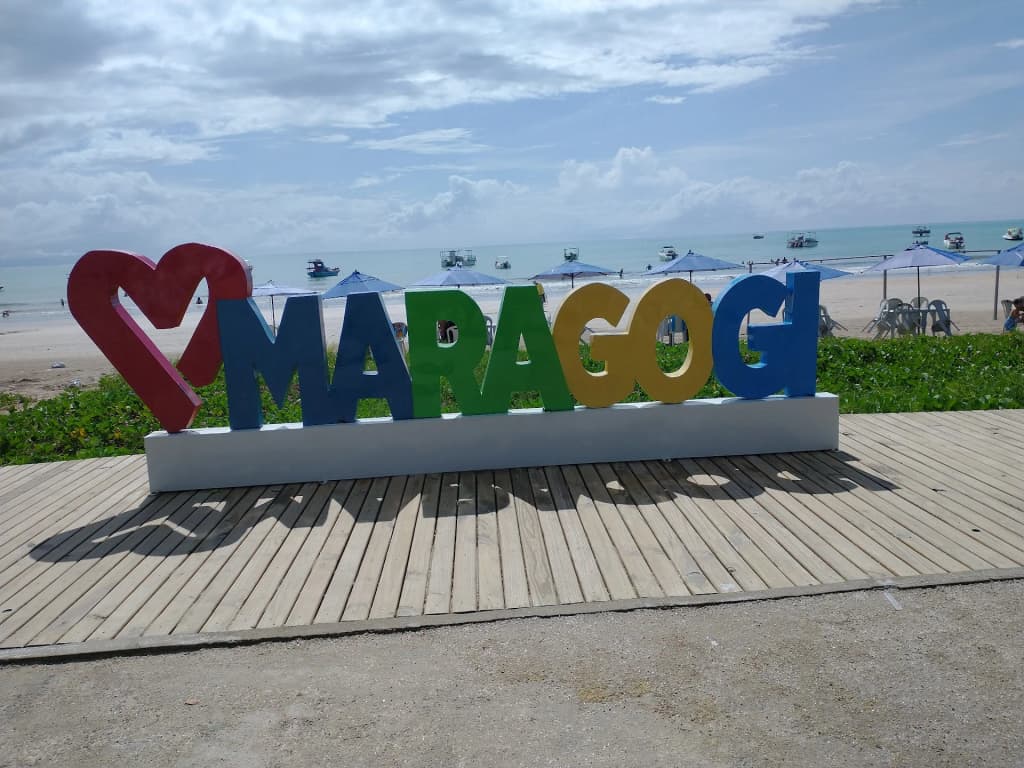
I spend my final morning back in the water, this time just drifting. The locals say the best time is November through February, when the sun is high and the rains have vanished, leaving the water crystal clear. I float between the two worlds in my mind.
Porto de Galinhas is the easy friend—the one who drives, knows the best clubs, and makes sure you’re never bored. Maragogi is the lover who demands patience, who makes you work a little harder, travel a little further, and watch the tides. But when the water retreats and the sun hits the sandbar just right, showing you a blue you’ve never seen before, you realize the silence was worth it.
More Photos
More Adventures
 $150 - $350/day 3-4 days
 Trancoso Travel Guide: 3-Day Itinerary & Budget Breakdown
Plan a practical 3-day trip to Trancoso, Brazil. Discover the best beaches, UTV tours to Praia do Espelho, and exact costs to optimize your travel budget.
 $50 - $120/day 3-5 days
 Chasing Echoes and Gold Dust in Tiradentes, Brazil
Experience Tiradentes, Brazil through a sensory journey of colonial architecture, deep-rooted history, and the rich culinary traditions of Minas Gerais.
 $50 - $150/day 5-10 days
 Conquer Ceará: The Ultimate Route of Emotions Road Trip
Ditch the resorts and hit the dunes. Discover the wild side of Ceará, Brazil, from hidden lagoons in Camocim to the electric nightlife of Jericoacoara.
 $40 - $80/day 2-4 days
 Boa Vista: Exploring the Amazon's Fan-Shaped Frontier City
Experience the unexpected beauty of Boa Vista, Roraima. Discover Macuxi indigenous crafts, the unique Lavrado biome, and sunset boat tours on the Rio Branco.