
Northern Italy: A Drive From Marble Spires to Alpine Peaks
A sensory 15-day road trip through Northern Italy, tracing a line from the espresso bars of Milan to the silent, jagged towers of the Dolomites.
The hiss is violent, a sudden release of steam that cuts through the morning murmurs of the café. It is the heartbeat of Milan, and it sets the rhythm for everything that follows. I am standing at a zinc counter in the shadow of the Duomo, watching a barista work with the grim focus of a surgeon. He slides a porcelain cup toward me without breaking eye contact with the businessman next to me. The espresso is dark, thick, and tastes like pure wakefulness.
Outside, the city moves with an aggressive elegance. I walk toward the Piazza del Duomo, and the white marble facade rises up like a lace curtain turned to stone. It is overwhelming in its detail—thousands of statues staring down, a silent audience to the tourists taking selfies below. I bought my ticket online to skip the queue—a necessary twenty euros to climb to the roof—and up there, walking among the spires, the city feels less like a museum and more like a living organism. In the distance, the Porta Nuova district rises, where the Bosco Verticale towers redefine the skyline. These residential high-rises are covered in thousands of shrubs and trees, a forest growing in the sky. Milan doesn't just preserve its history; it sprints toward the future.
The frenetic energy of the city fades the moment the road curves around the water. Lake Como doesn't just sit there; it commands attention. The water is a deep, impossible blue, reflecting the aristocratic villas that line the shore. I base myself in Bellagio, where the streets are less streets and more stone staircases climbing the hills. It is expensive here, and the crowds can be thick, but the ferry system makes escape easy.
I board the boat to Lenno, the ticket costing less than a cocktail. The wind on the water smells of algae and expensive perfume. I’m heading to Villa del Balbianello. You might recognize it from cinema screens, but standing here, Hollywood feels very far away. It is just the sound of water lapping against the stone dock and the smell of cypress trees baking in the sun. The gardens are manicured to perfection, a green contrast against the grey stone. It feels like a place designed for secrets.
Driving east, the landscape softens into the vineyards of the Veneto region. Verona is famous for a balcony that Juliet likely never stood on, but I am here for something more tangible. I find myself in a small pizzeria away from the main piazza, the air thick with the smell of yeast and woodsmoke. Vincenzo, the owner, claims his dough is the secret to longevity.
"It is the flour," he insists, dusting his hands on his apron, leaving white ghost prints on the dark fabric. "Pure Italian grain. You eat this, you live forever."
"I'll take two then," I say.
He laughs, a deep belly sound, and slides a Margherita into the oven. The crust comes out blistered and perfect. It ruins me for all other pizzas.
Before leaving the region, I take a detour to the Sanctuary of Madonna della Corona. It defies physics, a church clinging to a sheer rock face like a swallow's nest. The walk down is steep, a physical penance that makes the arrival feel earned. It is a place of silence, suspended between heaven and the valley floor, a reminder of how faith can literally build upon mountains.
Venice hits you with the smell of salt and old stone. It is a labyrinth where getting lost is the only real itinerary. I avoid the crush of Piazza San Marco during the midday heat and vanish into the side streets of Cannaregio. The canals are the veins of this city, and everything moves by boat. I hop into a gondola, splitting the eighty-euro fee with a couple I met at the dock.
Roberto, our gondolier, navigates the narrow channels with a boredom that comes from mastery. He points out a palazzo with a tired wave. "George Clooney married there," he says, steering us under a low bridge with a subtle twist of his wrist. The only sound is the oar slicing the water. It is hypnotic.
I end the day with cicchetti—little snacks of bread and fish—standing by a canal, watching the light turn golden and die on the water. Venice feels fragile, a beautiful, sinking dream that I am lucky enough to witness.
But the true crescendo of this journey lies further north. As I drive toward the Austrian border, the rolling hills sharpen into teeth. The Dolomites do not emerge gradually; they erupt from the earth. The air gets thinner, crisper. It smells of pine needles and cold stone.
I stop at Lake Carezza. They call it the "Rainbow Lake," and the water is a shifting kaleidoscope of emerald and turquoise, reflecting the Latemar peaks so perfectly it’s hard to tell where the water ends and the sky begins. The parking lot is full, a reminder that solitude is rare, but the view remains untouched.
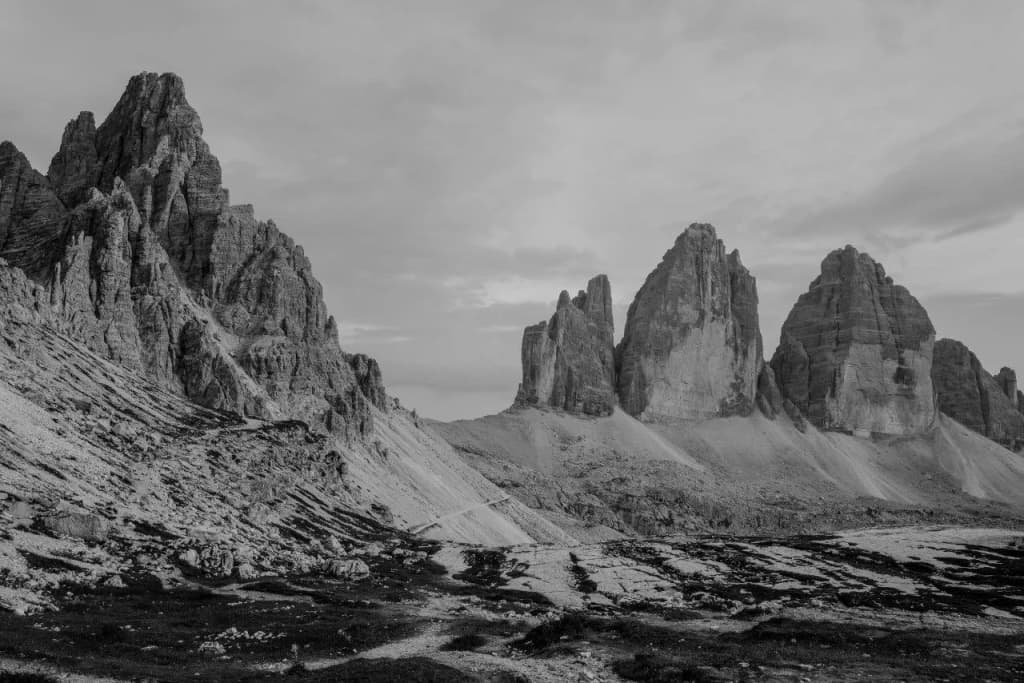
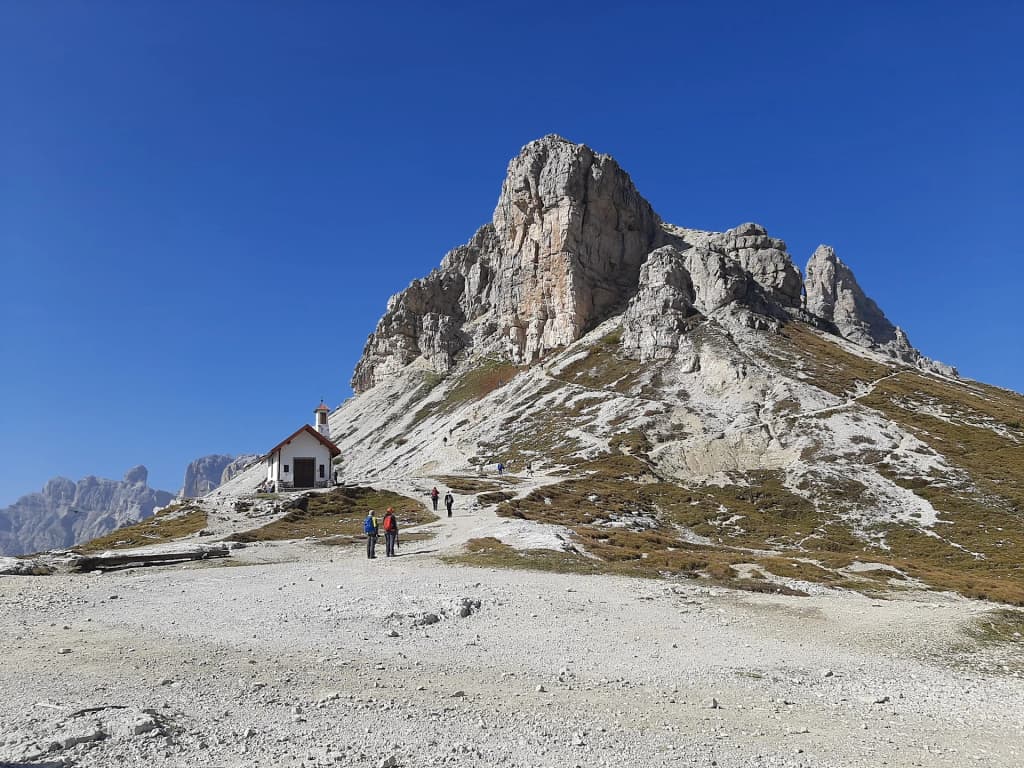
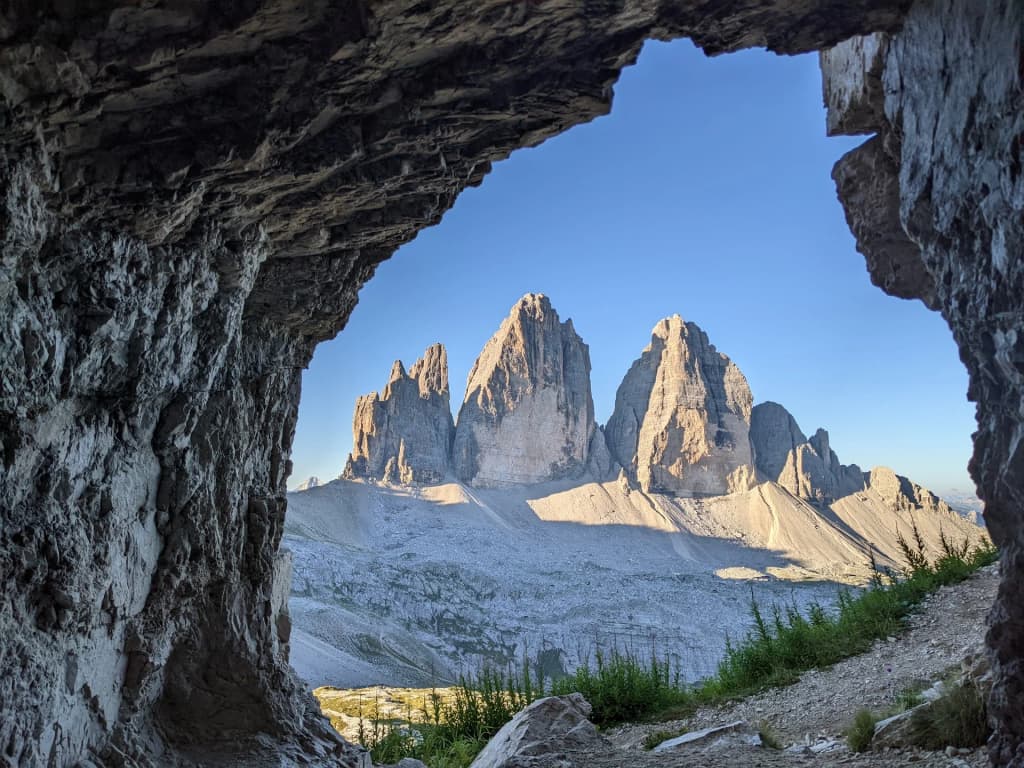
The road winds higher, up to the Tre Cime di Lavaredo. These three massive limestone towers are the icons of the region. I pay the thirty-euro toll for the mountain road—steep, but worth it to start the hike at altitude. The gravel crunches under my boots, a rhythmic sound that settles my mind. At 2,400 meters, the vegetation is sparse, just hardy grass and wildflowers clinging to the rock. The scale is disorienting. I feel like an ant crawling across the bones of the earth.
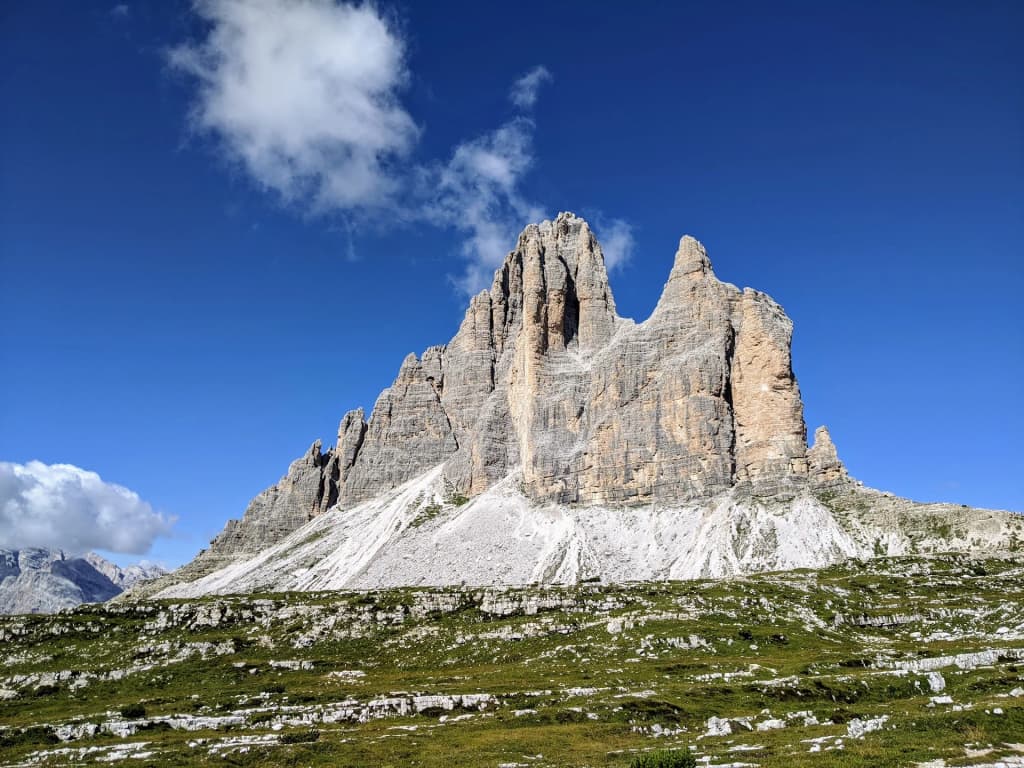
The loop trail takes me around the base of the peaks. One minute the sun is blazing, the next a cloud snagged on a summit throws us into chilly shadow. It is raw and wild, a stark contrast to the manicured gardens of Como. Here, nature isn't decoration; it is the ruler.
I finish the trip at Lake Braies. I arrive at 7 AM, before the tour buses disgorge their crowds, when the water is still a sheet of glass. I rent a wooden rowboat. My rowing is clumsy compared to Roberto in Venice, but out in the middle of the lake, drifting under the massive rock face of Seekofel, it doesn't matter.
I rest the oars and let the boat drift. This journey started with the noise of espresso machines and the flash of fashion in Milan, and it ends here, in the silent, cold embrace of the mountains. Italy is often sold as a museum of the past, but up here, in the thin air, it feels incredibly present.
More Photos
More Adventures
 $120 - $250/day 1-2 days
 Hack the Alps: Milan to St. Moritz Day Trip on a Budget
Discover how to travel from Milan to St. Moritz on a budget. Skip the Bernina Express, take the regional train, and experience the Swiss Alps like a pro.
 $150 - $300/day 3-5 days
 Conquer the Ice: A Raw Guide to Perito Moreno Glacier
Skip the tourist traps. Rent a car, brave the wild Patagonian weather, and trek across the jagged, electric-blue ice of the Perito Moreno Glacier.
 $40 - $80/day 4-6 days
 Forget the Beaches: Why Curitiba is Brazil's Ultimate Adventure
Skip the crowded tourist traps. Discover Curitiba, Brazil's green capital, featuring gravity-defying architecture, epic train rides, and budget thrills.
 $60 - $200/day 4-7 days
 Between the Andes and the Ocean: Unraveling Santiago
Experience the striking contrasts of Santiago, Chile. Discover historic dive bars, the soaring Andes in Cajón del Maipo, and the colorful hills of Valparaíso.