
Fire, Ice, and Black Velvet: Seeking Refuge in Reykjavik
Experience the sensory contrasts of Iceland's capital, from the tactile luxury of The Reykjavik EDITION to the colorful streets of Old Town.
The wind off the North Atlantic hits you like a physical weight, carrying the sharp, briny scent of cold deep water and distant ice. I pull my collar up, leaning into the gusts sweeping across the harbor. Ahead, The Reykjavik EDITION stands as a dark monolith against the pale northern sky. Its facade is a study in stark contrasts, clad in blackened timber—a Japanese technique called Shou Sugi Ban that perfectly mimics the charred, violent beauty of Iceland's volcanic terrain.
I push through the heavy glass doors and the biting cold instantly vanishes, replaced by a theatrical warmth. A sprawling LED canopy overhead pulses with a soft, digital aurora, but it is the smell that grounds me—woodsmoke, warm leather, and the subtle, earthy spice of the brand's signature black tea fragrance. At the center of the lobby, an open-flame fireplace crackles, surrounded by plush, low-slung seating.
"You look like you've been fighting the wind," the concierge says, his voice a low, melodic rumble. He hands me a warm, damp towel.
"Does the wind always win?" I ask, pressing the heat to my face.
He laughs, a short, genuine sound. "Always. But we build good walls."
Those walls enclose a space that feels both fiercely Icelandic and unmistakably modern. A four-meter basalt totem pole rises near the entrance, a nod to the traditional stone cairns that guide lost travelers across the island's desolate highlands. I sink into a black velvet chair—a tribute to Pierre Jeanneret—and watch the firelight dance across the blackened steel window frames.
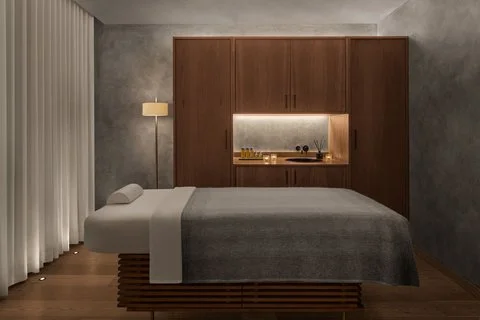
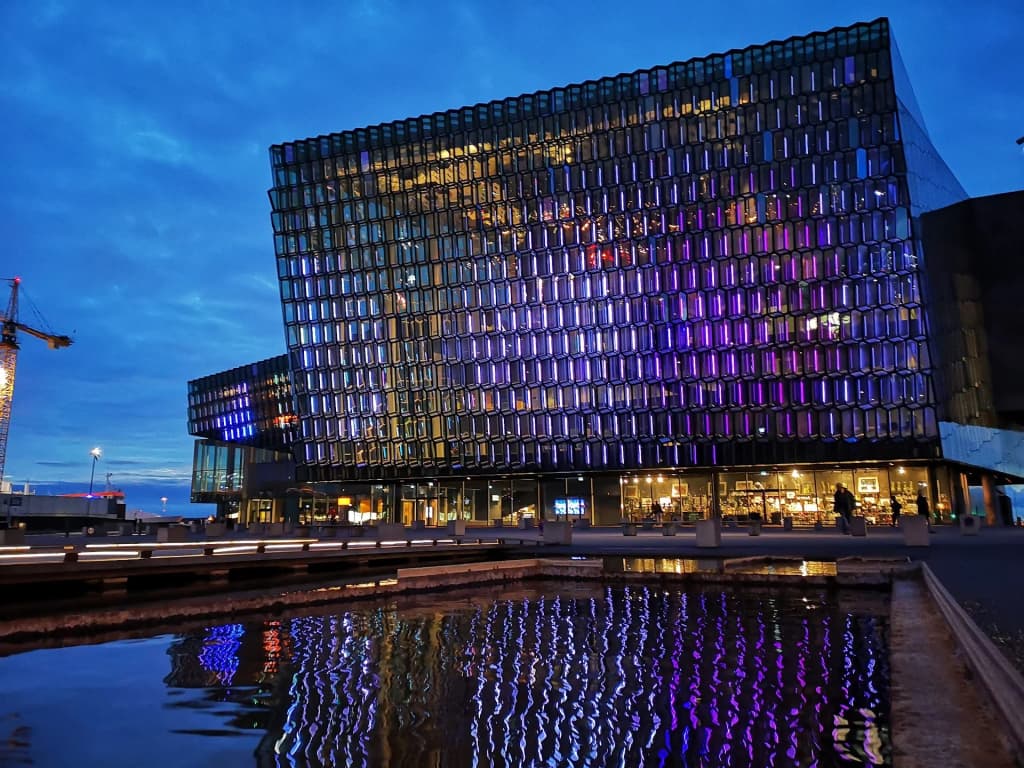
My suite is a sanctuary of quiet, tactile luxury on the upper floors. The transition from the rugged outdoors to this hushed, ash-wood haven is seamless. I run my hand along the custom Italian furniture and the cool copper lamps. The floor-to-ceiling windows act as a cinematic widescreen, framing the geometric glass honeycomb of the Harpa Concert Hall right next door.
I draw the blackout curtains—a strict necessity when the summer sun refuses to set—and step into the bathroom. The hot water runs over the slate tiles of the wet room, and the steam carries the bespoke, musky scent of Le Labo. It feels indulgent, washing away the forty-five-minute taxi ride from Keflavik Airport in an oversized soaking tub.
Later, I wander down to the lower ground floor, following the faint scent of eucalyptus. The spa is a subterranean temple of basalt and steam. I sit in the hammam, letting the wet heat seep deep into my bones, before moving to the central lounge. A spa attendant serves me a thick slice of volcano bread, dark and dense, sprinkled with black lava salt, alongside a glass of freshly pressed green juice. It tastes of the earth, rich and slightly sweet, grounding me after a long day of travel.
The evening blurs into an endless twilight. At Tides, the ground-floor restaurant helmed by Michelin-starred chef Gunnar Karl Gíslason, the dining room is a forest of industrial concrete columns and warm ash wood, anchored by a dramatic Eric Schmitt chandelier. I taste modern Iceland on a plate: cured fish that melts on the tongue, roasted rye, and the sharp, bright tang of wild berries.
I take my post-dinner restlessness up to the seventh floor. The Roof bar is wrapped in black finishes, a deliberate design choice that forces your eyes outward, toward the panoramic sweep of the harbor and the jagged mountains beyond.
"It's two in the morning," I say to the bartender, squinting at the golden, horizontal light flooding the terrace. The midnight sun hangs stubbornly above the horizon, casting long, surreal shadows.
"Time is just a suggestion here in the summer," she replies, sliding a glass of caraway-infused aquavit across the dark counter. "We sleep in the winter."
She points me toward Tölt, the hidden lobby bar downstairs. "Ask them about the name," she insists with a conspiratorial smile.
When I do, the mixologist at Tölt doesn't miss a beat. "It's the fifth gait of the Icelandic horse," he explains, pouring a dark, amber liquid over a single, massive cube of ice. "It's incredibly smooth. Legend says you can hold a full pint of beer while riding at a tölt and never spill a drop." He taps the polished walnut bar. "That's how we want you to feel in here."
The next morning, fortified by a bowl of thick, tart skyr and a warm cranberry scone from the hotel's cafe, I step back out into the crisp air. Reykjavik—the "Smoky Bay"—is a remarkably young capital, officially founded in 1786, and it carries an unpretentious, electric energy.
I walk along the waterfront toward the Sun Voyager. Jón Gunnar Árnason's steel sculpture gleams in the morning light, skeletal and sleek, resembling a Viking longship poised to sail into the sun. It is supposed to represent a dream of hope and discovery, and standing here, listening to the rhythmic slap of the freezing water against the rocks, it is easy to feel the pull of the unknown horizon.
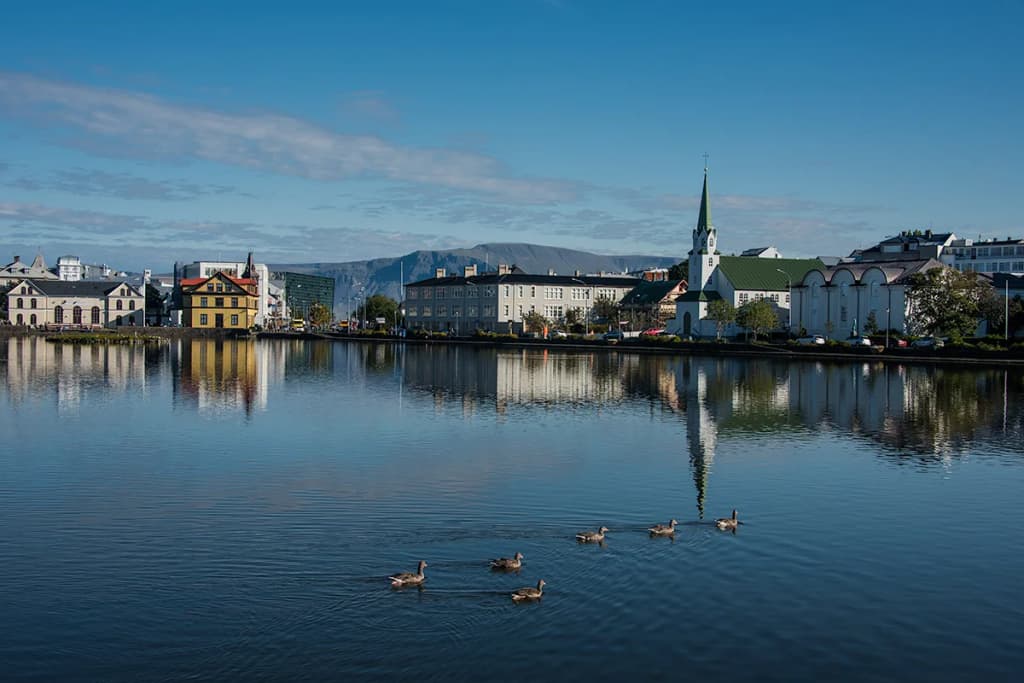
The Old Town unfolds in a patchwork of corrugated iron roofs painted in bold reds, blues, and yellows. I turn onto Rainbow Street, the asphalt painted in brilliant, sweeping colors that lead the eye straight up the hill. It is a loud, joyful celebration of diversity and inclusion, completely at odds with the austere, grey skies that often blanket the city.
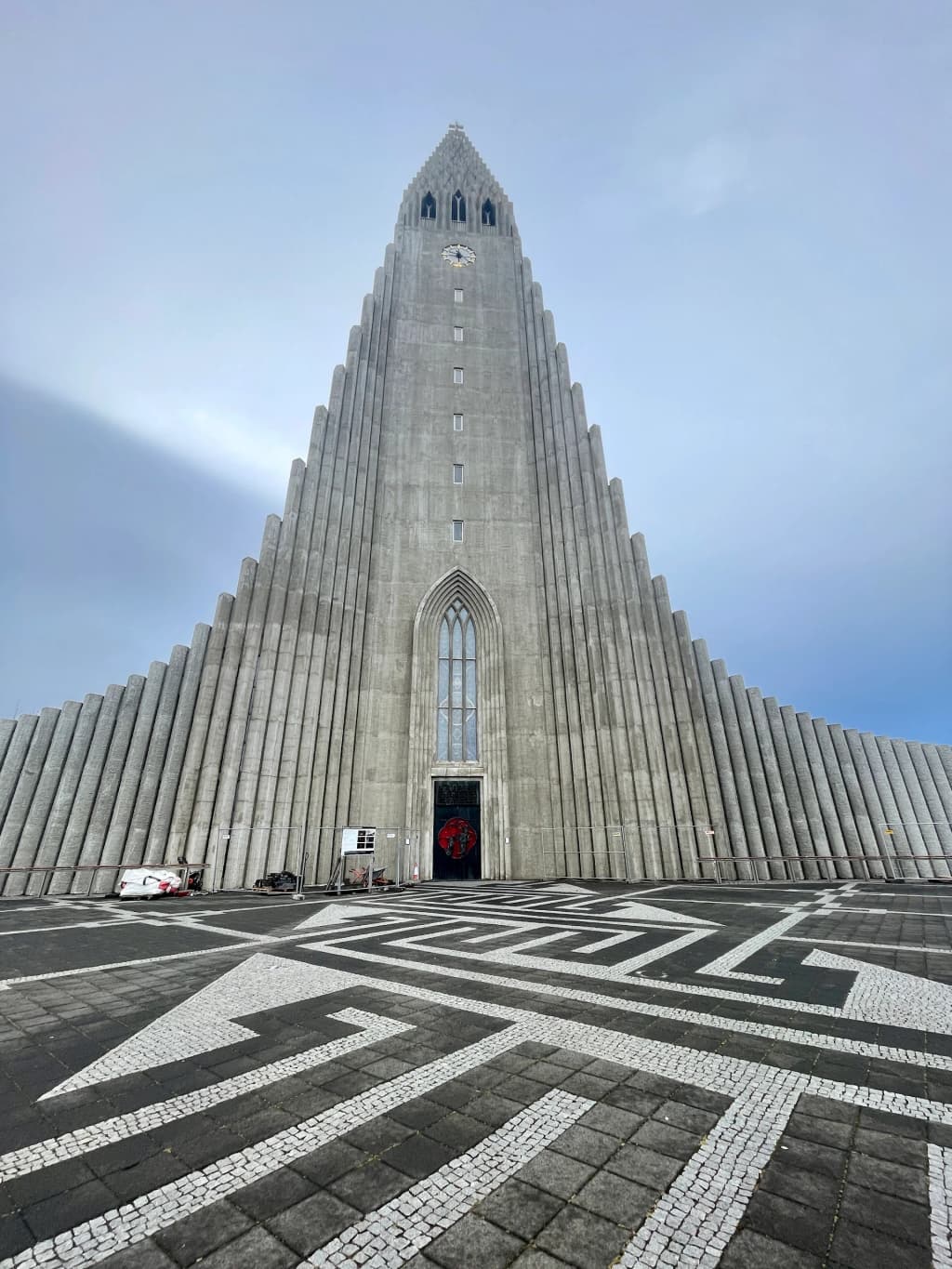
At the top of the hill stands Hallgrimskirkja. Its towering concrete facade mimics the hexagonal basalt columns I saw at the hotel, a piece of the raw volcanic landscape thrust into the center of the city. Inside, the silence is absolute. The pale light filters through the stark, unadorned windows, illuminating the massive pipe organ.
I sit in the wooden pews, feeling the chill of the stone seep through my coat. Reykjavik is a city of impossible contrasts. It is fire and ice, endless days and eternal nights, raw, punishing weather and the softest, warmest interiors. You don't just visit this place; you seek refuge in it. And as I walk back out into the biting wind, pulling my collar up once more, I realize I am no longer fighting it. I am just letting it carry me.
More Photos
More Adventures
 $800 - $2500/day 4-7 days
 Paris Reimagined: Four Exceptional Encounters in the City of Light
Discover a curated selection of refined Parisian experiences, from lunch at Le Bristol to dining above the city in the Eiffel Tower's Madame Brasserie.
 $200 - $550/day 1-3 days
 Finding the Parisian Soul Inside Disneyland Paris
Discover how Disneyland Paris blends immersive storytelling with distinct European charm, from exclusive coasters to crystal-lit breakfasts.
 $500 - $1200/day 3-5 days
 An Elevated Perspective: The Standard, High Line New York
Discover The Standard, High Line in our luxury review. Explore exceptional design, refined dining, and panoramic views in New York's Meatpacking District.
 $200 - $450/day 1-3 days
 Beyond the Louvre: Finding Magic in Disneyland Paris
Step off the train from central Paris and into a world where classic Disney magic meets French romance, complete with a sleeping dragon and nighttime drones.