
A Slow Travel Guide to Itacaré: Waves, Whales & Cacao
Experience the sensory magic of Itacaré, Bahia. From wild surf beaches and dense jungle trails to historic cacao farms, discover Brazil at its most raw.
The scent of boiling dendê oil and sea salt clings to the heavy afternoon air. Here on Concha Beach, the sand is soft, packed with life, and shaded by the sprawling arms of almond trees. Live acoustic guitar drifts from the wooden stalls, mingling with the rhythmic, gentle lapping of a sea so calm it feels more like a lagoon than the edge of the wild Atlantic. I watch a woman navigate the crowded shoreline, a massive tray balanced effortlessly against her hip, her bare feet sinking into the warm earth.
"You have to eat them while they're hot," Kelly says, stopping in front of my low-slung beach chair. She lowers the tray to reveal fifteen perfect, golden acarajé—deep-fried black-eyed pea fritters split and ready to be filled with vatapá and shrimp.
"Is fifteen enough for two people?" I ask, handing over a crumpled bill.
She laughs, a warm, rich sound that cuts through the chatter of the beachgoers. "For now. But you'll be calling me back before the sun goes down."
She isn't wrong. The heat of the Bahian sun demands slow movement and constant grazing. Getting to this stretch of the southern coast requires a bit of surrender. You can fly into Ilhéus, rent a car, and drive seventy kilometers north, or do what we did: take the slow, rhythmic ferry from Salvador followed by a five-hour bus ride. The journey strips away the frantic energy of the city, leaving you perfectly tuned to Itacaré's frequency. We've rented a small, airy apartment right in the center from a local family. At barely thirty dollars a night, it's a small price to pay for the freedom to walk everywhere, letting the town dictate our pace.
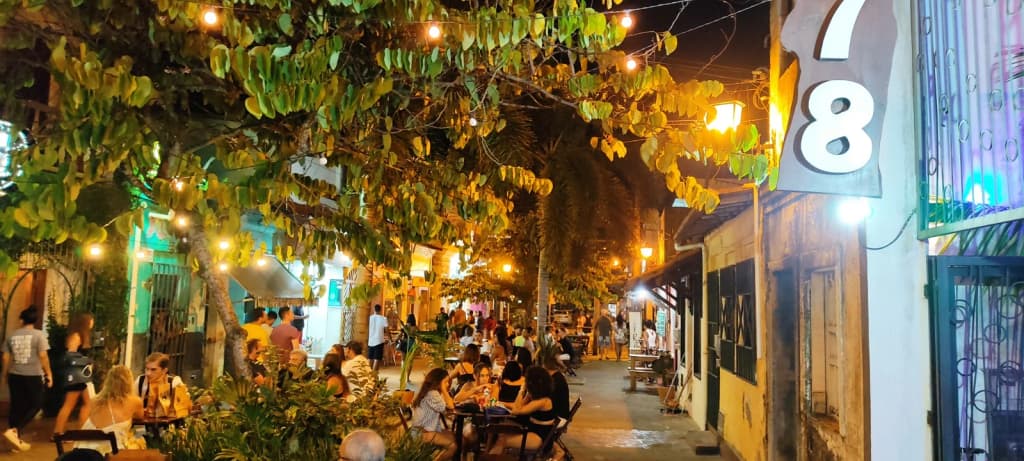
By dusk, the energy shifts inland. We leave the cooling sands of the urban beaches—Rezende, Tiririca, Costa, and Ribeira—and wander toward the end of Pituba Street. During the heat of the day, these cobblestones are quiet, the shop doors shuttered against the sun. But as the sky bruises into shades of purple and indigo, the street wakes up.
The air here smells of roasting meat and sweet, fermented fruit. Outside a small square near the Vila walkway, a capoeira circle has formed. The hypnotic thud of the atabaque drum and the metallic twang of the berimbau reverberate in my chest. We sit at a small wooden table on the pavement, ordering Juci's famous tapioca. For just fifteen reais, it arrives hot and crisp, oozing with cheese and coconut. Later, we might split a traditional seafood moqueca, the rich, coconut-milk-infused stew simmering in a clay pot that usually runs around forty dollars for a portion massive enough to feed three. For now, we just watch the dancers spin and kick, their bodies moving like fluid shadows under the yellow streetlights.
The next morning smells of damp earth and crushed leaves. We leave the town behind, meeting a local guide at the edge of the parking lot near Ribeira beach. The trail to Prainha isn't particularly steep, but the dense Atlantic Forest easily disorients the unfamiliar eye. We walk for nearly an hour under a canopy of massive green fronds that filter the harsh sunlight into a soft, emerald glow.
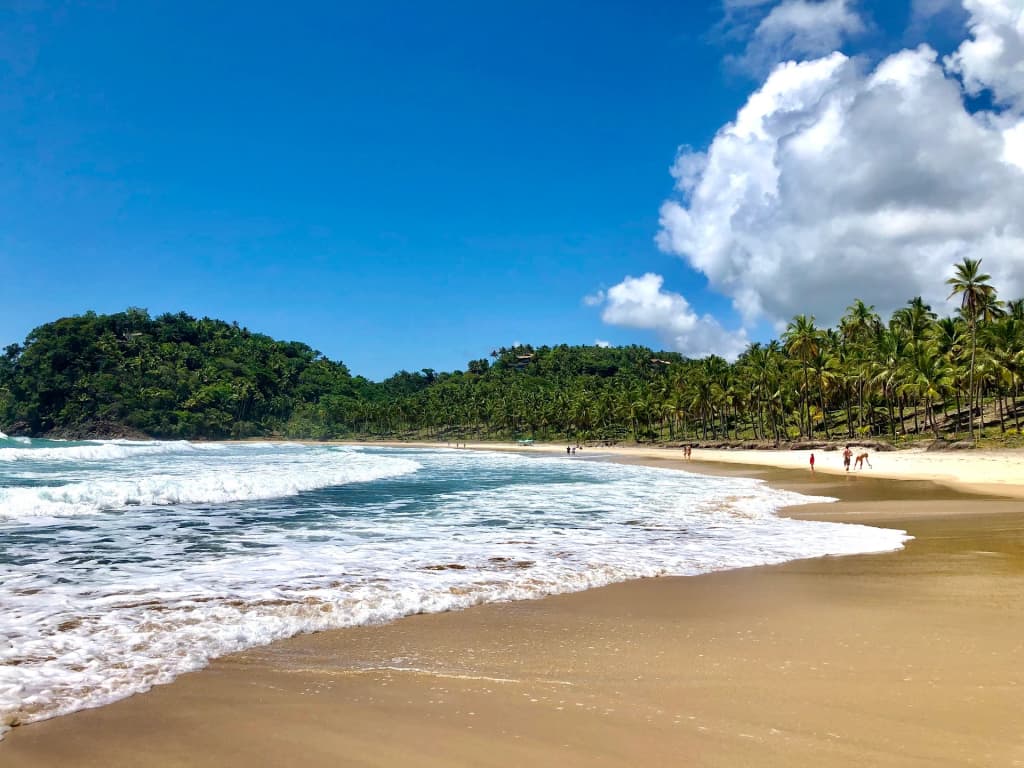
When the trees finally break, the view strikes me silent. Prainha is a vast, sweeping crescent of pale sand flanked by hundreds of towering coconut palms. Unlike the calm lagoon of Concha, the ocean here is furious and alive. Massive waves crash against the shore in explosions of white foam. It feels entirely deserted, a wild edge of the world where surfers carve lines into the water and the rest of us just sit in the sand, humbled by the sheer scale of the landscape.
We spend the next few days chasing this wildness along the rural beaches. We walk the trails from Itacarézinho to Gamboa, where the cove forms a natural fish trap, and onto Havaizinho and Engenhoca. Each beach is a secret pocket of paradise, separated by ten-minute walks through the jungle. At Engenhoca, a small freshwater river cuts through the sand, offering a cool, sweet rinse after hours in the heavy salt surf.
The deeper you go into Itacaré, the more the water changes shape. We trade the crashing waves for the deep, resonant roar of the Tijuípe Waterfall.
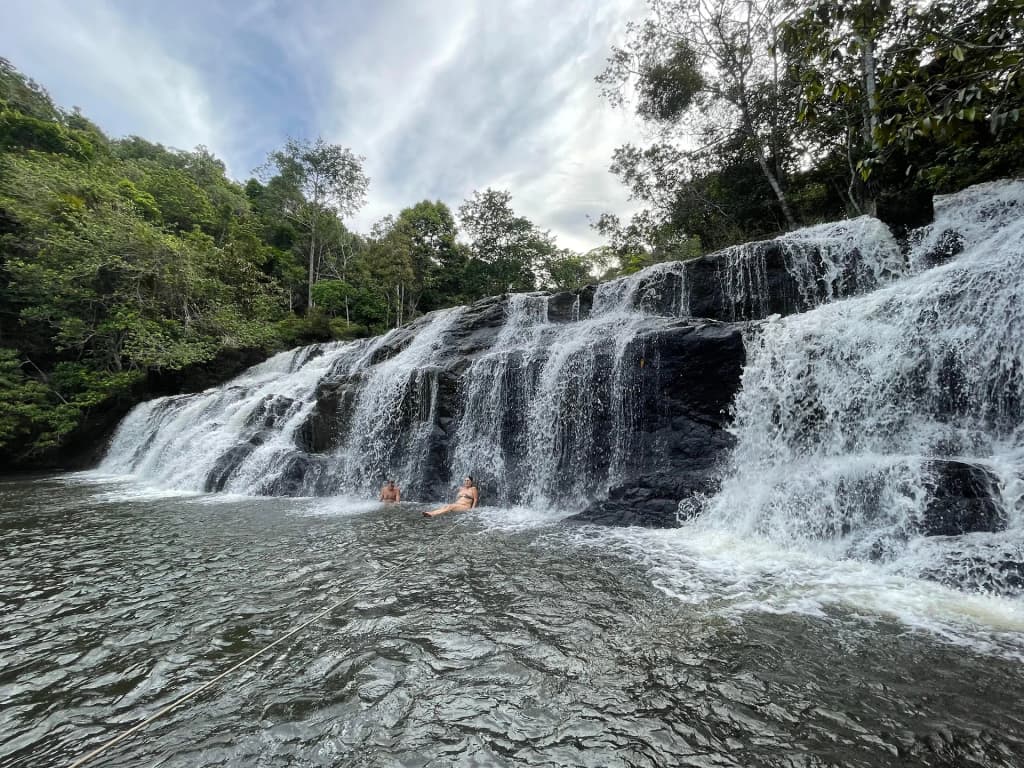
The air here is noticeably cooler, heavy with mist and the sharp scent of wet stone. The water cascades down wide, terraced rocks into a massive, dark pool. Plunging into the icy water sends a shock through my system, washing away the sticky coastal humidity. We float on our backs, looking up at the sliver of blue sky visible through the dense jungle canopy, listening to nothing but the deafening, beautiful sound of falling water.
The mud is cool and thick, rising past my ankles as we navigate the mangrove trail toward Geribuaçu. This is how you earn the best views in Bahia—with dirty feet and a little sweat. After an hour of wading through the shallow, root-tangled waters, the landscape opens up. We sit by the edge of the Geribuaçu River, devouring Ana's tapioca moqueca, the flavors of cilantro and palm oil dancing on my tongue.
A short walk further brings us to Arruda beach at low tide. The ocean has retreated, leaving behind surreal natural pools trapped in the coral reef. The water is a luminous, transparent turquoise. Tiny, silver fish dart around my ankles as I step carefully, hyper-aware of the sharp, living rocks beneath my feet. The water is bath-warm, heated by the afternoon sun. It feels like stepping into an aquarium, a fragile, temporary world that will vanish entirely when the tide returns.
July in Bahia brings a different kind of magic. The deep summer heat is gone, replaced by a breezy winter that summons giants. We board a small boat at Praia da Coroa just after breakfast, sailing out past the sandbars until the water turns a bruised, inky navy blue.
The boat rocks violently in the open ocean swells. I grip the wooden rail, eyes scanning the horizon. And then, the unmistakable mist of a blowhole. A massive humpback whale breaches, its dark, barnacled back breaking the surface before a massive tail slaps the water with a sound like a cannon shot. We sit in reverent silence as a pod of five glides past our small vessel, their immense shadows visible just beneath the surface.
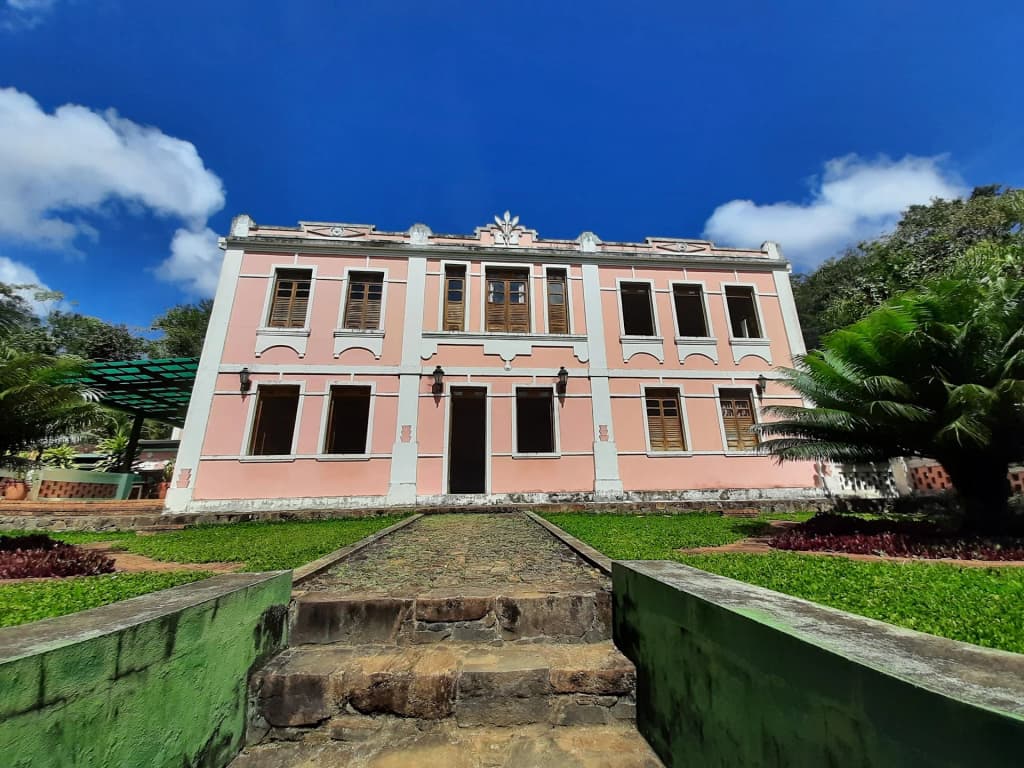
We end our time in Itacaré inland, driving into the heart of the Cocoa Coast. The historic Vila Rosa farm feels like stepping back a century. We walk through the shaded groves where the yellow and purple cacao pods hang heavy from the trunks. The air inside the fermentation rooms is sharp, acidic, and deeply sweet.
I hold a small cup of fresh cacao honey—the cold-pressed juice of the raw fruit. It tastes nothing like chocolate. It is bright, floral, and intensely tropical. As the sweet liquid slides down my throat, I realize this is the true essence of Itacaré. You don't just look at this place. You wade through its mud, you dive into its cold rivers, you let its ocean knock you off your feet, and you taste it, raw and unfiltered. You leave home to find things you never knew existed, and in return, the world gives you something you can never quite leave behind.
More Photos
More Adventures
 $45 - $125/day 3-4 days
 4 Days in Salvador: A Practical Itinerary & Budget Guide
Plan your trip to Salvador, Brazil with this strategic 4-day itinerary. Discover exact costs, Uber logistics, safety tips, and street food recommendations.
 $60 - $150/day 5-10 days
 Chasing Witches and Wild Coastlines in Florianópolis
Discover the wild soul of Florianópolis, Brazil. A sensory journey through the trails of Lagoinha do Leste, Azorean fishing villages, and Ilha do Campeche.
 $50 - $150/day 1-3 days
 Conquer Canoa Quebrada: Buggies, Ziplines & Red Cliffs
Skip the lazy beach days. Discover the adrenaline-fueled shores of Canoa Quebrada with dune buggies, massive ziplines, and electric local night markets.
 $50 - $150/day 3-5 days
 Survive the Sun: Conquering Brazil's Wild Jericoacoara
Skip the tourist traps. Hike the rugged coast to Pedra Furada, party at Alchymist Beach Club, and feast at Na Casa Dela. Your Jericoacoara adventure guide.