
Tokyo: Finding Silence in the Neon Chaos
A sensory journey through Tokyo's contrasts—from the crush of Shibuya to the stillness of Senso-ji—with essential tips on etiquette, food, and logistics.
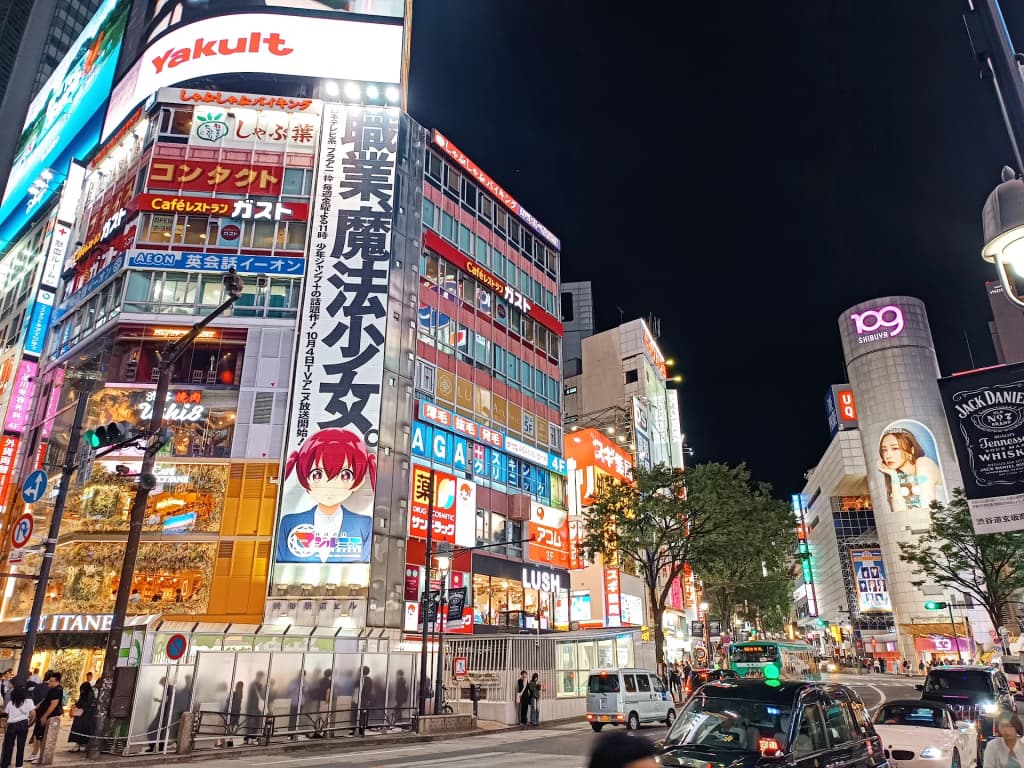
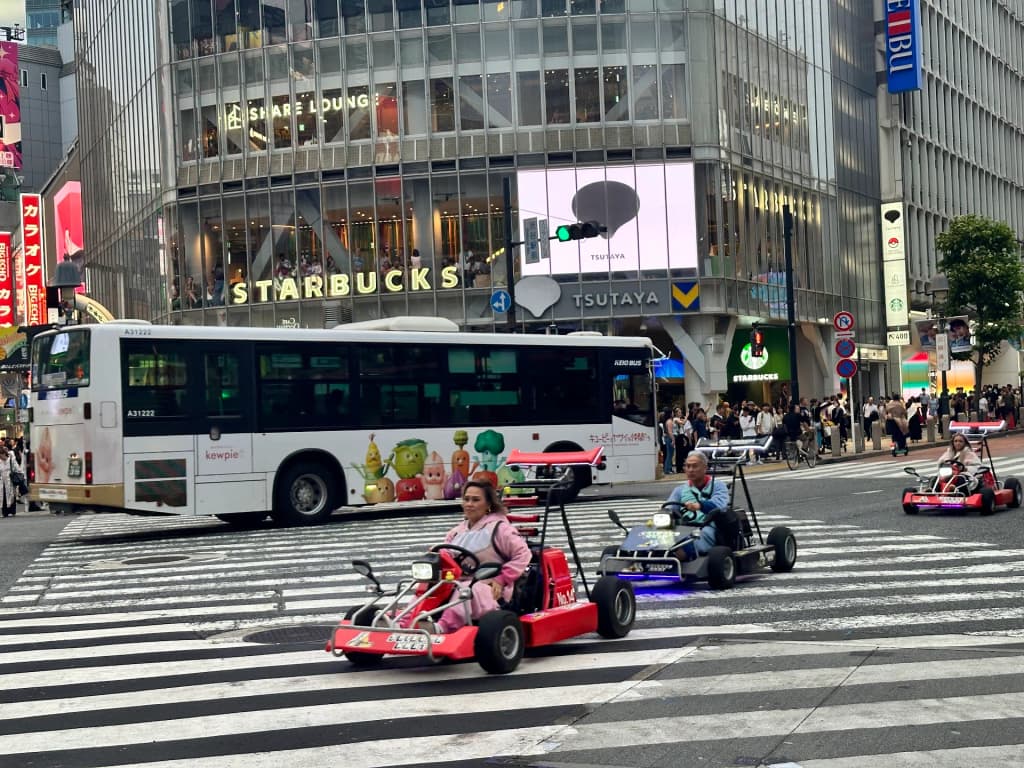
The digital chirp of the crosswalk signal cuts through the humid air, a bird-like sound that triggers a human landslide. The light turns green. From my vantage point in the second-floor Starbucks, the intersection below looks less like a street and more like a synchronized performance piece. A thousand umbrellas bloom simultaneously. Bodies weave past each other with impossible precision, a river of dark coats and glowing screens. This is Shibuya Crossing, and the energy vibrating off the asphalt is enough to charge a battery.
I sip my coffee, watching the tide recede. It is overwhelming, yes, but there is a rhythm to it. A strange, organized logic that defines this entire city.
The shock comes when you go underground. I descend into the subway station, bracing for noise, but the train car is a vacuum. It is packed shoulder-to-shoulder, yet the silence is absolute. No phone calls. No loud conversations. Just the rhythmic clatter of the tracks and the soft rustle of newspapers. I feel self-conscious even zipping my jacket.
"It’s about the group, not the individual," my guide, Araia, whispers to me later as we navigate the labyrinth of Shinjuku station. "You don't impose your noise on others."
We ride this respectful silence all the way to Asakusa. We arrive at Senso-ji Temple just before 9 AM, beating the tour buses by mere minutes. The air here is different—heavy with the smell of cedar and sweet smoke. At the large cauldron in front of the main hall, I watch an elderly woman wave the incense smoke over her head and shoulders. I mimic her, pulling the grey plumes toward me, hoping for whatever clarity it offers.
I decide to test my fate at the omikuji stalls. I shake a metal cylinder until a bamboo stick falls out—number 22. I find the corresponding drawer in the wooden cabinet and pull out a slip of paper.
"Bad fortune," Araia reads over my shoulder. She doesn't look concerned.
"Great," I say. "Now what?"
She points to a metal rack strung with hundreds of white folded papers. "Tie it there. You leave the bad luck behind at the temple. You don't carry it home."
I knot the paper tight, leaving my misfortunes to the wind, and wash my hands at the dragon fountain. The water is freezing, waking me up more effectively than the caffeine.
Tokyo demands you eat with your eyes first. In the window of a restaurant in Shibuya, the plastic food displays are so hyper-realistic I can almost smell the frying oil. But the real magic happens inside the tiny, ticket-machine ramen shops.
I stand before the glowing buttons, confused by the kanji until I find the English menu. I feed the machine a bill, press for the classic tonkotsu, and a ticket spits out. Inside, the kitchen is a cloud of steam. When the bowl arrives, the broth is thick and creamy, the pork dissolving on my tongue. The only sound allowed here is the slurp—a sign of appreciation and a practical way to cool the noodles.
However, the meal that haunts me isn't Michelin-starred. It costs less than three dollars. It’s the egg salad sandwich from 7-Eleven. It sounds absurd to fly halfway around the world for convenience store food, but the milk bread is impossibly soft, the filling rich and savory without being heavy. I eat it standing on a street corner, huddled against the February chill, realizing that in Tokyo, high quality and high convenience are often the same thing.
We take a day to escape the concrete gravity of the capital, driving two hours west toward Fujiyoshida. The goal is the classic view: the red Chureito Pagoda framing Mount Fuji. The price is 400 steps.
The air is thinner here, sharper. My thighs burn as we ascend the mountainside. "It’s shy today," a fellow climber says, gesturing to the horizon. And he's right. Clouds cling to the peak of the volcano, teasing us. We wait. The wind bites through my layers—I regret prioritizing fashion over thermals—but then, a gap. The white cone reveals itself for a fleeting minute, ancient and imposing against the blue sky, before vanishing again. It feels like a reward for the climb, a private audience with a celebrity.
Back in the city, the vibe shifts from spiritual to digital. We lose ourselves in Akihabara. Multi-story arcades deafen us with jingles and electronic shouts. I spend an embarrassing amount of coins trying to win a plush toy from a UFO catcher, failing miserably until a staff member takes pity on me and repositions the prize.
Later, at TeamLab Borderless, the art isn't on the walls; it is the walls. We walk through rooms of crystal lights and projected flowers that move and react to our touch. It’s disorienting and beautiful, a digital dreamscape that feels like the natural evolution of a city obsessed with the future.
There are practicalities to this wonderland that no guidebook prepares you for. The first is the trash situation. I finish my bottle of tea and look for a bin. There are none. I carry the empty bottle in my bag for six hours. In a city this clean, the absence of public trash cans is a paradox, a remnant of security measures from decades ago that morphed into a cultural habit of taking your garbage home.
And then there are the toilets. My hotel room bathroom looks like a cockpit. The seat is heated—a blessing in winter. I press a button, and a stream of water hits me with surprising precision. It’s a rite of passage, navigating the sprays and the sounds, realizing that even the most biological functions here are engineered for maximum efficiency.
Before we leave for Kyoto, we engage in the greatest travel hack Japan offers: Takkyubin. The concierge hands me a form, and for a small fee, our heavy suitcases are whisked away, promised to arrive at our next hotel the following day. We walk to the Shinkansen station with nothing but light backpacks, feeling unburdened.
As the bullet train slides out of Tokyo station, smooth as silk, I watch the density of the city give way to the suburbs. Tokyo is exhausting. It is a place where you walk 20,000 steps a day and wake up at 4 AM from jet lag. But it is also a place that works, a place that feeds you well, and a place that, even in its loudest moments, offers a strange, beautiful peace.
More Photos
More Adventures
 $120 - $350/day 2-3 days
 Disneyland Paris Strategy: Ride Hacks & Coaster Secrets
Think you know Disney? Think again. Discover the underground secrets, massive coasters, and insider hacks to conquer Disneyland Paris like a pro.
 $40 - $120/day 3-5 days
 Shadows and Gold: Walking the Living History of Ouro Preto
Wander the steep cobblestone streets of Ouro Preto, where Baroque masterpieces, subterranean gold mines, and a dynamic culinary scene breathe life into history.
 $50 - $150/day 1-2 days
 Conquer the Serra Verde Express: Brazil's Wildest Train
Ditch the tourist traps and ride the Serra Verde Express from Curitiba to Morretes. Discover ticket tips, seating secrets, and the best Barreado.
 $50 - $120/day 4-7 days
 Sensory Buenos Aires: Smoke, Stone, and Neon Lights
Immerse yourself in Buenos Aires. Experience the contrasts from the smoky grills of San Telmo to the neon-drenched pizzerias of Avenida Corrientes.