
Balneário Camboriú: A vertical city on the edge of the Atlantic
Beyond the skyscrapers of the 'Brazilian Dubai,' discover the sensory depth of Balneário Camboriú—from rainforest cable cars to historic fishing villages.
The shadow of the skyscraper hits the sand long before sunset. It is a cooling reprieve from the intense Santa Catarina heat, a sharp line of shade drawn by the colossal One Tower that looms behind me. The air here is thick with contradictory scents: the brine of the Atlantic Ocean mixing with the sugary, cinnamon aroma of Trudel—a chimney cake roasting on a nearby spit. To my left, the waves crash with a rhythmic, heavy thud; to my right, a wall of glass and steel rises so high it seems to scrape the clouds. They call this place the "Brazilian Dubai," a name that implies something artificial, constructed, perhaps soulless. But as I walk the newly widened shoreline of the Central Beach, dodging the erratic flight of beach tennis balls and listening to the murmur of families speaking rapid-fire Portuguese, the city feels undeniably alive.
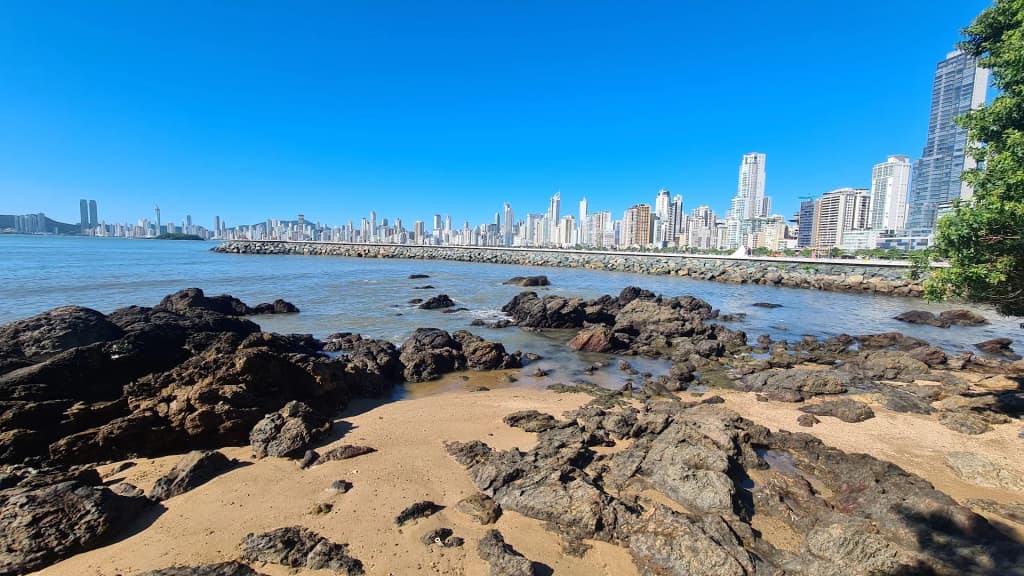
Balneário Camboriú is a study in vertical ambition squeezed into just fifty square kilometers. It houses some of the tallest residential buildings in South America, monoliths that reflect the ocean like mirrors. Yet, to focus only on the height is to miss the depth. I leave the busy Avenida Atlântica and walk south, toward Barra Sul. Here, the frenetic energy of the city center dissolves into the slower rhythm of the river meeting the sea. I find myself standing before the Passarela da Barra, a winding pedestrian bridge that does more than cross the water—it seems to cross time.
On the other side lies Bairro da Barra, the city's cradle. The roar of luxury engines fades, replaced by the chirping of birds and the rustle of leaves. I stumble upon the Capela de Santo Amaro, a modest white church whose foundations were laid in 1758. The contrast is jarring: a simple colonial structure surviving in the long shadow of hyper-modernity. Inside, the air is cool and smells of old wood and candle wax. Legend says the church bell once cracked from being rung so furiously to announce the end of slavery.
An elderly man sits on a bench outside, watching the fishing boats bob in the Camboriú River. He sees me staring at the skyline across the water.
"It grows fast," he says, not looking at me, his eyes fixed on the glass towers reflecting the orange light of dusk.
"Too fast?" I ask, taking a seat on the warm wood nearby.
He shrugs, a slow, deliberate movement. "It brings people. It brings money. But this side?" He taps the bench with a weathered hand. "This side remembers what we were before the elevators came. You cannot build a future without knowing where you stood in the past."
He tells me about the fishermen who used to ferry people across this river by hand, long before the bridge, long before the neon lights. It is a grounding reminder that beneath the concrete, this is still a village by the sea.
To understand the geography here, you must leave the ground. The next morning, I head to the Parque Unipraias aerial tramway. The cable car lifts us smoothly from the Barra Sul station, gliding over the river mouth. As we ascend, the city shrinks into a toy model, and the noise of traffic is swallowed by the dense, green silence of the Atlantic Forest. This is the only park in the world connecting two beaches with a stop in the rainforest.
I step out at the Mata Atlântica station, 240 meters up. The air is fresher here, oxygen-rich and smelling of damp earth and ferns. I wander the trails to the viewpoints. To the north, the curve of Balneário Camboriú looks like a smile of sand and stone; to the south, the ocean stretches endlessly. For those craving adrenaline, there is the Zip Rider—a high-speed descent that leaves riders breathless—but I prefer the quiet observation of the forest floor.
The cable car descends again, dropping us into Laranjeiras Beach. The water here is emerald green and calm, protected by the cove. It feels worlds away from the open ocean of the Central Beach. I spend the afternoon wading in the shallows, watching families share generous portions of fried shrimp, the universal language of a beach holiday.
Back in the city, the connection to the water continues, but behind glass. The Oceanic Aquarium is a marvel of modern conservation. It isn't just a display; it's a sanctuary. I watch Jean Miguel and Carlos Daniel, two otters with personalities bigger than their enclosure, swim with frantic joy. The aquarium also houses axolotls, the critically endangered "walking fish," breeding them here to ensure the species survives. It is a practical stop—especially if you buy the "Passport of Fun" which bundles the aquarium with the Classic Car Show and other attractions—but it is also an emotional one. Seeing the delicate balance of marine life just meters from the concrete jungle reinforces the city's fragile relationship with nature.
As night falls, the hunger sets in. The culinary scene in Balneário is as vertical and varied as its architecture. I find a table at Pizzaria Bis on Avenida Atlântica. The "Paris" pizza arrives, the crust dusted with parmesan before baking, giving it a crunch that snaps satisfyingly with every bite. Later, I follow the sound of live music to Essazona Bar. The atmosphere is electric—surf music, exotic cocktails, and a plate of crispy shark bites with Sicilian lemon. The chef, Olavo Loureiro, knows exactly how to balance the salt of the sea with the richness of comfort food. It is loud, it is happy, and it feels like the city is finally exhaling after a long day in the sun.
My final morning begins in the dark. I wake at 5:00 AM to drive up the Estrada da Rainha toward Morro do Careca. The road winds past the famous "Rua Torta," a crooked street designed to slow cars and charm pedestrians, but my destination is higher.
I reach the summit just as the sky begins to bruise with purple and gold. Morro do Careca is a popular spot for paragliders, launching themselves into the void, but at this hour, it is just me and the wind. From this vantage point, 100 meters above the sea, I see the duality of the region perfectly. To one side, the dense urban grid of Balneário; to the other, the wilder, greener expanse of Praia Brava. The sun breaks the horizon, painting the skyscrapers in fire and gold.
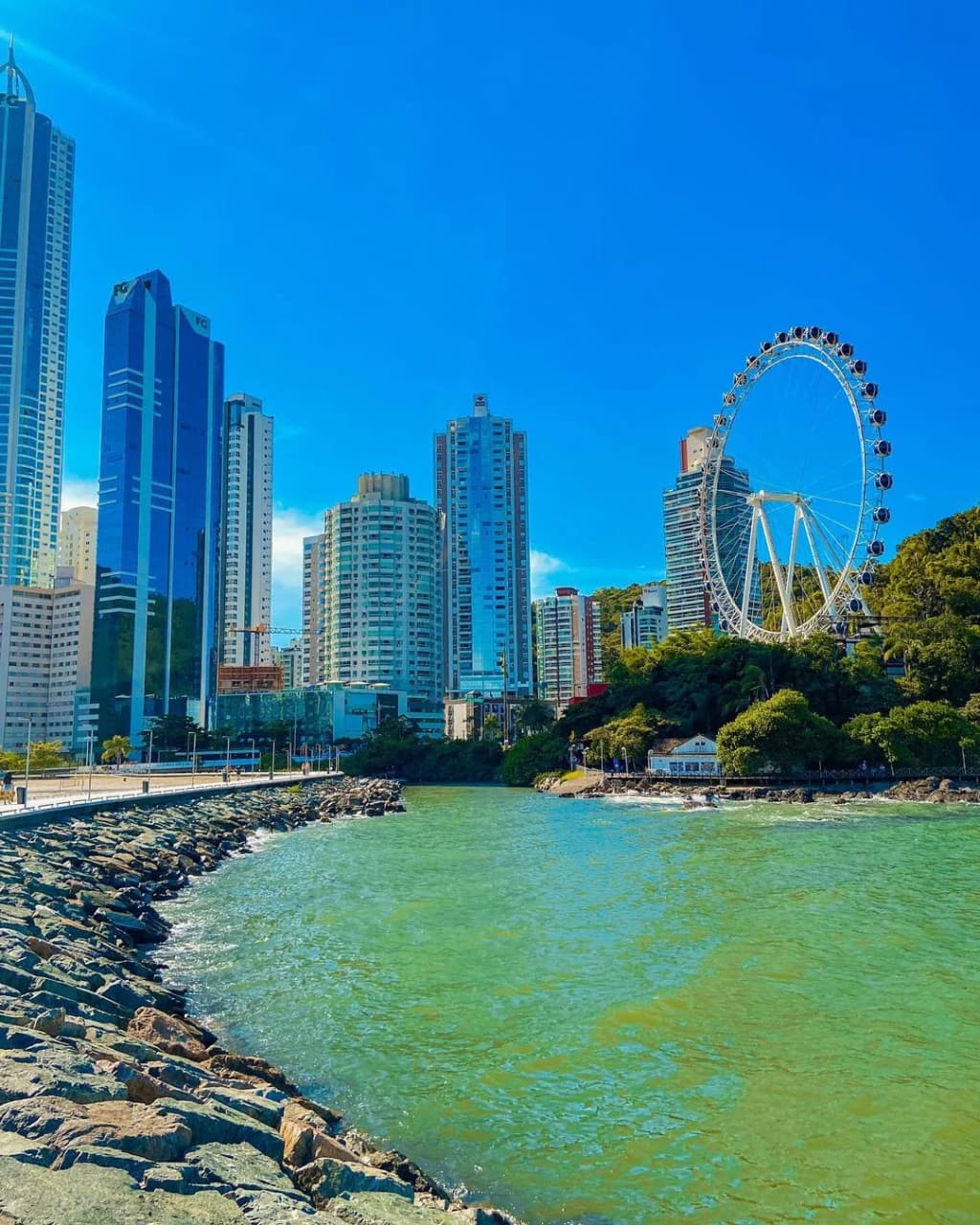
Down below, the city is waking up. The traffic will start, the cable cars will run, and the crowds will flock to Beto Carrero World nearby for rollercoasters and noise. But up here, watching the light hit the water, I realize the old man at the bridge was right. The buildings are impressive, yes. But it is the land underneath—the hills, the forest, the curve of the bay—that truly holds you.
More Photos
More Adventures
 $60 - $150/day 7-14 days
 Brazil's Rhythms: From the Discovery Coast to the Cerrado
Experience Brazil's contrasting landscapes. Journey through the rustic Discovery Coast, the white dunes of Lençóis Maranhenses, and the mystical Chapada.
 $40 - $100/day 3-4 days
 Campos do Jordão Itinerary: Budget Guide & Hiking Logistics
Plan a practical trip to Campos do Jordão, Brazil's highest city. Get exact costs for state parks, hiking Pedra do Baú, and budget-friendly dining.
 $50 - $150/day 3-7 days
 Chasing the Ephemeral Lagoons of Lençóis Maranhenses
Experience the seasonal miracle of Lençóis Maranhenses National Park, where torrential rains transform a Brazilian desert into crystalline blue lagoons.
 $75 - $250/day 7-14 days
 The Ultimate Month-by-Month International Travel Guide
Stop gambling with your PTO. Discover the exact best (and worst) international destinations for every month of the year to optimize budget and weather.