
Tasting the Douro: A Journey Through Portugal's Wine Valley
Wander through the terraced vineyards of Portugal's Douro Valley, tasting rare Port wines and exploring historic villages in this immersive travel essay.
The mist is thick this morning, clinging to the steep, terraced hillsides like spun sugar. The air is crisp, carrying the profound scent of damp schist, wet leaves, and the faint, sweet memory of crushed grapes. It takes an hour and a half to drive here from the loud, hurried streets of Porto, but the moment the road descends into the Douro Valley, the modern world simply dissolves. Time stretches out, moving only as fast as the sluggish river below. I am standing in the cool, shadowed cellar of Niepoort, a fifth-generation family winery where the oak barrels seem to breathe in the dark. The cellar master doesn't even know exactly how many labels they produce—somewhere between one hundred and one hundred and fifty, he guesses with a nonchalant shrug. They blend strict tradition with organic innovation here. Some of the bottles resting quietly in these dusty racks fetch upwards of two thousand, five hundred euros, while others sit comfortably around a hundred and forty. But the real luxury is simply standing here, inhaling centuries of quiet, deliberate craftsmanship.
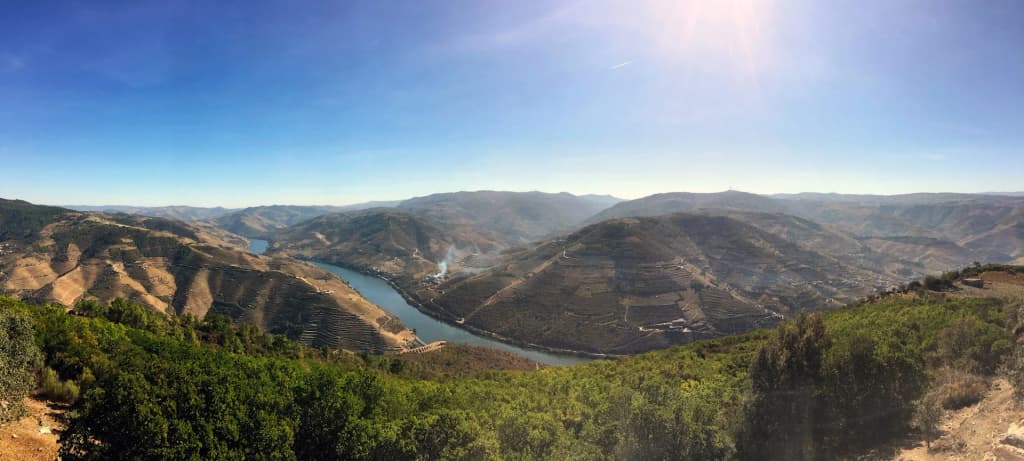
The road winds like a dropped ribbon toward Pinhão. The river curves gently, a liquid mirror reflecting the clearing sky. A train whistle blows in the distance, a low, mournful sound that bounces off the canyon walls. Pinhão is the beating heart of the valley, a strategic bend in the river that has launched a thousand Rabelo boats laden with heavy wine barrels. To truly understand this region—to trace the invisible borders of the Baixo Corgo, Cima Corgo, and the distant Douro Superior—you need the freedom of your own steering wheel. Renting a car in Porto unlocks not just this valley, but the entire north of Portugal, from the historic squares of Braga and Guimarães to the canals of Aveiro. You take the winding roads at your own pace, pulling over whenever the landscape demands it. The Douro was demarcated in the sixteenth century, making it one of the oldest protected wine regions in the world. I wander past the heavy wrought-iron gates of Quinta do Bomfim, where the ancient vines slope so dramatically toward the water you wonder how the harvesters keep their footing during the autumn picking.
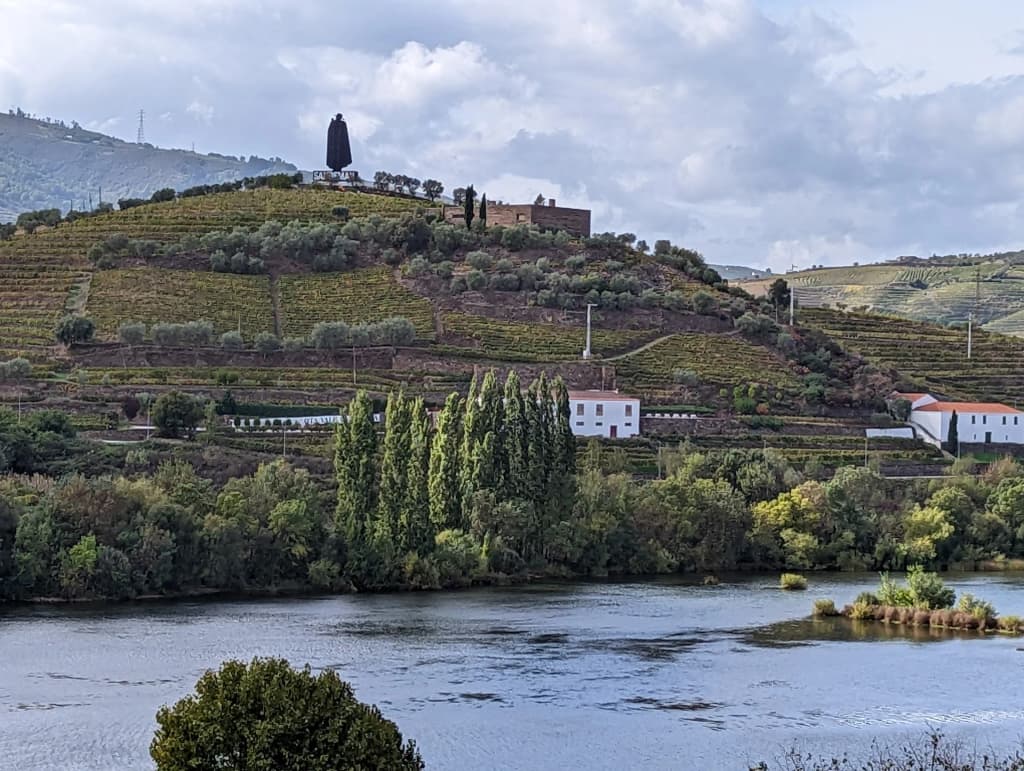
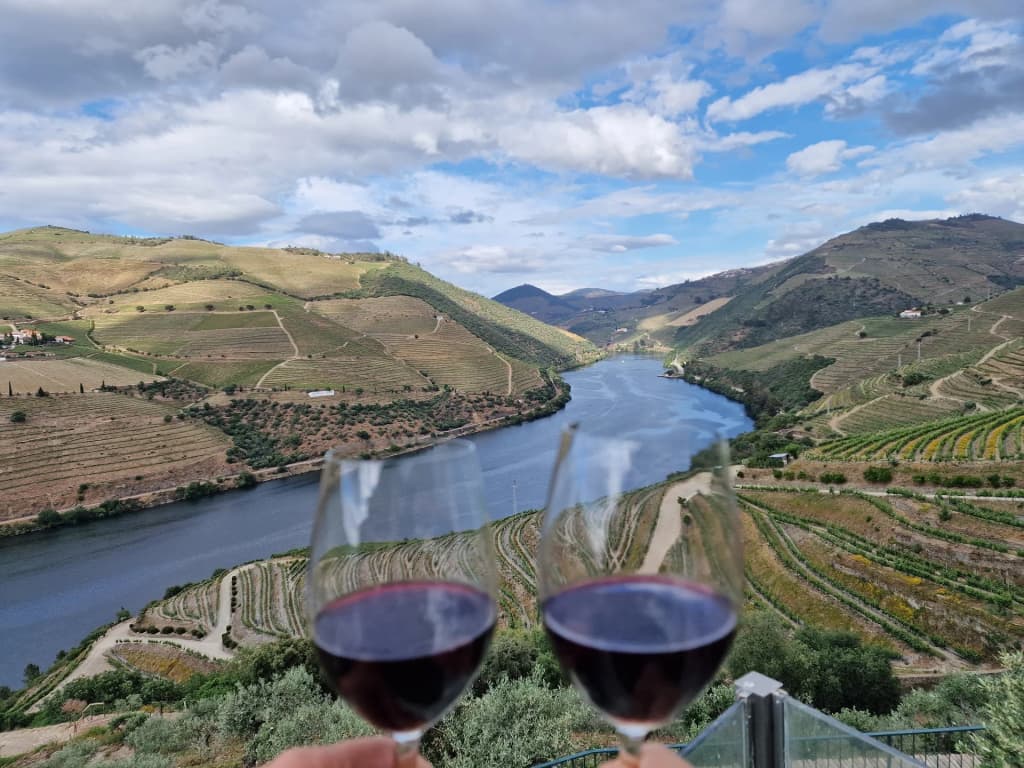
Up at Quinta de Ventozelo, the world falls away completely. Olive trees dot the landscape, their silver leaves shimmering and rustling in the warm afternoon breeze. I stand at the edge of the property, looking down at Pinhão, which now looks like a miniature village carved into the earth. The air up here is thinner, warmer against the skin. Later, at Quinta do Seixo, the iconic Sandeman estate owned by the massive Sogrape group, I sit on a high terrace overlooking the valley. The wine in my glass catches the late afternoon light, glowing a deep, luminous ruby. I swirl the Port, watching the heavy liquid leave thick legs on the glass. The sweetness coats my tongue, complex with lingering notes of dark cherry, toasted almond, and bitter chocolate. Tasting by the glass here, suspended between the vast blue sky and the endless green terraces, the wine tastes like the landscape itself—rich, ancient, and undeniably alive.
In Peso da Régua, the acknowledged center of the demarcated region, the old railway station has been reborn. The tracks are silent, but the long stone buildings hum with a new kind of energy. The heavy scent of roasted garlic, hot olive oil, and seared meats drifts from the open doors of the converted warehouses. I find a heavy wooden table at Cascas e Pratos. The room is a loud, joyful collision of clinking glasses and overlapping conversations in half a dozen languages. It is a place built for sharing, where heavy ceramic plates of sharp local cheeses and cured meats are passed back and forth, and every salty bite demands another sip of the region's elegant table wines.
The road climbs again, twisting its way into the town of Lamego. I step out of the afternoon heat and into Lam Vinhos, a massive distributor that feels more like a library of liquid history. The temperature drops instantly, cool and rigorously controlled. There are over three thousand, five hundred labels stacked from the floor to the high ceilings. The sheer volume is dizzying, a maze of glass and cork.
"It's a labyrinth," I say to Bruno, the merchant who is carefully organizing a display of vintage reds.
"And every bottle is a different path," he replies, his eyes crinkling as he hands me a heavy, dark bottle. "We offer ten percent off everything here. Sometimes up to thirty percent compared to the regular markets. You can take up to sixteen bottles back home on the plane, you know."
"If I buy sixteen," I laugh, feeling the cool glass in my hands, "I might never leave."
"That," Maria José calls out from behind the register, her voice ringing through the aisles, "is exactly the point."
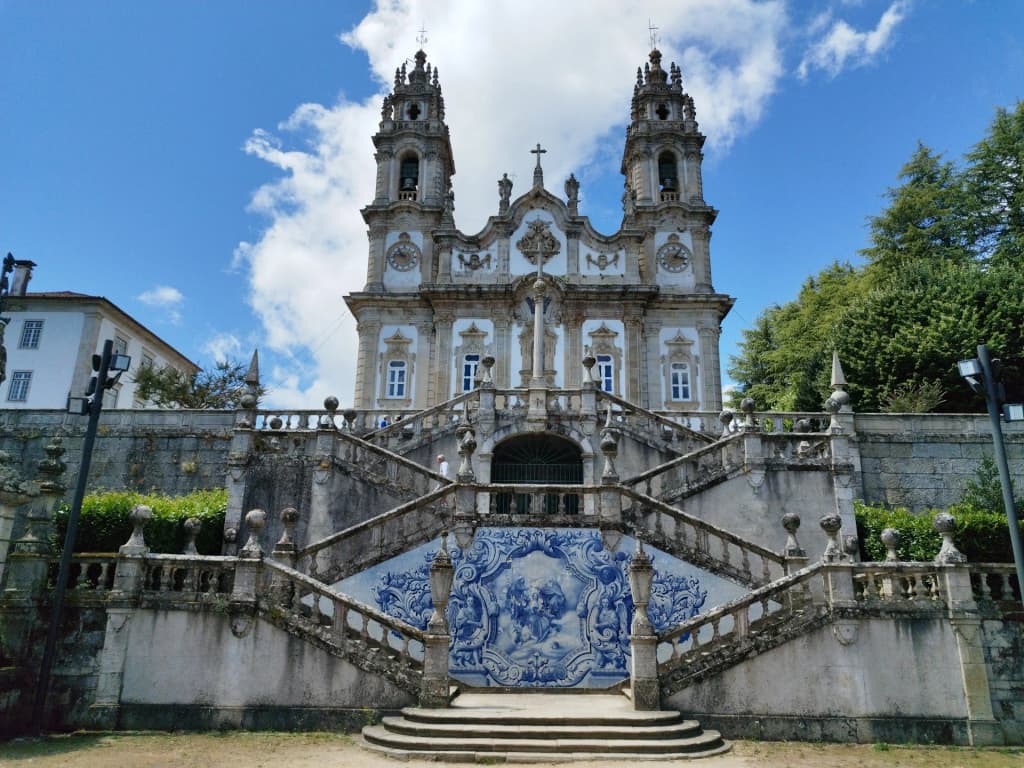
Just down the street, I slip into Douro Excellence Tapas e Petiscos. The air inside is heavy with the smell of sizzling beef and baking dough. I order the prego no pão. It is the simplest of Portuguese dishes—just a garlic-infused beef steak tucked inside a soft, crusty bread roll—but the execution is divine. The savory juices soak into the crumb of the bread, rich and deeply satisfying. It is the best I have ever eaten, humble yet profound. I walk it off by heading toward the Sanctuary of Our Lady of Remedies. Six hundred and eighty-six stone steps cascade down the steep hillside from the baroque church. I stand at the bottom, my hands deep in my pockets, looking up at the intricate stonework glowing golden in the fading evening light. I trace the zigzagging staircases with my eyes, feeling the weight of the day in my legs. I won't climb them today. The Douro has already given me enough, and a traveler always needs a reason to return.
More Photos
More Adventures
 $50 - $120/day 2-3 days
 Earth, Fire, and Lavender: A Sensory Weekend in Cunha
Breathe in the lavender fields, taste alpine mountain beer, and feel the heat of traditional Japanese kilns in the mountain village of Cunha, São Paulo.
 $50 - $120/day 3-5 days
 Chasing Echoes and Gold Dust in Tiradentes, Brazil
Experience Tiradentes, Brazil through a sensory journey of colonial architecture, deep-rooted history, and the rich culinary traditions of Minas Gerais.
 $150 - $300/day 1-2 days
 Conquer Epcot: The Ultimate High-Speed Global Gauntlet
Think Epcot is a slow stroll? Think again. It's a high-speed, globe-trotting gauntlet. Hack the rides, taste the world, and push your limits in Orlando.
 $50 - $150/day 1-2 days
 Finding Holland in the Tropics: Two Days in Holambra
Discover Holambra, Brazil's unexpected Dutch enclave. Wander through luminous flower fields, towering windmills, and rich European history in São Paulo state.