
Finding Holland in the Tropics: Two Days in Holambra
Discover Holambra, Brazil's unexpected Dutch enclave. Wander through luminous flower fields, towering windmills, and rich European history in São Paulo state.
The rain hits the glass of the greenhouse in heavy, rhythmic sheets, drowning out the low hum of the ventilation fans. Inside, the air is thick with the sweet, intoxicating scent of damp earth, fertilizer, and blooming roses. I hand over thirty reais to the attendant at Bloemen Park, seeking refuge from the sudden, violent Brazilian downpour. The wind howls outside, rattling the framing of the oldest permanent flower exhibition in the region, but here in the sheltered warmth, it is an explosion of color. More than thirty varieties of roses stretch out in neat, luminous rows, surrounded by hundreds of distinct plant species. You can feel the humidity clinging to your skin, a sharp, sticky reminder that despite the meticulously manicured European aesthetics surrounding me, we are still deep in the sweltering heart of São Paulo state.
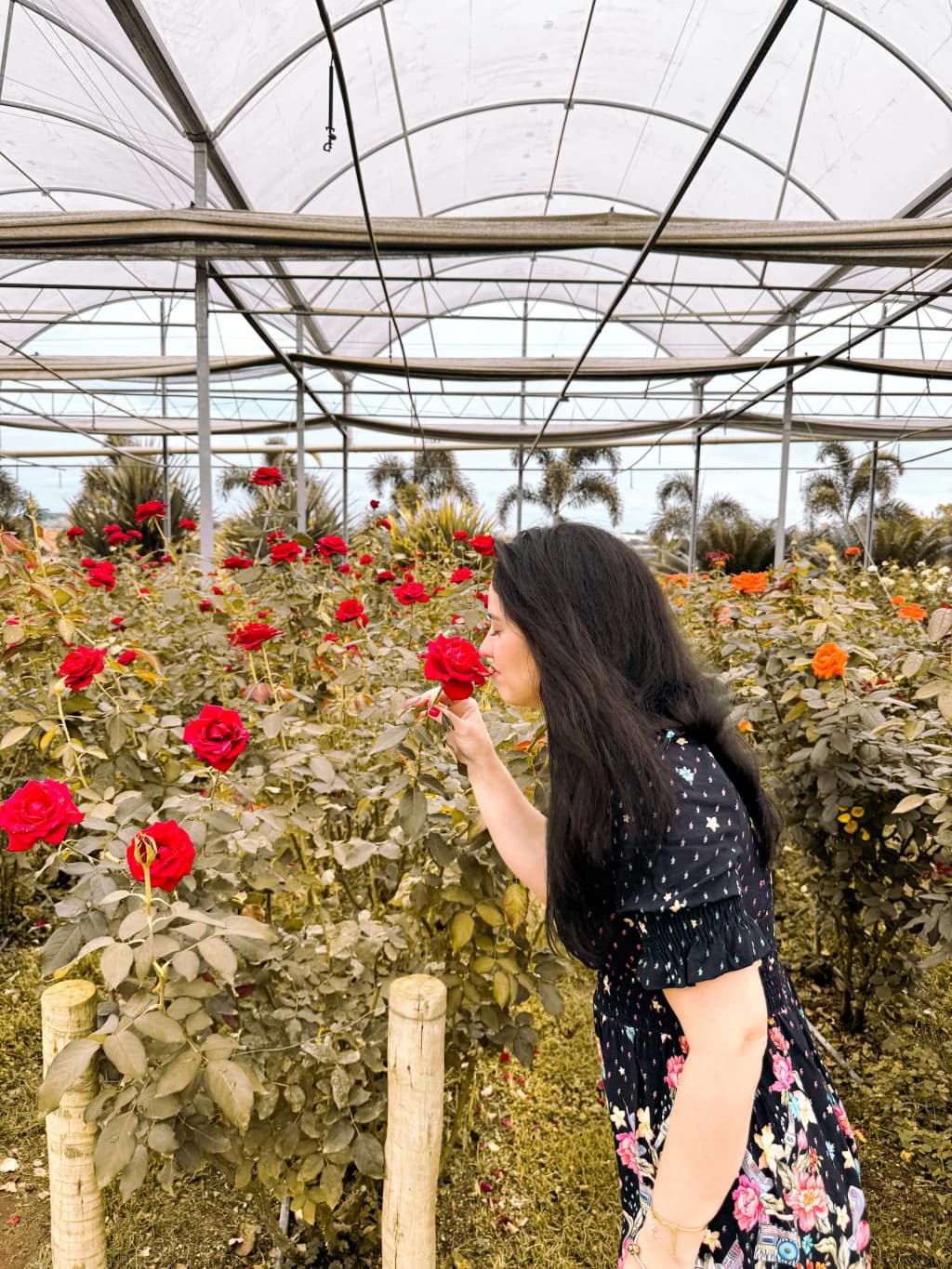
Holambra is a town that shouldn't quite make sense. It is a linguistic mashup of Holland, America, and Brazil, founded in the late 1940s by Dutch immigrants fleeing the devastation of the Second World War. Their initial dream was to establish a sprawling dairy empire in the tropics. The cattle, however, had other plans, stubbornly refusing to adapt to the punishing South American climate. By the 1960s, the community pivoted to what they knew best from the old country: flowers.
"We are a town of barely fifteen thousand people," João Vitor tells me as we walk between towering rows of yellow at Macena Flores. The damp, dark soil from the sunflower fields clings heavily to the soles of my boots.
"It feels much larger," I say, watching a flatbed truck loaded with bright blooms rumble past the iron gates, leaving a faint trail of diesel fumes in its wake.
He smiles, his hands gesturing to the endless fields under the returning sun. "That is because nearly half of all the flowers in Brazil start their lives right here in this dirt. Eighty percent of the country's floral exports pass through our hands." I pay another thirty reais for this guided tour, and it feels like a bargain for a front-row seat to an agricultural empire. We wander through massive, humid greenhouses bursting with everything from delicate, pale orchids to resilient, fleshy succulents, the air heavy with the scent of wet foliage.
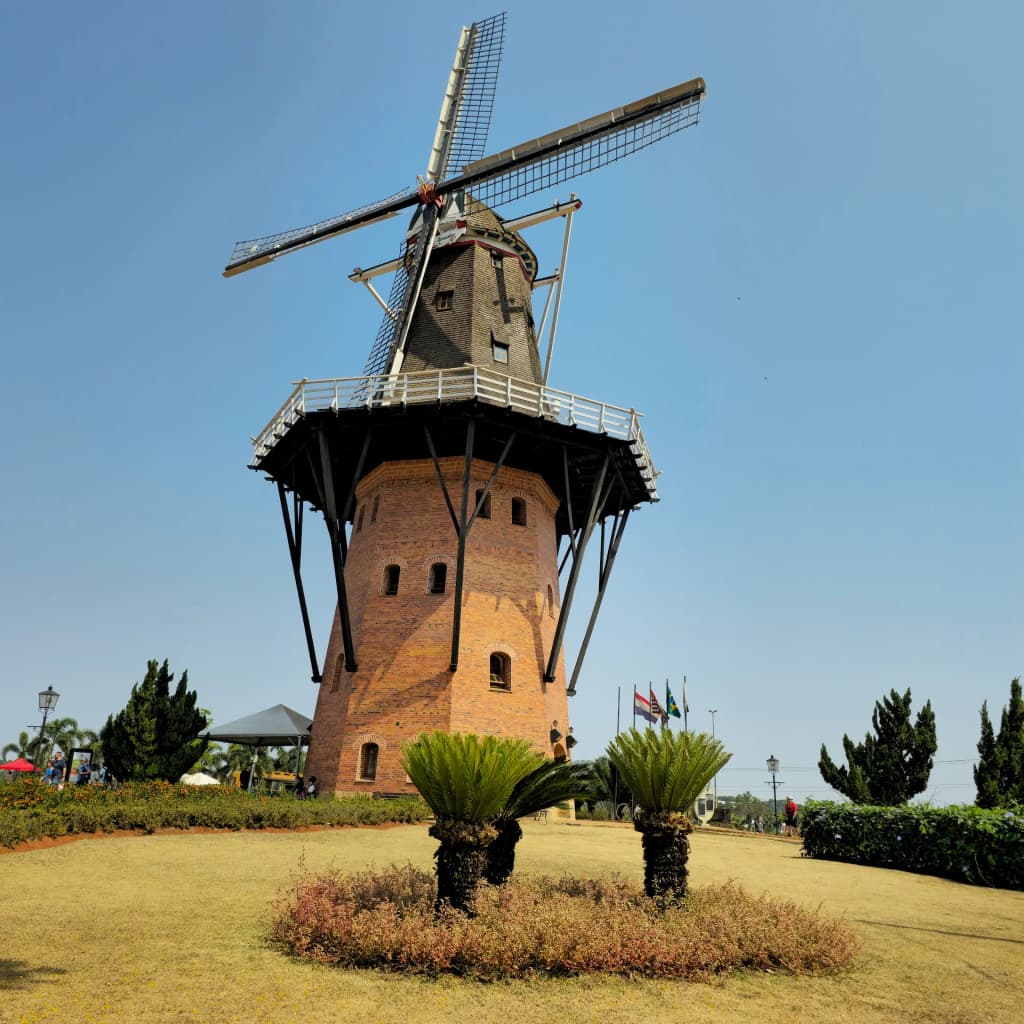
I leave the agricultural fields behind and head toward the center of town, where the skyline is dominated by something entirely unexpected. The Moinho Povos Unidos towers thirty-eight and a half meters into the blue sky, casting a long, cooling shadow over the sun-baked cobblestones. Built in 2008 to commemorate sixty years of Dutch immigration, it is the largest windmill in the Americas. I run my hand along the rough, sun-warmed brickwork near the base, listening to the low, mechanical groan of the massive wooden blades catching the afternoon breeze.
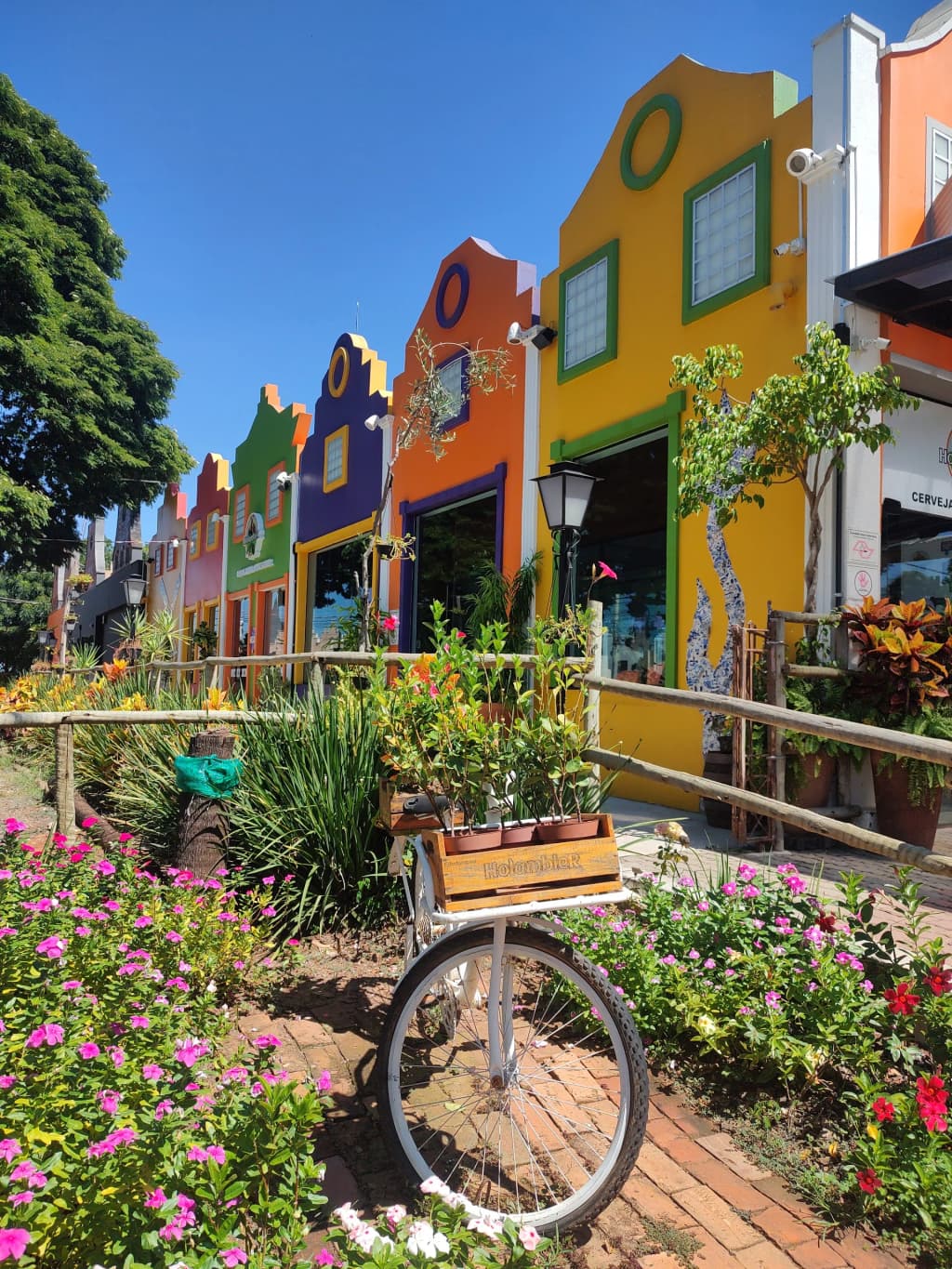
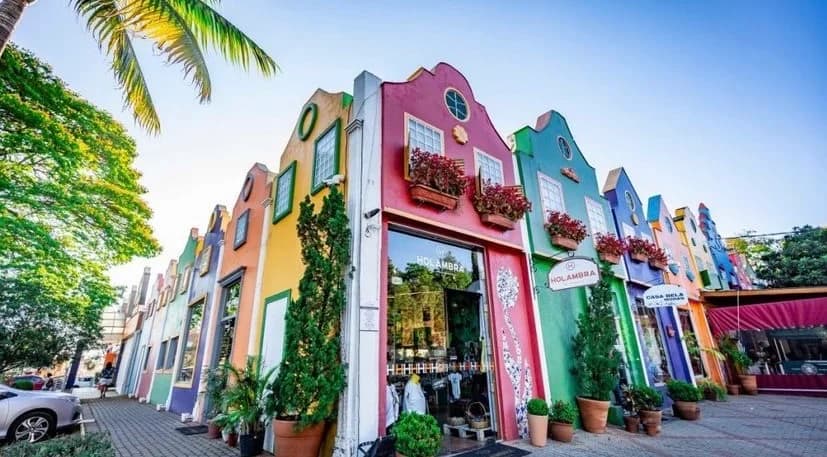
Just around the corner, the cultural immersion deepens into delightful kitsch. I pass a public telephone booth shaped entirely like a giant wooden tamanco—a traditional Dutch clog. Above me, a canopy of brightly colored umbrellas provides shade over a pedestrian street, their synthetic fabric snapping gently in the wind. The facades of the buildings mimic the narrow, gabled canal houses of Amsterdam, painted in cheerful pastels that glow warmly as the afternoon sun begins its descent. The visual clash of European architecture against the backdrop of broad-leafed tropical trees is surreal, yet strangely harmonious.
My home for the night is just as wonderfully idiosyncratic as the town itself. I turn the heavy metal key to Lodge Cinemol, a thematic guesthouse that feels less like an Airbnb and more like walking onto an eccentric film set. The kitchen is bathed in my favorite shade of deep blue, anchored by a refrigerator painted to look exactly like the Beatles' Yellow Submarine. I drop my canvas bags on the floorboards and slide a vinyl record onto the vintage turntable sitting in the living room. The crackle of the needle hitting the groove fills the space, followed by the smooth, unmistakable samba of Zeca Pagodinho. It is a perfect, bizarre fusion of cultures that makes me smile instantly.
I wander into the bathroom, where the floor tiles meticulously recreate the iconic black-and-white wave pattern of the Copacabana promenade. The lodge is an intimate space, strictly reserved for two adults, making it a quiet sanctuary away from the bustling flower festivals. For larger groups, the owners maintain another similarly sized cabin on the same lush property, allowing families to stay close while maintaining their own cinematic retreats.
The smell of roasted meats and rich, simmering gravy pulls me out of my cinematic hideaway and onto the Boulevard Holandês. I take a seat at a highly-rated traditional restaurant, the heavy wooden chairs scraping loudly against the floorboards. The menu is a comforting ode to the Netherlands. I order the Hunter's plate, a massive serving of tender filet mignon drenched in a dark, savory sauce, balanced perfectly by the sweet, tart bite of homemade apple puree and buttery sautéed potatoes. The meat melts in my mouth, the savory and sweet flavors mingling beautifully. The bill arrives at two hundred and fifty-eight reais for our table of four, a surprisingly gentle price for the sheer quality and volume of the feast.
To settle the heavy meal, I walk down to the edge of the lake where a local confectionery, Zoet en Zout, sits with its large glass windows glowing against the twilight. I order a slice of traditional Dutch pie and a small, bitter espresso. The hazelnut cream melts on my tongue, rich and sugary, as I look out over the dark water reflecting the warm string lights of the nearby chalets. The clinking of porcelain cups and the low murmur of Portuguese conversation surround me.
I learn quickly that timing is everything in Holambra. As I wander toward Parque Van Gogh the next morning, the air is still and quiet. Because I am visiting on a weekday, many of the charming lakeside attractions, including the brightly painted pedal boats and the zipline, are locked up tight. The city breathes deeply and bustles with tourists from São Paulo and Campinas on the weekends, but during the week, it rests.
Still, the park is free to enter and beautifully serene. I walk past the large, weather-resistant replicas of Vincent Van Gogh's masterpieces that dot the green lawns, their swirling yellows and blues luminous against the natural landscape. I follow the curving dirt path until it opens up onto the Vitória Régia deck. The wooden planks groan slightly underfoot, damp from the morning dew.
All along the metal railings, hundreds of brass and steel padlocks catch the early light. Lovers have etched their initials into the metal, locking them to the bridge before throwing the keys into the murky water below. I lean against the railing, feeling the cool metal through my shirt, and listen to the water lapping gently against the wooden pylons. Holambra is a place built entirely on beautiful contradictions—a dairy farm that grows roses, a piece of Europe baking in the Brazilian sun, a quiet lakeside town that paints a whole country in color.
More Photos
More Adventures
 $50 - $120/day 2-3 days
 Earth, Fire, and Lavender: A Sensory Weekend in Cunha
Breathe in the lavender fields, taste alpine mountain beer, and feel the heat of traditional Japanese kilns in the mountain village of Cunha, São Paulo.
 $50 - $120/day 3-5 days
 Chasing Echoes and Gold Dust in Tiradentes, Brazil
Experience Tiradentes, Brazil through a sensory journey of colonial architecture, deep-rooted history, and the rich culinary traditions of Minas Gerais.
 $50 - $150/day 1-2 days
 Conquer the Serra Verde Express: Brazil's Wildest Train
Ditch the tourist traps and ride the Serra Verde Express from Curitiba to Morretes. Discover ticket tips, seating secrets, and the best Barreado.
 $40 - $80/day 2-4 days
 Boa Vista: Exploring the Amazon's Fan-Shaped Frontier City
Experience the unexpected beauty of Boa Vista, Roraima. Discover Macuxi indigenous crafts, the unique Lavrado biome, and sunset boat tours on the Rio Branco.