
Echoes in the Marble: Touching the Soul of Athens
Experience the sensory collision of ancient ruins and modern life in Athens. Follow Marco Silva through the Acropolis, Plaka, and the soul of the Greek capital.
The smell hits you first. Charred pork, wild oregano, and the sharp, garlicky tang of tzatziki lingering in the warm evening air. I sit at a wobbly wooden table wedged into a narrow alleyway in Plaka. The cobblestones beneath my feet still radiate the baked heat of the afternoon sun. String lights zigzag overhead, casting a golden, cinematic hue on the faces of locals and wanderers alike. I take a bite of a massive gyros—a beautifully messy steal at eight euros—and let the chaotic symphony of the Monastiraki district wash over me. You can hear the rhythmic clinking of wine glasses, the fast-paced hum of Greek chatter, and the distant, metallic strumming of a bouzouki echoing down the lane.
"You eat like you have been starving for a century," the taverna owner says, pausing to wipe down the adjacent table with a damp cloth. He has deep, expressive laugh lines and a stark white apron dusted with flour.
"Maybe I have," I reply, wiping a stray drop of yogurt from my chin. "Or maybe the food here is just that good."
He chuckles, tossing the cloth over his shoulder with practiced ease. "This is Athens, my friend. We feed the soul first, the stomach second. Rest well tonight. Tomorrow, the stones will demand your energy."
He isn't wrong. The next morning, the air is crisp and surprisingly quiet as I navigate the winding, whitewashed paths of Anafiotika. With its bright blue doors and cascading bougainvillea, it feels less like a European capital and more like a secret island village dropped onto the side of a mountain. I reach the southern gates of the Acropolis right at eight o'clock, just as the heavy iron locks are turning. Bypassing the already snaking line at the ticket booth is a quiet victory; having secured my thirty-six euro combo ticket online the night before means I can walk straight into antiquity without breaking my stride.
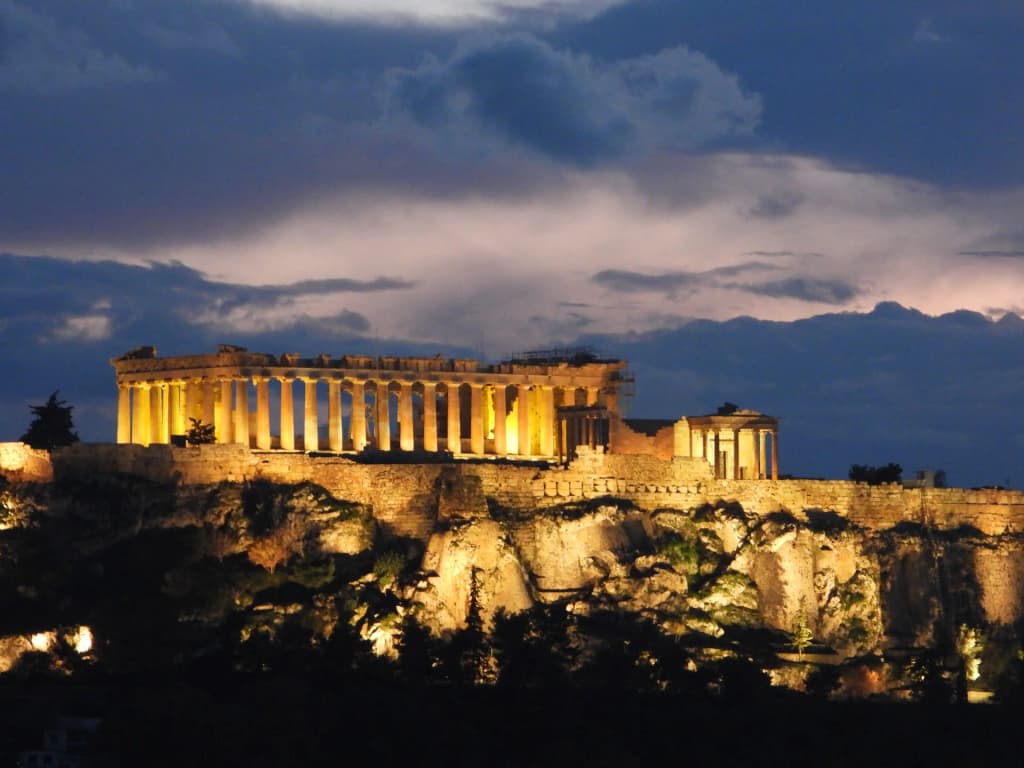
The climb is a steady, rhythmic burn in the calves, but as I crest the rocky hill, the modern world simply falls away. The Parthenon stands massive against the cloudless blue sky, its towering Doric columns glowing with a soft, buttery morning light. You can hear the wind whistling through the marble gaps, a haunting sound that hasn't changed in two and a half millennia. It is staggering, yet there is a subtle melancholy up here in the dusty air. Many of the original statues and intricate friezes are long gone, victims of time, weather, and historical plunder.
To find the missing pieces of this sprawling puzzle, you have to descend the hill and step into the Acropolis Museum. The cool, quiet air-conditioning is a welcome shock to the system after the exposed, sun-drenched ruins. Inside, bathed in natural light that filters through massive glass walls, the original caryatids and meticulously preserved sculptures stand in quiet dignity. Seeing the authentic carvings up close makes the ancient city outside feel whole again, bridging the gap between imagination and reality.
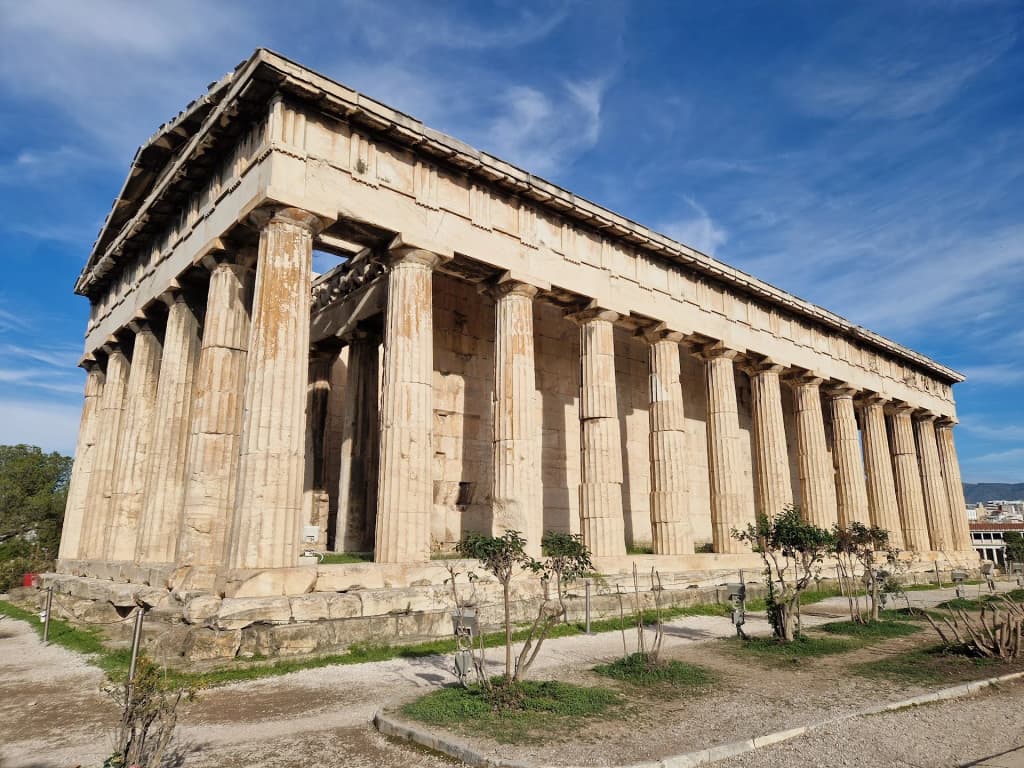
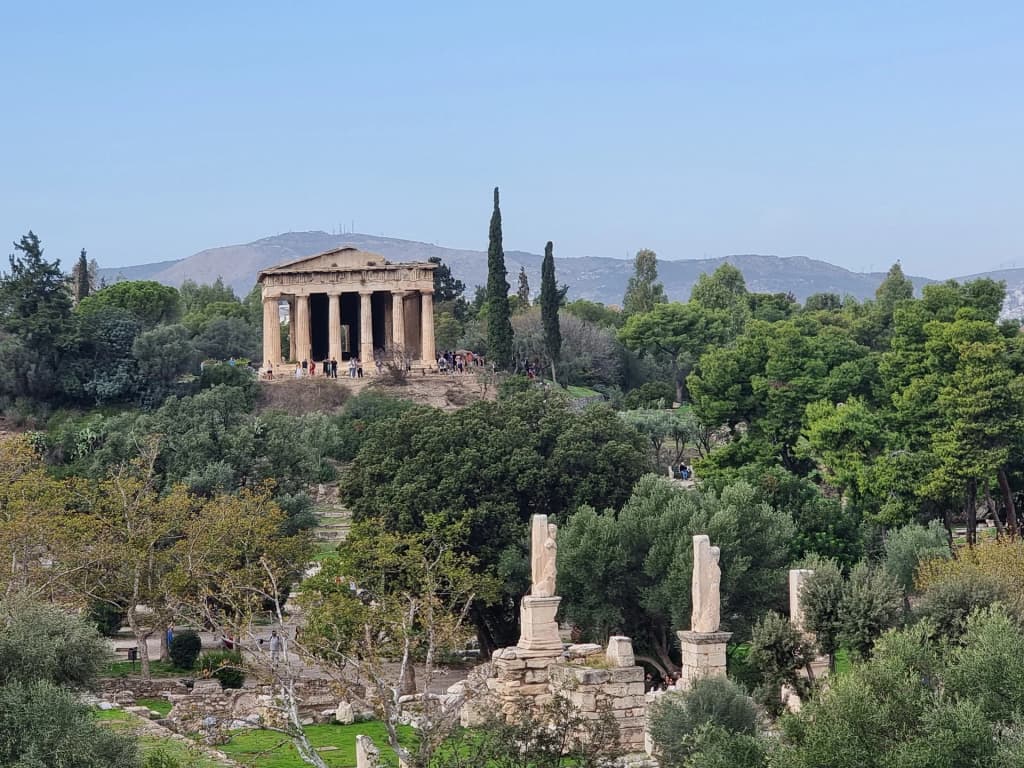
From the museum, it is a short, kinetic walk to the Ancient Agora. The path follows the dusty edge of Adrianou Street, where history and commerce sit comfortably side by side. I wander among the twisted trunks of ancient olive trees toward the Temple of Hephaestus. Unlike the skeletal remains of the Parthenon, this temple is startlingly intact. You can run your fingers over the rough, sun-baked stone and feel the deep grooves carved by hands centuries ago. The scent of crushed pine needles and dry earth is intoxicating, grounding you in the very dirt where philosophers once debated the nature of the universe.
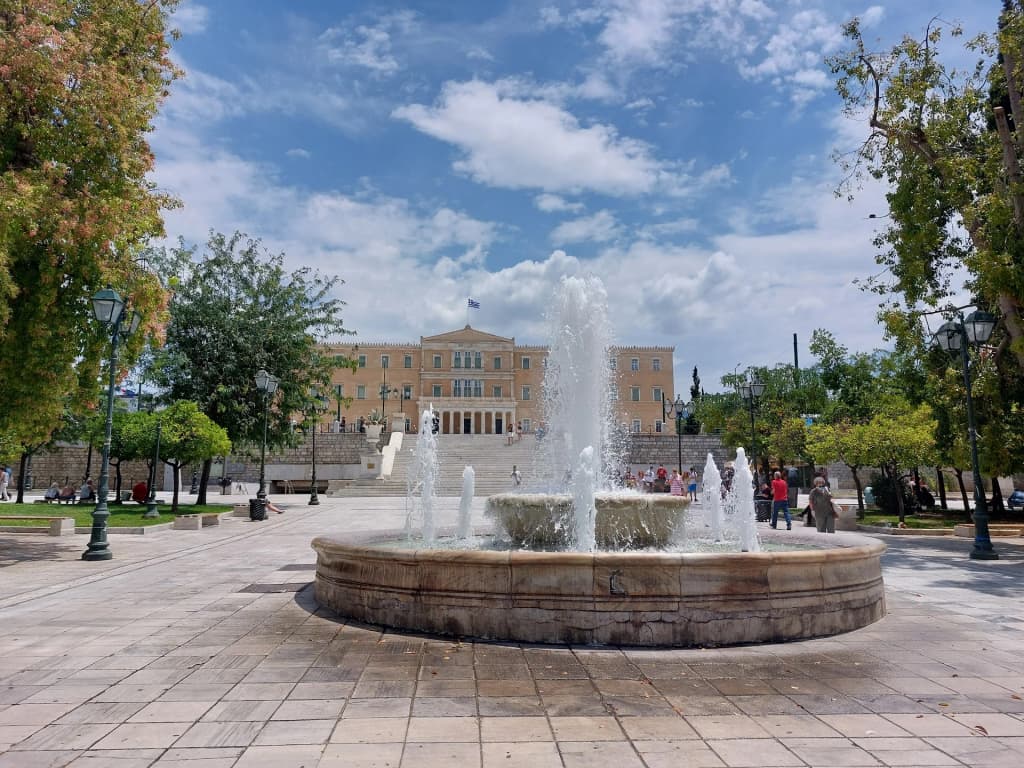
But Athens is not a tomb. It is a loud, breathing, unapologetic metropolis, a fact that becomes immediately apparent as I drift away from the ruins and onto Ermou Street. The contrast is dizzying. The ancient dirt paths give way to smooth, polished pavement lined with glowing storefronts and bustling cafes. The rich aroma of roasted chestnuts from street carts mixes with expensive perfumes trailing behind hurried shoppers. I follow the relentless tide of people until the narrow street suddenly opens up into the vast, sunlit expanse of Syntagma Square.
Here, in front of the imposing, pastel-hued Parliament building, a crowd gathers in hushed anticipation. The rhythmic, heavy strike of boots on marble shatters the ambient city noise. The Evzones, the elite presidential guard dressed in their traditional pleated kilts and pom-pom shoes, perform their elaborate changing ceremony. Their movements are painfully precise, almost hypnotic—a surreal, slow-motion dance of tradition unfolding in the dead center of a city that otherwise never stops moving.
As the afternoon shadows stretch longer and the heat begins to break, I seek out the highest vantage point I can find. Mount Lycabettus looms over the city, a jagged limestone peak crowned with a tiny, brilliant white chapel. Instead of tackling the punishingly steep hike, I opt for the funicular. It is a rattling, subterranean cable car that pulls you up through the dark rock for just a few euros. Emerging at the top is like stepping out of an airplane into the open sky.
The entirety of Athens spills out below in every direction, a boundless sea of flat white roofs turning dusty pink and lavender in the fading light. Far in the distance, the Aegean Sea shimmers like a sheet of hammered silver. The Acropolis, now illuminated by warm floodlights, anchors the sprawling metropolis below. It looks like a glowing heart beating steadily in the dusk. The wind up here is cooler, carrying the faint, distant hum of millions of lives continuing their evening routines—scooters buzzing, dogs barking, plates clattering.
You realize, looking down at it all, that this city has survived empires, brutal wars, and millennia of chaotic change, yet it still holds fiercely onto its wild, welcoming spirit. Athens is a place that doesn't just display its history behind glass; it invites you to sit at the table, share a meal, and become a fleeting part of its endless story.
More Photos
More Adventures
 $50 - $150/day 1-2 days
 Conquer the Serra Verde Express: Brazil's Wildest Train
Ditch the tourist traps and ride the Serra Verde Express from Curitiba to Morretes. Discover ticket tips, seating secrets, and the best Barreado.
 $50 - $120/day 4-7 days
 Sensory Buenos Aires: Smoke, Stone, and Neon Lights
Immerse yourself in Buenos Aires. Experience the contrasts from the smoky grills of San Telmo to the neon-drenched pizzerias of Avenida Corrientes.
 $50 - $150/day 3-5 days
 Tango, Steak, and Rivalries: A Buenos Aires Story
Experience the soul of Buenos Aires. From the colorful streets of Caminito to the modern elegance of Puerto Madero, discover where to eat, walk, and explore.
 $60 - $200/day 4-7 days
 Between the Andes and the Ocean: Unraveling Santiago
Experience the striking contrasts of Santiago, Chile. Discover historic dive bars, the soaring Andes in Cajón del Maipo, and the colorful hills of Valparaíso.