
A Free-Wandering Sunday Through Palermo and Recoleta
Wander through the lush parks of Palermo and the grand architecture of Recoleta on a sensory walking route that proves Buenos Aires' best experiences are free.
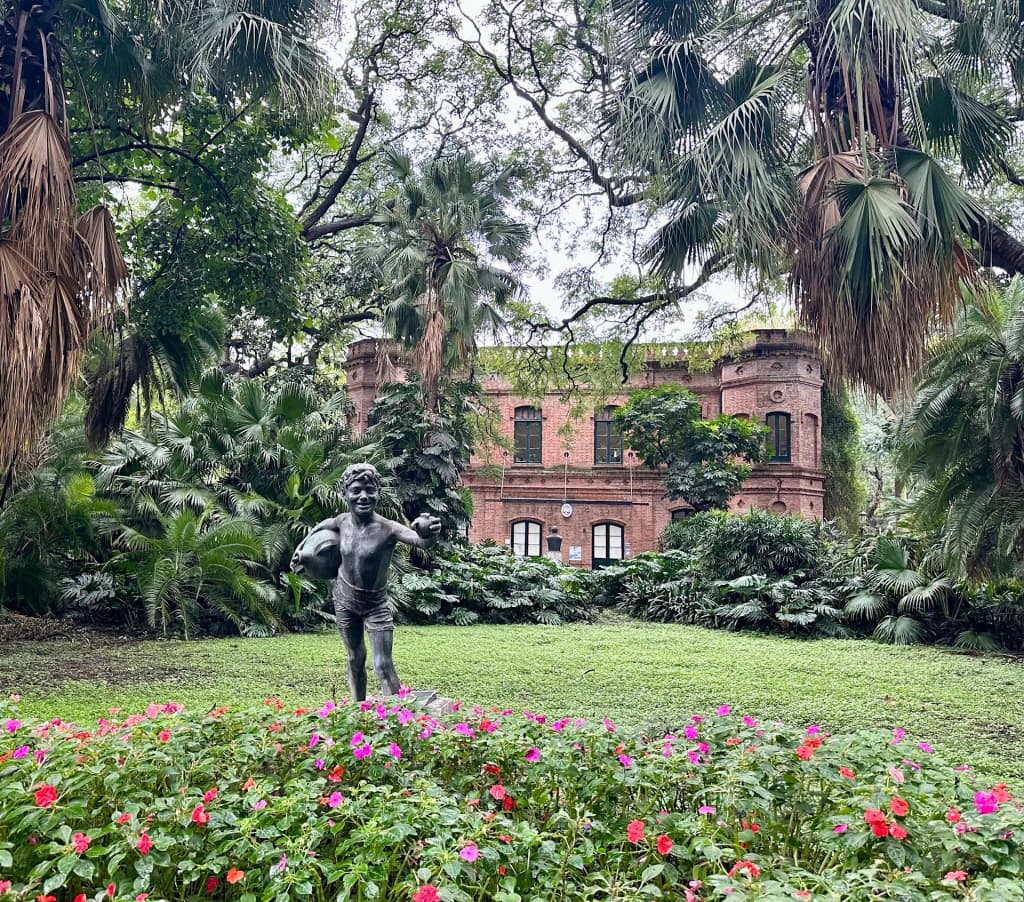
The sharp, sweet scent of damp earth and crushed eucalyptus leaves catches me before I even clear the wrought-iron gates. It is Sunday morning in Buenos Aires, and the Jardín Botánico Carlos Thays is already awake. The rumble of traffic from the nearby avenue fades into a soft hum, replaced by the trill of local birds and the crunch of gravel under the feet of early walkers. I stand in a living masterpiece from 1898, a sprawling green lung where over six thousand plant species breathe quietly in the morning chill.
I walk toward the center of the garden, drawn by the glint of sunlight hitting glass. The main greenhouse stands here, an exquisite piece of Art Nouveau architecture that took home a prize at the 1900 Paris Universal Exposition. It feels like a delicate glass palace dropped into a wild jungle. Nearby, a replica of the Roman Wolf statue watches over the paths, a quiet donation from Italy that speaks to the heavy European influence woven into the very dirt of this city. Locals jog past, mate gourds tucked under their arms, taking back their city on the weekend.
"You cannot pay with that here," the kiosk owner tells me, tapping a calloused finger against the glass counter where my green Wise debit card sits. "Only pesos. Efectivo."
"I just arrived," I explain, holding up the Movistar SIM card I am trying to buy. "I need the internet to find the Western Union."
He laughs, a raspy, warm sound that competes with the hiss of an espresso machine behind him. "Welcome to Argentina, my friend. It is a dance. Take the chip. Pay me later when you have the paper."
I thank him, sliding the tiny piece of plastic into my phone. Getting connected here is less of a transaction and more of a quest. It requires texting a WhatsApp bot to activate the number, a process that feels strangely personal. With a flicker of 4G finally hitting my screen, I trace my way toward the Alcorta Shopping mall in Palermo. It houses a Western Union inside a Carrefour supermarket that stays open on Sundays—a crucial lifeline when you land late on a Saturday night and need physical cash for street vendors. While international debit cards work flawlessly at most restaurants, bypassing heavy local taxes and offering a highly favorable exchange rate, the heartbeat of the streets still demands the rustle of paper pesos.
With cash in my pocket and a digital map in hand, the city opens up. Just past Plaza Italia, where a towering statue of Giuseppe Garibaldi watches over the traffic, I slip into the Ecoparque. The noise of the city vanishes entirely, replaced by the rustle of leaves and the distant call of exotic birds. What used to be an 1874 zoological garden is now a sprawling conservation center. There are no cages here. A peacock drags its iridescent tail feathers across the walking path, utterly unbothered by the humans. In the brush, I spot a mara—a creature that looks like a miniature capybara crossed with a hare—munching quietly on the wet grass.
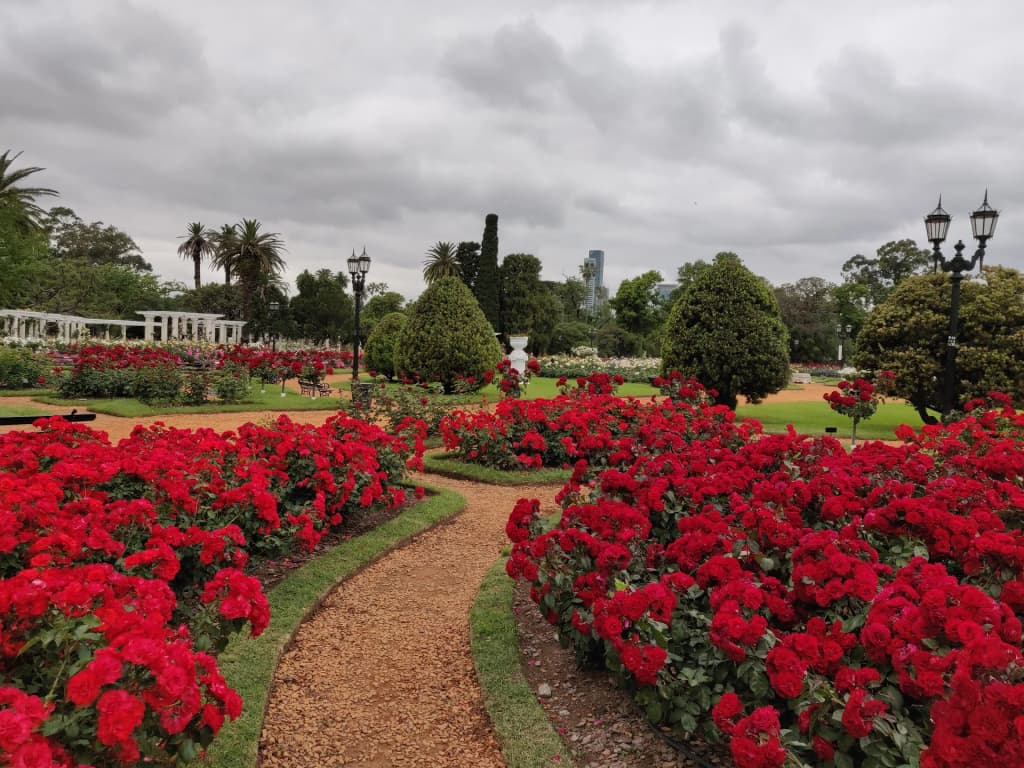
The walk flows naturally into the Parque Tres de Febrero, the crown jewel of Palermo's green spaces. I cross a small wooden bridge over an artificial lake where couples pedal lazy boats through the dark water. Ahead lies El Rosedal, a manicured garden bursting with over eighteen thousand roses. In October, the spring air coaxing them into maximum bloom, the colors are violently bright against the grey sky. The smell is intoxicating, a heavy floral perfume that hangs in the humid air.
Hunger hits, pulling me toward the Arcos del Rosedal, a curving brick structure that houses a bustling gastronomic hub. I settle into a wooden chair at Rock and Ribs. The taste of a charred, juicy burger and salty fries, washed down with a sharp, ice-cold lemonade, feels like a luxury. When the bill comes, it totals just over four dollars. It is a staggering realization of how far your money stretches when you step away from the typical tourist traps and simply exist in the city's natural rhythm.
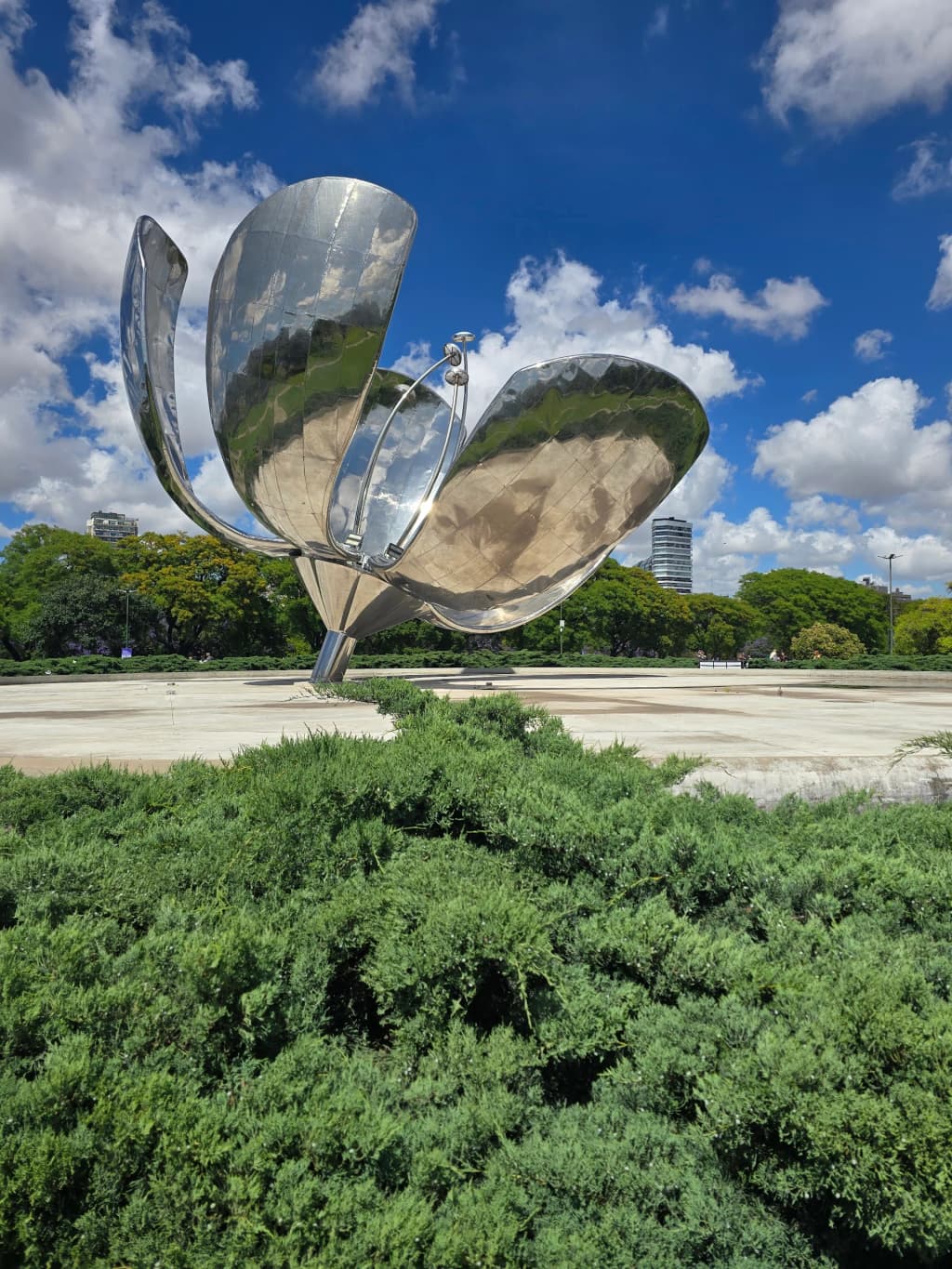
The architecture shifts as I walk south toward the upscale neighborhood of Recoleta. The buildings grow taller, their facades more ornate, dripping with Parisian influence. Suddenly, the skyline breaks, making way for a massive, gleaming structure of stainless steel and aluminum. The Floralis Generica stands twenty meters high, weighing eighteen tons, yet it looks as delicate as paper.
Designed by Argentine architect Eduardo Catalano, the mechanical flower opens slowly with the morning sun and closes as dusk settles, its massive metal petals controlled by photoelectric cells. I walk a slow circle around the reflecting pool beneath it. From one angle, it looks wide and welcoming; from another, narrow and defensive. It is a brilliant, silent performance of light and metal.
Just steps away, the colossal columns of the Faculty of Law loom over the avenue, a monument to power erected during the Perón era. It is a reminder of the complex, heavy history that shadows these beautiful streets, the same history that sleeps nearby in the Recoleta Cemetery where Eva Perón rests.
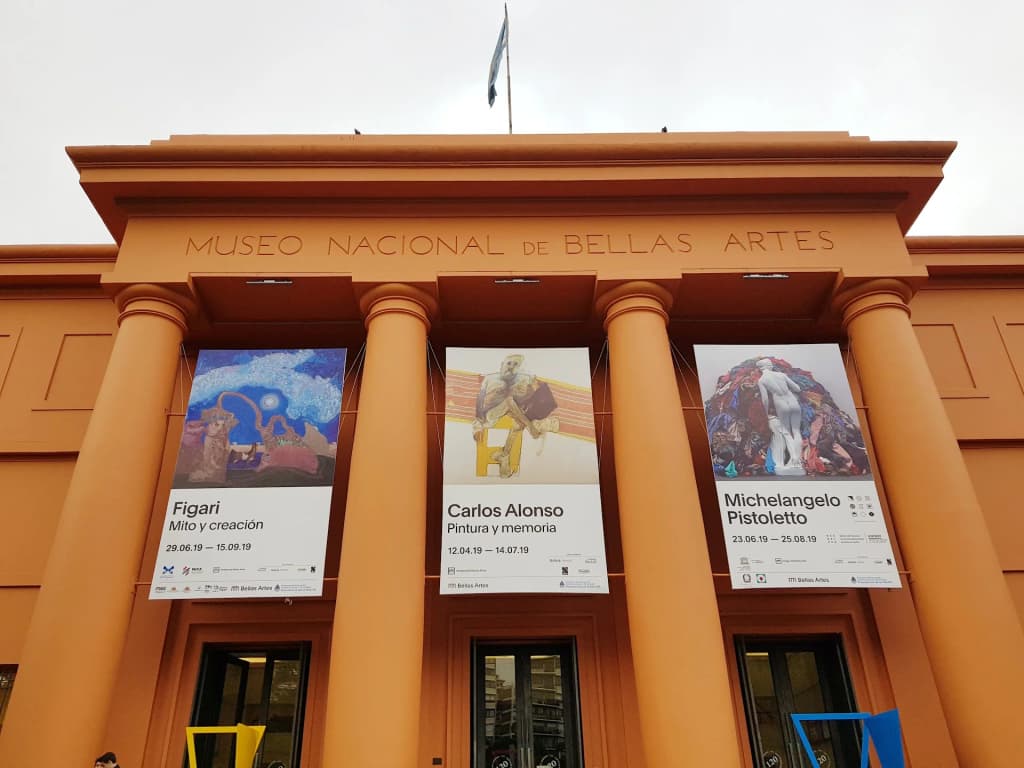
I find refuge from the afternoon heat inside the Museo Nacional de Bellas Artes. The heavy wooden doors give way to cool, echoing halls. Like the parks, it costs absolutely nothing to enter. I spend an hour wandering past original works by Goya, Cézanne, and Rembrandt. The polished wooden floors creak softly underfoot as I move from room to room, marveling at the quiet accessibility of such immense cultural wealth.
But the final act of the day waits a few blocks away. I push through the doors of El Ateneo Grand Splendid, and the sheer scale of the space forces me to stop dead in my tracks. What was once a grand theater in the 1920s, and later a cinema, is now one of the most magnificent bookstores on earth. The original frescoed ceiling glows warmly above row upon row of books. The ornate balconies where high society once watched tango performances are now quiet reading nooks.
I walk down the aisles, the smell of old paper and roasting coffee beans mixing in the air, and make my way to the very back. The original theater stage, framed by heavy crimson curtains, now serves as a café. I order a cortado, the bitter espresso hitting the back of my throat, and turn my chair to face the cavernous room.
You can spend a fortune trying to understand a city through guided tours and ticketed shows. But sitting here on this stage, watching locals flip through poetry books under the golden light of a century-old chandelier, after a day spent wandering through free rose gardens and open-air museums, you realize the truth. Buenos Aires does not hide its soul behind velvet ropes. It leaves the doors wide open, waiting for you to simply walk inside.
More Photos
More Adventures
 $40 - $80/day 2-4 days
 Boa Vista: Exploring the Amazon's Fan-Shaped Frontier City
Experience the unexpected beauty of Boa Vista, Roraima. Discover Macuxi indigenous crafts, the unique Lavrado biome, and sunset boat tours on the Rio Branco.
 $50 - $120/day 4-7 days
 Sensory Buenos Aires: Smoke, Stone, and Neon Lights
Immerse yourself in Buenos Aires. Experience the contrasts from the smoky grills of San Telmo to the neon-drenched pizzerias of Avenida Corrientes.
 $50 - $150/day 5-7 days
 Buenos Aires 5-Day Itinerary: Perfect Neighborhood Guide
Plan your perfect Buenos Aires trip with this meticulously organized 5-day neighborhood itinerary. Discover where to stay, costs, and a medieval village.
 $60 - $200/day 4-7 days
 Between the Andes and the Ocean: Unraveling Santiago
Experience the striking contrasts of Santiago, Chile. Discover historic dive bars, the soaring Andes in Cajón del Maipo, and the colorful hills of Valparaíso.