
Montevideo in Slow Motion: Savoring Uruguay’s Gentle Capital
Montevideo unfolds in slow motion—wind in your hair, steak on your tongue, and the quiet pulse of a city that feels like a small town. Come wander with me.
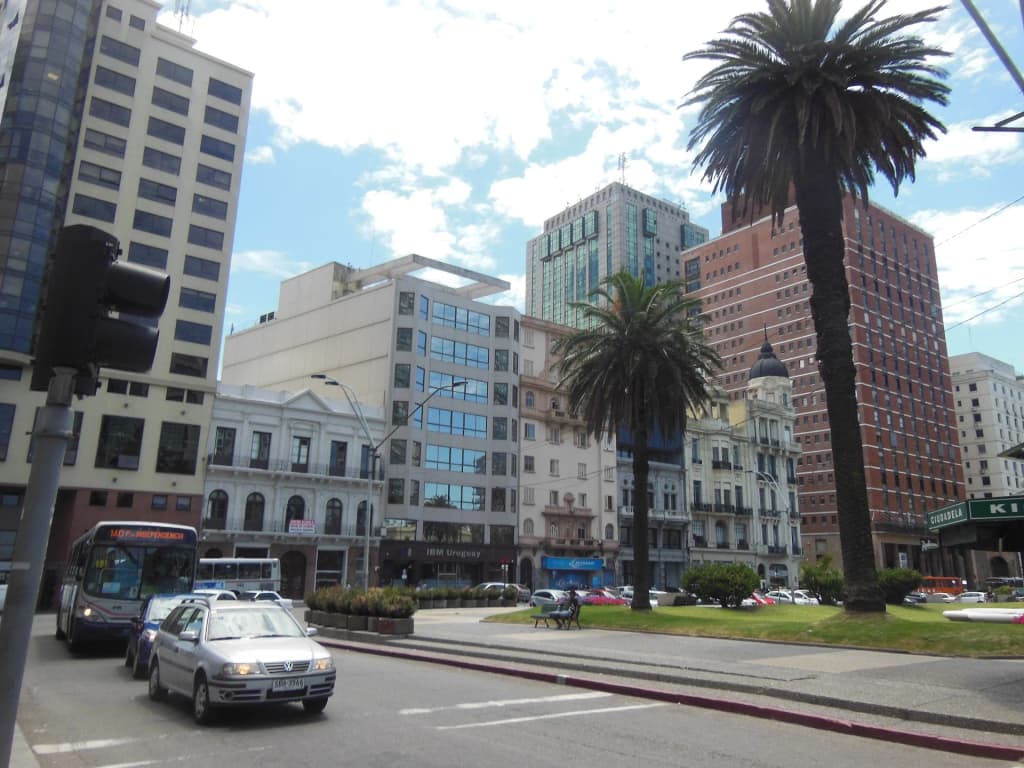
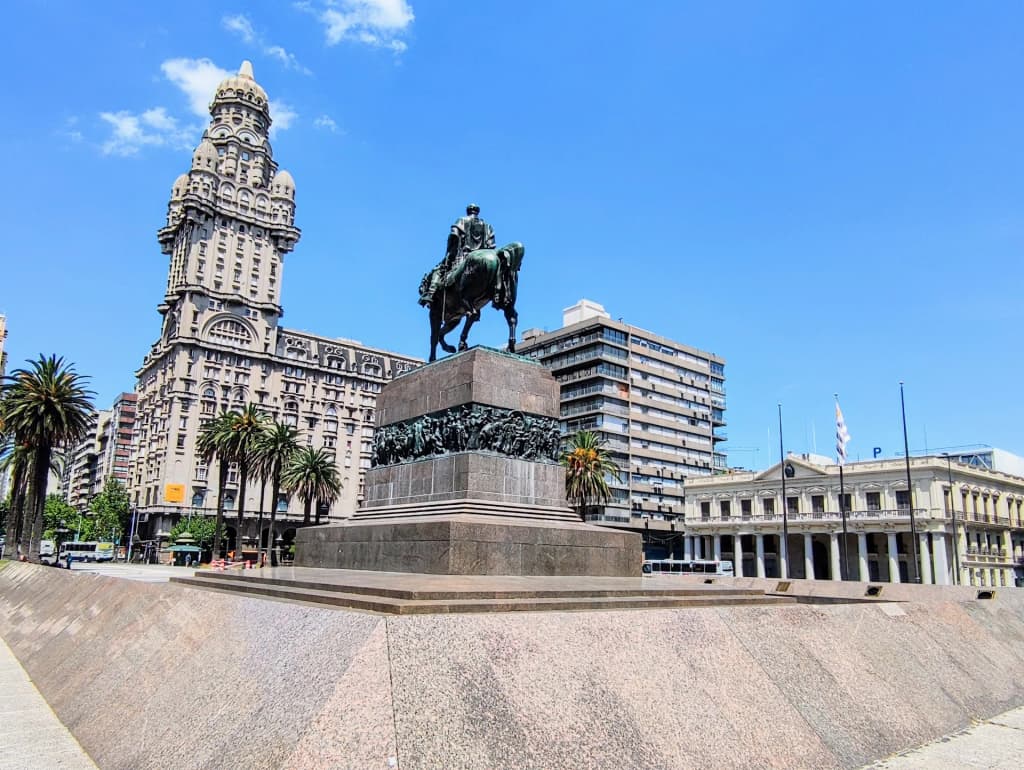
The wind is the first thing you notice. It whips around the corners of Plaza Independencia, tugging at jackets and hair, carrying the briny scent of the Río de la Plata and the faint, sweet smoke of distant grills. I stand at the edge of the square, blinking into the pale morning light, the city’s pulse slow and steady beneath my feet. The Salvo Palace looms above, its ornate crown catching the sun, and somewhere nearby, a drummer’s battery echoes off the stone, a protest or a celebration—here, it’s often both.
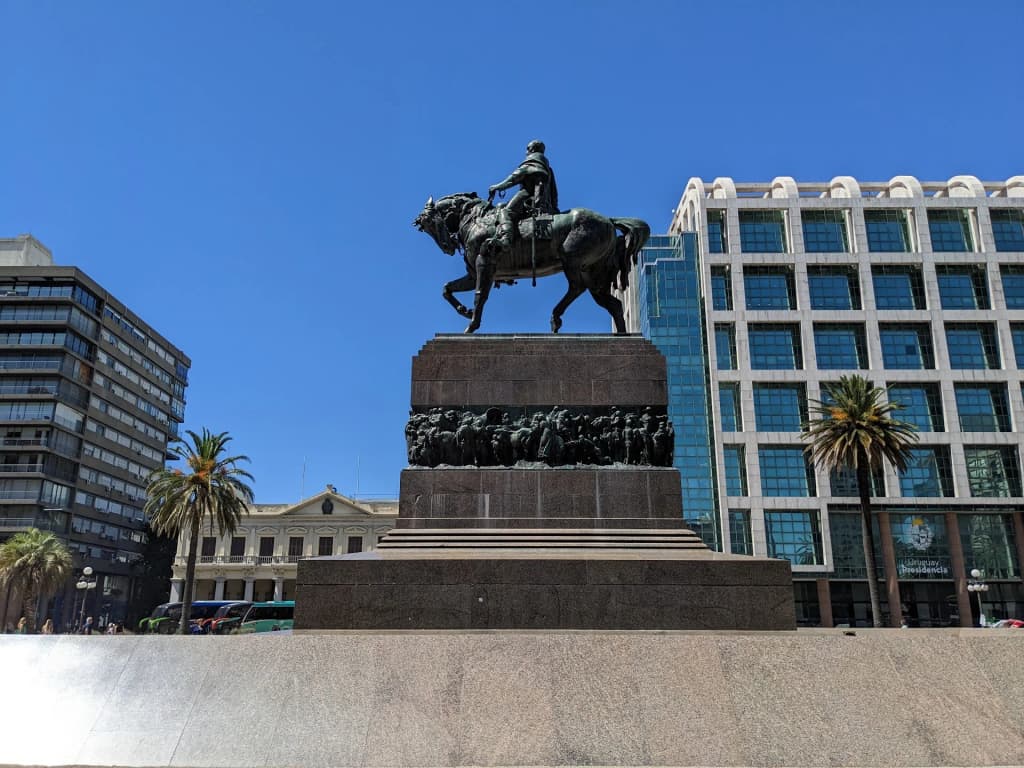
A woman in a red scarf leans against the monument to Artigas, her voice low as she tells me, “He’s our hero, you know. The father of Uruguay.” I nod, tracing the outline of the statue’s boots with my eyes, then follow the steps down to the mausoleum below. It’s silent here, the air cool and heavy, two guards standing at attention as if time itself has paused out of respect. I linger, reading the bronze letters, feeling the weight of history settle on my shoulders.
Hunger draws me west, through the old city’s narrow streets, past the battered replica of the Ciudadela gate and into the Mercado del Puerto. The market is a riot of sound and scent—grilled meat, wood smoke, the sharp tang of chimichurri, laughter bouncing off iron rafters. Waiters beckon from every doorway, menus in hand, promising the best parrilla in Montevideo. I choose a table at Cabaña Verónica, drawn by the easy smile of the man at the door.
“Medio y medio?” he asks, already pouring the half-wine, half-sparkling concoction into a chipped glass. The first sip is strange, then oddly perfect—dry, a little sweet, a little wild. My entrecôte arrives, pink at the center, flanked by a tumble of fries. The meat is tender, smoky, salted just enough. I close my eyes and let the flavors linger, the din of the market fading to a low hum.
“It’s expensive here,” I say, glancing at the bill. He shrugs, “But you remember the taste, not the price.”
The city is best explored on foot. My hotel is a clean, sunlit room just off Plaza Independencia, the sheets crisp, the air tinged with lemony disinfectant. From here, everything is close: the grand Teatro Solís, its columns glowing in the afternoon; the pedestrian Sarandí, lined with bookshops and cafés; the leafy Plaza Constitución, where the bells of the Matriz church ring out over the chatter of schoolchildren and the clink of coffee cups.
At Café La Farmacia, the old wooden cabinets still line the walls, glass jars labeled in looping script. I order a cappuccino and a pistachio pastry, the foam dusted with cinnamon, the sweetness cutting through the chill. The barista, a young woman with ink-stained fingers, grins as she slides the cup across. “You’re not from here,” she says, more observation than question.
“No,” I admit. “But I wish I was.”
She laughs, “Then stay longer. Montevideo is slow, but it grows on you.”
The wind picks up as I cross into Parque Rodó, the trees bending, the lake’s surface ruffled and green. Couples share mate on the grass, the bitter scent of the tea drifting on the breeze. I watch a fisherman cast his line, patient as the city moves around him. The sun slips behind a cloud, the temperature dropping, and I pull my jacket tighter, grateful for the warmth.
Later, I find myself at a tiny parrilla near the Rambla, the city’s long, curving waterfront. The grill sizzles, fat dripping onto coals, the air thick with the promise of dinner. My steak arrives, charred and juicy, a slab of provolone cheese bubbling at its side. The owner, a wiry man with a quick smile, leans over the counter. “You like?”
“Very much,” I say, mouth full, and he beams. “Good. Here, you eat like family.”
On my last morning, I walk the Rambla as the city wakes. Runners pass, breath clouding in the cold, while old men sit on benches, eyes fixed on the silver sweep of the river. The traffic is gentle, the rhythm unhurried. I think of other capitals—Bogotá, Santiago—how they pulse and roar. Montevideo, by contrast, feels like a city exhaling, content in its own skin.
I pause at the Montevideo sign, the wind tugging at my scarf, the Río de la Plata stretching wide and gray behind me. The city is quiet, almost meditative. I breathe in the salt and the promise of another slow day, and for a moment, I understand what the barista meant. Montevideo grows on you—not with spectacle, but with the gentle accumulation of small, perfect moments.
More Photos
More Adventures
 $50 - $120/day 3-5 days
 Chasing Echoes and Gold Dust in Tiradentes, Brazil
Experience Tiradentes, Brazil through a sensory journey of colonial architecture, deep-rooted history, and the rich culinary traditions of Minas Gerais.
 $120 - $250/day 1-2 days
 Hack the Alps: Milan to St. Moritz Day Trip on a Budget
Discover how to travel from Milan to St. Moritz on a budget. Skip the Bernina Express, take the regional train, and experience the Swiss Alps like a pro.
 $80 - $250/day 4-7 days
 The Quiet Art of Experiencing Paris on a Budget
Discover how to experience the romance of Paris without breaking the bank, from secret bakery rituals to navigating the city's economic rhythms.
 $120 - $350/day 2-3 days
 Disneyland Paris Strategy: Ride Hacks & Coaster Secrets
Think you know Disney? Think again. Discover the underground secrets, massive coasters, and insider hacks to conquer Disneyland Paris like a pro.