
Chasing the Horizon in Praia do Rosa: Trails, Tides, and Time
Experience the untamed beauty of Praia do Rosa, Brazil. Wander coastal trails, swim in natural pools, and embrace the slow rhythm of the village center.
The ambient lighting is low enough that I have to squint to read the handwritten menu, but the heavy, intoxicating scent of coconut milk and dendê oil makes reading entirely irrelevant. "You have to try the shrimp bobó," Luiz says, his thick Argentine accent wrapping warmly around the Portuguese syllables. He leans against the rustic wooden table at Urucum, wiping a stray drop of condensation from my glass of shockingly cold beer. "It changes people."
I smile, assuming it is the standard restaurant pitch. "We'll see about that," I tell him. But an hour later, as I scrape the very bottom of the traditional clay pot, I realize the gringo waiter wasn't exaggerating. The dish is a revelation of Brazilian coastal cuisine, rich and deeply comforting. The bill comes to about forty-five dollars for two—a steal for the best bobó of my life in a space that feels like a secret garden. It is eight in the evening, and this quiet corner of Imbituba has already pulled me under its spell.
I wake before the sun, slipping out of the crisp sheets at Jerivá Flats. The accommodation is a brilliant, budget-friendly find just eight hundred meters from the sand, offering the kind of quiet that only exists in beach towns before the surfers wake up. The morning air is cool, carrying the sharp, briny scent of the Atlantic. We are heading to the North Coast, aiming for the trail that leads to Praia Vermelha.
The path is etched clearly into the earth, winding upward. Wooden platforms appear occasionally, offering sturdy footing over the more uneven terrain. To my right, the ocean stretches out in a bruised, predawn purple that slowly bleeds into gold.
"You're out early," a fisherman says, passing me on the narrow dirt track with a bucket swinging from his weathered hand.
"Trying to beat the crowds," I reply, stepping aside to let him pass.
He chuckles, a low, raspy sound. "At Vermelha? You'll only have to fight the seagulls."
He is right. When we crest the final hill, revealing the red-tinged sands of Praia Vermelha below, it is entirely deserted. It is barely eight o'clock. The only sounds are the rhythmic crashing of the waves and the high-pitched calls of two solitary gulls circling overhead. Standing here, with the wind whipping my hair and the vast expanse of untamed coastline before me, it is entirely obvious why international newspapers routinely rank this bay among the most beautiful in the world.
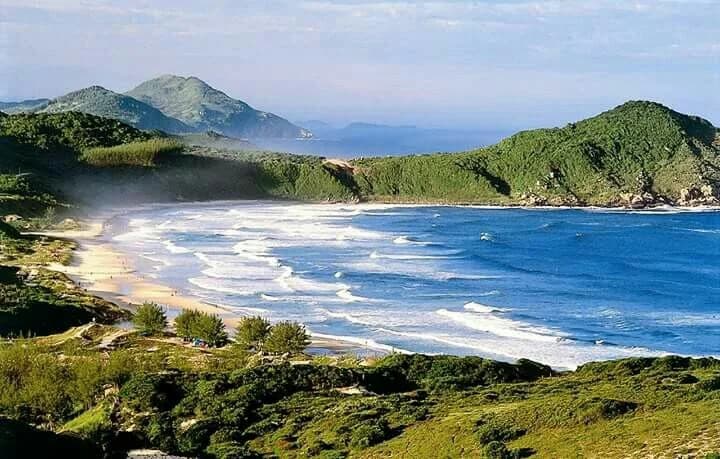
We trace our steps back toward the main stretch of Rosa Norte, the sun now fully awake and baking the morning dew off the broad leaves lining the trail. Looking down, Lagoa do Meio shimmers like a spilled mirror right in the center of the sand strip, naturally dividing the north and south ends of the beach.
It is hard to imagine that before the 1970s, this bustling paradise was simply known as Porto Novo, a quiet enclave inhabited almost exclusively by fishermen. The transformation began with a man named Dorvino Rosa, a local landowner who owned the crucial access paths to the coast. Instead of chasing away the wandering hippies and surfers who stumbled upon these pristine waves, Dorvino welcomed them. He let them pitch tents and stay for weeks, sharing his land with a hospitality so profound that the beach was eventually renamed in his honor.
Today, that bohemian spirit survives, though it has been polished by time and tourism. I wander toward the rocky outcrops where the natural pools form at low tide. The water here is a shocking, almost fluorescent shade of green. Even in late April, the Brazilian sun is relentless, pressing a layer of sweat against my back. The moment I slide into the natural rock basin, the icy, refreshing ocean water shocks my system in the best possible way.
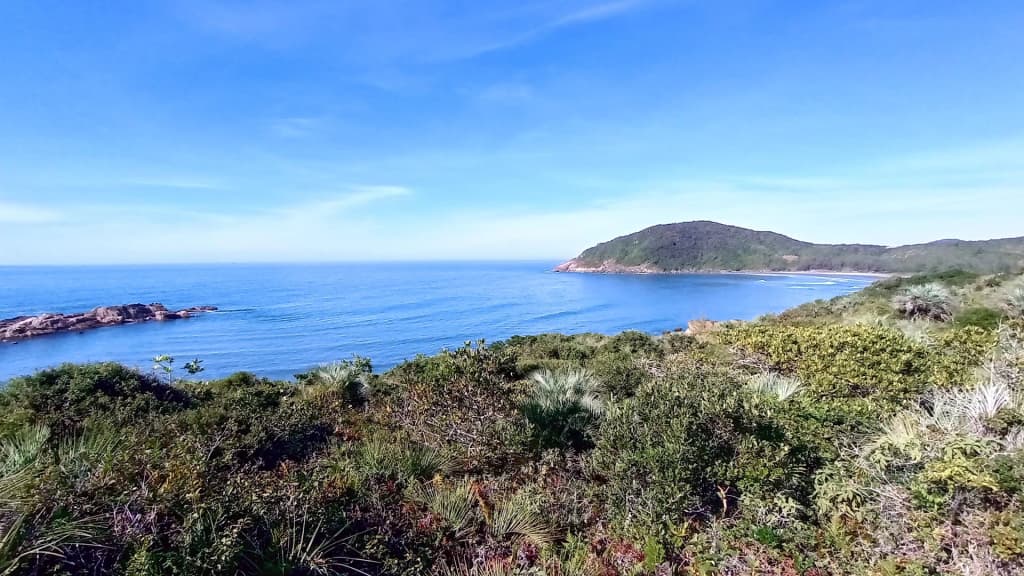
By midday, the hunger returns, driving us toward the South Coast to tackle the famous King's Way. This ancient trail snakes along the cliffs from Rosa down to Barra de Ibiraquera, passing Praia do Luz along the way. The hike is short—barely thirty minutes—but the visual payoff is immense.
From the main viewpoint, the panorama unfolds like a painted canvas. The dark, imposing mass of Ilha do Batuta sits offshore, while the pale dunes of Ribanceira roll in the distance. The wind howls up the cliff face, carrying the distant cheers of surfers riding the legendary swells below. This entire stretch of Imbituba is sacred ground for surf culture; it is the kind of place that inspires reggae songs and draws world champions.
But from June to November, the surfers share these waters with far more majestic visitors. This region is the national capital of the Right Whale. Though I am a few months too early to see the massive creatures breaching just offshore, the anticipation seems permanently woven into the local atmosphere.
We end the hike at the Maram Beach Club. The wooden deck overlooks the crashing surf, and I sink into a cushioned chair with a sigh of absolute relief. The menu here demands a higher budget, but as the waiter sets down a plate of perfectly charred octopus and a condensation-beaded local beer, I know the price is justified. The octopus is tender, smoky, and bright with citrus. I chew slowly, watching the horizon, feeling the salt drying tight on my skin.
The day dissolves into evening, and Praia do Rosa sheds its rugged, sun-baked exterior for something entirely different. The village center, located a short walk from our flat, comes alive under a canopy of warm fairy lights. The dirt roads are traded for cobblestones lined with boutique shops, lively bars, and rustic restaurants.
The air smells of woodsmoke, roasting garlic, and sweet crepes. Music spills out from open doorways—a mix of acoustic Brazilian pop and deep, rhythmic house beats. This is where the energy of Rosa concentrates when the sun goes down. People drift between tables, sunburned and smiling, trading stories of the day's best waves or the quietest stretches of sand.
I had hoped to end the night with fresh oysters at Lua Marinho, a local institution hidden among the winding streets, but their heavy wooden doors are shuttered for the evening. It hardly matters. The beauty of Praia do Rosa isn't found in checking items off an itinerary. It is found in the rhythm of the place.
I buy a simple caipirinha from a street vendor, the crushed lime and raw sugar burning pleasantly on my tongue, and lean against a low stone wall to watch the crowd. The village hums with life, a perfect contrast to the desolate, windswept beauty of Praia Vermelha just a few miles away. Dorvino Rosa's legacy is still here, alive in the laughter of strangers sharing tables, in the salty hair of the surfers, and in the undeniable feeling that, even if you are only here for a day, you are exactly where you are supposed to be.
More Photos

More Adventures
 $50 - $120/day 4-7 days
 Boipeba Island: Conquer Bahia's Wild, Car-Free Coast
Forget the tourist traps in Bahia. Discover Boipeba Island's empty beaches, rugged trails, and off-the-grid adventure. Get the ultimate guide now.
 $50 - $150/day 4-7 days
 Where the Atlantic Breathes: Finding Solitude in Imbituba
Discover Imbituba, Brazil. From the towering dunes of Itapirubá to the wild shores of Praia do Rosa, experience a deeply sensory coastal journey.
 $50 - $150/day 3-5 days
 Skip Porto Seguro: The Wild Beaches of Arraial d'Ajuda
Escape the crowds of Porto Seguro. Discover the rugged cliffs, wild beaches, and intense natural beauty of Arraial d'Ajuda in our adventure guide.
 $50 - $150/day 3-5 days
 Ditch the Shoes: Conquering the Sand Roads of Jericoacoara
Skip the resort. Jericoacoara is a barefoot paradise of pristine lagoons, wild off-road trails, and towering dunes. Read the ultimate adventure guide.