
Winter Shadows and Squeaky Curds: Getting Lost in Old Quebec
Wander through the frozen, walled streets of Old Quebec, where seventeenth-century French history, towering castles, and the rich taste of poutine bring the city to life.
The scent of boiling sugar and woodsmoke hangs heavy in the crisp, biting air, an invisible warmth cutting through the Canadian winter. The vendor doesn't look up from his wooden cart as he pours a thick, amber ribbon of hot maple syrup directly onto a bed of packed, pristine snow. He waits exactly three seconds, his breath pluming in the freezing afternoon, then presses a short wooden stick into the cooling liquid, rolling it into a sticky, translucent lollipop. I hand him a few coins, my bare fingers brushing the freezing snow as I take it. The taste is pure, smoky sweetness—a sudden, sugary rush against the numbing cold.
This is Quartier Petit Champlain, a neighborhood that feels less like North America and more like a forgotten pocket of seventeenth-century France. The cobblestones beneath my boots are uneven, worn smooth by centuries of footsteps and polished by the morning's frost. Golden light spills from the windows of small artisan boutiques, casting long, wavering shadows across the narrow alleys. French chatter floats out of a nearby doorway, mixing with the distant, rhythmic crunch of heavy boots on the icy pavement. It is easy to forget that just a three-hour train ride away lies the sprawling metropolis of Montreal. Here, within the only fortified city walls north of Mexico, time moves at a completely different, unhurried rhythm.
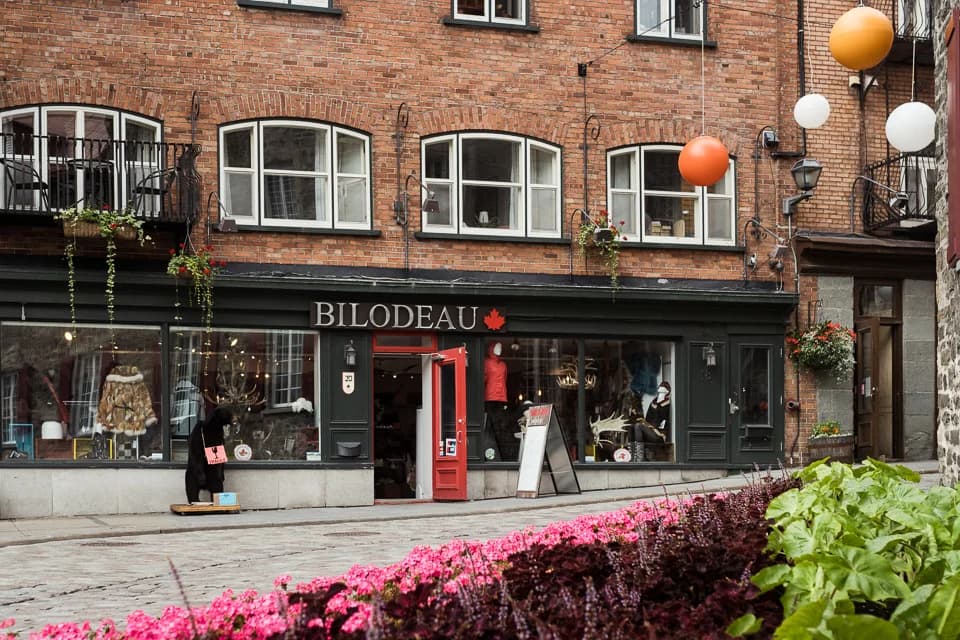
I wander down toward Place Royale, the exact patch of earth where French civilization first took root on this continent. The small stone church of Notre-Dame-des-Victoires stands quietly in the square, its spire piercing the pale blue sky like a solitary sentinel. To avoid the steep, lung-burning climb back up the cliff to the Upper Town—a climb that feels twice as long in a heavy winter coat—I hand over a few dollars and step into the funicular.
The glass cabin shudders slightly as it begins its steep, mechanical ascent. Below, the lower town shrinks into a miniature village of snow-dusted roofs, while the vast, icy expanse of the St. Lawrence River stretches out toward the horizon, choked with jagged floes of white ice slowly drifting with the current.
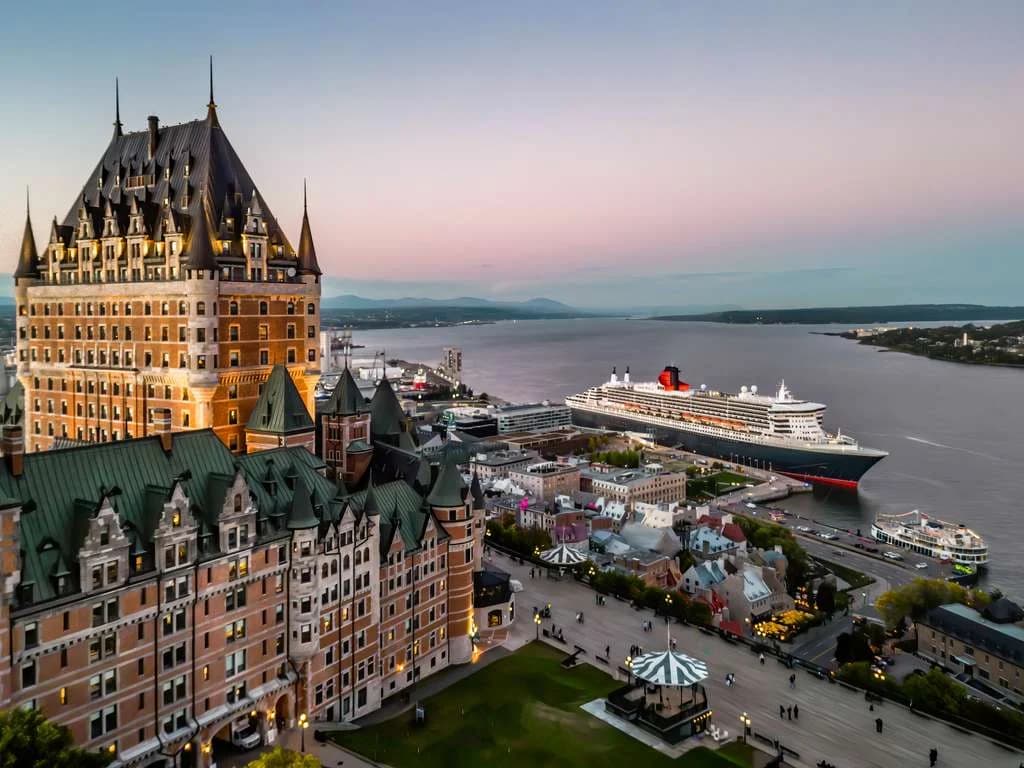
Stepping out onto Dufferin Terrace, the wind hits me instantly. It is a fierce, unforgiving gust coming right off the river, carrying the smell of damp earth, frozen water, and approaching snow. But the chill is quickly forgotten as I look up. Dominating the skyline is the Fairmont Le Château Frontenac. Its towering brick walls and oxidized green copper roofs are impossibly grand, looming over the city like a protective fortress. Standing in its colossal shadow, the sheer scale of the architecture demands reverence. Even if you aren't spending the night in one of its luxurious rooms, wandering through the opulent, hushed lobby feels like trespassing in a royal palace, where the thick carpets swallow the sound of your footsteps and the brass fixtures gleam under warm chandelier light.
I had booked a small room well in advance, knowing how quickly prices climb as the winter festivals draw near. Choosing a place inside the ancient fortifications—Vieux-Québec—was the best decision I could have made. There is a certain magic to waking up, stepping out of your heavy wooden door, and already being inside a historical painting, with no need to calculate transit times or wait shivering at a bus stop. Three full days is the perfect amount of time to let the city reveal itself to you without rushing, allowing for slow mornings and long, lingering dinners.
But right now, the cold is seeping through the seams of my coat. I push open the heavy door of a dimly lit bistro on Grande Allée, greeted instantly by a wall of heat and the rich, savory smell of roasting meat, melted cheese, and spilled dark beer.
"You look like you need something to warm the bones," the bartender says, his accent thick and lyrical, as he wipes down the worn mahogany counter with a damp cloth.
"Is it that obvious?" I ask, wrapping my numb fingers around a paper napkin just to feel the friction.
He laughs, a deep, resonant sound that rumbles beneath the lively chatter of the crowded room. "The wind off the river gives everyone away. Sit. I will bring you something real."
Ten minutes later, a steaming ceramic bowl is set before me. Poutine. Not the fast-food imitation you find elsewhere, but a mountain of thick-cut, twice-fried potatoes drenched in a dark, peppery meat gravy, topped with massive, irregularly shaped cheese curds. The curds squeak against my teeth with the first bite—the ultimate sign of freshness. The salty, savory richness coats my tongue, completely erasing the memory of the freezing wind outside.
By the next morning, the sky has cleared into a piercing, cloudless blue. I rent a car for the day, navigating out of the narrow, walled city streets. Just fifteen minutes down the road, the urban landscape abruptly gives way to raw, untamed nature.
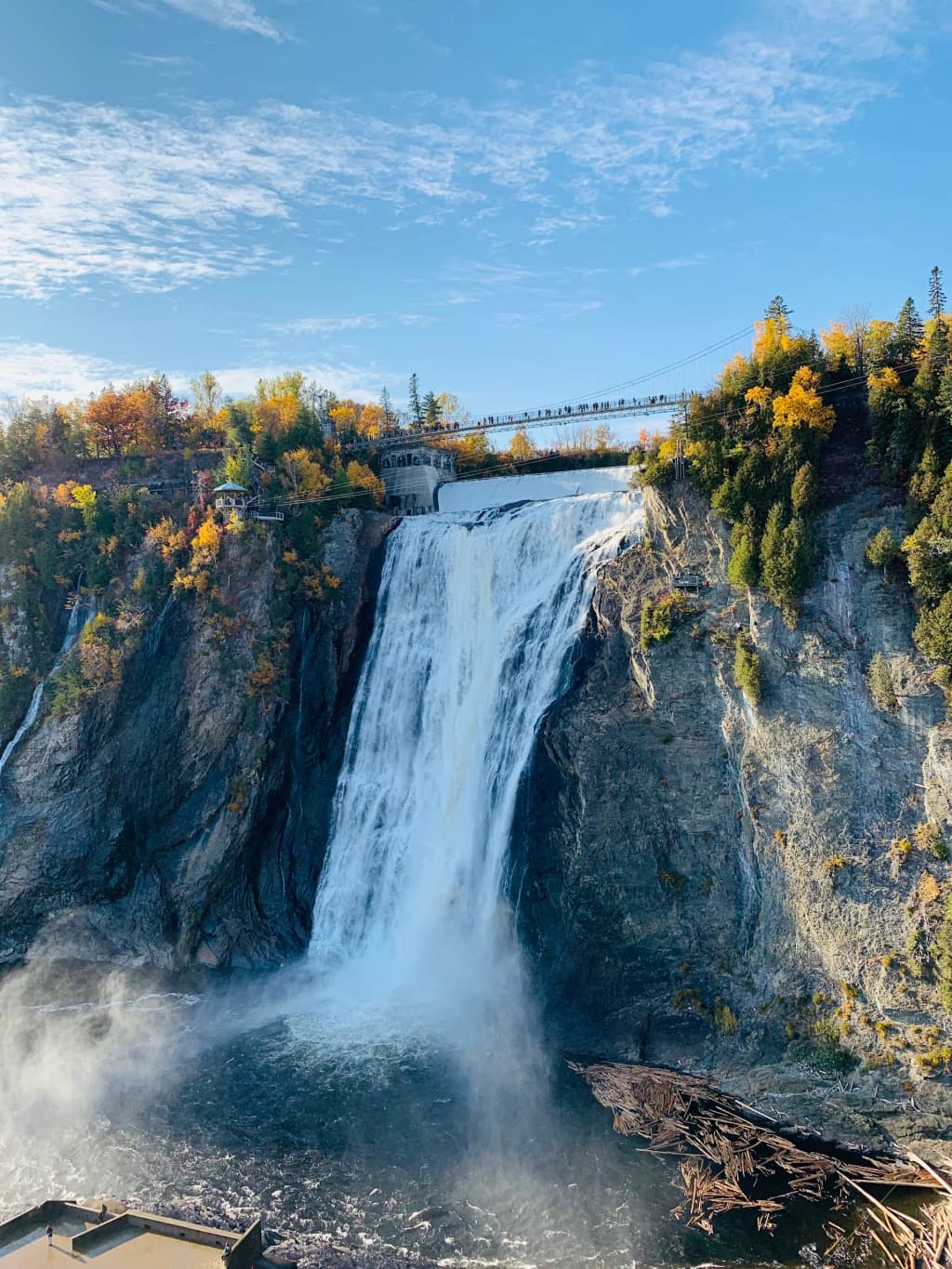
I hear Montmorency Falls before I see it. It is a low, continuous roar that vibrates in my chest, growing louder with every step along the wooden boardwalk. Standing at the base, looking up at a waterfall that plunges thirty meters higher than Niagara, the sheer force of the water is mesmerizing. I take the cable car to the top, the metal box swaying gently in the breeze, and step onto the suspension bridge that crosses directly over the precipice. The mist rises up, dampening my face, smelling of crushed pine needles, wet stone, and fresh, churning water. Looking down, the water violently crashes into the basin below, sending up thick clouds of white spray that immediately freeze onto the surrounding cliffs, creating massive, jagged sculptures of ice.
Just a short drive past the falls, I cross the sprawling suspension bridge onto Île d'Orléans. The shift in atmosphere is immediate. The island is a patchwork of sleepy rural farms, centuries-old stone houses with steeply pitched roofs, and sprawling, snow-covered vineyards. It feels like stepping back into an even older, quieter version of the province, where the rhythm of life is dictated entirely by the seasons.
I pull over at a small roadside farm stand, its wooden shelves lined with jars of preserves and bottles of cider. The air here smells of damp soil, woodsmoke, and fermenting grapes. I buy a bottle of local ice wine, a sweet, syrupy nectar made from grapes left to freeze on the vine until their sugars concentrate into something extraordinary. The woman behind the counter, wrapped in a thick wool shawl, hands me a small sample in a plastic cup. It tastes like concentrated autumn—notes of wild honey, overripe apricot, and a sharp, biting acidity that mirrors the cold air.
Later, as the sun begins to set, I find myself back in the city, standing on the edge of the Plains of Abraham. This vast green park, once a bloody battlefield that determined the fate of a continent, is now perfectly quiet. A few locals walk their dogs along the snow-dusted paths, their boots crunching softly in the fading light. The sky turns a bruised purple, and the lights of the Château Frontenac flicker on in the distance, glowing warm and yellow against the encroaching night. I pull my coat tighter around my neck, listening to the wind rustle through the bare, shivering trees, entirely content to just stand here and let the centuries wash over me.
More Photos
More Adventures
 $80 - $250/day 4-7 days
 The Quiet Art of Experiencing Paris on a Budget
Discover how to experience the romance of Paris without breaking the bank, from secret bakery rituals to navigating the city's economic rhythms.
 $120 - $350/day 2-3 days
 Disneyland Paris Strategy: Ride Hacks & Coaster Secrets
Think you know Disney? Think again. Discover the underground secrets, massive coasters, and insider hacks to conquer Disneyland Paris like a pro.
 $50 - $120/day 3-5 days
 Chasing Echoes and Gold Dust in Tiradentes, Brazil
Experience Tiradentes, Brazil through a sensory journey of colonial architecture, deep-rooted history, and the rich culinary traditions of Minas Gerais.
 $40 - $120/day 3-5 days
 Shadows and Gold: Walking the Living History of Ouro Preto
Wander the steep cobblestone streets of Ouro Preto, where Baroque masterpieces, subterranean gold mines, and a dynamic culinary scene breathe life into history.