
From Mountain Mists to Limestone Seas: A Thai Awakening
Experience the sensory shift from the spiritual heights of Chiang Mai to the cinematic limestone cliffs of the Andaman Sea on a transformative journey through Thailand.
The crisp, sixteen-degree air hits you the moment you slide open the heavy glass door to the balcony. It is a startling, welcome contrast to the heavy, relentless humidity we left behind in Bangkok just twenty-four hours ago. My room at the Intercontinental feels less like a hotel and more like a private sanctuary of dark wood and soft linens. There is a towel carefully folded into the shape of a birthday cake resting on my bed, a quiet reminder from the staff that today, I am a year older. The quiet of the room is absolute, save for the distant, muffled hum of the waking city below. I pour a cup of black coffee, letting the steam warm my face, and look out over the horizon. Turning forty-something here, suspended between the frenetic energy of my past few days and the spiritual calm of the north, feels less like aging and more like arriving.
The scent of damp earth and crushed sugar cane fills the valley long before the dense jungle canopy actually parts. We are an hour outside the city limits at Patara Elephant Farm, a sanctuary dedicated to rescuing and rehabilitating these magnificent creatures. The morning mist still clings to the upper branches of the trees, turning the early light soft and silver.
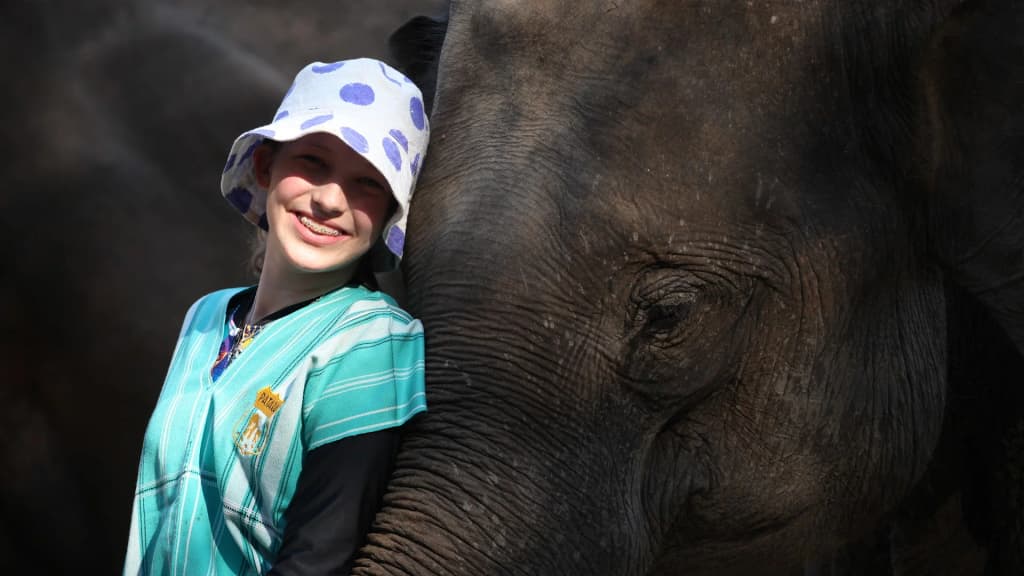
I watch a baby elephant, barely waist-high but already weighing over a hundred kilos, playfully nudge its mother with a clumsy trunk. The sheer scale of the adults is humbling, but it is their eyes that hold you—deep, amber, and impossibly ancient. You can literally feel the vibration in your chest when they rumble to communicate with one another. Running my hand along the rough, bristled skin of a matriarch, I am struck by the tragic history of her kind. In the twentieth century, Thailand had over a hundred thousand elephants; today, barely four thousand remain, survivors of logging and exploitation. Standing here in the cool mud, feeding them sweet stalks of cane until my hands are sticky, you realize this isn't just an animal encounter. It is an act of quiet restitution.
The scent shifts from earthy greens to burning jasmine and old wood as we ascend the winding mountain road. To reach Wat Phra That Doi Suthep, the most important temple in Southeast Asia, you must first climb. Three hundred and six stone steps stretch upward, flanked by intricately carved naga serpents whose scaled bodies ripple along the banisters. The climb is a physical meditation, a shedding of the outside world before entering the sacred space above.
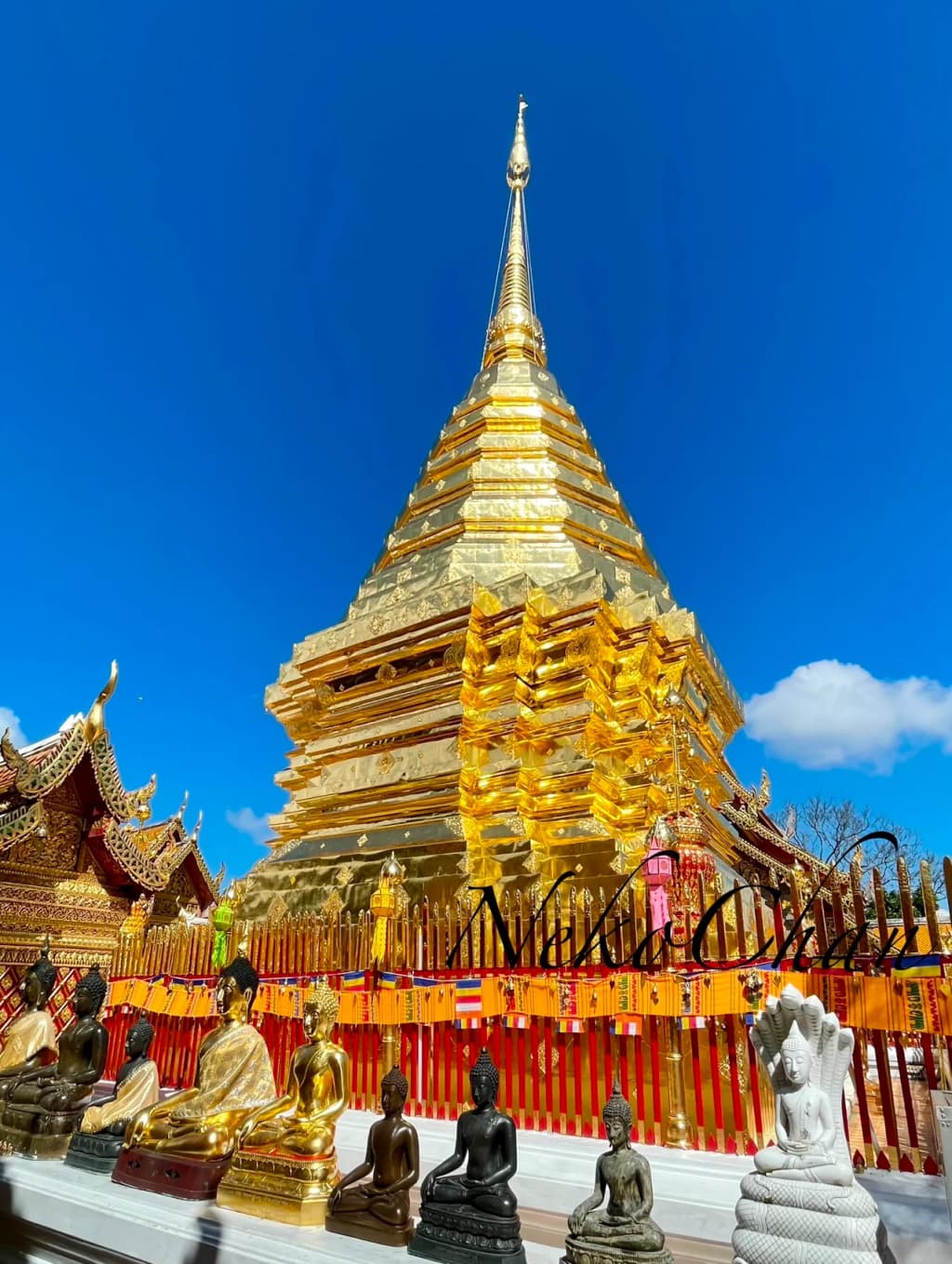
"Each Buddha here represents a day of the week," Meia, our guide, tells me as we stand before the golden shrines at the summit. The air is thin at seventeen hundred meters, and the view of the valley below is entirely obscured by a brilliant, glowing fog.
"I was born on a Thursday," I say, watching the incense smoke curl into the mountain mist.
She smiles, her eyes crinkling at the corners. "Then you must leave your lotus flower right over there. It is the path of purification."
I lay the delicate pink petals at the base of the designated statue, the gold leaf catching the muted sunlight. Later, we wander through the Thai Silk Village, letting the impossibly soft, hand-woven fabrics slip through our fingers. The contrast is striking—the rough, ancient stone of the temple stairs giving way to the liquid drape of pure silk. I buy a scarf, a tangible piece of Chiang Mai to carry with me, before returning to the hotel for a feast of Peking duck on the sixteenth floor. The chef carves it table-side, the impossibly crispy skin and rich, dark hoisin melting on the tongue as the city lights flicker to life below, a sprawling grid of gold against the encroaching night.
I am wrestling with my suitcase, the zipper protesting against the sheer volume of silk and jade I have accumulated over the past few days. The short hour-and-twenty-minute domestic flight to Phuket is notoriously strict—a seven-kilo limit for a carry-on is a laughable concept when you have been exploring the artisan markets of the north. I gladly hand over the eighteen hundred baht for the extra weight at the check-in counter. It feels like a small toll to carry these heavy memories south.
The air changes the exact moment we touch down in Phuket. It is thick, salty, and tastes of the ocean. We drop our bags and head straight to a beach club as the sky begins to bruise purple and orange. The ice in my glass clinks against the rim as I take a sip of something sweet and citrusy. The mountain chill of Chiang Mai is already a memory, replaced by the heavy, enveloping warmth of the Andaman coast.
The boat rocks violently for the first ten minutes before settling into the rhythm of the deep sea. We are cutting through the water toward the Phi Phi Islands, the warm salt spray stinging my cheeks. And then, suddenly, the horizon opens up, and Maya Bay reveals itself.
Even with the crowds of boats bobbing in the distance, the sheer scale of the limestone karsts rising vertically from the emerald water commands absolute silence. The beach was closed for four years to allow the coral reefs to heal from the devastating impact of over-tourism, and you can see the life returning to the shallows in flashes of silver and blue. The water is so clear it looks like liquid glass. We cannot swim here—a strict rule enforced by rangers to protect the fragile ecosystem—but just standing on the blindingly white sand, listening to the gentle lap of the tide, is enough.
We cruise further into Pileh Lagoon, where the hundred-meter cliffs form a natural, cathedral-like enclosure. The boat slows to a crawl. The silence here is heavy, broken only by the echo of water slapping against the wooden hull. We pass the Viking Cave, its dark maw strictly off-limits to protect the lucrative industry of harvesting swallow nests, which fetch upwards of three thousand dollars a kilo for Chinese soups. Eventually, we drop anchor at Bamboo Island, and I finally surrender to the water. It is warm, buoyant, and washes away the lingering exhaustion of travel.
Our final morning begins on the water, but in an entirely different way. We are lounging on the deck of the Yona Beach Club, a sprawling, luxurious floating oasis anchored just off the coast of Phuket. The engineering of it is marvel enough, but the atmosphere is what holds you.
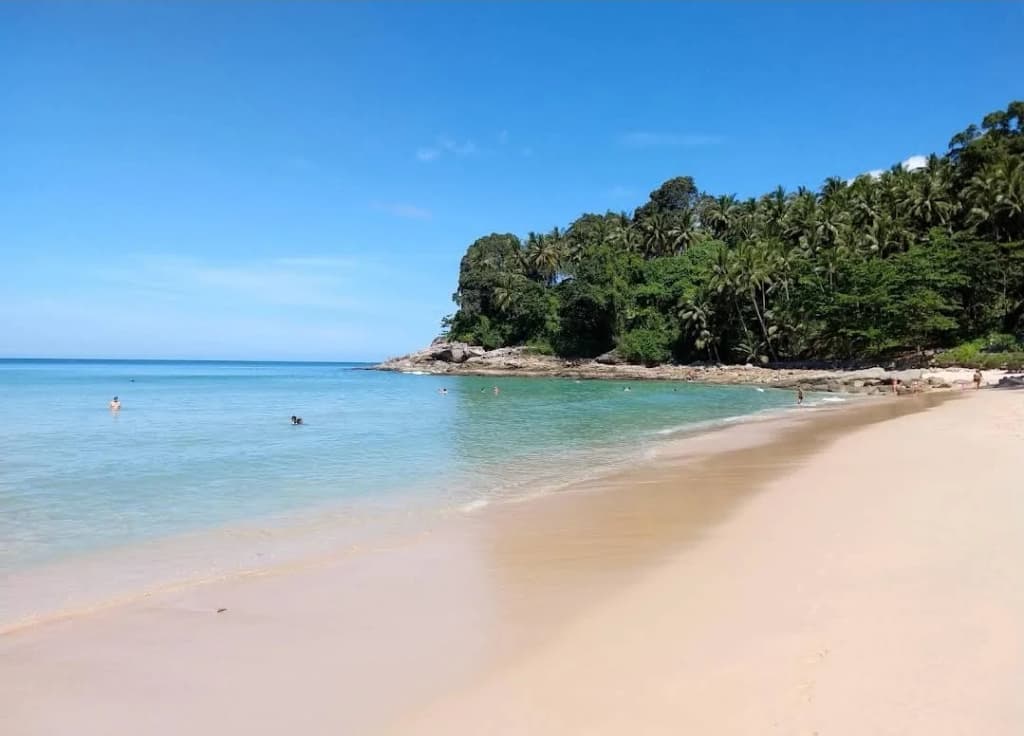
At nine in the morning, the vibe is relaxed, the music a low, rhythmic pulse that syncs with the tide. I sip a mocktail, feeling the gentle sway of the ocean beneath me. Later, we transition to the sophisticated shores of Surin Beach, sinking our toes into the warm sand at Catch Beach Club.
Sitting here, watching the sun dip below the horizon one last time, I look around at the women I have shared these past weeks with. Traveling alone has its merits, but traveling in a group of strong, potent women is entirely transformative. We have shared stories, vulnerabilities, and an uncountable number of laughs across temples, jungles, and oceans. The spicy, sour tang of tom yum soup, the rough skin of an elephant, the golden gleam of Doi Suthep, and the emerald waters of Phi Phi—they are all stitched into the memory of this journey. But it is the shared glances, the quiet conversations on rocking boats, and the collective awe that I will carry home. The sun finally sets, painting the sky in shades of violent violet and soft peach, and for a moment, everything is perfectly still.
More Photos
More Adventures
 $50 - $150/day 3-5 days
 Chasing Tides and Tamarind: The Sensory Rhythm of Aracaju
Explore Aracaju through its disappearing sandbanks, rich seafood, and bustling municipal markets. Discover the soul of northeast Brazil in this journey.
 $60 - $250/day 21-60 days
 A Teardrop on Eternity: Drifting Through Asia's Extremes
Experience the staggering sensory extremes of traveling across Asia, from the freezing summit of Mount Fuji to the sweltering ruins of Angkor Wat.
 $80 - $250/day 7-14 days
 Okinawa Unleashed: The Wild Side of Japan You Need to See
Skip Tokyo. Dive into Okinawa's gritty port cities, wild archipelagos, and star-sand beaches. Read the ultimate adventure guide to Japan's alter-ego.
 $150 - $400/day 3-6 days
 Where the Trees Are Made of Steel: Walking Singapore
Walk through the mist of the Cloud Forest, trace the 3.5-kilometer Marina Bay waterfront, and uncover the engineered magic of Singapore's futuristic skyline.