
Saffron Robes and Limestone Cathedrals: A Sensory Journey Through Thailand
A 15-day sensory journey through Thailand, moving from the chaotic heat of Bangkok's street food stalls to the cool temples of Chiang Mai and the limestone cliffs of Krabi.
The oil sizzles in the wok, a sound like heavy rain hitting a tin roof. It is 10 p.m. in Bangkok, and the air is still thick enough to chew. I am sitting on a blue plastic stool that feels dangerously flimsy, watching an old woman toss chilies and holy basil into the flames. The smell is aggressive—charcoal smoke, frying garlic, exhaust fumes from the passing tuk-tuks, and the sweet rot of durian from a stall nearby. She slides a plate of pad kra pao toward me without looking up. The first bite is a shock of heat and salt that makes my eyes water, and just like that, the long flight is forgotten.
Bangkok demands your submission. You cannot fight the heat or the traffic; you have to flow with it. The next morning, the chaos shifts from the streets to the visual overload of the Grand Palace. I arrive at 8:30 a.m., just as the heavy gates swing open, hoping to beat the worst of the sun. It is a futile hope. By nine, my linen shirt is sticking to my back. The dress code here is strict—shoulders covered, long pants required despite the tropical humidity—and it feels like a penance.
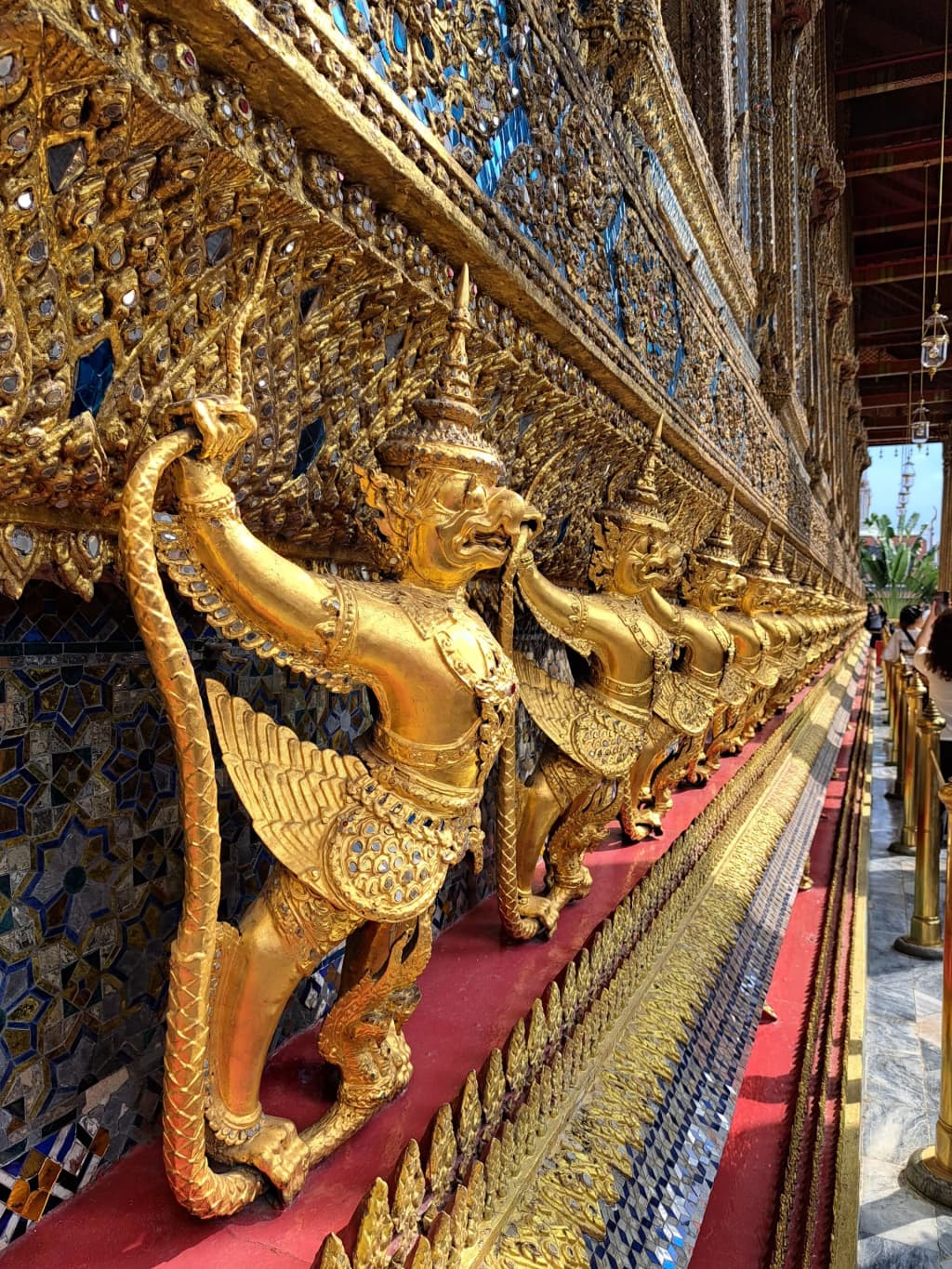
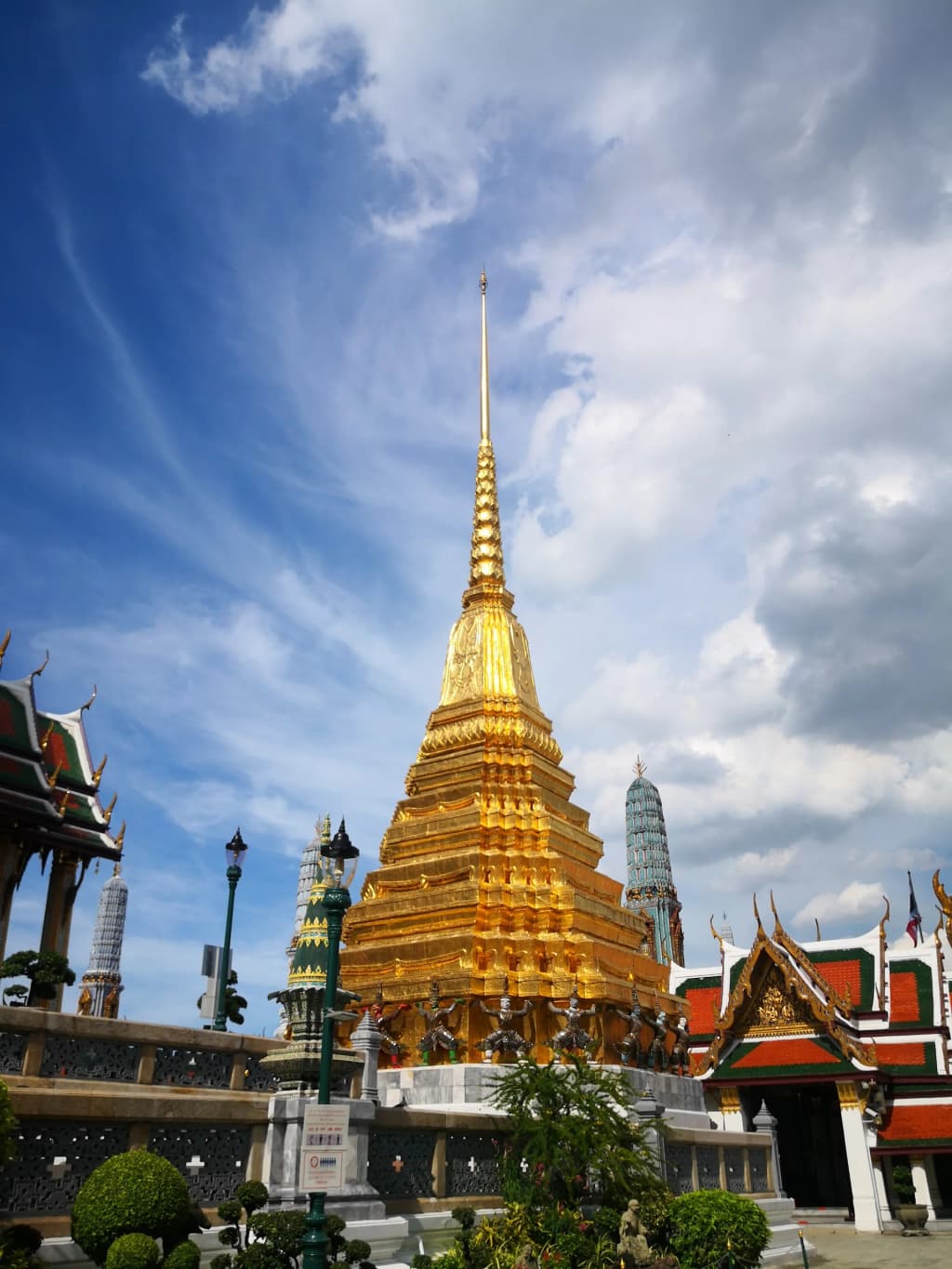
But as I step into the courtyard of Wat Phra Kaew, the physical discomfort fades into the background. "Gold," a man next to me whispers. He isn't talking to anyone in particular. He’s just stating a fact. The chedis are wrapped in gold leaf, the pillars encrusted with mosaics that catch the fierce sun and throw it back at you. It is blinding. I wander through the corridors, listening to the chime of tiny bells on the roof eaves, realizing that this is not just a monument but a living center of faith. A monk in saffron robes adjusts his glasses and checks his smartphone, a reminder that in Thailand, the ancient and the modern are constantly holding hands.
To understand the commerce of this country, you have to leave the polished center. An hour outside the city, the Maeklong Railway Market offers a lesson in adaptation. I am standing on the train tracks, quite literally, surrounded by baskets of dried shrimp and mounds of red chilies. The air smells of fish sauce and crushed limes.
"Back, back!" a vendor shouts, waving a hand at me.
A horn blasts, deep and terrified. In a synchronized wave, awnings are snatched back, and trays of vegetables are slid inward on rails. The train is a wall of steel that passes inches from my nose. I can see the rust on the wheels, feel the heat of the engine, and make eye contact with a passenger eating rice in the window seat. As soon as the last carriage clears, the awnings drop back down, and the buying and selling resumes as if nothing happened. It is a surreal dance, a reminder that life here grows around obstacles, rather than trying to remove them.
We fly north to Chiang Mai, and the assault on the senses softens. The air here has a crispness to it, especially in the mornings. The city is surrounded by a crumbling brick wall and a moat where fountains spray water into the sunlight. We rent a red songthaew—a pickup truck with two benches in the back—to take us up the mountain to Doi Suthep. The road winds through dense jungle, the temperature dropping with every hairpin turn.
At the top, the atmosphere is heavy with incense. Monks move silently across the marble floors, their orange robes bright against the white stone. I sit on the steps, watching the sun sink behind the mountains, painting the city below in shades of violet and bruised orange.
"Make merit?" a woman asks, holding out a lotus flower.
I buy one and place it before the golden spire. It feels less like a transaction and more like an admission of gratitude for the silence. We spend the next day avoiding the elephant riding camps, which are plentiful but often cruel. Instead, we visit a sanctuary where the interaction is limited to observation. Watching a matriarch dust herself with dirt from a distance feels like the only respectful way to engage with these giants.
Dinner that night is in a street stall near the Chang Puak Gate. This is where I meet Nui. She is manning a massive pot of yellow curry, her movements efficient and practiced. The steam rising from her cart smells of coconut milk and turmeric.
"You want Khao Soi?" she asks. It’s not really a question. It’s the dish of the north.
"Yes, please," I say, taking a seat on a metal stool. "But not too spicy."
She laughs, a dry, crackling sound. "Farang spicy," she says to her assistant, using the local term for foreigner.
The bowl she hands me is a study in texture: soft egg noodles swimming in rich coconut curry, topped with crispy noodles, pickled mustard greens, and a squeeze of lime. It is creamy, tart, and fiery all at once. The heat builds slowly, a warm burn that sits in the chest.
"Good?" she calls out later, as I wipe the last of the sauce with a spoon.
"Aroy mak," I manage, my mouth still tingling. Delicious.
The transition to the south is a shift from earth to water. We land in Krabi and take a van to the pier, but 'pier' is a generous word. It’s a muddy bank where long-tail boats bob in the tide. We wade out to the boat, hoisting our bags over our heads, the water warm as bathwater against my legs.
As we approach Railay Beach, the engine cuts. Silence rushes in, filled only by the sound of water lapping against the hull. The limestone cliffs here are cathedral-like, rising vertically from the emerald water, stained with iron and time. There are no cars on Railay, only sand paths and the rustle of monkeys in the trees. The days here dissolve into a simple routine: wake up, eat fruit, swim, watch the climbers scale the rock faces, and wait for sunset.
And the sunsets are an event. Everyone—backpackers, honeymooners, locals—gathers on the west beach. The sky turns a violent shade of pink, silhouetting the long-tail boats anchored offshore. It is a communal pause, a moment where hundreds of strangers stop moving to witness the day ending in glory.
Our final days are spent on the Phi Phi islands. We avoid the party hostels of Tonsai and hire a private boatman, a weathered man named Lek, to take us out at dawn.
"Early is best," Lek says, pointing to the horizon where the sun is just bleeding into the sky. "Before the big boats."
He is right. When we drift into Maya Bay, the water is a sheet of glass. The bay, once decimated by overtourism, has healed during its closure. Black-tipped reef sharks patrol the shallows, their fins cutting the surface. We are not allowed to swim here anymore, only to stand on the sand and look. It feels like being in a museum where the art is alive.
As the boat turns back toward the main island, the spray hitting my face, I realize that Thailand hasn't just been a series of sights. It has been a rhythm—the chaotic beat of Bangkok, the slow hum of the north, and now, the gentle lap of the Andaman Sea. I close my eyes and let the salt water dry on my skin, trying to memorize the feeling.
More Photos
More Adventures
 $40 - $150/day 20-30 days
 Conquer Thailand: The Ultimate 20-Day Blueprint
Skip the tourist traps. Grab your backpack. This is your high-energy, no-BS guide to dominating Thailand in 20 days. Get ready to sweat.
 $40 - $120/day 14-30 days
 The Taste of Chili and Time Travel: Everyday Magic in Thailand
Immerse yourself in the sensory details of Thailand's deeply rooted culture, from Buddhist calendars and saffron-robed monks to street food rules.
 $50 - $150/day 5-10 days
 Finding the Rhythm of Bahia: From Porto Seguro to Trancoso
Experience the sensory magic of Brazil's Costa do Descobrimento, from the chaotic nightlife of Porto Seguro to the barefoot luxury of Trancoso's beaches.
 $50 - $150/day 5-10 days
 Conquer Ceará: The Ultimate Route of Emotions Road Trip
Ditch the resorts and hit the dunes. Discover the wild side of Ceará, Brazil, from hidden lagoons in Camocim to the electric nightlife of Jericoacoara.