
The Million-Euro Stage: Walking Paris's Champs-Élysées
Wander down the world's most famous avenue, where million-euro rents, strict aesthetic rules, and Parisian café culture create an intoxicating theater.
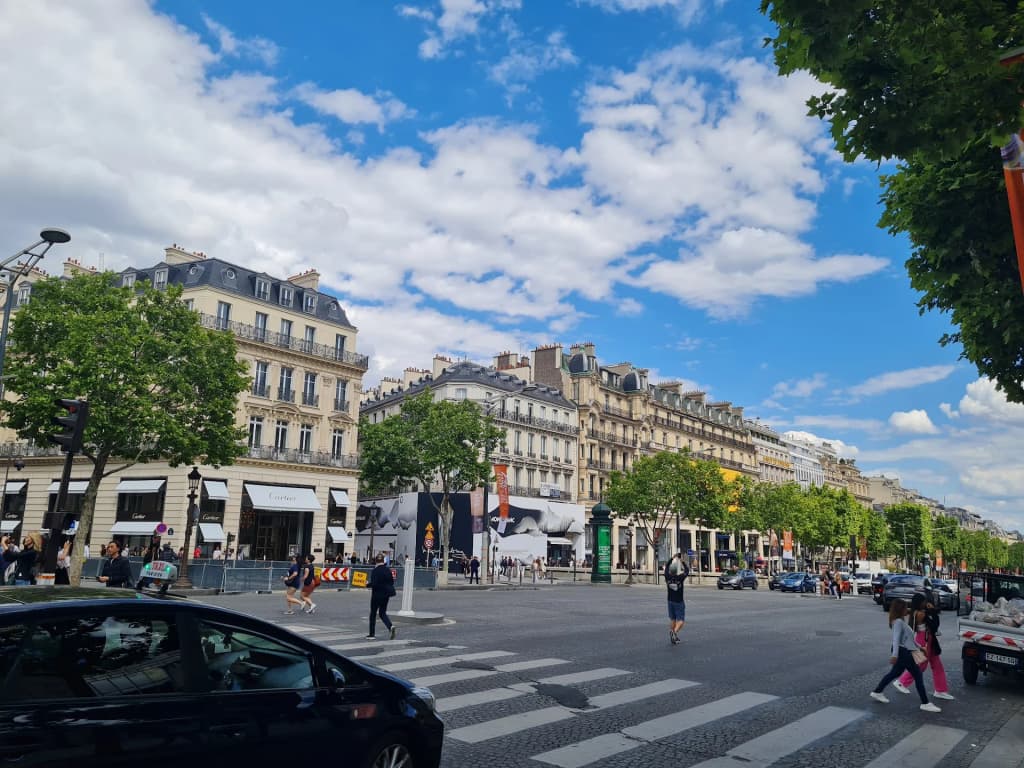
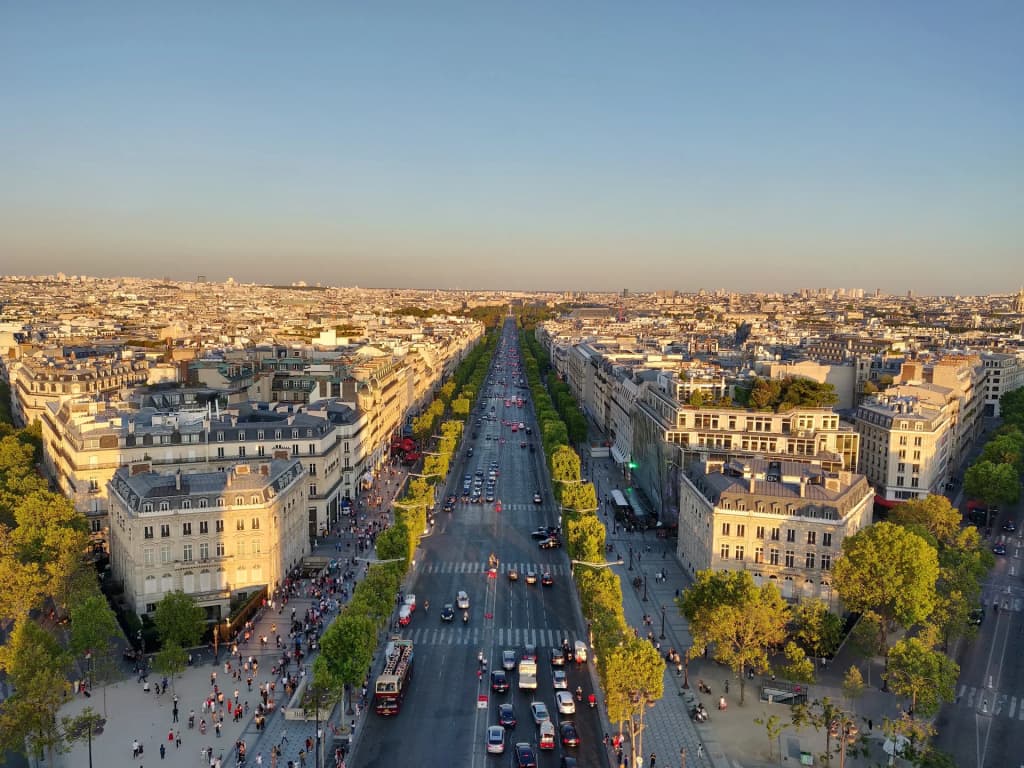
The autumn air bites at your cheeks the moment you step out of the metro station, carrying a distinctly Parisian cocktail: the sharp tang of exhaust fumes, the buttery warmth of baking pastries, and the earthy, roasted scent of chestnuts blackening on a street vendor's iron drum. The wide sidewalks of the Avenue des Champs-Élysées stretch out before you like a manicured runway, flanked by the rigid, beautiful symmetry of horse chestnut trees. Their leaves, turning the color of bruised gold, dapple the pale morning light, casting dancing shadows over the wide, pale cobblestones. There is a relentless, rhythmic hum here—the hiss of tires on stone, the click of leather heels, the crossfire of Arabic, Japanese, English, and rapid-fire French. You don't just walk down this avenue; you enter its current.
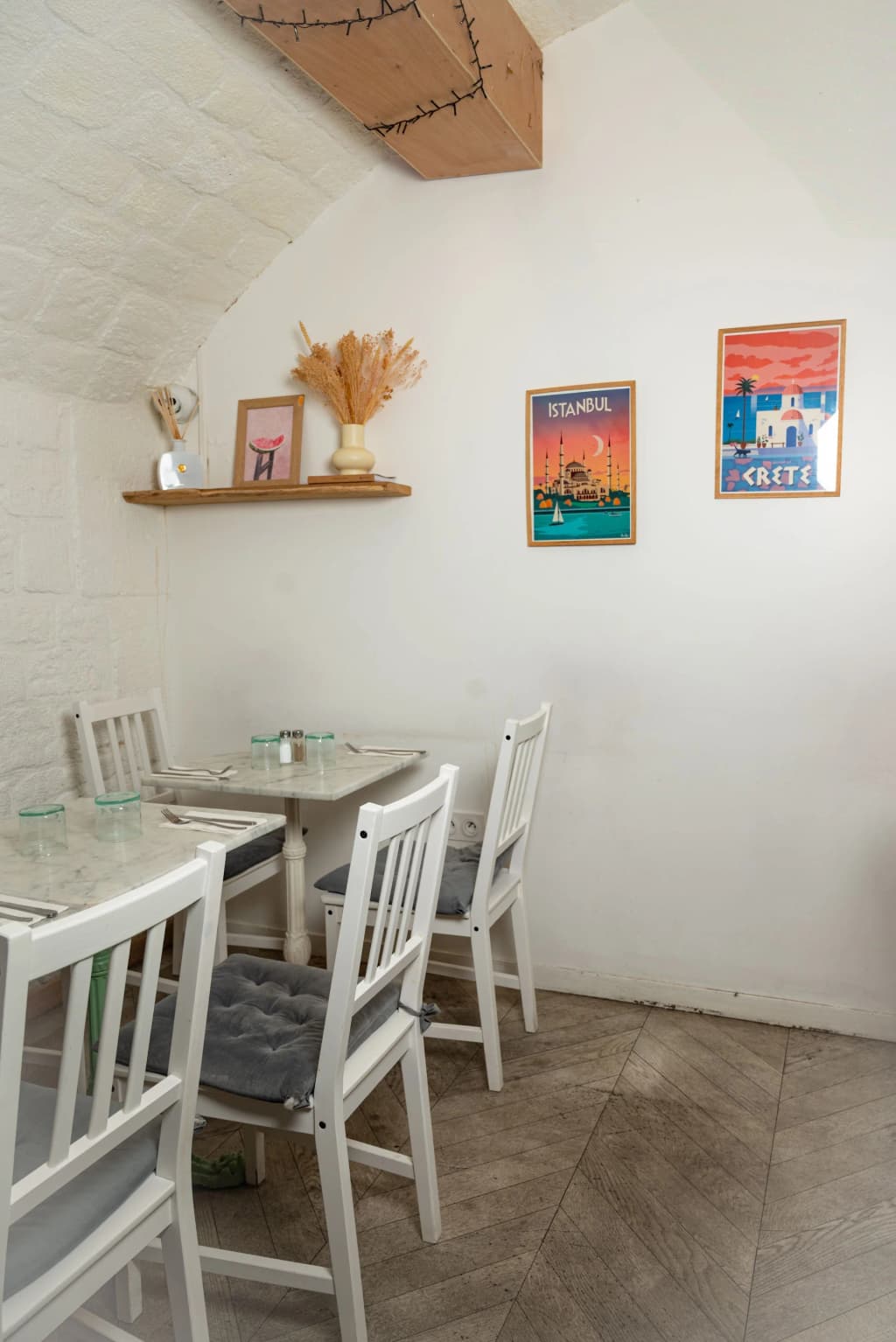
I find an empty wicker chair outside a brasserie, the kind with small round tables squeezed so tightly together you practically share the air with your neighbors. The chair creaks in a comforting, familiar way as I sit. When the espresso arrives, it is served in a thick, white porcelain cup, the crema a perfect, unbroken ring of hazelnut brown. The silver spoon clinks sharply against the saucer, a tiny bell cutting through the low roar of the traffic. The coffee is bitter, sharp, and entirely necessary. It wakes up the palate, preparing you for the sheer weight of where you are sitting.
"It is a theater," the waiter tells me, his voice a low gravel over the ambient noise. His name is Laurent, and his white apron is tied with absolute precision around his waist. He wipes down the adjacent table with practiced, sweeping motions that look almost choreographed.
"It certainly feels like a stage," I say, wrapping my cold hands around the warm porcelain of my cup.
He stops and looks out at the endless stream of pedestrians. "Everyone comes to watch," he says, a faint, knowing smile touching the corners of his mouth. "But very few can actually afford the ticket. The rest of us? We just make sure the set looks good."
I watch a woman in a camel trench coat sweep past, a shopping bag swinging from her wrist like a pendulum. I had read the numbers before taking this walk, trying to quantify the myth. To rent a modest, ninety-square-meter apartment above these elegant awnings costs upwards of one million euros a year. It is a staggering reality that hangs invisibly in the air. This stretch of pavement is the second most expensive in all of Europe, trailing only behind the astronomical heights of London's Bond Street. You aren't just paying for an espresso here; you are paying to breathe the myth of the Elysian Fields.
Leaving the café, I walk further up the gentle incline of the avenue, my boots striking the pavement in time with the city's pulse. The storefronts along this stretch are a masterclass in restrained opulence. Even the global behemoths, the brands you see in every suburban mall across the world, have to bow to the unrelenting Parisian aesthetic. I pause across from a fast-food chain, its globally recognized golden arches stripped of their usual garish, screaming red background, replaced instead by a muted, almost elegant facade.
When these popular, everyday brands first tried to set up shop here, the locals practically revolted. There was a collective, fiercely protective outcry. This is the Champs-Élysées, baby, the sentiment echoed through the arrondissements. The most beautiful avenue in the world. You cannot pollute it with plastic colors. The city listened. Now, any brand, no matter how ubiquitous or powerful, must adhere to strict architectural guidelines. They must be what the locals call "gourmetized." Their visual volume must be turned down, their facades redesigned to blend into the Haussmannian elegance, ensuring they do not interrupt the visual poetry of the street.
As the afternoon deepens into a bruised purple twilight, the air grows significantly colder, seeping through the wool of my coat. The traffic thickens, transforming into a slow-moving river of red taillights flowing steadily toward the monumental silhouette of the Arc de Triomphe. The glow from the luxury boutiques—the sprawling, multi-level temples of Dior, Louis Vuitton, and Cartier—spills onto the sidewalk like liquid gold.
Inside the Galeries Lafayette Champs-Élysées, the atmosphere shifts from the chaotic street to a hushed, museum-like reverence. The air smells of expensive leather and heavy, floral perfumes. Security guards stand like statues in tailored suits, their eyes scanning the room, while tourists press their faces against the glass outside, fogging the elaborate window displays with their breath. The textures here are intoxicating—the soft brush of silk, the cold, heavy weight of gold jewelry, the smooth, polished marble underfoot.
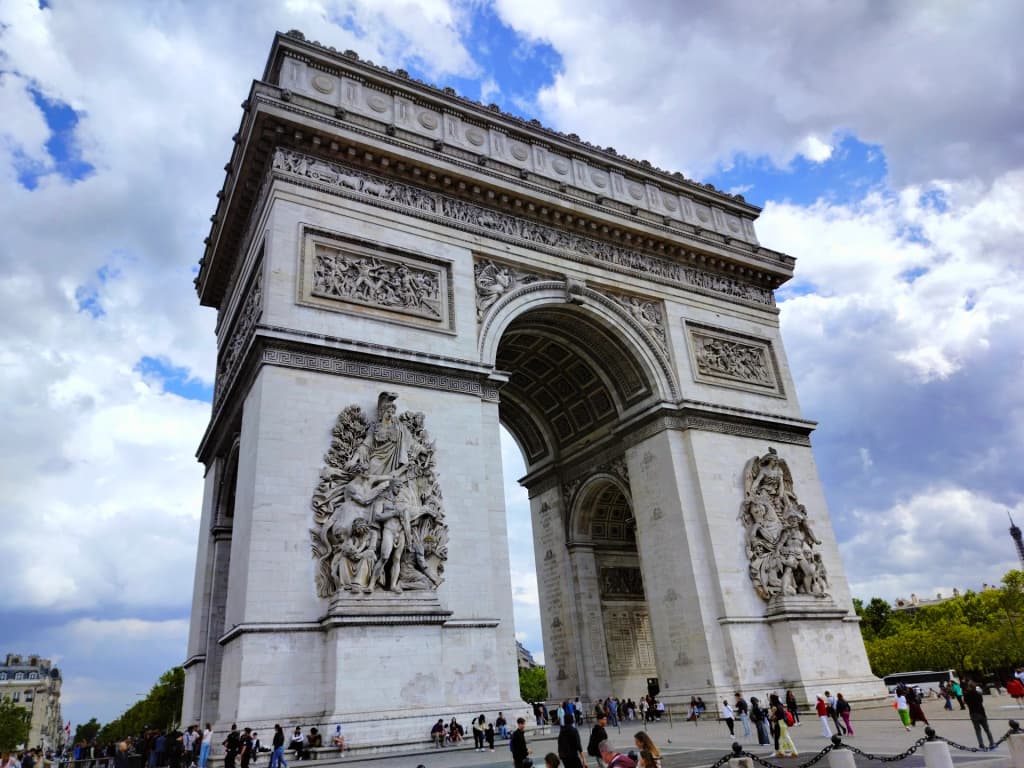
The streetlights suddenly flicker to life, a synchronized ignition of warm amber bulbs running all the way down the gentle slope toward the Place de la Concorde. I stand at the edge of the crosswalk, letting the chaotic, beautiful symphony of Parisian traffic wash over me. The Champs-Élysées is a grand paradox. It is absurdly commercial, impossibly expensive, and rigidly controlled. Yet, when the evening light hits the chestnut trees just right, and the massive stone arch glows at the top of the hill, it is undeniably magical. It is a place that demands you play a part, drawing you into its grand illusion, even if you are only passing through before the night truly begins.
More Photos
More Adventures
 $200 - $400/day 2-4 days
 Tasting the Contrarian Soul of Geneva, Switzerland
Explore Geneva beyond the banks. Join a local for bison pastrami, lakeside filets de perches, and rich fondue in this immersive cultural travel guide.
 $60 - $150/day 4-7 days
 Conquer Buenos Aires: The Ultimate 7-Day Itinerary
Ready to conquer Buenos Aires? Skip the tourist traps and dive into this high-octane 7-day itinerary. Discover the real heart of Argentina's capital.
 $100 - $250/day 10-14 days
 The Meticulous 13-Day Italy Itinerary & Budget Guide
Master Italy's travel logistics with our 13-day itinerary. Discover exact costs, train schedules, and strategies to avoid tourist traps and long lines.
 $120 - $250/day 3-5 days
 The Practical Planner's Guide to Washington D.C. on a Budget
Master Washington D.C. with this methodical planner's guide. Learn exactly how to navigate the Metro, find iconic cheap eats, and optimize your daily budget.