
Lanterns, Rain, and Reverence: Yi Peng in Chiang Mai
A night of floating lanterns, muddy sandals, and Buddhist wishes at Chiang Mai’s Yi Peng Festival. Magic, chaos, and the glow of a thousand dreams.
The van rattles over the last stretch of road, windows fogged with the breath of a dozen strangers. Someone points out a stuffed Mickey Mouse stitched to the seatback, its eyes wild, and laughter ripples through the group. Outside, the sky is a pale, expectant blue, the kind that promises both miracles and rain. We’re an hour and a half from Chiang Mai, winding toward a field where, tonight, the sky will burn with light.
The festival grounds sprawl in a patchwork of color-coded zones—yellow, green, red, blue, and, at the center, the elusive elite. Our badges say “premium,” which means we’re close enough to the stage to see the flicker of anticipation on people’s faces, but not so close that we’re perched above it all. The air is thick with the scent of grass and incense, and the distant thump of drums carries over the hum of arriving crowds. It’s just after four, and, for now, the entrance is effortless—no lines, no chaos, just a gentle ushering into the heart of the celebration.
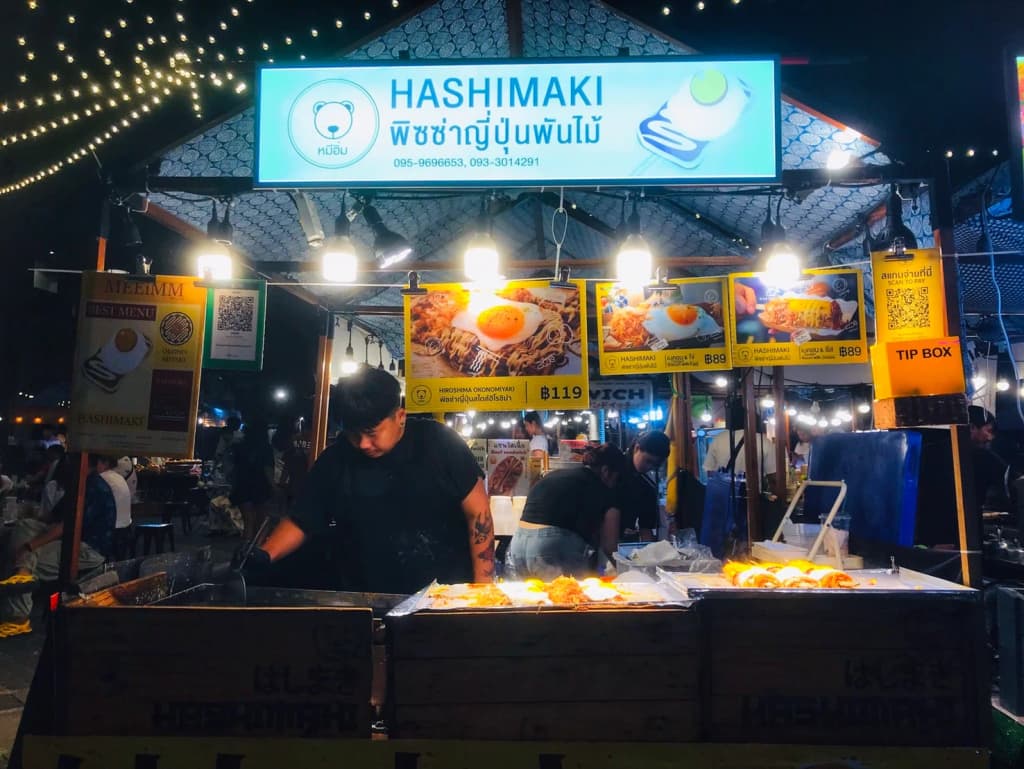
Rows of food stalls beckon, each one a riot of color and steam. There’s a stand with beef massaman curry, another with spaghetti in a sweet tomato sauce, and a bar of salads so green it almost glows. I scoop up a cup of corn soup, the aroma buttery and warm, and join the slow-moving tide of festival-goers. The fried chicken is crisp, the brownie dense and sticky, and the drinks—neon-hued juices, no alcohol, no soda—are a nod to the festival’s Buddhist roots. “No beer here,” a vendor grins, handing me a bottle of water. “Only good wishes.”
By six, the lines for drinks snake back toward the entrance, but if you wander to the far end of the premium zone, you’ll find tables empty and desserts untouched. My sandals are caked in mud, the hem of my white dress already streaked brown. “Closed shoes next time,” I mutter, and a woman beside me laughs, lifting her own muddy feet. “It’s part of the blessing,” she says. “You’ll remember it longer this way.”
Beyond the food, a quieter ritual unfolds. Along the edge of a small lake, people gather for Loi Krathong—a parallel festival of floating flower boats. Each krathong is a tiny raft of banana leaves and blossoms, topped with a candle. The line to launch one is daunting, a slow shuffle of hope and impatience. “You have to let go of the bad things,” a local woman explains, pressing a krathong into her daughter’s hands. “And wish for good.”
I watch as she lights the candle, the flame sputtering in the breeze. “Sometimes it goes out before you reach the water,” she shrugs. “But the wish still counts.” Later, we find a quieter spot, a hidden bend in the river where the line is gone and the ritual feels intimate. My friend Jess lights her candle, whispers something I can’t hear, and sets her krathong adrift. “Goodbye, bad luck,” she calls, and the little boat spins away, trailing sparks.
Night falls with a suddenness that feels theatrical. The crowd gathers in the seating zones, each person clutching two paper lanterns in a plastic bag. Instructions echo in Thai, English, and Portuguese, the words overlapping in a chorus of anticipation. “Wait for the signal,” a volunteer says, torch in hand. “We rise together.”
The first lantern is awkward—fingers fumbling with the wire, the paper trembling in the wind. But then the fire catches, the silk balloon inflates, and the countdown begins. Three. Two. One. A thousand lanterns lift at once, golden and trembling, and the sky becomes a river of light. Gasps ripple through the crowd. “Meu Deus,” someone whispers beside me, and I feel it too—the awe, the hush, the sense that for a moment, everything is possible.
Rain begins just as the last lanterns vanish into the clouds. At first, it’s a gentle patter, then a downpour, drumming on plastic ponchos and bare heads. We run for the vans, laughter and complaints mingling in the wet air. The parking lot is a sea of red taillights, mud, and resigned faces. “Forty minutes and we haven’t moved,” someone groans. “It’s all part of the experience,” another replies, and we settle in for the long, slow crawl back to Chiang Mai.
Later, as the van finally inches forward, I press my forehead to the glass. The fields are empty now, the lanterns gone, but the memory lingers—a sky ablaze, wishes whispered into the dark, the taste of fried chicken and the feel of mud between my toes. The festival is imperfect: the food is fine, the bathrooms are not, the crowds and the rain and the endless traffic are real. But the moment the lanterns rise, none of that matters. For a breathless instant, you are part of something luminous, something that floats above the mess and the mud and the everyday. And that, I think, is worth every soggy step.
More Photos
More Adventures
 $60 - $150/day 3-5 days
 Beyond the Ice: The Wild Side of El Calafate
Ditch the tourist traps. Explore El Calafate's underground cave feasts, ancient Tehuelche history, rugged 4x4 trails, and sub-zero ice bars in Patagonia.
 $150 - $300/day 1-2 days
 Conquer Epcot: The Ultimate High-Speed Global Gauntlet
Think Epcot is a slow stroll? Think again. It's a high-speed, globe-trotting gauntlet. Hack the rides, taste the world, and push your limits in Orlando.
 $50 - $150/day 1-2 days
 Conquer the Serra Verde Express: Brazil's Wildest Train
Ditch the tourist traps and ride the Serra Verde Express from Curitiba to Morretes. Discover ticket tips, seating secrets, and the best Barreado.
 $30 - $60/day 3-5 days
 A Free-Wandering Sunday Through Palermo and Recoleta
Wander through the lush parks of Palermo and the grand architecture of Recoleta on a sensory walking route that proves Buenos Aires' best experiences are free.