
A Pilgrim’s Gaze: Two Days in Aparecida’s Sacred Heart
Step into Aparecida’s living faith: mosaics, miracles, riverside legends, and the world’s largest Marian sanctuary. A sensory journey for all travelers.
The first thing you notice is the hush, a kind of reverent quiet that settles over the vast plaza despite the thousands of footsteps. Sunlight glints off the ochre tiles of the Santuário Nacional de Nossa Senhora Aparecida, and the air is thick with the mingled scents of melting wax, fresh bread, and the faint metallic tang of rain on stone. I stand at the foot of the basilica, dwarfed by its immensity, watching families and solitary pilgrims alike drift toward the arched entrance, their faces a tapestry of hope, fatigue, and awe.
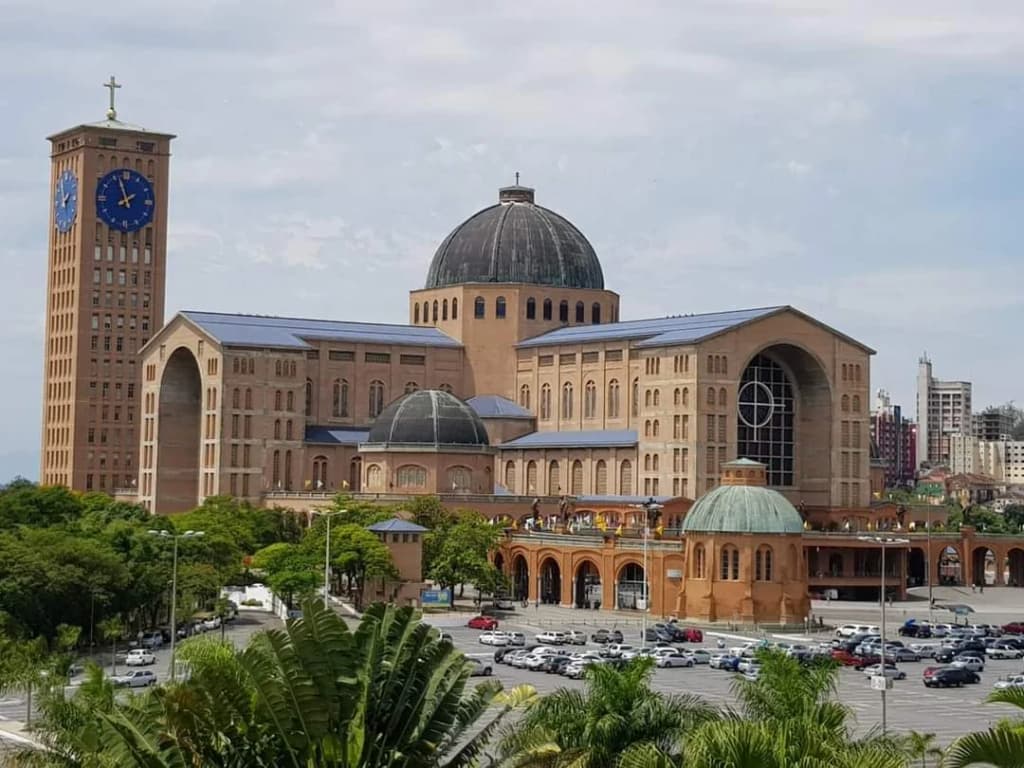
A woman in a blue headscarf catches my eye as she lights a candle nearly as tall as her granddaughter. “For my son,” she murmurs, voice trembling with both faith and memory. The Capela das Velas is a riot of color and heat, wax pooling in rivers beneath the racks, the air heavy with the perfume of burning hope. Here, candles shaped like limbs, hearts, and even tiny houses flicker in the dimness—each a prayer, a plea, or a thank you. The official shop next door sells these candles, and the line is never short.
Outside, the basilica’s mosaics shimmer in the morning light, their blues and golds telling stories older than the city itself. The Campanário, designed like two hands pressed in prayer, looms nearby, its thirteen bells silent for now. I trace the Passarela da Fé, the Faith Walk, a gentle incline connecting the new sanctuary to the old. Less than 400 meters, but every step feels weighted with the stories of millions who have crossed before me—some barefoot, some on their knees, all seeking something just out of reach.
Inside, the nave soars. The original image of Nossa Senhora, found centuries ago in the muddy waters of the Paraíba do Sul, rests in a golden niche, shielded by glass. The line to see her ebbs and flows, but in the late afternoon, I find a quiet moment. A man behind me whispers, “She listens, you know. Even if you don’t speak.”
The basilica is free to enter, and the accessibility is striking—ramps, wide paths, and even wheelchairs available by request. The parking lot, vast and orderly, costs about R$35 a day, but my hotel, part of the sanctuary complex, slips me a voucher. I watch as a family navigates the space with a stroller, the youngest child asleep, the parents’ faces soft with relief at the ease of movement.
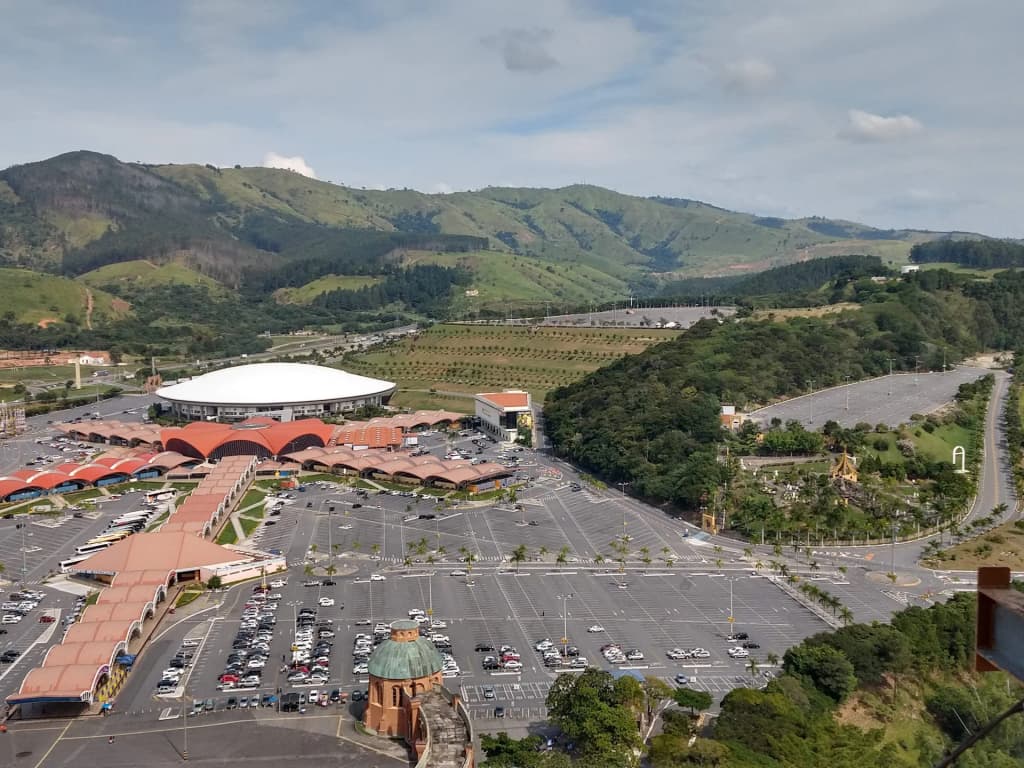
The Torre de Brasília beckons, its elevator whisking me up to a 360-degree view: the basilica’s red brick arms stretching wide, the city of Aparecida unfurling below, the green smudge of the Serra da Mantiqueira on the horizon. The river glints, winding through the valley, and I think of the fishermen who, in 1717, pulled a broken statue from its depths and changed the fate of this place forever. The museum here, included in the more comprehensive ticket, is a quiet trove of miracles—crutches, photographs, football jerseys, even Ayrton Senna’s helmet, all left in gratitude.
Downstairs, the Sala das Promessas is a collage of devotion: dolls, wedding dresses, tiny houses, and thousands of photographs papering the ceiling. The air is thick with stories, some whispered, some shouted, all woven into the fabric of the sanctuary.
Lunch is a simple affair at the Centro de Apoio ao Romeiro, a sprawling food court just across from the basilica. The aroma of pão de queijo and roasted meats mingles with the laughter of children. I try the famous Pão de Nossa Senhora, still warm, its crust dusted with flour, and feel the comfort of tradition in every bite. The center is more than a place to eat—it’s a hub for pilgrims, with shops selling everything from rosaries to electronics, and even an aquarium where children press their faces to the glass, marveling at turtles and freshwater fish.
A vendor at a souvenir stall grins as I finger a wooden carving. “You’re not from here, are you?” she asks, her accent lilting. “No,” I admit, “but I wish I was.” She laughs, pressing a tiny medal into my palm. “Then come back. We always do.”
The afternoon brings a change of pace. I board the cable car—the bondinho—its windows framing the basilica as we glide above the Dutra highway, the city shrinking below. The ride is brief, eight minutes of gentle swaying, and then I’m atop Morro do Cruzeiro. The view is worth the climb: the sanctuary, the city, the endless green. There’s little here but a lanchonete, a bathroom, and the wind, but it’s enough. For those with mobility challenges, the incline is steep, but the cable car makes it possible for most.
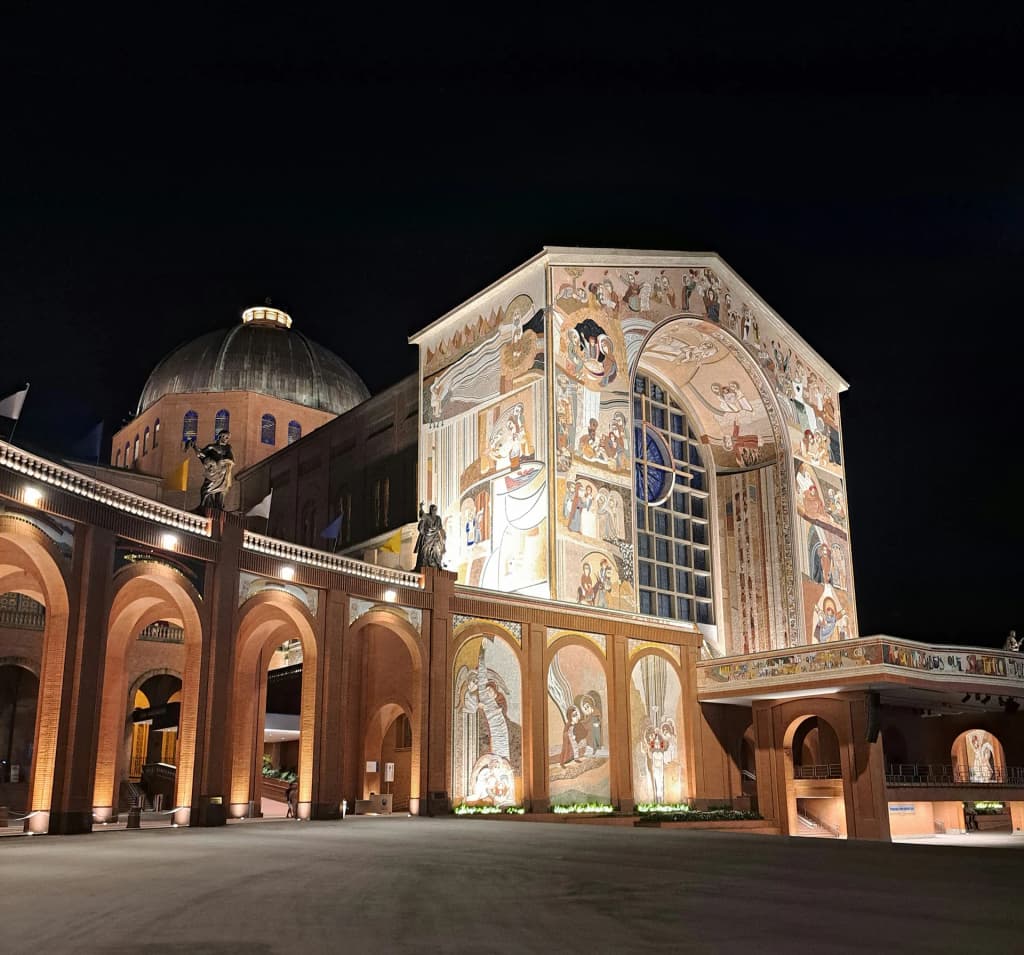
Back in town, my hotel—Rainha dos Apóstolos—offers a quiet respite. The room is simple, clean, and cool, with a view of Cidade do Romeiro below. Isa, the owner’s daughter, waves from the hallway, her laughter echoing. “You see the lake?” she points. “At night, the lights look like stars.”
Cidade do Romeiro is a world unto itself: open-air restaurants, gelato stands, and a lake dotted with pedal boats. Children chase pigeons, couples linger over coffee, and the air is sweet with the promise of evening. I eat a plate of grilled chicken at Restaurante Obelisco, the flavors bright and familiar, and later, a slice of pizza at Tutant, the cheese stretching in long, golden threads.
The next morning, I follow the Caminho do Rosário, a riverside path shaded by trees and lined with statues depicting biblical scenes. The walk is gentle, the river murmuring beside me, and the city’s bustle fades into birdsong and the crunch of gravel underfoot. At Porto Itaguaçu, the story of Aparecida’s beginning comes alive: the fishermen’s village, recreated in wood and thatch; the Capela da Pesca Milagrosa, its white walls gleaming; and the Parque Três Pescadores, where rescued birds call from the treetops and a balsa waits to ferry visitors to the very spot where the statue was found.
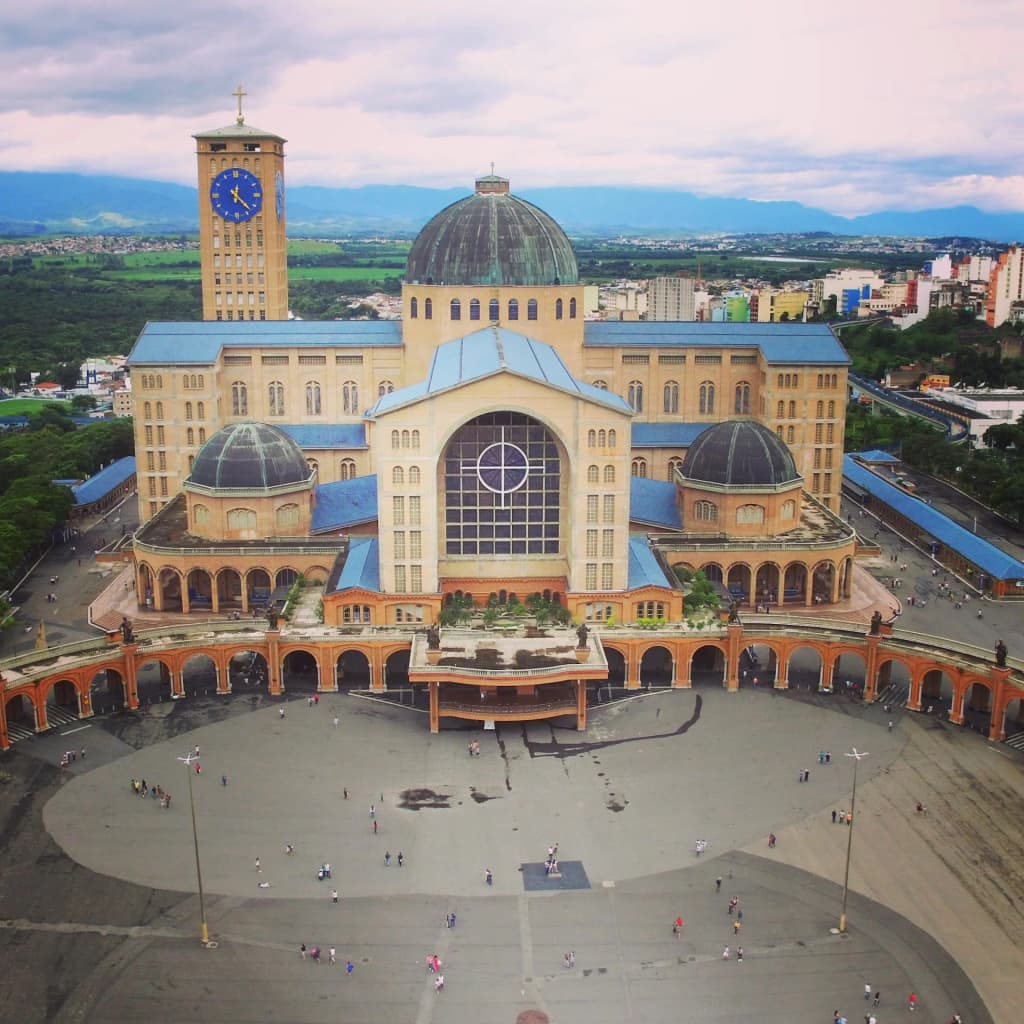
A guide in a faded blue shirt gestures to the water. “Here, everything changed,” he says. “Not just for the fishermen, but for all of us.”
The park’s entrance is R$24, or R$55 with the boat ride. I watch as a family boards, the children’s laughter echoing across the water. The sun is high now, the air thick with the scent of river mud and wildflowers, and I feel the weight of centuries pressing close.
By late afternoon, the city is quieter. The crowds thin, the basilica’s bells toll softly, and the sky blushes pink over the valley. I sit on a bench, bread in hand, and watch as a group of cyclists—dusty, sunburned, grinning—arrive at the sanctuary gates. Some have come from São Paulo, others from distant corners of Minas Gerais, all drawn by the same invisible thread.
Aparecida is a city of faith, yes, but also of stories—of families, of miracles, of quiet moments by the river. Two days is enough to glimpse its heart, but not to know it. That, I suspect, would take a lifetime.
More Photos
More Adventures
 $50 - $120/day 3-5 days
 Chasing Echoes and Gold Dust in Tiradentes, Brazil
Experience Tiradentes, Brazil through a sensory journey of colonial architecture, deep-rooted history, and the rich culinary traditions of Minas Gerais.
 $50 - $120/day 2-3 days
 Earth, Fire, and Lavender: A Sensory Weekend in Cunha
Breathe in the lavender fields, taste alpine mountain beer, and feel the heat of traditional Japanese kilns in the mountain village of Cunha, São Paulo.
 $40 - $120/day 3-5 days
 Shadows and Gold: Walking the Living History of Ouro Preto
Wander the steep cobblestone streets of Ouro Preto, where Baroque masterpieces, subterranean gold mines, and a dynamic culinary scene breathe life into history.
 $50 - $150/day 1-2 days
 Finding Holland in the Tropics: Two Days in Holambra
Discover Holambra, Brazil's unexpected Dutch enclave. Wander through luminous flower fields, towering windmills, and rich European history in São Paulo state.