
Bogotá is a Cold City That Burns: A Guide to the Colombian Capital
Bogotá demands you breathe deeply in the thin Andean air. From the depths of the Salt Cathedral to the heights of Monserrate, here is how to navigate Colombia's capital.
The cold hits you first—sharp, thin, and unexpected for a city this close to the equator. When the automatic doors of El Dorado International Airport slide open, the air at 2,600 meters feels like it’s playing hard to get. Your lungs work a little harder to pull in the oxygen. Outside, the sky is a bruised shade of gray, and the traffic is a river of yellow taxis flowing with a chaotic, honking rhythm that somehow works.
We step into the fray with our documents still warm in our hands. Colombia makes you work for your entry; the Check-Mig form is a non-negotiable bureaucratic hurdle you must clear before boarding, and the immigration lines can test your patience. But once through, I bypass the currency exchange booths with their predatory rates and head straight for a green ATM. My Wise card works instantly, dispensing a stack of Colombian pesos—I pull out 800,000 to be safe. With cash in pocket and the altitude settling into my chest, I am ready to face the city.
We drop our bags in Chapinero, a district of red brick and trendy cafes that feels worlds away from the gritty history of the center. But the pull of the past is too strong to ignore. We hail a cab to La Candelaria, the historic heart where the streets narrow and the colonial balconies lean in like they are sharing secrets.
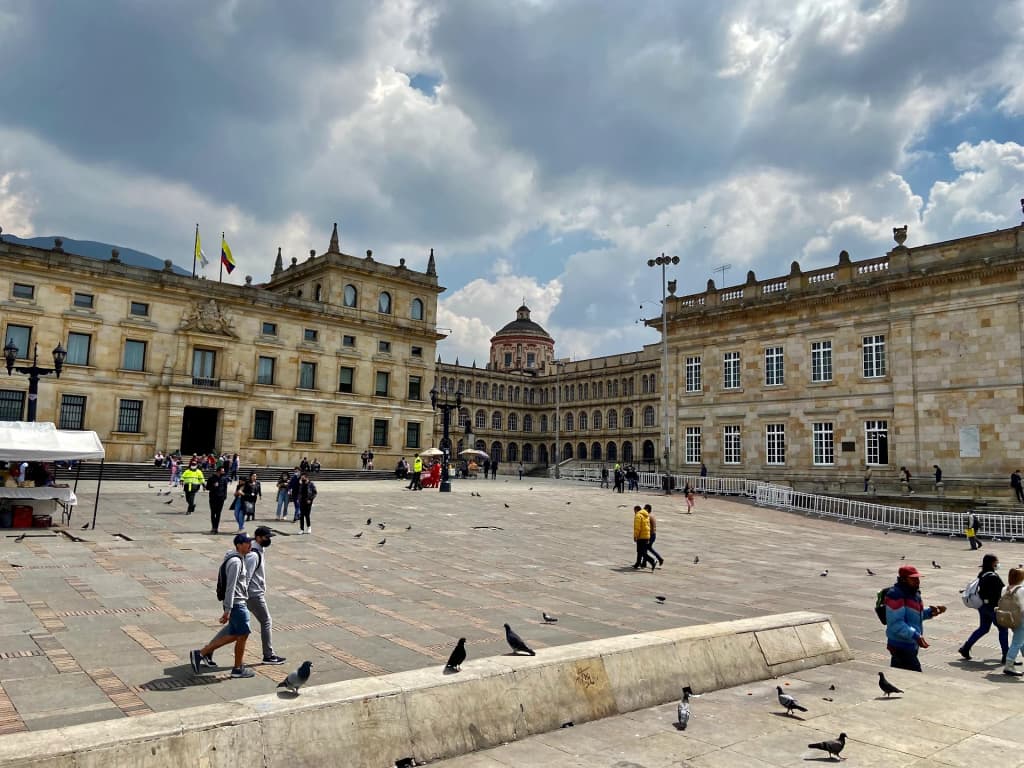
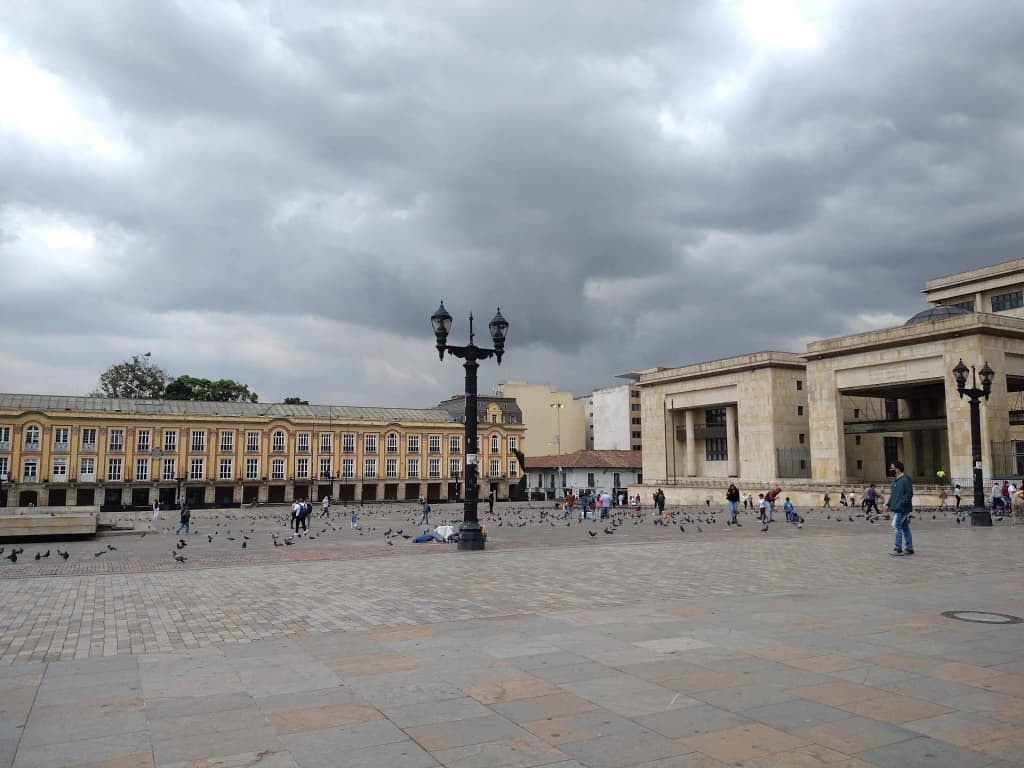
Plaza de Bolívar is an assault on the senses. The sheer scale of it makes you feel small. To my left stands the Palace of Justice, imposing and solemn; to my right, the Primary Cathedral, a patchwork of stone rebuilt four times over the centuries. But it’s the sound that dominates—the flutter of thousands of wings. The square is carpeted in pigeons. People feed them, children chase them, and the air is thick with the sound of cooing and the rustle of feathers.
"Too many birds," an old man mutters next to me, pulling his ruana tighter against the wind. He watches a tourist covered in pigeons with a look of mild horror.
"It’s good luck, isn't it?" I ask him.
He laughs, a dry, wheezing sound. "It is only good luck if they don't ruin your jacket."
The cold drives us to seek warmth, and in Bogotá, warmth comes in a bowl. We wanted to try La Puerta Falsa, the oldest restaurant in the city, but the line snakes out the door and down the cobblestones. Instead, we duck into La Puerta de la Catedral just down the street. It feels less like a compromise and more like a discovery.
The waiter doesn't ask what we want; he knows. "Ajiaco," he says, nodding at the empty table.
When the bowl arrives, I understand why this dish is the city's soul. It is a thick, hearty soup made of three kinds of potatoes, corn on the cob, and shredded chicken, served with a side of capers and heavy cream. You stir it all together until it becomes a creamy, savory comfort that warms you from the inside out. While we eat, I swap out my SIM card. I bought a Claro chip from a street kiosk for 21,000 pesos—about five dollars. It was a two-minute transaction that gave me enough data to navigate the city for weeks. It is these small practical victories, like good soup and cheap data, that make a trip smooth.
The next morning, we chase the gold. The Museo del Oro isn't just a museum; it is a vault of memory. Inside, over 55,000 pieces of pre-Hispanic gold work glow in the darkness. The rooms are dimly lit to protect the artifacts, creating a hypnotic atmosphere where the metal seems to float. We wander through the exhibits in silence, then make our way to the Botero Museum nearby. It is free to enter, which feels like a gift. Fernando Botero’s voluminous sculptures and paintings are everywhere—people, fruit, animals, all depicted with exaggerated, rotund proportions. It is whimsical, yes, but also deeply Colombian in its abundance.
But to truly understand the scale of this place, you have to look down on it. We take the funicular up to Cerro Monserrate. The ticket costs 27,000 pesos, and the ride is a steep, grinding ascent. At the top, 3,152 meters up, the air is even thinner. I wrap my jacket tighter. The wind here bites, but the view commands your attention. The city sprawls out endlessly, a sea of brick and concrete held in the green embrace of the Andes. There is a white church up here, a destination for pilgrims, and a small market selling coca tea to help with the altitude.
"We are going underground today," I tell the group the next morning. We are heading to Zipaquirá to see the Salt Cathedral.
We navigate the public transport to the Terminal del Norte and catch a small bus—a buseta—for 8,000 pesos. The ride takes an hour, winding through the savannah where the grass is impossibly green. Zipaquirá is charming, cleaner and quieter than the capital, but we are here for what lies beneath.
The entrance to the Salt Cathedral costs about 96,000 pesos for the two of us. It is not cheap, but as we descend into the dark tunnels, the price becomes irrelevant. The air smells of sulfur and mineral. We walk through the Stations of the Cross carved directly into the salt rock. It is dark, illuminated by dramatic blue and purple lights that cast long shadows against the rough walls.
"It feels heavy here," my companion whispers. We are 180 meters underground.
At the bottom, the main nave opens up. It is massive. A giant cross is carved into the salt, backlit so it seems to float in the darkness. It is eerie and beautiful, a strange mix of tourism and deep faith. We walk back up, legs burning, and catch the bus back to the city, the taste of salt still on our lips.
Back in Bogotá, the vibe shifts as the sun goes down. The historic center can feel a bit rough at night—locals warned us to keep our cameras hidden—so we stick to the north. We head to Zona T and Parque 93. This is the chic side of Bogotá. The streets are lined with trees, the restaurants buzz with conversation, and the people are dressed to impress.
We end the night at Andres Carne de Res. It is not just dinner; it is a fever dream. The decor is a chaotic mix of religious iconography, neon lights, and hanging bric-a-brac. The menu is a magazine, literally. I order a burger, but I am really here for the energy. Music pumps, actors in costumes wander between tables, and the smell of grilled meat fills the air. It is loud, it is expensive, and it is incredibly fun.
Sipping a coffee at a Juan Valdez café later—because you cannot leave Colombia without paying homage to the coffee—I reflect on the city. Bogotá is not an easy place. It is cold, the traffic is maddening, and the altitude makes you dizzy. But between the salt mines and the mountain peaks, between the golden artifacts and the grit of the streets, there is a pulse here that you can’t help but fall in sync with.
More Photos
More Adventures
 $50 - $120/day 3-5 days
 Chasing Echoes and Gold Dust in Tiradentes, Brazil
Experience Tiradentes, Brazil through a sensory journey of colonial architecture, deep-rooted history, and the rich culinary traditions of Minas Gerais.
 $40 - $120/day 3-5 days
 Shadows and Gold: Walking the Living History of Ouro Preto
Wander the steep cobblestone streets of Ouro Preto, where Baroque masterpieces, subterranean gold mines, and a dynamic culinary scene breathe life into history.
 $75 - $250/day 7-14 days
 The Ultimate Month-by-Month International Travel Guide
Stop gambling with your PTO. Discover the exact best (and worst) international destinations for every month of the year to optimize budget and weather.
 $80 - $250/day 4-7 days
 The Quiet Art of Experiencing Paris on a Budget
Discover how to experience the romance of Paris without breaking the bank, from secret bakery rituals to navigating the city's economic rhythms.