
Parador Cambará do Sul: Silence, Smoke, and the Art of the Cocoon
A journey to Parador Cambará do Sul, where bee-inspired architecture meets the raw winds of Brazil's canyon country and slow-cooked Gaucho feasts.
The mist here has a weight to it. It rolls over the hills of the Serra Gaúcha not like weather, but like a living thing, dampening the sounds of the world until all you can hear is the crackle of wood in the fireplace. I am standing on the deck of what looks like a futuristic wooden seed pod dropped into the middle of the Brazilian wilderness. The air is crisp, carrying the scent of pine and damp earth, a reminder that even though I am wrapped in a thermal robe, the wild is just a pane of glass away.
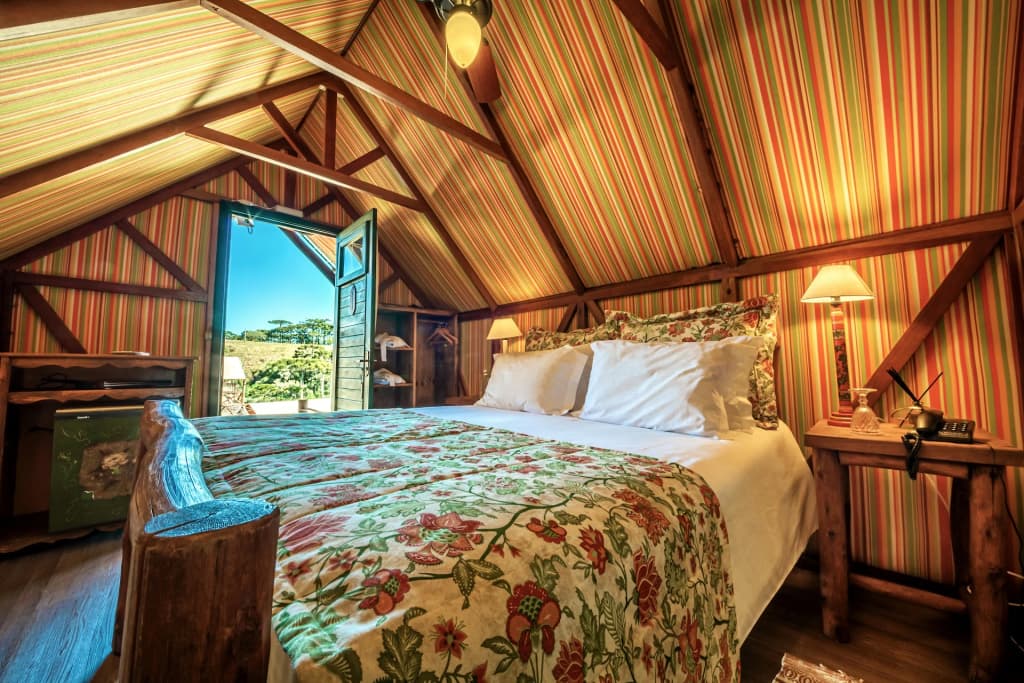
This is Parador Cambará do Sul. They mastered the concept of "glamping" here long before the word became a marketing cliché. Since 2001, they have been blurring the line between the raw exposure of camping and the high-thread-count comfort of a luxury hotel. I am staying in a "Casulo"—a Cocoon. The design is intentional, inspired by the hives of native stingless bees. It feels organic, with curved lines that seem to hug you. Inside, there is a letter waiting for me, explaining the specific bee species my room is named after, accompanied by a small jar of local honey. It is a sweet, golden welcome that tastes of the wildflowers I saw on the drive in.
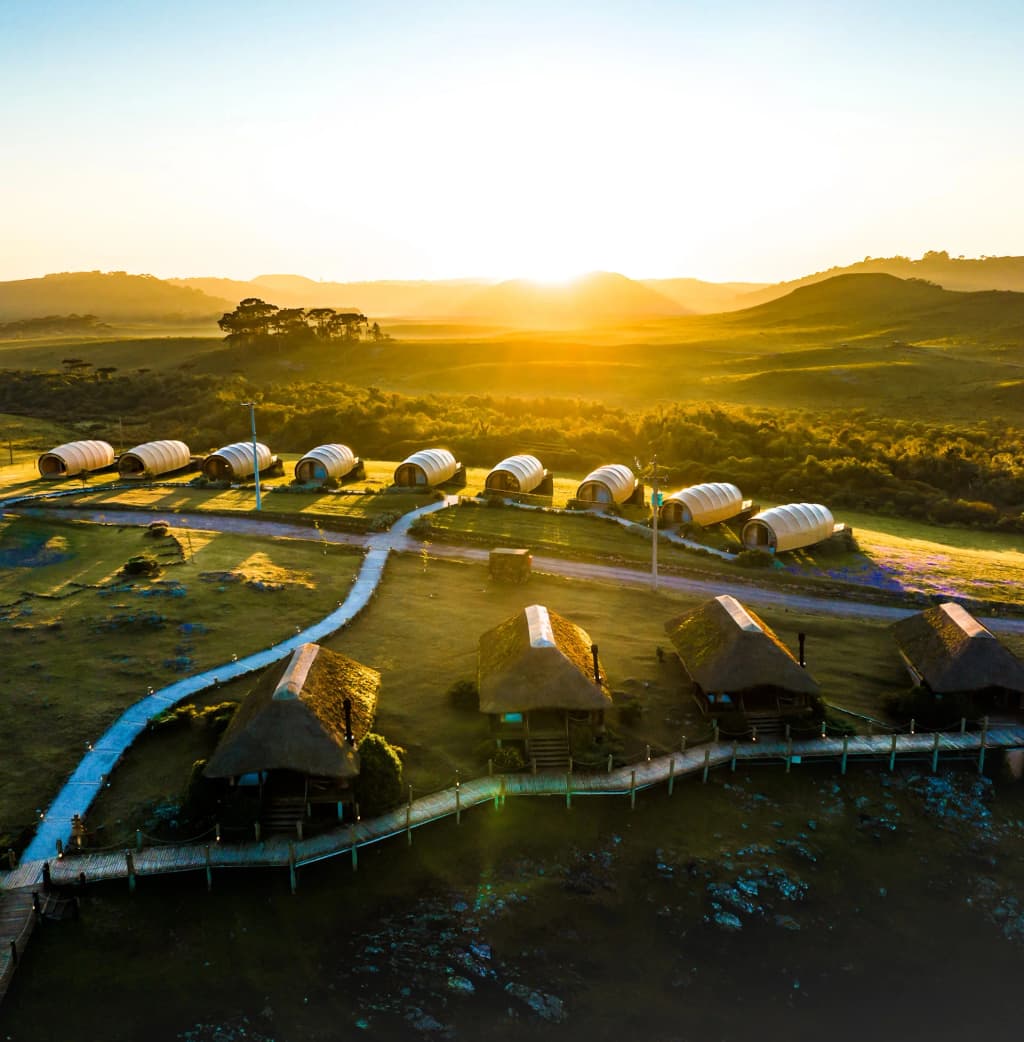
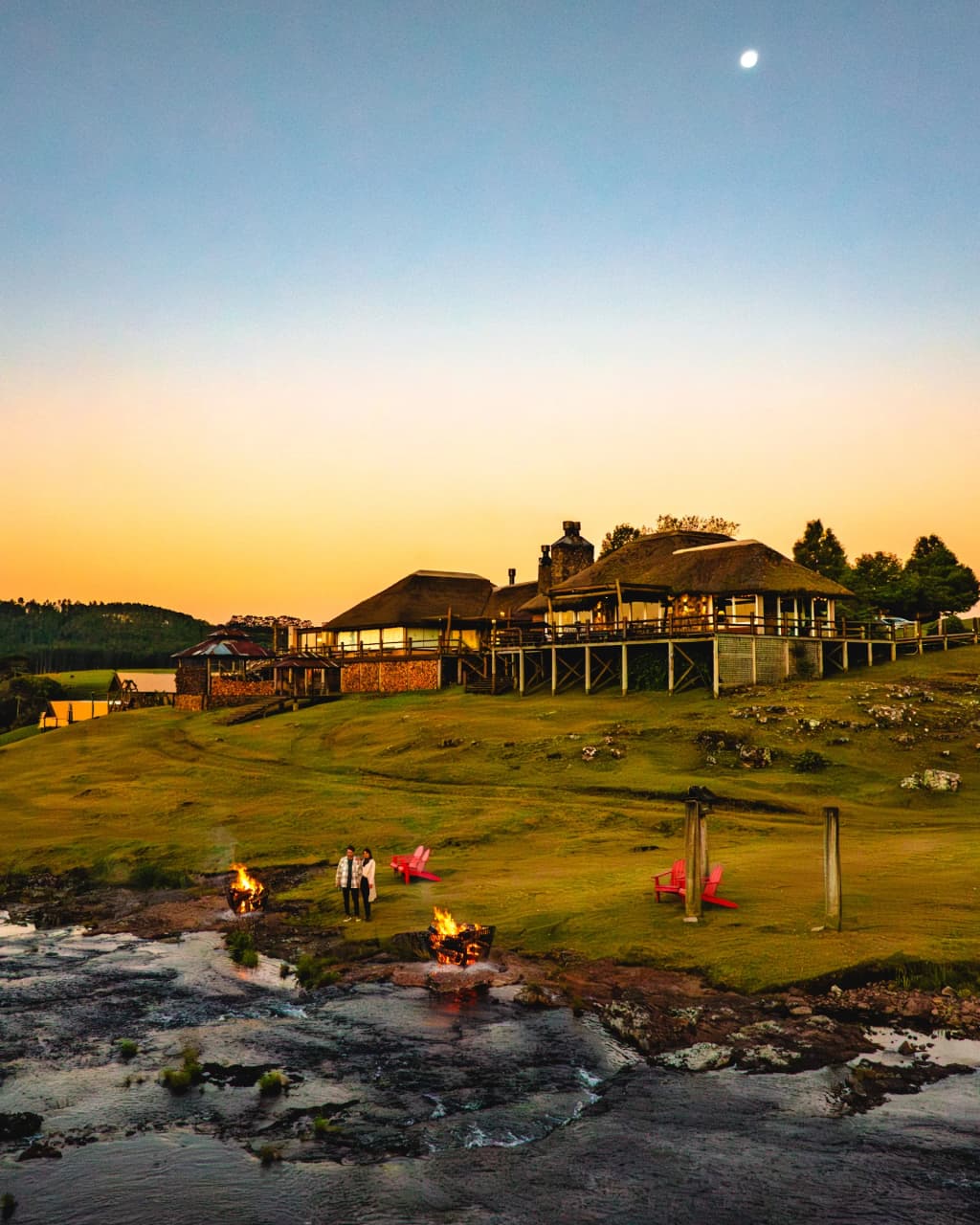
The sun begins to dip, and the temperature drops with it. Even though it isn't winter, the highlands demand respect—and layers. I make my way to the main lodge for dinner at Alma, the on-site restaurant. The warmth hits me the moment I open the door. It smells of woodsmoke and roasting herbs. The kitchen here, led by Chef Rodrigo Bellora, operates on a philosophy of localism that feels less like a rule and more like a religion. Everything passes through the heat of the wood-fired oven.
"We prioritize ingredients from a network of local suppliers," César, one of the staff members, tells me as he sets down a plate. "Organic products, fresh ingredients, all with the aroma of the embers."
He presents a dish of red rice with duck and a caramelized loquat that looks like a jewel. The trout, he explains, is local, served with vegetables that still have the snap of the garden in them. You have to plan ahead for these tastes; some of the slow-cooked specialties require 24 hours' notice. As I eat, I realize this isn't just sustenance; it is a map of the region served on a ceramic plate.
Morning brings a different kind of sensory experience. After a breakfast table groaning with regional cakes and jams—served from 7:30 to 10:00 AM—I head out to the trails. The property sits on the banks of the Camarinhas River, and the walk is easy, a gentle introduction to the landscape. I stumble upon a curious installation: two large wooden cones aimed at the forest, designed to amplify the sounds of nature.
I lean my head in. The sound of the wind in the araucaria trees doubles in volume. I can hear a bird call from hundreds of meters away as if it were on my shoulder. It’s a moment of forced mindfulness, a reminder to stop looking at my phone and start using my senses.
But the real giants are further out. I drive the 32 kilometers to Canyon Fortaleza in the Serra Geral National Park. The road is rough—unpaved and bumpy—but the discomfort vanishes the moment the earth opens up. The cliffs drop vertically into a green abyss. It costs about 50 reais per person to enter, a small price for a view that makes you feel insignificant in the best possible way. If you have the stamina, you can combine it with a visit to Itaimbezinho Canyon for a combined ticket price, but I prefer to linger here, watching the clouds snag on the jagged rocks.
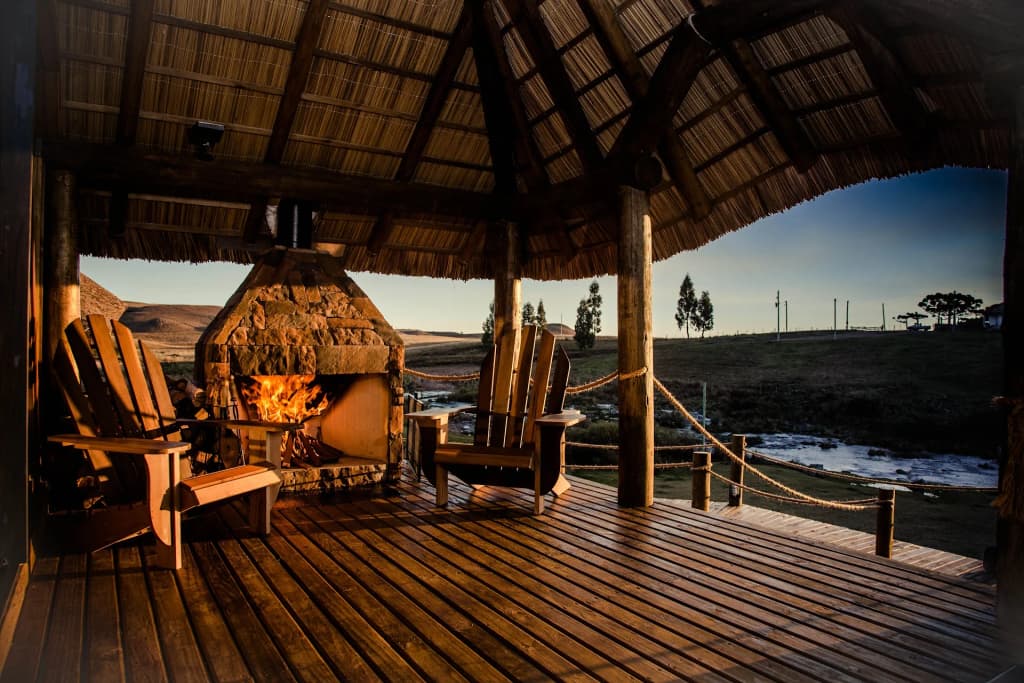
Back at the Parador, the air is filling with smoke again, but this time it’s heavy with the scent of beef. It is Saturday, one of the days designated for the traditional fogo de chão—ground fire barbecue. In the outdoor kitchen, ribs are staked into the ground around a roaring fire, cooking slowly, agonizingly, for hours.
I find Vlad tending the flames. He looks like he has been doing this since the beginning of time.
"How long does this take?" I ask, eyeing the golden layer of fat on the ribs.
"Seven to nine hours," Vlad says, not looking away from the fire. "Strong fire, high heat. If you eat at noon, this meat has been here since before dawn. If you eat at two, it's been here nine hours."
The result is meat that falls off the bone if you look at it too hard. But the barbecue isn't just about meat. I wander into the new cheese cellar to meet Aurélio. He introduces me to Queijo Serrano, a raw-milk cheese produced in these high-altitude fields for over 200 years. "The pasture is totally native," he explains, cutting me a slice. "No feed, no supplements. It’s the taste of the land."
The rest of the stay blurs into a series of tactile joys. I spend an hour on horseback with the Galopar agency, traversing the fields on a steed that seems to know the terrain better than I know my own neighborhood. Later, for a change of pace, I hop on a quad bike with Coyote Adventure, climbing to one of the highest points of the farm to watch the horizon stretch out forever.
But the best moment comes at the very end. It is night again. The turn-down service has left a chocolate and a weather forecast on my bed—a forecast that promises chill and mist. I step out onto the deck of my cocoon one last time. The Jacuzzi is bubbling. The sky is a riot of stars, unpolluted by city lights. There is that silence again. It’s not empty; it’s full. Full of wind, full of distant water, and full of the peace that only comes when you are miles away from everything you think you need.
More Photos
More Adventures
 $100 - $350/day 5-7 days
 Ditch Your Shoes: The Ultimate Jericoacoara Adventure Guide
Skip the tourist traps. Rent an ATV, dive into Buraco Azul, and taste the wild side of Jericoacoara. Your ultimate adventure guide to Brazil's sandy paradise.
 $50 - $150/day 3-5 days
 Misty Peaks and Wood-Fired Feasts in Visconde de Mauá
Experience the misty mountains of Visconde de Mauá, Brazil. Discover steep trails, cozy rain-lashed cabins, and the rich culinary heritage of Minas Gerais.
 $30 - $60/day 3-5 days
 Skip the Beach: The Mystical Quartz Mountain of São Thomé
Trade the beach for the mountains. Explore São Thomé das Letras, Brazil's off-grid quartz town. Dive into waterfalls, dark caves, and defy gravity.
 $150 - $400/day 3-5 days
 Finding Stillness Above the Clouds in Brumadinho
Discover what happens when constant travel pauses in a sprawling, glass-walled luxury retreat high in the misty, forested mountains of Brumadinho, Brazil.