
San Andrés Island: Chasing Colombia's Sea of Seven Colors
Experience the kinetic energy and kaleidoscopic waters of San Andrés, Colombia. From scuba diving the coral reefs to the lively shores of Spratt Bight.
The salt spray stings my eyes, but I can't look away from the water rushing past the hull of the lancha. It isn't just blue. It is a shifting canvas of cerulean, then a deep bruised navy, followed by a shocking, translucent turquoise that looks exactly like crushed glass scattered over white silk. The boat captain, a man whose skin is the texture of weathered mahogany, throttles the Yamaha outboard engine over the chop. He catches me staring over the edge and points a calloused finger toward the horizon. "The sea of seven colors," he shouts over the roar of the motor, his voice carrying the thick, melodic cadence of island Creole. He hands me a plastic cup sweating with heavy condensation. I take a long drink. The sweet, icy tartness of limonada de coco—coconut lemonade—coats my throat, rich and creamy, slicing cleanly through the dense Caribbean heat. We are hurtling toward Johnny Cay, and already, the mainland feels like a rumor.
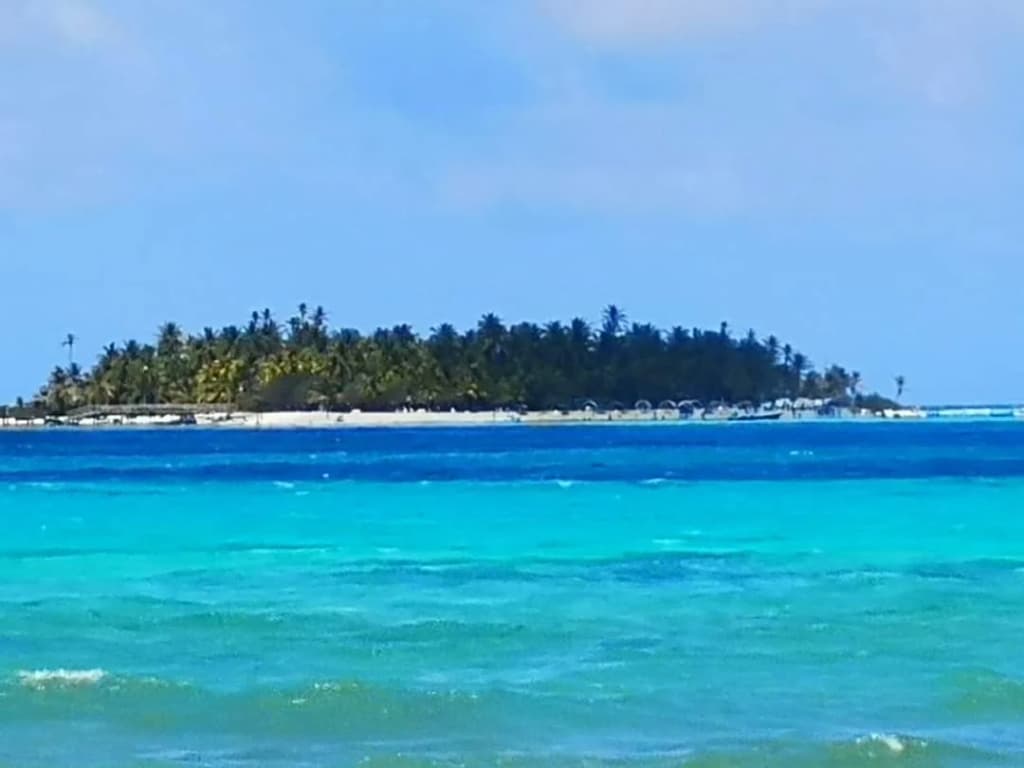
The boat drops anchor in waist-deep water near Aquarium Island, a sliver of sand that lives up to its name the moment you step off the fiberglass deck. The water here is as warm as a drawn bath. You don't just swim in San Andrés; you become suspended in a living prism. Strapping on a scuba tank later that morning, the chaotic noise of the surface—the shouting vendors, the reggae thudding from portable speakers, the splashing of tourists—is instantly erased by the rhythmic, Darth Vader-like hiss of my own breathing through the regulator. Down here, the light filters through the seven colors of the sea, casting everything in a cathedral-like glow. Schools of surgeonfish and electric-hued parrotfish dart through the coral heads. The water is so impossibly clear that when I look up, I can see the hulls of the boats hovering above us like clouds in a liquid sky.
But to truly understand the geography of this place, you have to leave the water entirely. By mid-afternoon, the heavy scuba gear is swapped for a canvas harness. A speedboat catches the wind, and suddenly I am parasailing hundreds of feet in the air. The silence up here is absolute, save for the wind rushing past my ears. Looking down, the namesake seven colors finally make sense. The varying depths of the coral reefs, the stretches of blinding white sand, and the deep ocean trenches create a patchwork quilt of blues and greens that stretch out until they bleed into the curvature of the earth.
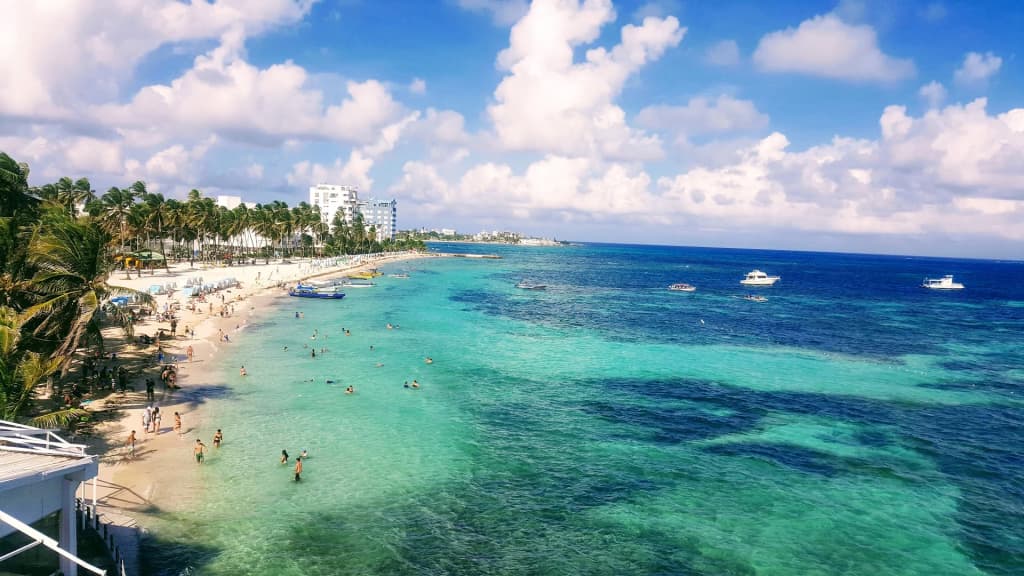
Back on solid ground, the pulse of the island changes completely. Spratt Bight is the beating heart of downtown San Andrés, a long, curving beach where the sand is the color of bleached bone and the energy is relentlessly kinetic. I walk along the paved promenade, my sandals slapping against the sun-baked concrete. The air smells of frying plantains, coconut oil, and the sharp, metallic tang of the sea. Every fifty feet, the soundtrack shifts. It is a collision of heavy reggaeton spilling out from open-air bars, the rhythmic clatter of dominoes slapping against wooden tables in the shade of palm trees, and the constant hum of scooters weaving through traffic.
Navigating the center of the island on foot is an exercise in sensory overload, so I follow the lead of the locals and visitors alike. I hand over a few crumpled Colombian pesos at a roadside stand—roughly forty dollars for the day—and take the keys to a battered, gas-powered golf cart. It is the unofficial chariot of San Andrés. There are no windows to roll up, no buffer between you and the environment. Driving the loop around the island takes you away from the dense commercial center and out into the raw, wind-whipped coastline of the southern tip. The road hugs the water so tightly that occasionally, a rogue wave crashes against the volcanic rock and sends a mist of salt water right across the steering wheel.
We stop at a calm inlet where a small boat is pulling a wakeboarder through the glassy water. The physical exhaustion of the day is starting to set into my shoulders—a good, heavy kind of tired that only comes from hours spent fighting the sun and the sea. I buy another limonada de coco from a woman sitting on an overturned cooler by the side of the road. It is even sweeter this time, the coconut cream separating slightly in the afternoon heat.
The sun finally collapses into the ocean, leaving behind a sky bruised with purples and oranges. The heat breaks, replaced by a steady, cooling trade wind. I make my way to La Regatta, a restaurant that looks like a brightly painted pirate ship permanently moored to the docks. It is famously difficult to get a table here without booking weeks in advance, but arriving right at six o'clock just as they unlatch the heavy wooden doors proves to be the trick. The interior is a labyrinth of nautical antiques and colorful wood, but the real draw is the deck sitting directly over the water.
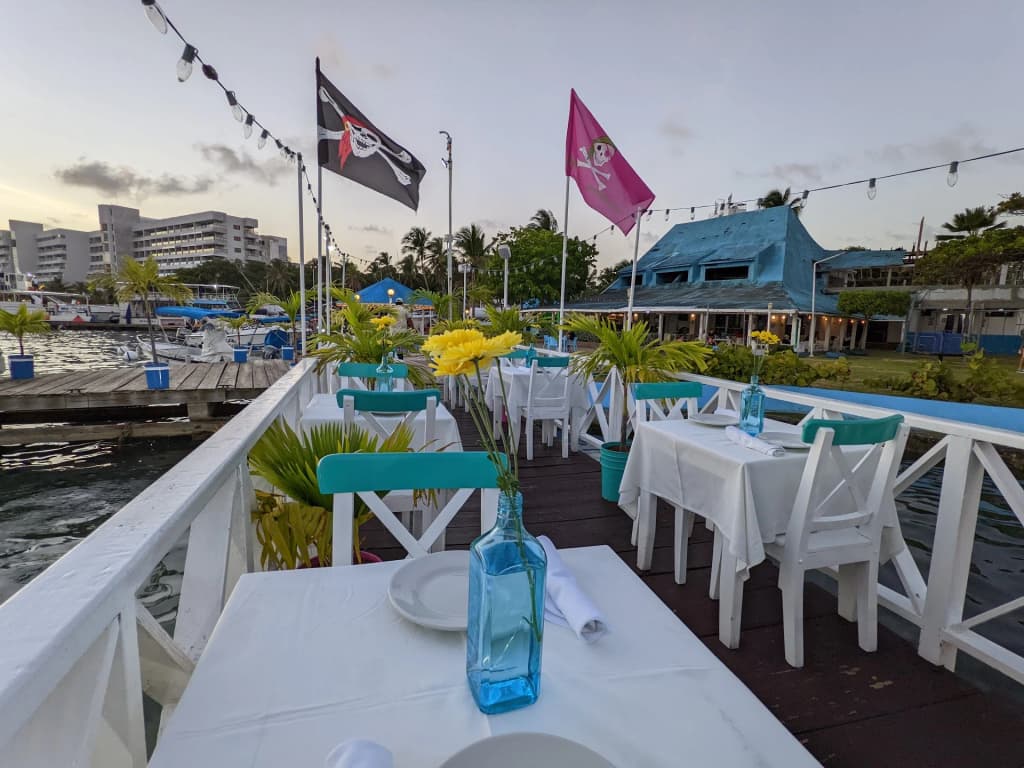
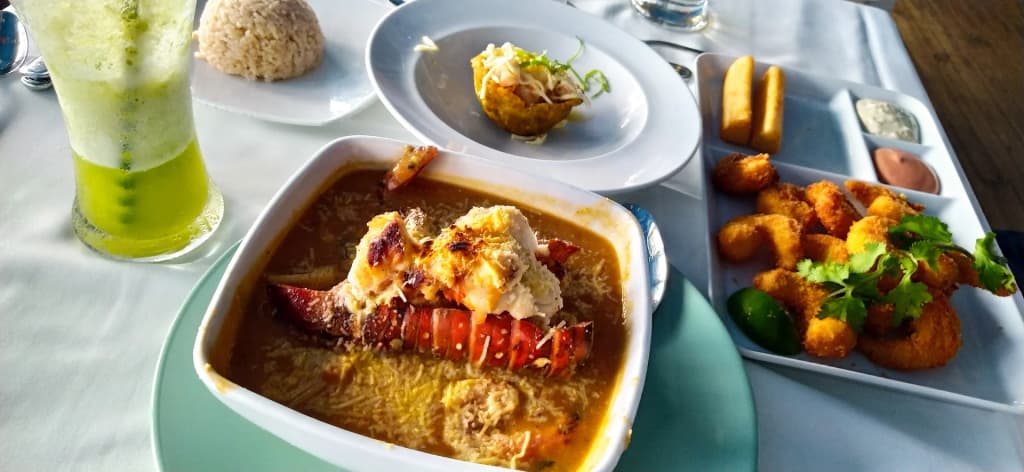
I sit at a small table near the railing, watching the running lights of distant boats bob in the dark harbor. A waiter in a crisp shirt sets down a plate of whole fried red snapper, accompanied by a mound of dark, caramelized coconut rice and flattened, crispy patacones.
"You are looking at the water like you have never seen the ocean before," he says, pouring water into my glass. It is more of an observation than a question.
"I haven't seen this ocean," I admit, pulling my eyes away from the dark horizon. "I spent the whole day trying to count the seven colors."
He laughs, a deep, easy sound that barely carries over the gentle lapping of the water against the pilings. "Seven if you are counting fast, my friend," he says, sliding a small bowl of spicy pepper sauce toward me. "More if you sit here long enough. You have to eat the rice while it is still steaming. The ocean will be there tomorrow."
He is right. The snapper is heavily seasoned, the skin audibly crunching under my fork, giving way to tender, flaky meat that tastes of garlic and lime. The coconut rice is sweet and savory all at once, a perfect counterpoint to the sharp heat of the pepper sauce.
Walking back to my room later that night, the island has quieted down, though it never truly sleeps. The heavy bass of a distant club thumps in time with my footsteps. The air is still thick with humidity, clinging to my skin, leaving a fine residue of salt. I realize that San Andrés isn't just a place you look at; it is a place that physically attaches itself to you. It is in the grit of the sand between your toes, the ring of water in your ears after a long dive, and the lingering, sweet taste of coconut on your tongue long after the glass is empty.
More Photos
More Adventures
 $40 - $150/day 20-30 days
 Conquer Thailand: The Ultimate 20-Day Blueprint
Skip the tourist traps. Grab your backpack. This is your high-energy, no-BS guide to dominating Thailand in 20 days. Get ready to sweat.
 $40 - $120/day 14-30 days
 The Taste of Chili and Time Travel: Everyday Magic in Thailand
Immerse yourself in the sensory details of Thailand's deeply rooted culture, from Buddhist calendars and saffron-robed monks to street food rules.
 $50 - $150/day 5-10 days
 Finding the Rhythm of Bahia: From Porto Seguro to Trancoso
Experience the sensory magic of Brazil's Costa do Descobrimento, from the chaotic nightlife of Porto Seguro to the barefoot luxury of Trancoso's beaches.
 $50 - $150/day 5-10 days
 Conquer Ceará: The Ultimate Route of Emotions Road Trip
Ditch the resorts and hit the dunes. Discover the wild side of Ceará, Brazil, from hidden lagoons in Camocim to the electric nightlife of Jericoacoara.